What a diamond cutter does on site
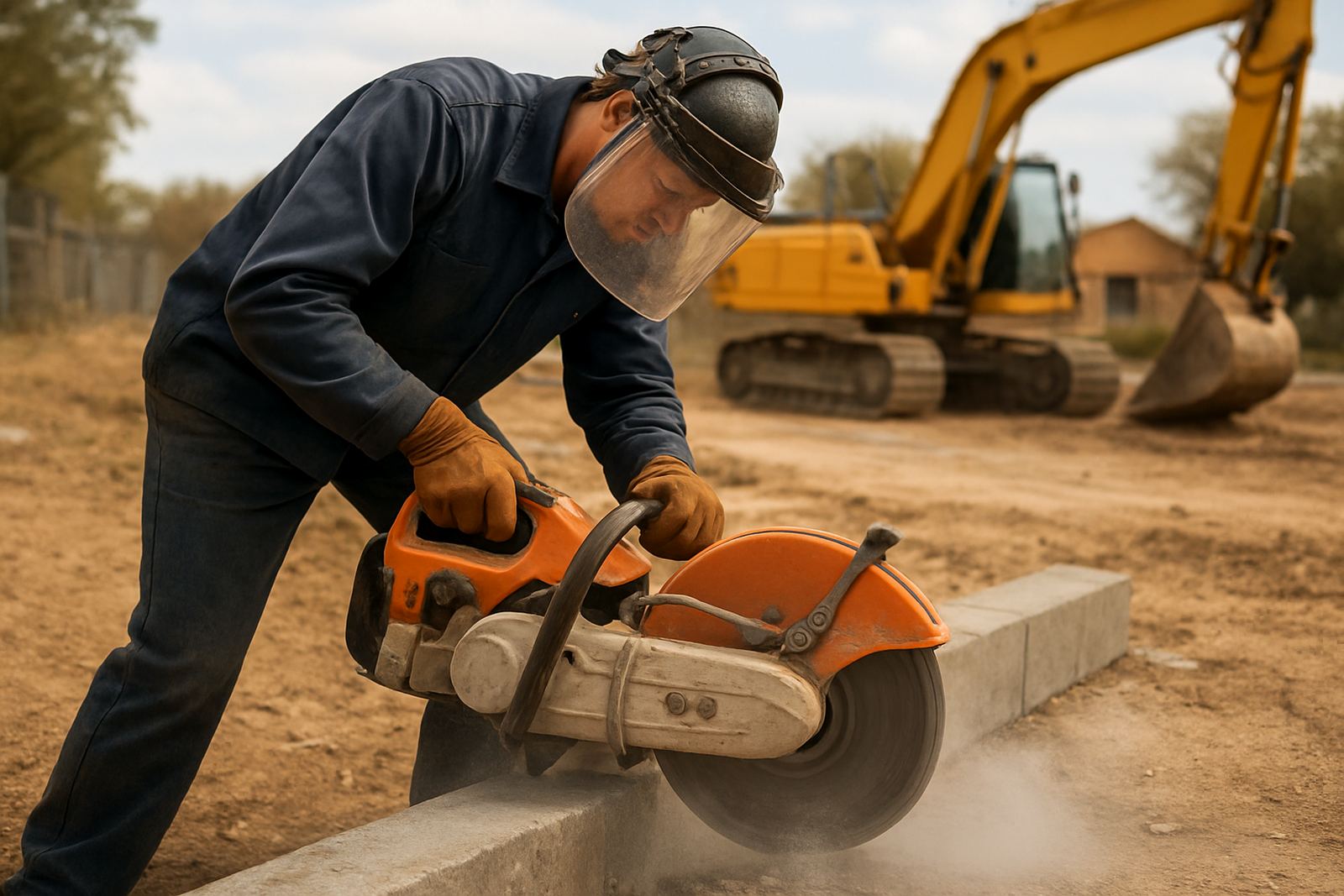
A diamond cutter is a handheld cutting tool fitted with a diamond blade for fast, controlled cuts in hard materials. It is commonly used on concrete slabs, brickwork, blockwork, pavers, kerbs, lintels and some steel sections, depending on the blade fitted and the machine size.
These units are popular on construction sites because they are lighter than large saws, easier to move between work areas and suitable for cutting in tight spaces. They are used for openings, trimming edges, pipe routes, expansion cuts and repair work where you need a straight line and minimal breakout.
- Concrete and reinforced concrete slabs
- Brick, block and masonry walls
- Road kerbs, pavers and paving edges
- Steel angle, small pipe and section work with the correct blade
Available cutter sizes and blade options
We supply different cutter sizes to match the depth of cut and the type of job. Smaller handheld cutters are useful for finish work and shallow cuts, while larger units give more depth for slabs, kerbs and thicker masonry. Blade size and blade type must match the material, otherwise you waste time and wear the blade out too quickly.
For most site work the right choice depends on cut depth, access and whether the machine will be used indoors or outdoors. If the job is in a confined area, a lighter unit is often better. For heavier civil work, a larger petrol cutter with a suitable blade is usually the better fit.
- Small handheld cutters for trimming, chasing and light duty cuts
- Medium cutters for general concrete and masonry work
- Large cutters for deeper slab and kerb cuts
- Diamond blades selected for concrete, masonry or steel
We can help match the cutter to the job so you do not end up forcing a small machine through a thick section, which slows production and can damage the tool.
Where diamond cutter hire works best
Diamond cutter hire is suitable for construction, maintenance and remedial work across Gauteng, KwaZulu-Natal and the Western Cape. In Johannesburg and Germiston, these units are often used on building alterations, yard repairs and service installations. In Durban and coastal areas, contractors also use them for hardscape repairs where humidity and salt air can affect tools left outside overnight.
Their main advantage is control. A handheld cutter lets the operator work close to walls, foundations and existing services. That matters on municipal jobs, retail upgrades and occupied sites where clean edges and reduced dust are important. For work in traffic zones or public areas, site control and clear marking are essential before cutting starts.
- Building alterations and opening cuts
- Road and paving repair work
- Service trench preparation
- Kerb trimming and edging
- Maintenance work in yards, factories and depots
Power, fuel and site setup requirements
Most handheld diamond cutters on hire are petrol driven, which makes them practical for sites without reliable power. Some lighter models are electric, which may suit indoor work where fumes must be kept down and power is available. If you are working during load-shedding or on a site with limited electrical supply, petrol units are usually the safer choice.
Before the machine arrives, confirm the working area, water supply if wet cutting is needed, and access for safe handling. Wet cutting helps control dust and cool the blade, while dry cutting may be used for short sections where water is not practical. Always check whether the site rules allow dust suppression, especially on occupied buildings or near sensitive services.
- Petrol units for mobile work and power cuts
- Electric units for suitable indoor or fixed-point tasks
- Water connection or containers for wet cutting
- Clear access, PPE and marked cut lines
In some municipalities dust control is taken seriously, so plan for suppression and cleanup from the start rather than trying to manage it later.
Care, servicing and daily checks
A well kept cutter gives cleaner cuts and lasts longer. Check the blade before every shift for damage, glazing or wobble and make sure the guard is secure. Fuel, air filters and starting systems should be checked regularly, especially on petrol machines that stand in the truck or workshop for a few days between jobs.
After use, clean off slurry, dust and concrete paste. If the unit is returning from a coastal job, wipe down metal parts and store it dry to reduce corrosion. A machine that is stored wet or covered in dust will often give trouble on the next hire, and that means delays on site.
- Inspect blade condition and fit before starting
- Check fuel levels, plugs and air filters
- Keep the guard, handle and throttle working properly
- Clean after use and store in a dry place
What to confirm when placing your hire order
When you order a diamond cutter, the main details are the material being cut, the depth required, the length of the work and whether the site has power or water available. If the cut is for reinforced concrete, say so. Steel cutting needs a different blade setup from masonry, and kerbs often need a stronger machine than people expect.
You should also confirm the site location, delivery access, whether an operator is needed and if the job runs after hours or over a weekend. For long-term hire, we can help with fleet planning and swap-outs if a unit is needed on more than one site. That saves time when projects move between Germiston, Midrand, Pretoria East, Durban, Pinetown, Bellville and Cape Town.
- Material type and thickness
- Required cut depth and length
- Power source or fuel preference
- Wet or dry cutting conditions
- Delivery address and site access
Reliable hire support for Gauteng, KZN and the Cape
MachinesAfrica Rentals supplies diamond cutters from Germiston with depot support across Gauteng, KwaZulu-Natal and the Western Cape. Our team handles same-day dispatch where possible, breakdown response, on-site servicing and off-hire collections so your crew can keep moving. For larger contracts, we can assist with long-term hire, operator supply and safety documentation too.
Sibusiso Mthembu leads the business, with support from Annelie van Wyk on operations, Thabo Nkosi on fleet, Zanele Dlamini on hire coordination, Willem Erasmus in the workshop and Nokuthula Khumalo on safety and compliance. If you need a cutter for a single day or for an ongoing contract, we will match the machine to the job and keep the process straightforward.
Key facts
| Machine type | Handheld diamond cutter |
|---|---|
| Typical blade sizes | 300 mm to 400 mm |
| Cut depth | Approx. 100 mm to 150 mm depending on blade and model |
| Power options | Petrol or electric, subject to site needs |
| Best materials | Concrete, masonry, kerbs, pavers and selected steel sections |
| Hire support | Delivery, operator supply, servicing and off-hire collection |