Tracked Excavators Built for Site Work
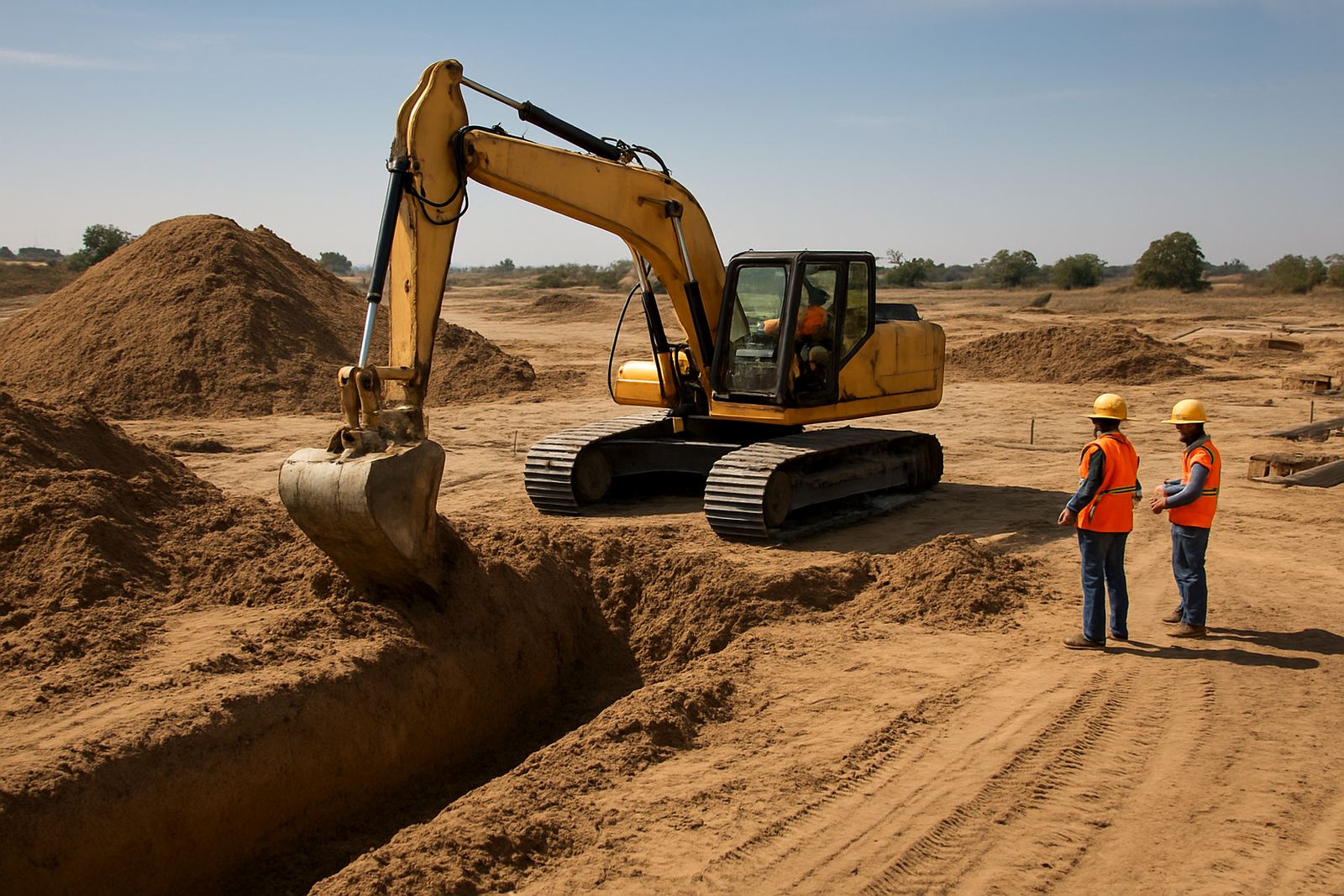
Excavator hire is the right call when you need controlled digging, fast spoil removal and steady work on uneven ground. Our tracked units are suited to construction sites, civil works, road cuttings, services trenches, drainage lines and site clean-up where a wheeled machine would struggle for grip. The undercarriage spreads the weight better on soft ground, which helps on fresh fill, damp clay and jobs after rain.
We keep a range of machine sizes for different outputs, from compact units for tight urban work to larger excavators for heavier bulk earthworks. If you are opening service trenches in Midrand, clearing a plot in Boksburg or loading spoil on a site in Pinetown, we can match the machine to the task and the access available.
Sizes, Reach and Working Capacity
Choosing the correct size makes a big difference to hire cost, fuel use and daily output. Smaller excavators are easier to move through narrow access, while medium and larger units give more digging depth, bucket force and loading height. On busy sites, the wrong size slows everything down and can leave you paying for extra hours or extra labour.
- Mini excavators: ideal for service trenches, house foundations and work near walls or boundary lines
- Medium excavators: suited to bulk digging, drainage, platform prep and loading trucks
- Larger excavators: better for mass earthworks, quarry-type loading and deeper cuts
- Long-reach options: useful where banks, slopes or water channels need extra reach
- Bucket choices: trenching buckets, general-purpose buckets and wider clean-up buckets available on request
When you order, tell us the digging depth you need, the width of the trench or cut, and whether the machine must load directly into tipper trucks. That helps us send the right unit first time, no guess work.
Where Excavator Hire Works Best
These machines suit active sites where ground needs to be opened quickly and safely. They are commonly used for trenching for stormwater, sewer and water lines, platform preparation, demolition clean-up, retaining wall excavations and stockpile management. On sites with tight access, we can advise whether a compact machine is better than a larger one, especially in built-up areas like Germiston, Pretoria East and central Durban where turning space is limited.
Excavators also help where the site changes daily. If your team is moving spoil, opening another line or shifting to a second work face, the machine can be repositioned quickly and keep labour teams productive. For coastal jobs in Cape Town or Durban, regular cleaning matters because salt air and damp conditions can affect pins, bushes and electrics if the machine is not looked after properly.
- Construction sites with changing work fronts
- Civil engineering and bulk services trenches
- Drainage, roadworks and platform shaping
- Loading spoil, rubble and aggregate
- Demolition clean-up and general earthmoving
Delivery, Setup and Site Requirements
We arrange site delivery from our Germiston base and depot network, including Midrand, Pretoria East, Boksburg, Durban, Pinetown, Cape Town and Bellville. Before dispatch, we check access, off-loading space and site instructions so the machine arrives ready for work. Same-day dispatch is available on certain bookings, which is useful when a programme changes or a breakdown leaves you short of plant.
Tracked excavators do not need gas, and they run on diesel. You will need a level enough area for safe off-loading, clear access for the lowbed or delivery truck, and a place to park the machine at the end of the shift. If your site is in a municipal area with strict loading rules or noise limits, let us know upfront so we can plan delivery windows and operating times.
Where operators are included, we brief them on the site plan, traffic flow, overhead services and any no-go areas. That keeps the machine working safely and reduces delays caused by avoidable stoppages.
Care, Servicing and Breakdown Support
Excavator hire works best when the machine is treated as part of the site team. Daily checks should cover oil, coolant, track tension, bucket wear, grease points and any warning lights. On dusty inland sites around Gauteng, filters and glass can need more frequent cleaning. On coastal projects, pins and couplers should be washed down to limit corrosion and sticking.
Our workshop and field teams support long-term hire with on-site servicing, fuel management and breakdown response. If a machine needs attention, we aim to minimise downtime with quick inspection and, where required, a plant swop-out. That helps keep your crews working instead of waiting around. It is one of the reasons contractors keep coming back, because lost hours on a site cost real money.
- Daily pre-start checks for leaks, wear and warning lights
- Track inspection and grease maintenance
- Bucket pin and coupler checks
- Hydraulic hose and hose-guard inspection
- Fuel top-ups planned to suit shift length and load-shedding windows
What to Check Before You Book
To get the right excavator first time, work through the job details before ordering. Measure the trench depth, the width of the working area and the distance from the spoil pile to the dig face. If the site has soft ground, steep edges or overhead obstructions, say so. We can then advise on machine size, bucket type and whether a long-reach or compact unit is safer.
You should also confirm the delivery point, the hours the machine can work, whether an operator is needed and if fuel management forms part of the hire. If you need safety documents, method statement support or off-hire collection at short notice, tell us early. That helps us set up the hire properly and avoid a stop-start booking.
- Dig depth and trench width
- Access width and turning space
- Ground condition and slope
- Need for operator supply or solo machine hire
- Hire duration, weekend support and collection timing
A Practical Hire Partner for South African Sites
MachinesAfrica Rentals has been supporting contractors since 2008, with a team led from Germiston by Sibusiso Mthembu and a hands-on operations crew that understands the pace of local sites. From fleet planning and safety documentation to off-hire collections and weekend support, we keep the hire process straightforward. That matters when you are juggling labour, materials and delivery slots.
Whether you need one excavator for a trench job or a fleet plan for a larger project, we work with your site team to keep equipment available and fit for purpose. Send your enquiry through the contact page and tell us what you are digging, where the site is and when you need the machine on ground.
Key facts
| Machine type | Tracked excavators for construction and earthworks |
|---|---|
| Typical sizes | Mini, medium and larger excavator options |
| Fuel type | Diesel |
| Common uses | Trenching, bulk digging, loading and site clean-up |
| Mobility | Tracked undercarriage for soft or uneven ground |
| Support options | Operator supply, on-site servicing and breakdown response |