
What a concrete mixer hire gives you on site
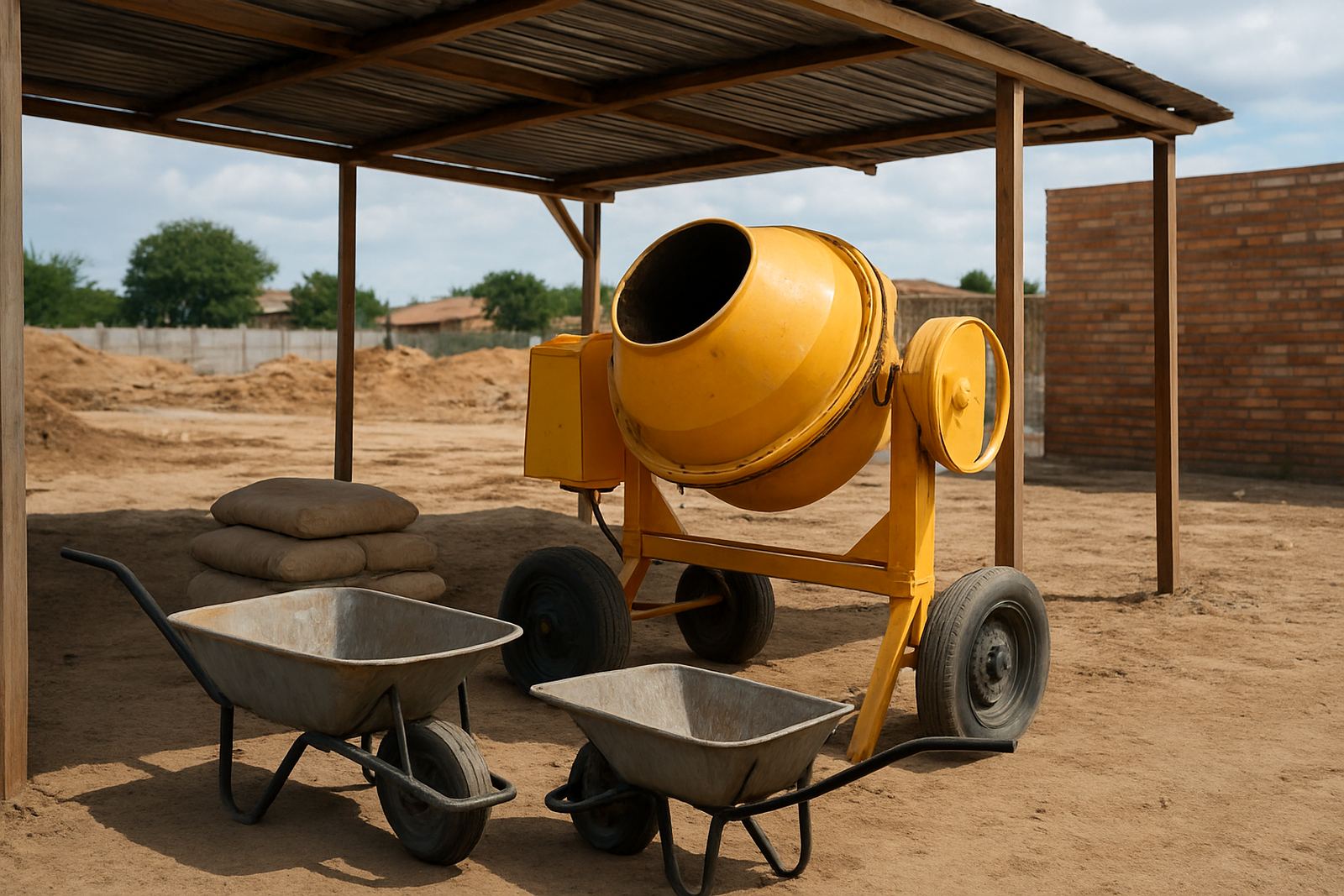
A concrete mixer is used to blend cement, sand, stone and water into a workable mix for small to medium pours. It is the right choice when you do not need a ready-mix truck on site, or when the job needs smaller batches during the day. For patching slabs, wall footings, kerb work, paving repairs and general construction support, a site mixer saves time and keeps the crew moving.
At MachinesAfrica Rentals we hire towable and site mixers suited to local conditions, from tight access yards in Johannesburg to coastal sites in Durban and Cape Town where salt air and rain can affect equipment care. The units are checked before dispatch and are supplied clean, greased and ready for use. If your team is doing several small pours, a mixer can be the simpler option because it keeps materials under control and reduces waste.
- For batch work where consistent mixing matters
- For repair jobs and small foundation pours
- For sites with limited access or no ready-mix access
- For maintenance crews working across multiple properties
Mixer sizes and options that suit local jobs
We supply common site mixer sizes that suit small building teams and larger contractors handling repetitive batches. The usual drum capacities range from about 120 litres up to 400 litres, with practical working outputs below the stated drum size so the load can turn properly. If your team is mixing mortar or concrete all day, the right size depends on how often you pour and how many people are feeding the mixer.
For light repair work a 120 litre or 160 litre unit is often enough. For ongoing site work, 200 litre to 300 litre mixers are more practical because they balance output and manoeuvrability. Larger units can handle heavier daily use, but they need more space and a steady power source. We can also help with plant planning if you need mixers with other hire items such as generators, scaffolding or compact tools.
- 120 litre and 160 litre mixers for smaller pours and patching
- 200 litre and 300 litre mixers for general building work
- 400 litre class mixers for higher output on larger sites
- Towable and site-based units, depending on access and transport needs
Where concrete mixer hire works best
Concrete mixers are well suited to residential developments, civil maintenance, alterations and short duration projects. They are especially useful where batching needs to happen close to the formwork so the mix does not stiffen before placement. In Germiston, Pretoria East and Midrand they are often used on new builds, yard slabs and boundary wall work. In Pinetown and Bellville they are common on repair jobs where access is tight and there is no room for a full delivery setup.
They also suit works where the quantities change through the day. A small team can mix exactly what is needed for each pour, which helps with cost control and less leftover material. That matters on municipal repairs, sectional title maintenance and commercial fit-outs where waste can become a problem. If your project is near a residential area, a mixer also helps keep noise and traffic under control compared with repeated truck movements.
- House slabs, footings and small retaining walls
- Paving, kerb repairs and drainage work
- School, clinic and municipal maintenance projects
- Commercial alterations and property upgrades
Power supply, setup and daily operation
Most site mixers are electric and need a suitable power supply on site. Smaller units may run from a standard single-phase supply, while larger models may need a stronger connection or a generator where the site does not have reliable power. On projects where load-shedding or temporary supply interruptions are expected, we can advise on generator pairing so the mixer does not sit idle.
Setup is straightforward. The mixer should stand on level ground, close to the materials but clear of walkways and vehicle routes. The operator should have enough space to feed the drum safely and discharge into wheelbarrows, buckets or staging trays. On wet ground or uneven fill, it is better to place the unit on firm boards or prepared ground. If the site is near the coast, daily wash-downs are important because moisture and salt can shorten the life of moving parts if left to sit.
- Check the supply rating before ordering the mixer
- Allow space for loading, tipping and cleaning
- Keep extension leads short and suitable for site use
- Plan for generator backup where power is uncertain
Care, servicing and safe use on hire
Concrete sets quickly, so cleaning is part of the job and not an afterthought. The drum should be washed out soon after use and any residue removed before it hardens. Moving parts need regular greasing, tyres or stands should be checked, and electrical leads must be kept dry and undamaged. Our workshop inspects and services mixers before hire, but on site the crew still needs to follow proper use and cleaning habits.
Safety also matters around rotating equipment. The operator should keep hands clear of the drum opening, wear the right PPE and never overload the mixer. If the unit is being used on a busy site, place it where pedestrians and moving plant do not pass too close. For long-term hire, we can arrange breakdown response and on-site servicing so the machine stays in working order. That can save a lot of time when pours are scheduled around other trades and delays cost money.
- Wash the drum after every shift
- Do not overfill the mixer beyond the working batch line
- Check belts, guards and fasteners before use
- Keep the mixer on firm level ground during operation
What to check before you place an order
Before you book a concrete mixer, it helps to confirm the size of the pour, the material mix and how often the machine will run during the day. If your team is working in short bursts, a smaller mixer may be enough. If you are feeding blockwork, slabs and repairs from one unit, a larger drum is usually more efficient. We also recommend checking access to the site, the power source, and whether you need same-day dispatch or a planned delivery slot.
If your site is in Gauteng, KZN or the Western Cape, we can coordinate delivery from the nearest depot and help with off-hire collection when the job is complete. Our hire team can also work out whether you need operator supply, weekend support or a swop-out if another unit is needed. Clear information at the start makes the hire smoother and avoids downtime once work has begun.
- Estimate the daily batch volume in litres or cubic metres
- Confirm power availability and cable distances
- Tell us if the site has narrow access or stairs
- Ask about long-term hire and collection timing
Key facts
| Drum capacity | 120 litre to 400 litre class units |
|---|---|
| Working output | Approx. 90 litres to 320 litres per batch |
| Power | Electric units, single-phase or heavier site supply depending on model |
| Use case | Small pours, repair work, mortar and concrete batching |
| Mobility | Towable or site-based, depending on size and access |
| Hire support | Site delivery, same-day dispatch, weekend support and off-hire collection |