
Rammers built for narrow trench compaction
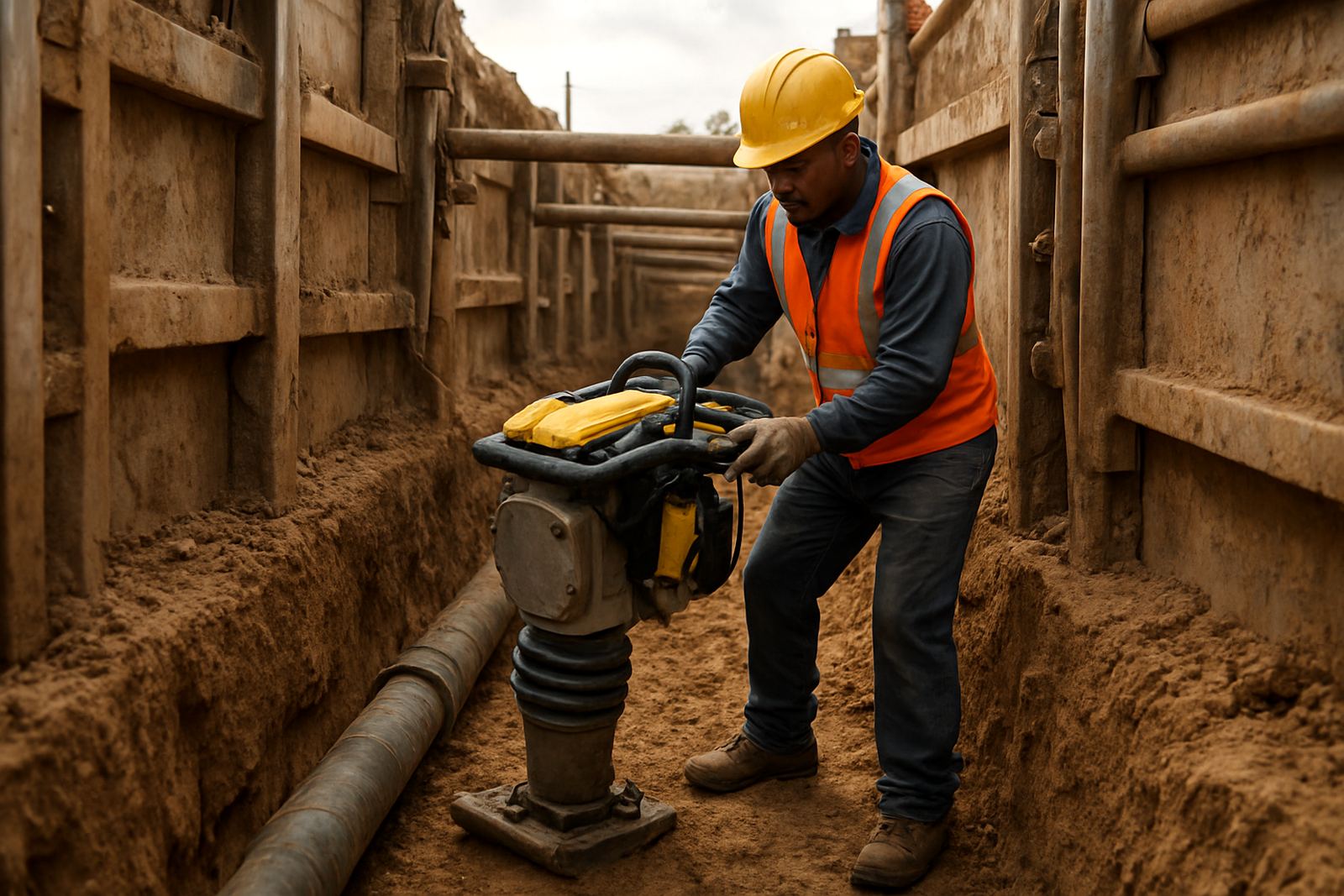
A rammer, sometimes called a jumping jack, uses a high impact force to compact soil in narrow spaces. It is best for trenches around water lines, sewer lines, electrical ducts and stormwater runs where working width is limited and the compaction needs to be deep rather than wide.
Our hire units are supplied for civil work, housing projects, service installations and repair jobs where firm backfill matters. They are suited to granular and mixed soils, and they help reduce settlement after backfilling. For clay or wet material, the machine may still work but conditions need checking first so the right compaction method is used.
- Ideal for trench widths from about 300 mm to 600 mm
- Suitable for compacting around pipes, manholes and sleeves
- Commonly used on site repairs and reinstatement work
Size options and working weights to match the job
We supply compact rammers for light reinstatement work as well as heavier units for deeper trench layers and tougher ground. Selection depends on trench depth, soil type, access and how much ground needs to be compacted in a shift.
Typical working weights range from 50 kg to 80 kg with compaction shoes sized to suit confined spaces. Shoe width is usually around 280 mm to 330 mm, while impact force and stroke length vary by model. If your crew is compacting around utility runs or working inside a tight boundary line, a narrower shoe can save time and reduce accidental contact with pipework or formwork.
- Light duty units for patching and shallow backfill
- Mid range units for general trench work and service corridors
- Heavier units for deeper lifts and harder ground
Where a rammer works best on site
Rammers are the practical option where the trench is too narrow for a plate compactor or where a machine must work close to a wall, footing or boundary. They are widely used on municipal work, private developments and industrial sites across Johannesburg, Pretoria, Durban, Cape Town and surrounding areas.
They suit plumbing trenches, electrical service trenches, fibre ducts, road shoulder repairs and small excavation jobs after pipe laying. In coastal areas such as Durban and Cape Town, wet sand and moisture can affect performance, so the team should check the material before starting. On dusty inland sites around Gauteng, a clean fuel mix and regular air filter checks help keep output steady.
- Backfilling around services and utilities
- Small repair patches in yards, driveways and access roads
- Compaction near foundations where access is tight
Power, fuel and setup on site
Most rammers in hire are petrol driven, with diesel options available for certain applications. They do not need mains power, which makes them useful on sites where load-shedding, limited supply or temporary infrastructure would slow the job. Before use, the team should confirm the fuel type, tank capacity and start method so the correct consumables are available on site.
For trench work, keep the excavation safe, dry enough to compact and open only as much as needed for the task. A rammer should be used with proper lifting and access planning because the machine is heavy and can be awkward in confined spaces. If the site has restricted hours, municipal noise rules or neighbour concerns, let us know when booking so we can plan delivery and collections around them.
- Petrol units for general compacting work
- Diesel units available on request for site specific needs
- No mains electricity required
Care, servicing and safe daily use
Rammers take a fair amount of punishment on site, so routine checks matter. Before each shift, inspect the shoe, bellows, throttle, handles and engine housing for wear or damage. The air filter should be kept clean, oil levels checked and any loose fasteners tightened before work starts. If the machine starts hopping unevenly, losing power or leaving soft patches, stop and report it.
Our workshop team services hire units regularly and checks them before dispatch. If a unit develops a fault during hire, we can arrange breakdown response, on-site servicing or a swop-out where the job is urgent. That helps crews keep moving instead of waiting for a fix at the depot.
- Daily pre-start inspection recommended
- Keep the shoe clean from clay and grit
- Allow the machine to cool before refuelling
What to confirm when you order a rammer
To send the right machine, we need a clear picture of the work. Tell us the trench width, depth, soil type and whether the job is in open ground or a confined area. If the site is in Germiston, Midrand, Pinetown, Bellville or elsewhere in our service areas, we can plan the nearest depot and dispatch accordingly.
Please also confirm whether you need weekend support, long-term hire, operator supply or same-day dispatch. If the machine will be moved between sites, let us know about access gates, loading ramps and parking limits. That way the hire is set up properly from day one and there is no hold up on site.
- Trench size and soil conditions
- Fuel preference and expected daily hours
- Delivery access, site contact and collection timing
Key facts
| Machine type | Pedestrian trench rammer |
|---|---|
| Working weight | 50 kg to 80 kg |
| Shoe width | About 280 mm to 330 mm |
| Best use | Narrow trenches, backfill and confined patch work |
| Power | Petrol driven, diesel options on request |
| Hire support | Site delivery, same-day dispatch, servicing and collections |