What a skid steer loader does on a busy site
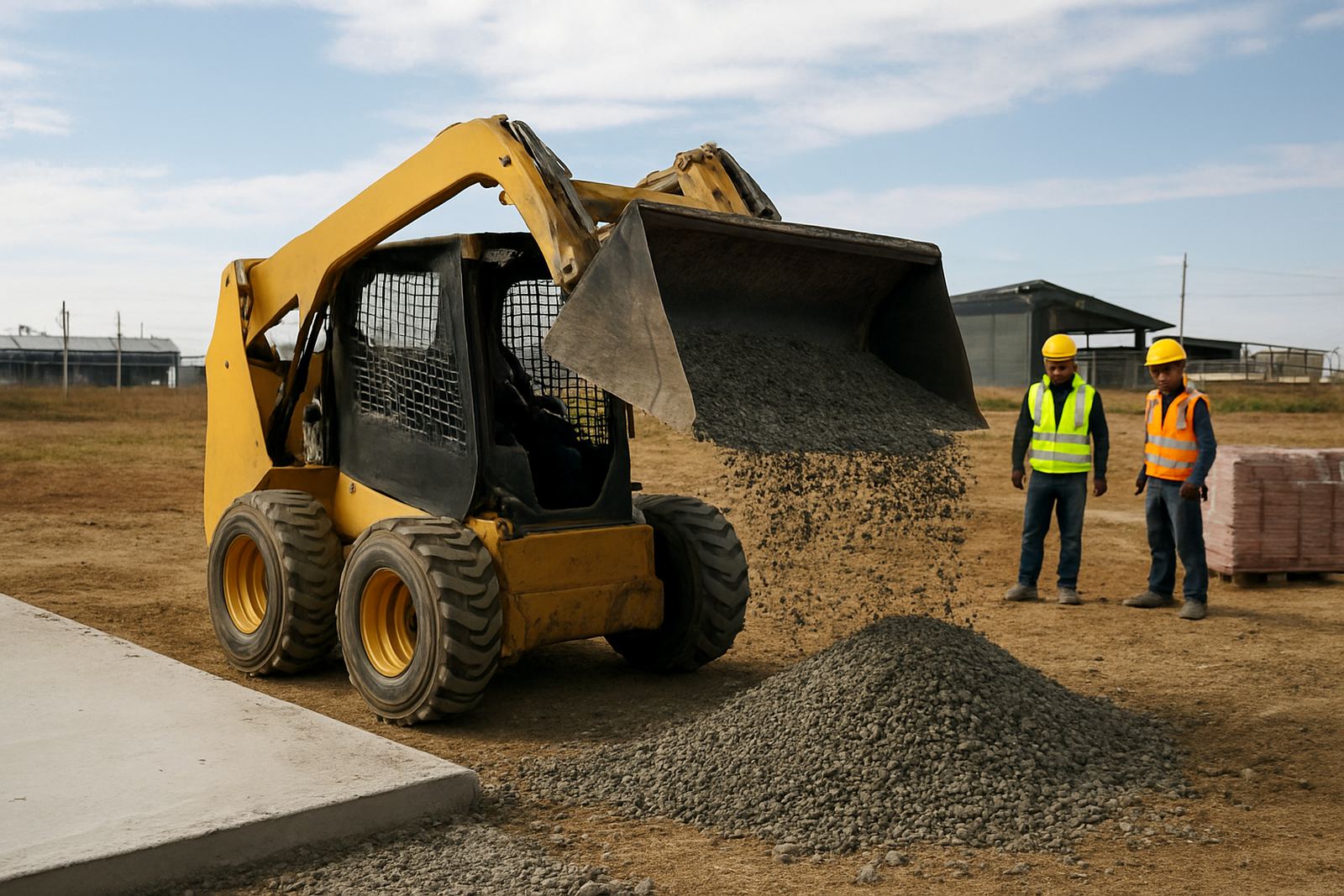
A skid steer loader is a compact machine built for short, sharp work where space is limited and time matters. It turns within its own footprint, loads spoil, shifts materials and takes attachments for digging, sweeping, trenching and more. On building sites, warehouse yards, civil works and renovation projects, it is often the machine that keeps the job moving between bigger plant moves.
Because the loader is small but strong, it suits inner-city sites in Johannesburg, tight residential work in Pretoria East, and access-constrained areas around Durban and Cape Town. It also helps when you need to work near finished surfaces, boundary walls, parked trucks or active trades without constantly repositioning larger equipment.
Size options and working specs to plan around
We supply skid steers in common compact sizes and heavier-duty options, depending on the material, terrain and attachment work. Most hires fall into the 700 kg to 1 400 kg operating capacity range, with bucket widths typically between 1.2 metres and 1.8 metres. Compact units are useful for narrow driveways and internal yard work, while larger units give better breakout force for rubble, aggregate and site clear-up.
Typical working details to check before you book include operating weight, tipping load, lift height, tyre type and attachment compatibility. Some jobs only need a straight bucket and pallet fork set, while others call for augers, trenchers or a sweep attachment. If the machine is going onto a finished slab or soft ground, ask for the correct tyre choice and ground pressure details so you do not end up with unnecessary damage or bogging.
- Operating capacity: usually 700 kg to 1 400 kg
- Bucket width: around 1.2 metres to 1.8 metres
- Lift height: about 2.4 metres to 3.2 metres to hinge pin
- Drive type: wheeled compact loader with tight turning radius
- Attachments: general purpose bucket, forks, broom, auger, trencher
Where skid steers work best in South African conditions
Skid steers are well suited to compact urban jobs, mixed-trade construction sites and projects where material must move quickly from one point to another. They are often used for topsoil handling, paving prep, concrete rubble removal, landscaping bulk movement and loading waste into skips. On coastal sites, regular wash-down and grease points matter because salt air can affect pins, hoses and electrical connectors more quickly than inland.
For Gauteng contractors, these machines are handy in tight developments, parking decks, townhouse complexes and industrial parks where access is limited. In KZN, they help with site clean-up after rain and mud build-up. In the Western Cape, they are often requested for estate work, small civil jobs and municipal projects where a neat working footprint is important and the site traffic is constant.
- Construction sites with restricted access
- Demolition clean-up and rubble loading
- Landscaping and grading prep
- Warehouse yards and loading bays
- Municipal maintenance and small civil works
Power needs, fuel use and attachment setup
Most skid steers in hire use diesel and are ready for day-to-day site use without special power requirements. They are delivered with the correct fuel level for handover and, if needed, can be arranged with fuel management as part of the hire. For attachment-driven work, the machine must match the hydraulic flow and coupler setup of the tool being used. That part matters more than many crews realise, because the wrong flow rate can slow the job right down.
Before the machine arrives, make sure the access route is clear, the gate width is checked and the loading area can take the machine weight. If you are working inside a building or on a slab, confirm floor loading limits and turning space. For long shifts, especially where load-shedding affects other site activities, a skid steer can keep clean-up and material handling going without waiting on separate plant. Just make sure the selected attachment is compatible and the operator knows the sequence for quick changeovers.
Care, servicing and staying ahead of breakdowns
Skid steers work hard in dust, mud and broken ground, so day-to-day care makes a real difference. We keep to scheduled servicing, hydraulic checks, tyre inspections and grease intervals to help reduce downtime. If a unit needs attention on site, our breakdown response and on-site servicing support are there to keep the project moving rather than forcing a full stop.
On your side, it helps to clean the machine at the end of the shift, check for loose couplers and report any unusual vibration, hydraulic seepage or steering issues straight away. Small problems on a compact loader can turn into lost hours fast, especially on jobs where one machine does several tasks each day. A bit of routine care saves a lot of trouble, and it keeps the hire period cleaner to manage.
- Daily visual checks before start-up
- Grease moving points where required
- Keep the cab and radiator area clear of dust
- Report leaks, warning lights or unusual noise immediately
- Allow time for off-hire collection and basic wash-down
What to confirm when ordering skid steer hire
To get the right unit first time, send through the site location, access details and the type of material you will move. Tell us whether the work is bulk loading, trench support, sweeping or attachment use, and whether the surface is gravel, paving, concrete or soft ground. If the site has security rules, loading bay limits or municipal requirements, mention those too so the delivery runs smoothly.
It also helps to confirm the hire period, whether you need an operator, and if there will be weekend work or night work. For longer projects, fleet planning can be arranged so the machine stays on schedule with the rest of your plant. If you need a swop-out, same-day dispatch or off-hire collection, we can plan that around the site programme. Johannesburg traffic, coastal deliveries and depot timing all affect turnaround, so the more detail you give, the easier it is to avoid delays.
- Job location and access width
- Ground condition and floor loading limits
- Attachment requirements
- Operator supply needed or not
- Hire duration and collection plan
Key facts
| Operating capacity | 700 kg to 1 400 kg, depending on unit |
|---|---|
| Engine type | Diesel, site-ready compact loader |
| Lift height | Around 2.4 metres to 3.2 metres to hinge pin |
| Bucket width | Approx. 1.2 metres to 1.8 metres |
| Typical use | Loading, clean-up, grading support and attachments |
| Hire support | Same-day dispatch, operator supply, breakdown response |