What a floor saw does on site
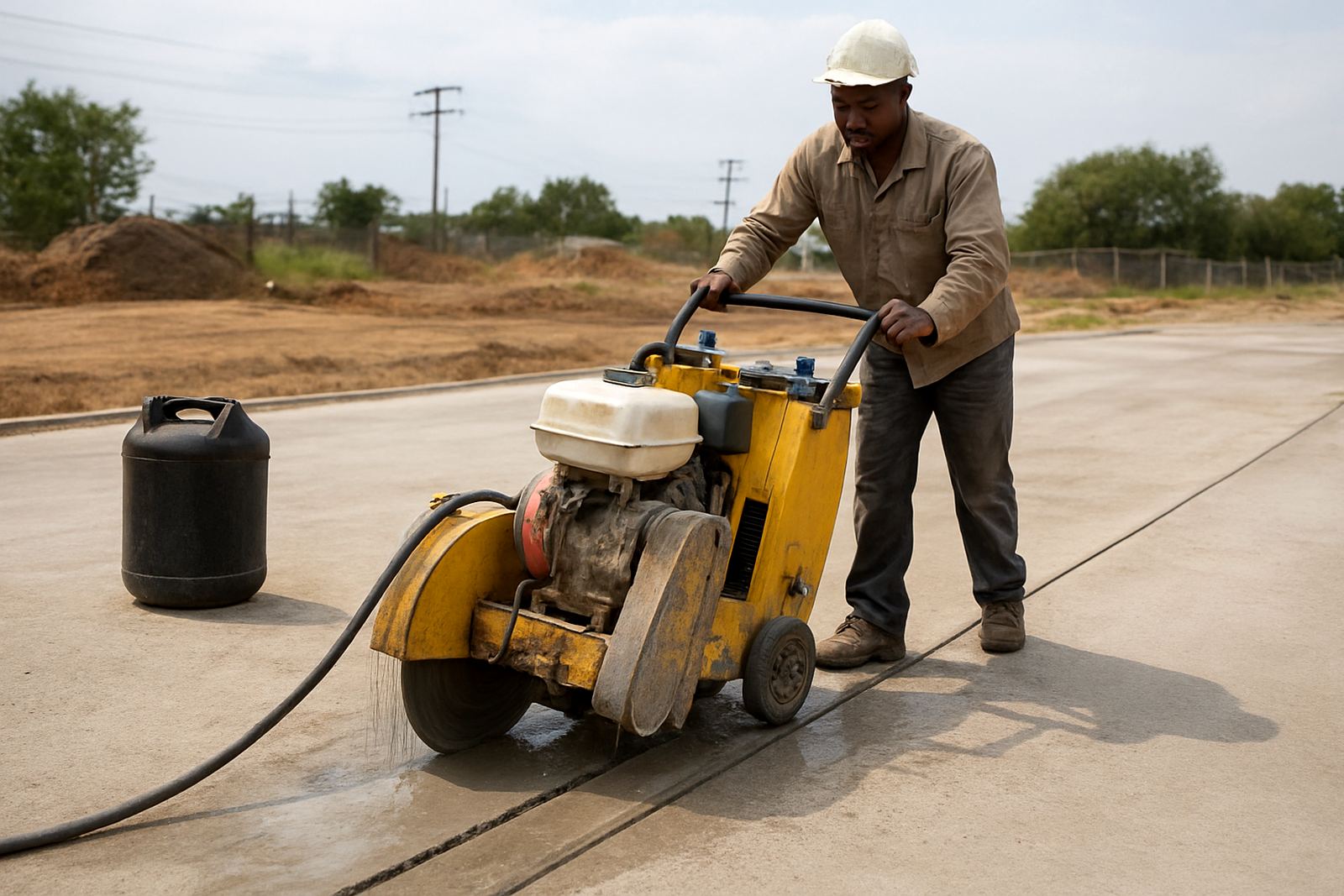
A floor saw is a push-along cutting machine used to make straight cuts in concrete, asphalt and other hard surfaces. It is commonly used for road repairs, service trenching, slab sectioning, expansion joints and neat breakout work where hand breaking would leave a rough edge. The right saw helps you control cut depth, reduce cracking beyond the line and keep the site safer for the team.
On busy sites in Johannesburg, Pretoria, Durban or Cape Town, a floor saw saves time when a slab must be cut before removal or when a road section needs to be opened for pipes, cables or drainage. It is especially useful where access is tight and a tidy finish matters, for example around municipal works, retail yards, factories and residential developments.
We hire floor saws for short jobs and longer programmes, with support for delivery, swop-outs and weekend work where needed. If your crew is working under pressure and the schedule shifts, a quick dispatch can keep the job moving without waiting around.
Sizes and cutting options available
Different jobs need different blade sizes and power levels. Smaller floor saws suit light to medium concrete work, while larger units handle deeper cuts in road surfaces and thicker slabs. The choice depends on the material, required depth and whether you need petrol or diesel power for the site.
- Blade sizes commonly used: 300 mm, 350 mm, 400 mm, 500 mm and larger where cut depth requires it.
- Typical cutting depth range: about 100 mm to 200 mm plus, depending on blade size and saw model.
- Power options: petrol units for flexible day hire, diesel units for heavier duty work and longer shifts.
- Water-fed cutting: used to control dust and cool the blade during continuous cutting.
- Push frame and depth control: for accurate line cutting and repeatable results.
If you are not sure which size is suitable, share the slab thickness, surface type and cut length. That lets us match the machine to the job instead of sending something too small or too heavy for the conditions. On coastal jobs, especially around Durban and Bellville where moisture and salt can affect equipment, a proper match helps keep the saw performing cleanly and safely.
Where floor saw hire works best
Floor saws are used wherever controlled cutting is needed before breaking, coring or excavation. They are a practical choice for contractors, civil teams and maintenance crews working on surfaces that must remain tidy enough for reopening or repair.
Common applications include new builds, road reinstatement, trench preparation, factory floors, paving transitions, municipal service repairs and yard upgrades. The saw is also useful on sites where load-shedding complicates planning, since you may need a fuel-powered unit that can work without a permanent electricity supply.
- Road repairs and reinstatement cuts
- Concrete slab sectioning
- Expansion and movement joints
- Service trench and duct openings
- Hardstanding and yard modifications
In Germiston, Midrand and Boksburg, we often supply floor saws for industrial sites where accuracy matters near live services, forklift routes and busy access points. In Durban and Pinetown, the same equipment is often hired for port-side and coastal works where corrosion resistance and daily checks are part of the routine.
Power, water and setup on site
Before a floor saw starts cutting, the site needs a proper setup. That includes a safe cutting line, clear access for the operator and enough water for wet cutting if dust control is required. A level surface is important too, because the saw must track straight and maintain depth without jumping or wandering.
For petrol or diesel units, plan for fuel on site and enough space for refuelling at safe intervals. If the machine uses a water-fed blade, make sure there is a clean supply and a way to manage slurry so it does not wash across walkways or drains. On municipal sites, especially where stormwater rules are enforced, this matters more than people think.
- Check access width before delivery so the saw can reach the workface
- Confirm blade size and cut depth before the machine leaves the depot
- Allow space for water hoses, fuel handling and safe operator movement
- Keep the cut line marked and measure twice before starting
- Arrange traffic control if the work is near vehicles or pedestrians
If the site is active, tell us about any ramps, kerbs, gates or overhead restrictions. A quick heads-up helps us plan delivery and off-hire collection without delays.
Care, service and safe operation
Floor saws work hard, especially on abrasive surfaces and long cuts. Good care keeps the blade true, reduces wear and lowers the risk of breakdown during the shift. Our fleet is checked between hires and serviced by our workshop team in Germiston, with support for on-site servicing when a job cannot stop for long.
Operators should keep an eye on blade condition, belt tension, depth control and water flow. A blade that is worn, cracked or fitted incorrectly can slow the cut and create an unsafe situation. The machine also needs cleaning after use, especially after cutting wet slurry or dusty concrete. On coastal sites, a quick rinse and dry-down helps limit corrosion on exposed parts.
- Inspect the blade before starting each shift
- Confirm guards, handles and depth controls are working properly
- Use the correct blade for concrete, asphalt or mixed surfaces
- Clean off slurry, dust and debris before return
- Report unusual vibration, smoke or loss of cutting speed immediately
We can also assist with operator supply if your crew does not have a trained person available. That is often useful for larger cut programmes or where safety documentation must be kept in order.
What to check when ordering floor saw hire
The most useful hire starts with a few practical details. The first is the material type, because concrete, asphalt and mixed hardstanding do not cut the same way. The second is cut depth, since this decides blade size and the machine class. The third is access, because a floor saw may need to move through a doorway, yard gate or narrow passage before it reaches the cut.
Also tell us whether the job needs wet cutting, fuel-powered operation, same-day dispatch or weekend support. If the work site has dust restrictions, active public access or special municipal conditions, mention that too. A small detail left out at the start can slow the job later, and no one wants a crew waiting while the wrong unit sits at the depot.
- Surface type: concrete, asphalt or mixed hardstanding
- Required cut depth and approximate blade size
- Length of cut and expected daily output
- Power preference: petrol or diesel
- Site access, delivery time and collection needs
- Any dust control, traffic control or compliance requirements
Our hire coordinators can help match the machine to the programme, whether you are working in Pretoria East, Midrand, Pinetown or Bellville. If your schedule changes, we can plan plant swop-outs and off-hire collection to fit the site rather than hold it up.
},{Key facts
| Machine type | Walk-behind floor saw for controlled cutting |
|---|---|
| Blade sizes | 300 mm to 500 mm plus, subject to job depth |
| Typical cut depth | About 100 mm to 200 mm plus depending on blade and model |
| Power options | Petrol and diesel units |
| Dust control | Wet cutting with water feed |
| Hire support | Site delivery, operator supply, servicing and breakdown response |