Mobile light towers for work after dark
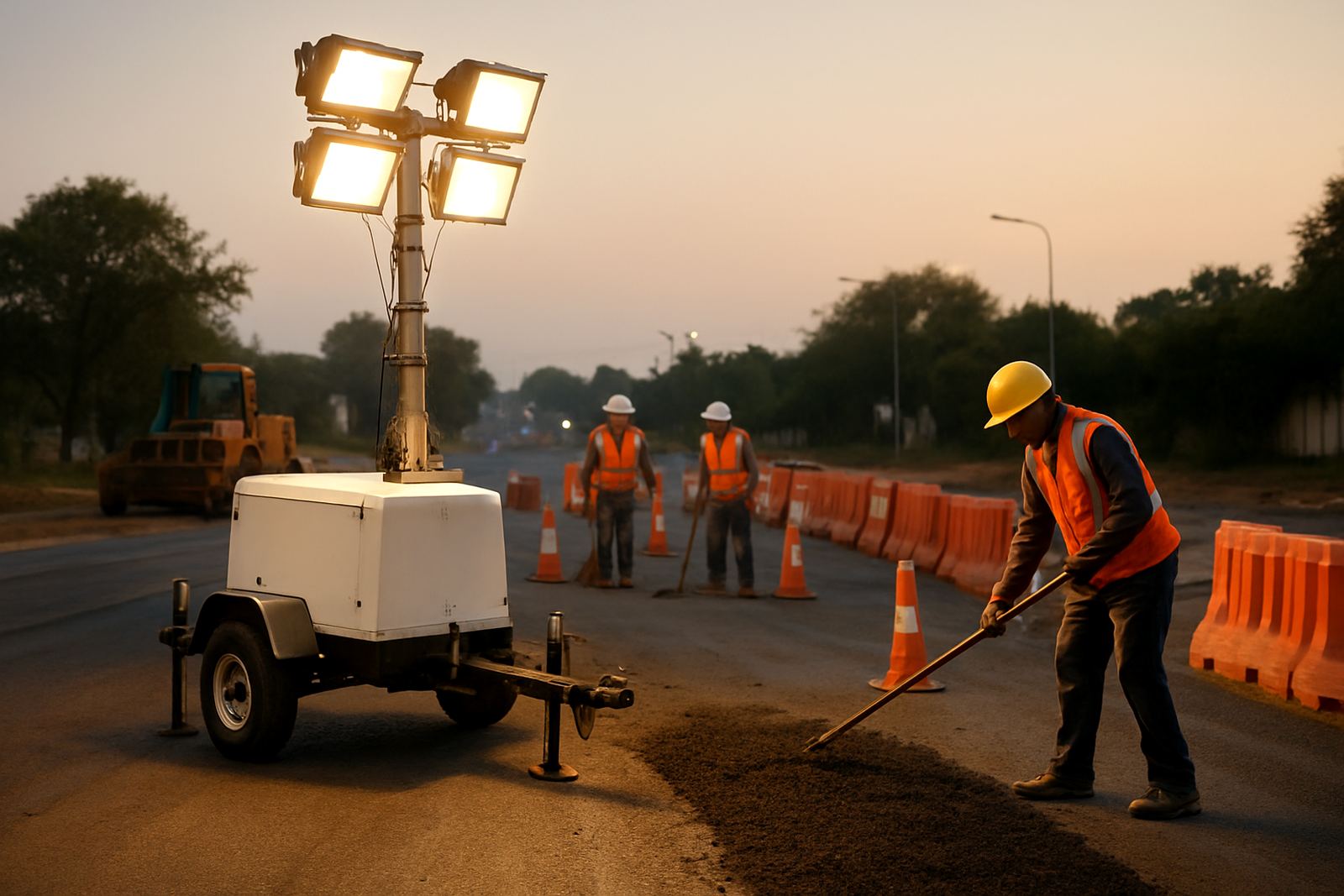
Light tower hire is the practical choice when a job cannot stop at sunset. These units are built to throw bright, wide coverage across work areas so operators, labour teams and drivers can see what they are doing, even in cold mornings or poor weather. A light tower is usually mounted on a towable chassis or skid base, with a mast that raises the lamps above vehicles, stockpiles and fencing. That height matters, because low lights on poles or temporary site lights often leave dark patches and glare.
On construction sites around Germiston, Midrand, Pretoria East and Boksburg, light towers are commonly used for earthworks, concrete pours, road repairs, security patrols and loading bays. In Durban and Pinetown they are also useful where coastal humidity, wet ground and early evenings make visibility a problem. We supply units that can be moved between sites and positioned where the light is needed most, without complicated setup. For contractors working around load-shedding schedules, a good tower keeps the job going when the grid is off. It saves a lot of time on short night shifts too.
Options, output and typical tower sizes
Different jobs need different light spread and run times, so it helps to match the tower to the site. Smaller units are suitable for compact yards, security points and maintenance work, while larger diesel towers are better for open areas, road sections and multi-crew sites. We can supply units with manual or hydraulic mast raising, fixed or rotating heads, and sound-dampened covers for sites where noise control matters. If you need one tower for a few nights or a fleet for a longer project, we can plan the mix around your programme.
- Light output: typically 4 x 320W to 8 x 400W LED or metal halide lamps
- Mast height: usually 6 m to 9 m raised height
- Coverage: suitable for approx. 2 000 m2 to 6 000 m2 depending on layout
- Runtime: many diesel units run for 60 to 80 hours on a full tank, depending on load
- Mobility: towable trailer, skid base or forklift pockets on selected units
- Weather use: designed for outdoor work, with weather-resistant fittings and lockable panels
LED towers are often preferred for long running hours and lower fuel use. Traditional lamp sets can still be useful where clients want a specific light pattern or where the site plan already allows for them. We will advise on what suits the terrain and the length of the shift, rather than just sending a one-size unit.
Where light tower hire works best
Light towers are used wherever crews need clear visibility and safe movement after dark. That includes building sites, quarry access roads, bulk material handling, pipe laying, fencing, temporary staging areas and emergency repairs. They also work well for event support, but our main focus is construction and industrial work where the equipment has to keep up with daily pressure.
These units are especially useful on:
- Night shifts on road construction and resurfacing
- Concrete pours that run past sundown
- Warehouse expansions and yard developments
- Storm damage repairs and municipal works
- Security lighting for plant yards and stockpiles
- Shutdowns, turnarounds and maintenance windows
In coastal areas such as Durban, Bellville and parts of Cape Town, good positioning is important because wind and moisture can affect how a tower is stabilised and serviced. On inland sites around Gauteng, dust and uneven ground are the main issues. We work with contractors on rough terrain, mixed soil conditions and sites where access changes from one phase of the job to the next. A tower may look simple, but it still needs to be placed right or it wastes fuel and leaves gaps in the work zone.
Power, fuel and installation on site
Most light towers used on building sites are diesel powered, which makes them suitable for remote work and places where mains supply is not dependable. They are generally straightforward to set up, but the unit still needs level ground, enough clearance for the mast and a safe refuelling point. If the tower is working near excavations, vehicle routes or pedestrian access, it should be positioned so the light falls into the work zone and not into drivers' eyes. Simple planning makes a big difference.
For placement, we usually check the following:
- Ground conditions and slope
- Space to raise the mast fully
- Distance from overhead lines or structures
- Access for refuelling and servicing
- Security of the unit after hours
- Noise limits and local site rules
Where the client wants several towers, we can help plan spacing so there are no dark pockets between them. On some sites, one tower is enough for a compact work area. On larger jobs, a line of units may be better than one very powerful machine. If your team is working around generators, compressors or welding areas, it also helps to avoid overlapping fuel points and keep maintenance access open. That keeps the site safer and reduces small delays during the shift.
Keeping the tower running through the hire period
Light towers need regular checks if they are going to perform well for the full hire period. Before dispatch, our workshop team checks the mast, lamps, cabling, tyres or runners, fuel system and safety stops. The unit is then sent out ready for site use, with the basics in order and the paperwork sorted for handover. On longer hires, we can schedule service visits, breakdown response and plant swop-outs if a unit is needed off site for repairs.
Site teams should keep an eye on a few simple things during use:
- Fuel level and runtime, especially over weekends
- Stable footing after rain or ground movement
- Lamps that go dim or stop working
- Mast locks and tilt mechanisms
- Damage from reversing plant or site traffic
- Any sign of oil leaks, loose fittings or frayed cables
Dust, salt air and vibration can shorten service intervals, so it pays to report problems early. A small fault left alone becomes a larger one by the next shift. Our team can assist with on-site servicing, operator supply where needed, and off-hire collections once the job is done. We also support weekend work, because many shutdowns and weather recovery jobs do not wait for Monday.
What to check before you place an order
To get the right light tower the first time, it helps to give us a clear picture of the job. The main questions are simple: how big is the area, how many hours will the tower run each night, and what kind of ground will it sit on? If you are unsure, our hire team can work from drawings, site notes or a brief description from the foreman. We often help clients who only know that the area is too dark and they need proper light by tomorrow morning.
Please have these details ready:
- Site location and access route
- Required hire period and working hours
- Area to be lit in square metres or approximate dimensions
- Power preference, if mains or generator supply is being used
- Ground condition and whether the site is level
- Need for towing, delivery or off-hire collection
It also helps to mention whether the tower will be used on a short-term night shift, a long-term build or a moving work front. That changes the setup. A compact security yard in Germiston is not the same as a road job outside Durban or a coastal site near Cape Town where wind and moisture are part of daily planning. With the right details upfront, we can match the unit, arrange site delivery and keep the project moving without waste.
Key facts
| Typical light output | 4 x 320W to 8 x 400W lamps, depending on unit |
|---|---|
| Mast height | About 6 m to 9 m raised height |
| Coverage area | Approximately 2 000 m2 to 6 000 m2 |
| Power source | Diesel-powered units, with fuel-efficient LED options available |
| Runtime | About 60 to 80 hours on a full tank, depending on load |
| Setup format | Towable trailer or skid-mounted options for site mobility |