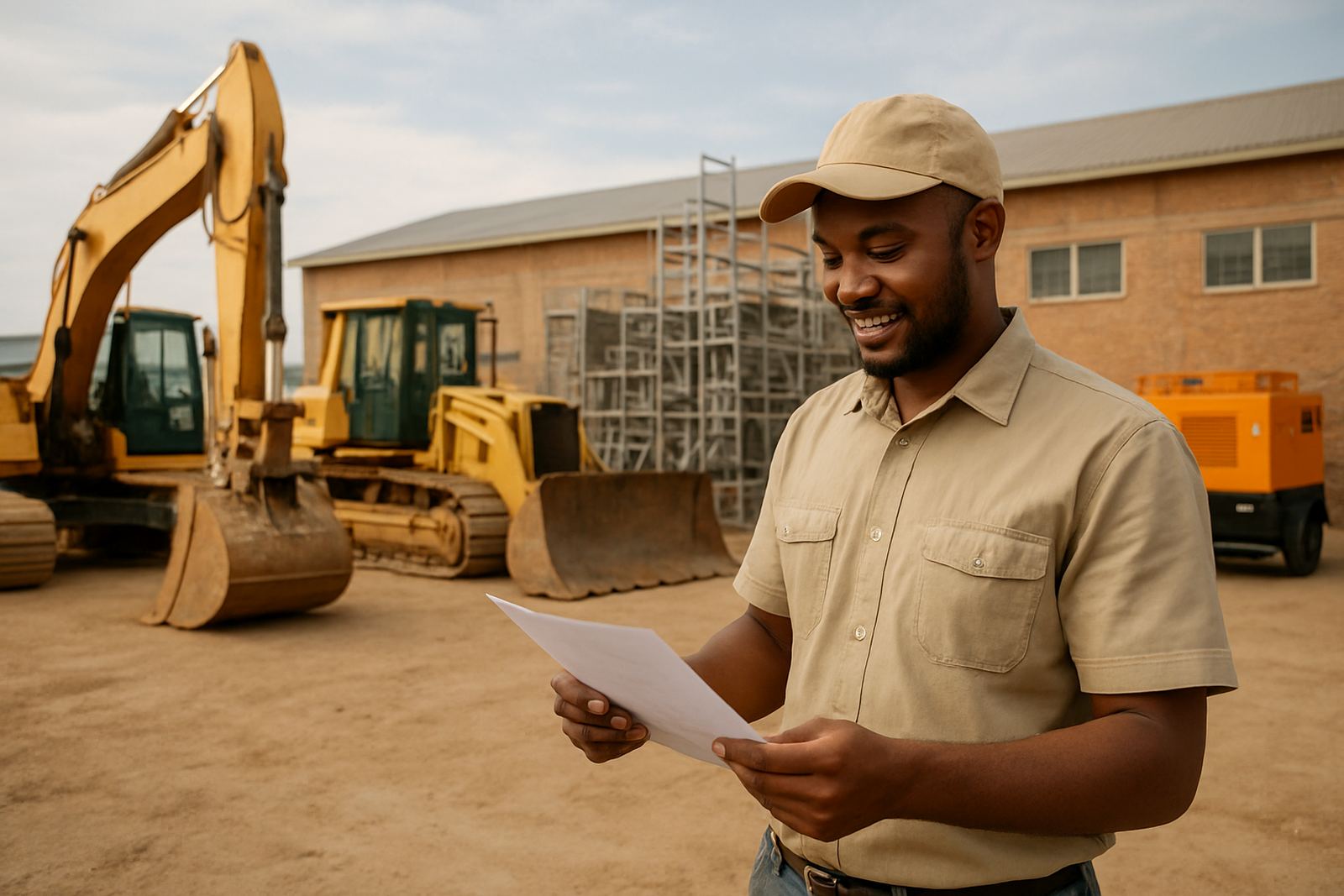

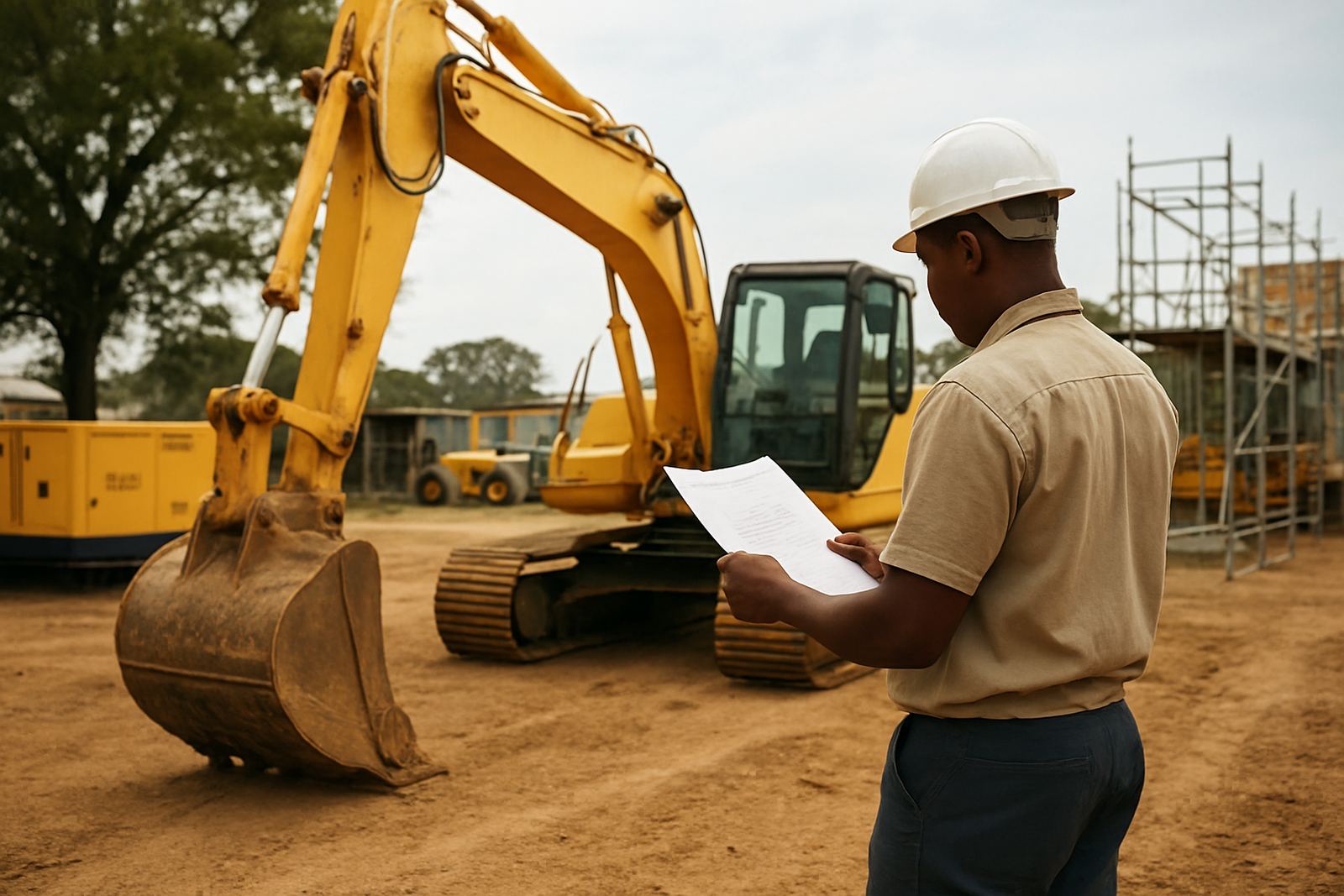
1. Confirm the off-hire date and collection window
Start by confirming when the equipment is due back and whether it will be collected from Germiston, Midrand, Pretoria East, Boksburg, Durban, Pinetown, Cape Town or Bellville, or from your site directly. The sooner the collection window is agreed, the easier it is to plan loaders, traffic access and any after-hours permits needed for busy city sites.
If your programme changes, tell us as early as possible so we can adjust the fleet plan. A late change can affect other jobs, especially when a machine is booked for another site the next morning. Clear timing also helps avoid unnecessary standby charges and missed collections.
2. Clean the machine and remove loose material
Before collection, give the machine a proper clean so the condition can be checked without guessing. Remove mud, rubble, concrete splatter and loose debris from tracks, buckets, trays and steps. On coastal sites, salt build-up and wet sand should be washed off too, otherwise corrosion starts quickly.
- Brush out cabs, platforms and footwells.
- Clear loose tools, straps, chocks and personal items.
- Remove spoil from skips, buckets and hoppers where possible.
- Wipe down glass, mirrors and lights so any damage is visible.
A clean machine speeds up the return check and helps avoid disputes over old dirt hiding new damage. It also makes it safer for the collection crew when they load the equipment on site.
3. Park the unit in a safe, accessible spot
Place the machine where the collection vehicle can reach it without reversing through active work areas. If the site is tight, make sure the access route is free of rebar, loose stone, drainage covers and overhead obstructions. On some municipal sites, access times are restricted and security can only open one gate, so plan for that in advance.
Choose firm ground for parked plant, especially after rain or in soft fill areas. A machine buried in mud or parked on a slope can delay uplift and may need extra recovery equipment. In load-shedding periods, keep gate access and lighting sorted before the truck arrives, because a dark site slows the process and raises safety risks.
- Lower attachments to the ground where safe to do so.
- Leave enough space for ramps, tilt trays or lifting gear.
- Keep the machine visible and accessible to the collection team.
- Hand over any keys, isolation tags or lockout items with the site contact.
4. Check fuel, fluids and service notes
Where practical, leave the machine in the condition agreed on hire. If the unit is meant to return with a full tank, top it up before collection. If the hire was arranged on a fuel management basis, follow the agreed return level and keep the reading visible. That helps with final close-out and avoids disputes on refuelling.
Look for leaks, warning lights, flat tyres, cracked hoses or damage caused during the last shift. Report anything unusual immediately, even if the machine is still running. A small problem like a loose belt or slow hydraulic seep can affect the workshop turnaround for the next customer, and it is better to note it before uplift.
5. Separate the attachments and paperwork
Make sure all hired attachments, accessories and safety items are kept together. It is common for buckets, breakers, scaffold components, fuel bowsers, barriers and cables to get moved around site, especially when several teams share one yard. Before collection, count everything against the hire note and keep it in one place.
- Return all keys, remote controls and battery chargers.
- Keep manuals, inspection sheets and operator logs ready.
- Remove non-hired tools and site stock from the machine.
- Flag any missing parts before the truck leaves the site.
Paperwork matters just as much as the hardware. If there were incidents, breakdowns, operator changes or safety notes during the hire, hand those over with the unit so the off-hire record is complete.
6. What happens during collection and close-out
When the collection team arrives, they will inspect the machine, confirm the serial or fleet number and check the visible condition against the hire record. If the unit is safe to move, it is loaded and secured for transport. If there is damage or an issue that needs attention, the finding is noted and the next step is agreed with the site contact.
For long-term or multi-machine hires, we can also plan staggered off-hires so your site team does not lose all plant at once. That is helpful on live construction programmes where one crew is still working while another area is being cleared. Good off-hire control keeps the job tidy, and it makes final invoicing cleaner too.
If you need plant collected from a basement, a confined yard or a high-traffic road closure zone, tell us in advance. The more we know about the site the smoother the pickup, and it keeps everybody safer.