Portable sanitation for construction sites, events and shutdowns
Chemical toilets are self-contained portable sanitation units used where permanent plumbing is not available or where a project needs extra welfare points fast. They are common on building sites, road works, utilities jobs, civil projects and temporary setups where crews are working from first fix through to handover. On municipal sites and commercial contracts, proper sanitation is not just a convenience, it is part of basic site compliance.
Our hire units are supplied ready for use and can be placed where your team needs them most, close to work fronts, laydown areas or site offices. For inner-city work in Johannesburg, tight access in Pretoria East, or coastal jobs in Durban and Cape Town where humidity can affect maintenance schedules, a reliable serviced unit makes a big difference. It keeps waste contained, reduces downtime and helps you avoid complaints from workers and neighbours alike.
We support contractors working on everything from small renovations to multi-storey developments, with hire periods ranging from a few days to months. If your site shifts often, we can arrange plant and welfare moves as the work progresses, so you are not stuck with a unit in the wrong place.
Unit options, sizes and practical specifications
Different sites need different welfare setups, and the right toilet depends on crew numbers, access and the length of the job. Standard chemical toilet units suit most general construction use, while heavier duty options can be arranged for higher footfall or longer-term hire. Where access is limited, a compact unit can be the better choice, especially on basement works, perimeter repairs or small plots with narrow gates.
- Standard single chemical toilet for general site use
- Heavy-duty unit for higher traffic and longer hire periods
- Units with urinal section for mixed crew use
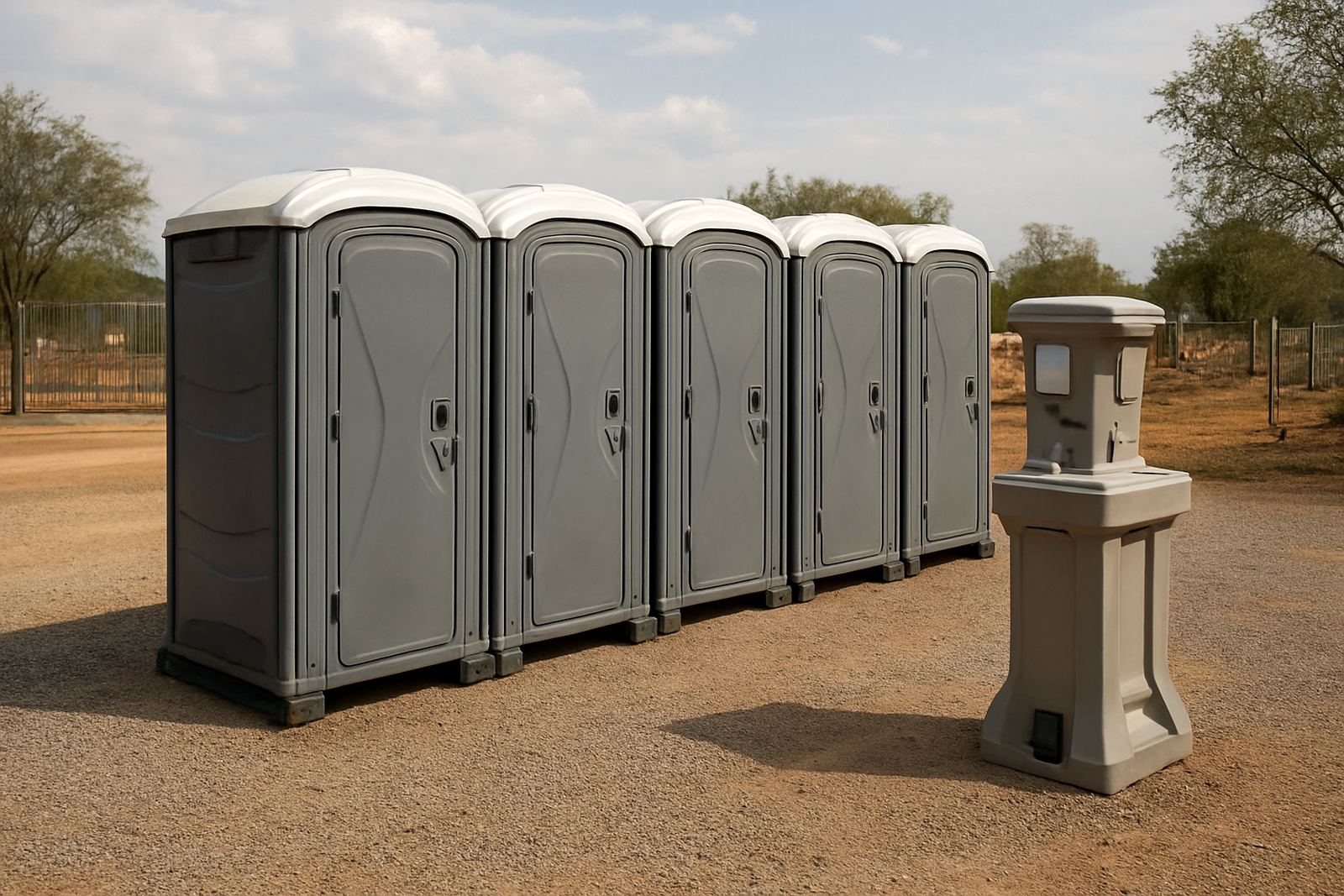
- Optional hand sanitiser dispenser or hand wash point nearby
- Short-term, weekly and monthly hire available
As a guide, a standard unit is typically about 1.1 m wide, 1.2 m deep and 2.3 m high, with a sealed waste tank under the floor. Most units are light enough for placement by truck or lift truck, depending on ground conditions. The waste tank capacity is usually suited to ordinary site use between service visits, though the actual interval depends on headcount and weather. Hotter months and high use will need more frequent attention, that is just the reality on busy sites.
For sites that need more than one toilet, we can help you plan numbers according to workforce size and duration. A larger crew working long shifts near Germiston or Midrand may need more than one unit, while a smaller maintenance team might only need a single toilet with scheduled servicing.
Where chemical toilet hire works best
Chemical toilet hire is suitable wherever you need a clean, self-contained welfare solution without relying on existing plumbing. It is often used on new builds, earthworks, shopfitting projects, road maintenance, fencing jobs, demolition work and temporary contractor compounds. It also helps during electrical shutdowns, water interruptions and maintenance outages where fixed facilities are not usable.
In Gauteng, busy sites often need quick placement and predictable service intervals. In KZN, humidity and summer rain can make regular cleaning more important. In the Western Cape, wind exposure and site dust can increase wear on fittings and surfaces. We keep that in mind when planning delivery and servicing, so the unit stays usable and orderly throughout the hire.
- Construction sites with no permanent sewer connection
- Roadworks and civil engineering sites
- Temporary compounds and contractor laydown yards
- Refurbishment, demolition and fit-out projects
- Emergency welfare provision during outages or shutdowns
If your site is under municipal inspection or needs welfare records for the principal contractor, we can support the basic documentation around servicing and placement. The goal is simple: provide a practical toilet solution that fits the site conditions and the programme without causing hold ups.
Delivery, placement and power or gas requirements
Chemical toilets do not need electrical power or gas to operate, which makes them useful on remote sites and during load-shedding. They are self-contained and can be positioned with minimal disruption, provided the ground is reasonably level and accessible to our collection vehicle. For uneven ground, soft soil or tight access, let us know in advance so we can plan the drop off properly.
Installation is straightforward. We place the unit on firm ground, check access for service calls and confirm the best position relative to pedestrian routes, plant movement and privacy. On sites with strict safety rules, the toilet should be kept clear of excavation edges, vehicle routes and areas where lifting takes place. If your site has a layout plan, send it through with the enquiry so we can work around it.
There is no permanent plumbing required. In most cases, the only things you need to provide are a suitable location, access for servicing and a clear route for collection. If the unit is being used near the coast or in dusty conditions, a more regular service plan is often worth it because both salt and grit can affect the finish and the general cleanliness of the unit.
Cleaning, servicing and waste removal
Good sanitation is not only about having a unit on site, it is about keeping it usable. Our chemical toilet hire can include scheduled servicing, waste removal and replenishment of chemicals and consumables. Service frequency depends on the number of users, project duration and site conditions. A small crew on a short job may only need weekly service, while a larger team on a hot, busy site may need more frequent visits.
During service, the waste tank is emptied, the bowl is cleaned and the unit is checked for damage or missing parts. We also look at odour control, locking mechanisms and general presentation. If a unit is damaged by machinery, misuse or high winds, we can arrange a replacement or swop-out where practical. That keeps the site moving and avoids an ugly mess that can cause complaints from workers, neighbours and inspectors.
- Scheduled waste removal to suit crew size
- Cleaning of tank, seat area and internal surfaces
- Refill of chemical solution and hygiene supplies
- Inspection for damage, leaks and missing fittings
- Replacement or swop-out where needed
For long-term hire, regular servicing is the easiest way to keep welfare standards steady. It also helps with contractor housekeeping because the welfare area stays presentable instead of becoming a problem halfway through the programme.
What to check before you book
Before you place an order, it helps to work through a few site details so the right unit and service schedule can be arranged. The main thing is to match the hire to the actual site use, not just the paper programme. A small job with six workers is very different from a large civil site with shift changes and weekend work.
- How many people will use the toilet each day
- How long the hire will run for
- Whether the site has level ground and vehicle access
- Whether you need one unit or several across different work zones
- How often servicing will be needed
- Whether you need hand sanitiser, hand wash or extra welfare units
It is also worth confirming site rules before delivery. Some developments require specific access times, induction requirements or sign-in procedures. Others have limited entry because of security or traffic management. If you know the site is in a busy area like Germiston industrial, central Durban or a controlled suburb in Cape Town, give us those details upfront so delivery is arranged without delay.
When you send the enquiry, include the site location, expected start date, crew size and whether the hire is for days, weeks or months. That gives us a clear picture and helps us send the right unit first time, no guess work.
Why contractors hire from MachinesAfrica Rentals
We work with contractors who need practical equipment and straight answers. Our Germiston base gives us a strong starting point for Gauteng, and our depot network supports sites in KwaZulu-Natal and the Western Cape as well. That matters when you need a quick turn around, a longer hire agreement or a welfare change on an active site.
Sibusiso Mthembu leads the business with Annelie van Wyk, Thabo Nkosi, Zanele Dlamini, Willem Erasmus and Nokuthula Khumalo overseeing operations, fleet, coordination, workshop support and compliance. That team structure helps with planning, servicing and safety documentation so you are not left chasing details after the unit has been dropped off. We keep the process simple, from enquiry to collection.
If your project needs chemical toilet hire alongside plant, tools or site support, we can coordinate the bigger picture. One call through the enquiry form is often enough to sort the welfare side properly and keep your site moving.
Key facts
| Hire type | Chemical toilet hire for construction and temporary welfare use |
|---|---|
| Typical size | Approx. 1.1 m wide x 1.2 m deep x 2.3 m high |
| Power or gas | None required |
| Capacity | Self-contained waste tank suited to scheduled servicing |
| Use periods | Short-term, weekly, monthly and long-term hire |
| Service coverage | Johannesburg, Gauteng, KwaZulu-Natal and the Western Cape |