Telehandlers for lifting where forklifts cannot go
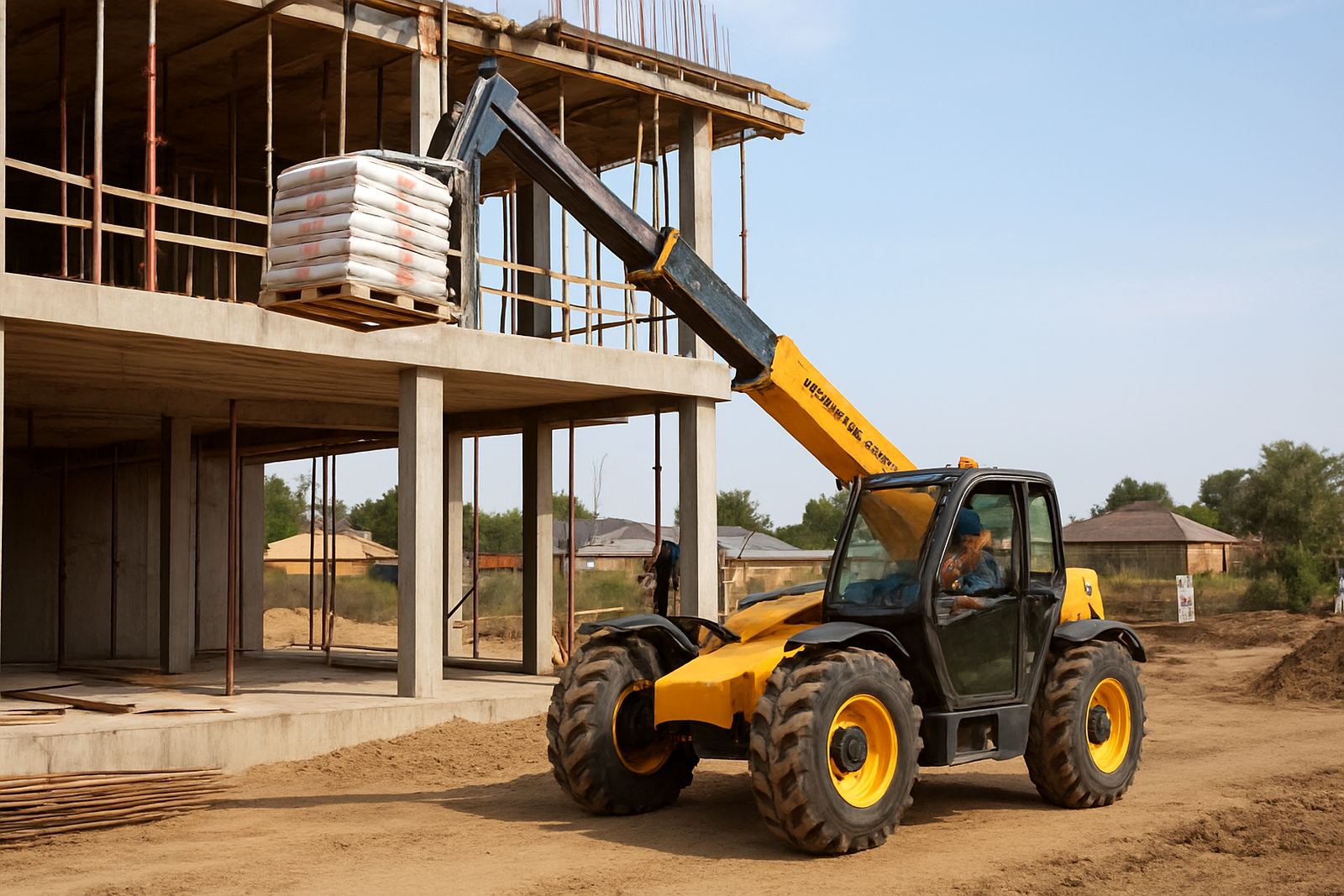
A telehandler, sometimes called a telescopic handler, is a diesel powered lifting machine with an extendable boom. It is used to place pallets, bricks, shuttering, steel and bundled materials at height, often where a standard forklift would struggle because of uneven ground, poor access or the need to reach over obstacles. On South African sites, they are common on housing developments, commercial builds, precast yards and renovation work where materials need to be moved quickly and safely.
The main advantage is reach. A telehandler can pick up a load at ground level and place it several metres above the deck, or across a trench, boundary wall or scaffold line. That makes it useful for delivery offload, floor-by-floor staging and moving stock around a site without hiring extra lifting gear for every task. For contractors working under tight deadlines, that can save time and keep labour better focused.
Sizes and lifting options for different site jobs
We hire telehandlers in a range of lift heights and capacities so the machine matches the job instead of forcing the job to suit the machine. Smaller units are useful on tighter urban sites in Germiston, Pretoria East and parts of Durban where access is limited. Larger machines are better for higher reach work, bulk material handling and sites with long travel distances or stacked storage.
- Compact units for tighter access and lower lift heights
- Mid-size machines for general building work and pallet handling
- High-reach telehandlers for upper floors and heavier materials
- Fixed carriage or fork carriage options, depending on the load type
- Tyres suited to rough ground and site conditions
- Additional lifting attachments where the task calls for it
Typical working heights range from around 6 metres up to 17 metres, with load capacities from about 2.5 tonne to 4 tonne depending on boom extension and machine size. As with any lifting machine, capacity changes as the boom extends, so the load chart matters as much as the headline rating.
Where telehandlers work best on South African sites
Telehandlers suit projects where materials need to be delivered to elevated or awkward positions without setting up a crane for every lift. They are widely used on construction sites, warehouse builds, schools, industrial yards and residential developments. In Gauteng, they are often hired for brickwork, roofing, floor slabs and loading bays. In coastal areas like Durban and Cape Town, they are also handy for handling materials in conditions where wind and damp can slow other work.
They are not only for lifting. A telehandler can help keep the whole site moving by reducing manual carrying, shortening travel time and improving how pallets and bundled stock are staged. When used with a proper lifting plan, it can also cut down on damage to materials and help reduce stop-start delays when deliveries arrive early or in mixed loads.
- Roofing and truss placement
- Brick and block delivery to upper levels
- Formwork and scaffolding material movement
- Warehouse and yard loading work
- General site logistics where ground is uneven
Power, fuel and setup requirements before hire
Telehandlers in this category are typically diesel powered and self-contained, so they do not need a fixed electrical supply or gas connection. That makes them suitable for sites without permanent power, including early-stage developments and loadshedding affected projects where generators may already be carrying the site. Because they are mobile machines, the key setup points are access, ground condition and space for turning and boom movement.
Before hire, check that the ground is level enough for safe travel and lifting. Soft ground, loose rubble and steep slopes can affect stability, especially when the boom is extended. If your site has narrow access or shared roads, it helps to confirm entry width, overhead obstructions and the turning area needed for delivery and off-hire collection. On some municipal projects, traffic control and loading times may need to be arranged in advance, so it is worth planning the delivery window early.
Care, servicing and breakdown support during hire
Good hire equipment should arrive ready for work. Our fleet is checked and maintained so it can go straight onto site with the right paperwork and service history in order. Telehandlers are working machines, so routine care matters. Keep the cab clean, check tyres, inspect forks and attachments, and report any unusual noise, fluid leak or warning light as soon as it appears. That helps prevent small issues becoming a full stop.
For longer hires, especially on busy Gauteng and coastal sites, scheduled servicing can be arranged to reduce downtime. If a unit develops a fault, we can organise breakdown response and, where needed, a plant swop-out so the job can continue. Safety documentation can also be provided for site file requirements, which is often needed by principal contractors and safety officers before a machine is allowed onto the workface.
- Pre-delivery inspection and service checks
- On-site servicing for long-term hire
- Breakdown response where practical
- Plant swop-outs to limit delays
- Safety documentation for site compliance
What to check when ordering a telehandler
When ordering, the most important details are the lift height, load weight, site surface and how the machine will be used each day. If the load is heavy but only needs to go a short distance, a smaller machine may be enough. If the materials must reach an upper deck or pass over obstructions, boom length becomes more important. It helps to give the actual load size and not just the material type, because pallets of block, steel packs and water tanks all behave differently.
Also check whether you need an operator, whether the hire is for one shift or a longer term, and whether the site requires weekend work or same-day dispatch. If access is tight, tell us the gate width and any overhead cables, scaffolding or tree branches. For coastal sites, mention wind exposure and ground moisture. For inland sites, dust and heat can affect daily checks and servicing intervals, so planning matters from the start.
- Required lift height and reach
- Maximum load weight and load centre
- Site access width and ground condition
- Need for operator supply or self-drive arrangement
- Duration of hire, including weekend support if needed
- Delivery area and collection timing
Telehandler hire backed by a practical fleet team
MachinesAfrica Rentals is based in Germiston and supports sites across Gauteng, KwaZulu-Natal and the Western Cape through our hire depots and site delivery service. The team led by Sibusiso Mthembu works with contractors, builders and site managers who need equipment that arrives on time and keeps moving. Whether the job is in Midrand, Boksburg, Pinetown or Bellville, the aim is the same: get the right machine to site without fuss.
If you are planning a lift schedule, managing multiple trades or dealing with a deadline that cannot slip, telehandler hire gives you a practical way to move materials where they need to go. Tell us what the site needs, and we will help match the machine, the timing and the support around it. That makes a proper difference on a live build, especially when the weather turns or deliveries come in faster than expected.
Key facts
| Drive type | Diesel, self-propelled |
|---|---|
| Typical lift height | About 6 m to 17 m |
| Typical lift capacity | About 2.5 tonne to 4 tonne |
| Use | Pallets, formwork, steel, blocks and general site materials |
| Power or gas requirement | No mains power or gas needed |
| Hire support | Site delivery, operator supply, servicing and breakdown response |