Forklifts for yard work, loading bays and site handling
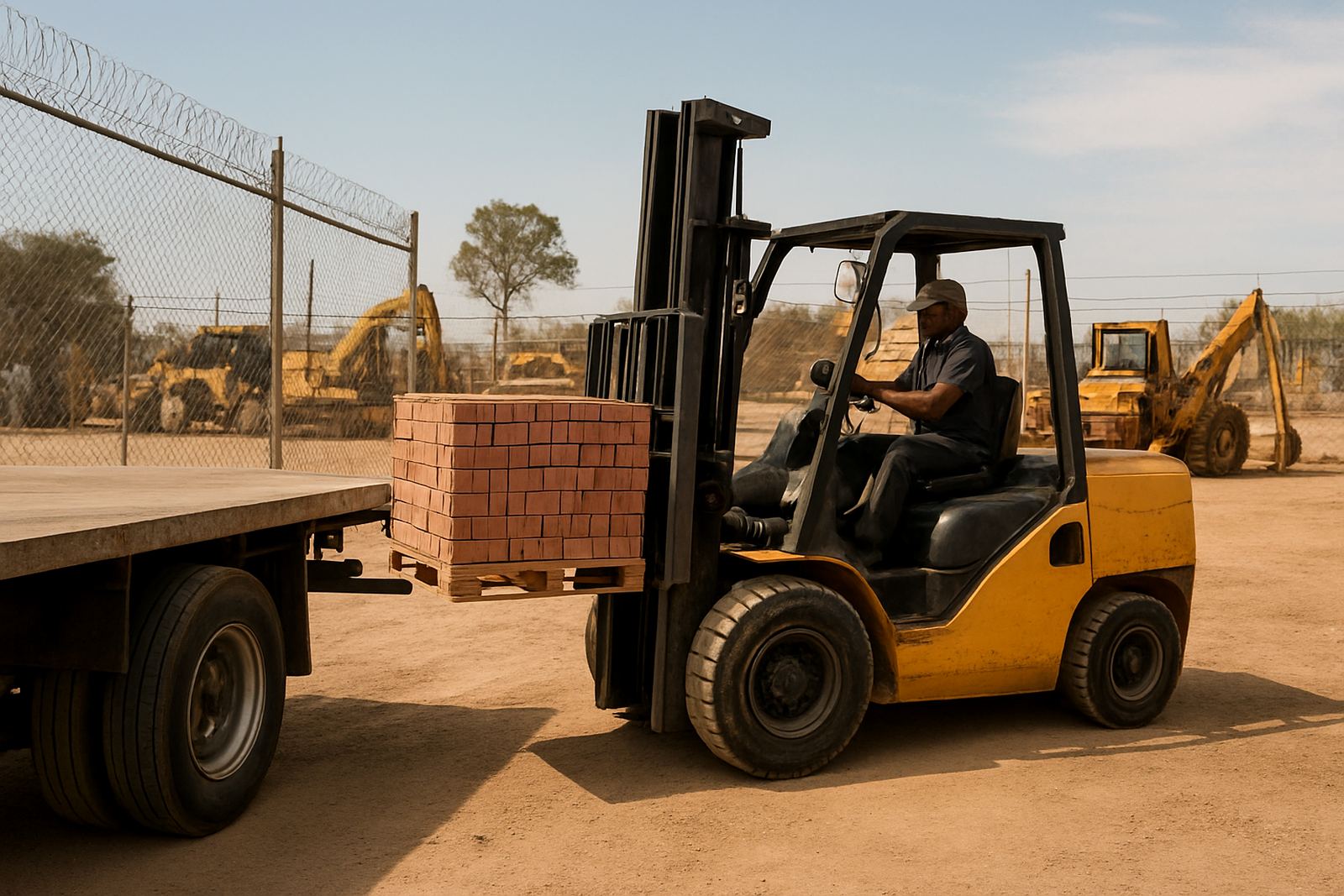
Forklifts are used wherever palletised goods, bagged stock, steel, timber or packaged materials need to move safely from one point to another. On building sites, they save time at the loading bay, help with offloading deliveries and reduce manual lifting where the ground is busy and space is tight.
Our hire fleet is suited to construction yards, retail storage areas, factories, warehouses and contractor depots. In Germiston, Midrand, Pretoria East, Boksburg, Durban, Pinetown, Cape Town and Bellville, clients often use forklifts for short bursts of work during receiving, stock piling and distribution. It is a straightforward solution when you need lifting capacity without buying a machine outright.
Depending on the job, you can hire a compact unit for tighter access or a larger machine for heavier pallets and outdoor handling. For sites with uneven ground, wet surfaces or gravel, we match the forklift to the conditions so the machine can work safely and without unnecessary wear.
Sizes and options to match the load and the site
Forklift hire is not one-size-fits-all. The right machine depends on load weight, lift height, access width and how often the machine will be used. We supply common site sizes from light-duty units through to heavier lifts, with options for diesel, gas or electric where the job calls for it.
Typical hire choices include 2.5 ton, 3 ton and 5 ton forklifts, with mast heights that can suit standard pallet stacking and higher racking access. For general site handling, a 3 ton unit is often the best all-round choice. For larger loads, bulk materials or frequent delivery offloading, a 5 ton machine is more suitable. Electric units are useful indoors or in enclosed work areas where fumes must be avoided, while diesel models handle outdoor yards and rougher ground well.
- Lift capacity: commonly 2.5 ton, 3 ton and 5 ton
- Fuel type: diesel, gas or electric depending on site use
- Mast height: standard and higher reach options available
- Tyres: solid or pneumatic options for smooth or rough ground
- Attachments: forks for pallets, with other fitments on request
Where forklifts suit best on South African projects
Forklifts are most useful where goods must be moved quickly between trucks, storage points and work areas. They suit yards with regular deliveries, builders merchants, warehouses, project stores and plant holding areas. On construction sites they help with materials handling, especially where pallets of brick, cement, tiles, piping or fittings need to be shifted without delay.
They are also practical in coastal areas where humidity can affect stored materials, and in Gauteng where sites may have limited time windows for offloading before traffic, security or municipal access rules become a problem. In Durban and Cape Town, wind, rain and moisture can affect stock handling, so keeping materials under cover and moving them in controlled loads helps prevent damage.
Forklifts work best on firm, level ground. If your yard is gravel, uneven or still being prepared, tell us upfront so we can advise on tyre choice and machine size. In some cases a site needs simple ground preparation or clear access routes before the hire starts, which saves time and keeps the machine from getting bogged down.
Power, fuel and site setup before the machine arrives
Before hire, it helps to confirm whether your site needs diesel, gas or electric. Diesel forklifts are common for outdoor use and longer shifts. Gas units are useful where a cleaner running option is preferred and the site has a controlled refuelling point. Electric forklifts need battery charging arrangements and are better for indoor handling or quieter work areas.
If you are hiring an electric unit, check that there is a safe charging space, access to power and enough room for cable handling or battery changes. For diesel or gas, make sure your site has a clear refuelling plan and safe storage for fuel cylinders or cans, with the right signage in place. On larger projects, especially where contractors are sharing a yard, it is worth setting out a simple traffic flow so pedestrians and vehicles do not cross paths unnecessarily.
- Confirm fuel type before the truck leaves the depot
- Check gate width, turning space and floor level
- Plan where deliveries will be unloaded and stacked
- Arrange charging or refuelling access in advance
- Keep the work area clear of loose rubble, rebar and debris
Servicing, safety checks and dependable hire support
Hire equipment works best when it is serviced properly and checked before it reaches site. Our forklifts are maintained by our workshop team and monitored for tyres, forks, hydraulics, mast function, brakes and lights before dispatch. That helps reduce downtime and supports safer work on busy sites where a failed lift can hold up several trades at once.
We also support long-term hire, weekend support, breakdown response and off-hire collections, so clients can keep to programme even if the job runs longer than planned. If a machine needs to be swapped out, we can arrange a suitable replacement subject to availability. On active construction sites this kind of support matters, because one missed delivery or one failed forklift can throw the whole day out.
Clients should still carry out daily visual checks on site. Look for fluid leaks, damaged forks, low tyre pressure, warning lights and any unusual noise during operation. If a problem is spotted, stop the machine and report it straight away rather than pushing through the shift.
What to confirm when ordering your forklift
To get the right forklift hire, it helps to send the details through clearly on the enquiry form. The more accurate the information, the easier it is to match the machine to the job and arrange delivery without delays. If the site has special access conditions, restricted hours or security paperwork, mention that as well.
Useful details include the load weight, lift height, surface type, fuel preference and whether an operator is needed. If the machine will work in a narrow yard or inside a warehouse, give the aisle width and doorway sizes. If you are handling palletised stock in a noisy or congested area, it may also help to note whether the machine will be used around pedestrians, trucks or other plant.
- Estimated load weight and pallet size
- Lift height required and stacking height
- Indoor or outdoor use
- Ground condition: concrete, gravel or mixed surfaces
- Hire duration: short-term, long-term or weekend support
- Need for operator supply, fuel management or safety documents
Local depot support across Gauteng, KZN and the Western Cape
MachinesAfrica Rentals operates from Germiston, Midrand, Pretoria East and Boksburg, with further depot support in Durban, Pinetown, Cape Town and Bellville. That footprint helps with same-day dispatch, site deliveries and fast response when a project is running close to deadline. It also makes it easier to plan collections and swop-outs without losing a full day to transport.
For contractors managing more than one site, we can assist with fleet planning so the right forklift is available where it is needed most. Whether you are moving stock in a warehouse, clearing a loading yard or handling materials on a construction project, the aim is the same: a machine that arrives ready for work and stays reliable through the hire period.
Speak to our team through the enquiry form and we will help match the forklift to your site, load and hire period.
Key facts
| Common lift capacities | 2.5 ton, 3 ton and 5 ton units |
|---|---|
| Fuel types | Diesel, gas or electric options |
| Typical use | Pallet handling, unloading, stock movement and yard loading |
| Site suitability | Construction yards, warehouses, depots and loading bays |
| Support options | Operator supply, fuel management and safety documentation |
| Hire cover | Gauteng, KwaZulu-Natal and the Western Cape |