Start with the load, not the fuel tank
The first step is to work out what you need to run at the same time. A small site office, charging tools, lighting and a mixer need far less power than a tower crane, pumps, compressors or welding gear. If the generator is undersized it will trip, run hot and wear out early. If it is too large, you may waste fuel and still pay more than you need to.
List every item that must run during the busiest part of the day. Check the running load and the starting load, because motors draw more current when they start. Pumps, compressors and some saws can need a much higher start-up surge. That is where many sites get caught out, especially on mixed builds with both light and heavy equipment.
- Base load: lights, chargers, office power, water pumps and small tools
- Starting load: motors, compressors, mixers and heavier plant control systems
- Future allowance: add capacity for a small margin if the scope may grow
- Power quality: confirm whether the site needs stable output for sensitive equipment
Choose the right kVA for your site conditions
Generator size is usually discussed in kVA, and that figure should be matched to the real job rather than guessed. A residential build in Midrand may only need a compact unit for site cabins and tools, while a larger commercial site in Germiston or Pretoria East may need a much bigger set to support multiple trades at once. For coastal work in Durban or Cape Town, the same load can be harder on equipment because of humidity and salt air, so placement and servicing matter just as much as the rating.
A practical rule is to allow extra headroom so the generator is not working flat out all day. A unit running comfortably will usually last longer and use fuel more sensibly. If you are unsure, ask for a load plan before dispatch. It is better to size correctly first time than to swap units after half a day and lose production.
- Light duty: office cabins, lighting and hand tools
- Medium duty: small plant, welders, mixers and site services
- Heavy duty: multiple motors, pumps, cranes or full site power support
- Critical duty: where backup power must come on quickly and stay steady
Place the generator where it can work safely
Good placement reduces noise issues, cable losses and fuel handling problems. Put the unit on level ground with clear airflow around the radiator and exhaust. Keep it away from excavation edges, standing water and public walkways. On busy sites in Gauteng, access for deliveries and refuelling should also be planned so the generator does not block plant movement or emergency routes.
If the generator is near offices or nearby neighbours, think about noise, vibration and exhaust direction. Local municipal rules may affect where you can position equipment, especially near roads, boundary lines or occupied buildings. A small adjustment in position can make a big difference to compliance and day to day site comfort.
- Set on firm, level ground with no soft spots underneath
- Leave space for servicing, refuelling and cable entry
- Keep clear of trenches, stormwater runs and doorways
- Use barriers or cones where plant and pedestrians share space
Plan fuel use around shift times and load-shedding
Fuel management is not just about filling the tank. It is about matching supply to working hours, shift changes and planned outages. In South Africa, load-shedding still shapes many projects, so the generator may need to support a whole day’s programme, not just a short backup period. If fuel is delivered late or monitored badly, even a correctly sized unit can stop the job.
Track average burn rate, not just tank size. A unit that runs steadily on a consistent load will usually be easier to manage than one that keeps surging. Keep records of refuelling times, usage and any unusual consumption. That makes it easier to spot leaks, overloading or idle running, and it helps with budget control on long-term hire.
- Confirm daily runtime and expected fuel burn before the hire starts
- Keep fuel on a secure surface away from heat and sparks
- Assign one person to check levels at set times each day
- Plan for weekends and public holidays if the site runs through them
Check the cables, changeover and earthing before switching on
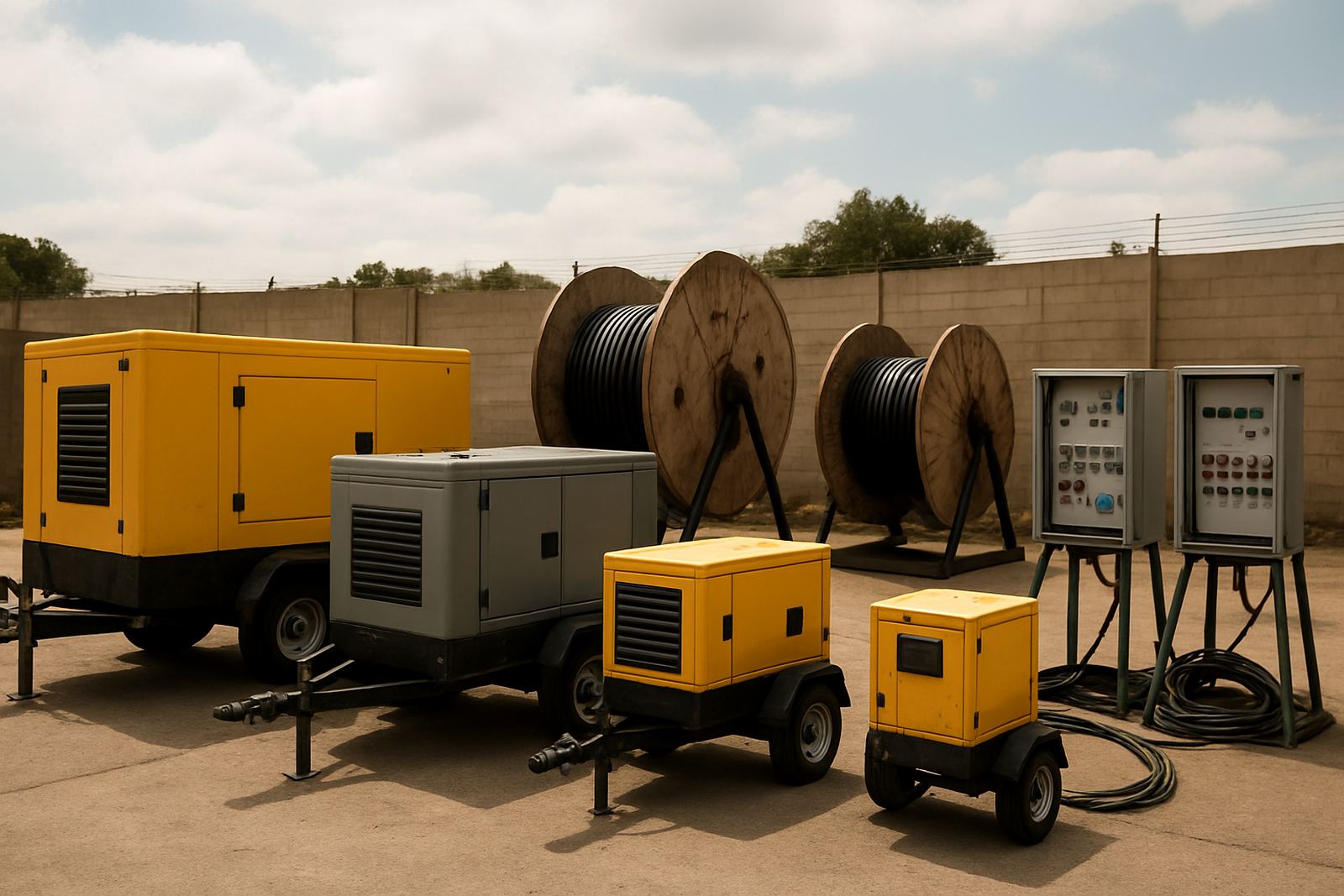
A generator is only as good as the installation around it. Cables must be sized correctly for the distance and the load, otherwise voltage drop can affect tools and motors. Changeover arrangements should be clear and labelled so staff do not back-feed the supply or create a risk at the main board. Earthing also matters, especially on wet sites or where people are working in boots on damp ground.
Before first use, have a proper inspection done and keep the paperwork on site. Safety documentation is not busywork. It helps supervisors, auditors and the client see that temporary power has been set up properly. If the project runs for months, repeat checks should form part of the weekly routine, not only when something goes wrong.
- Correct cable size for the distance and load
- Clear changeover procedure for site staff
- Verified earthing and protection devices
- Inspection records kept with the site file
Use support services to avoid downtime
Generators work best when the hire is backed by proper site support. Breakdown response, on-site servicing and plant swop-outs can save a day or more of lost time when a unit develops a fault. For long-term hires, fleet planning also helps because the right set can be kept on standby if the job grows or the original unit needs to come off hire for maintenance.
At MachinesAfrica Rentals, the hire team coordinates dispatch from Germiston and branches serving Gauteng, KwaZulu-Natal and the Western Cape. That means site delivery, weekend support and off-hire collections can be arranged around the build programme rather than the other way around. For contractors, the main value is simple: keep power available, keep the site safe, and keep the schedule moving.