Start with the site task, not the machine
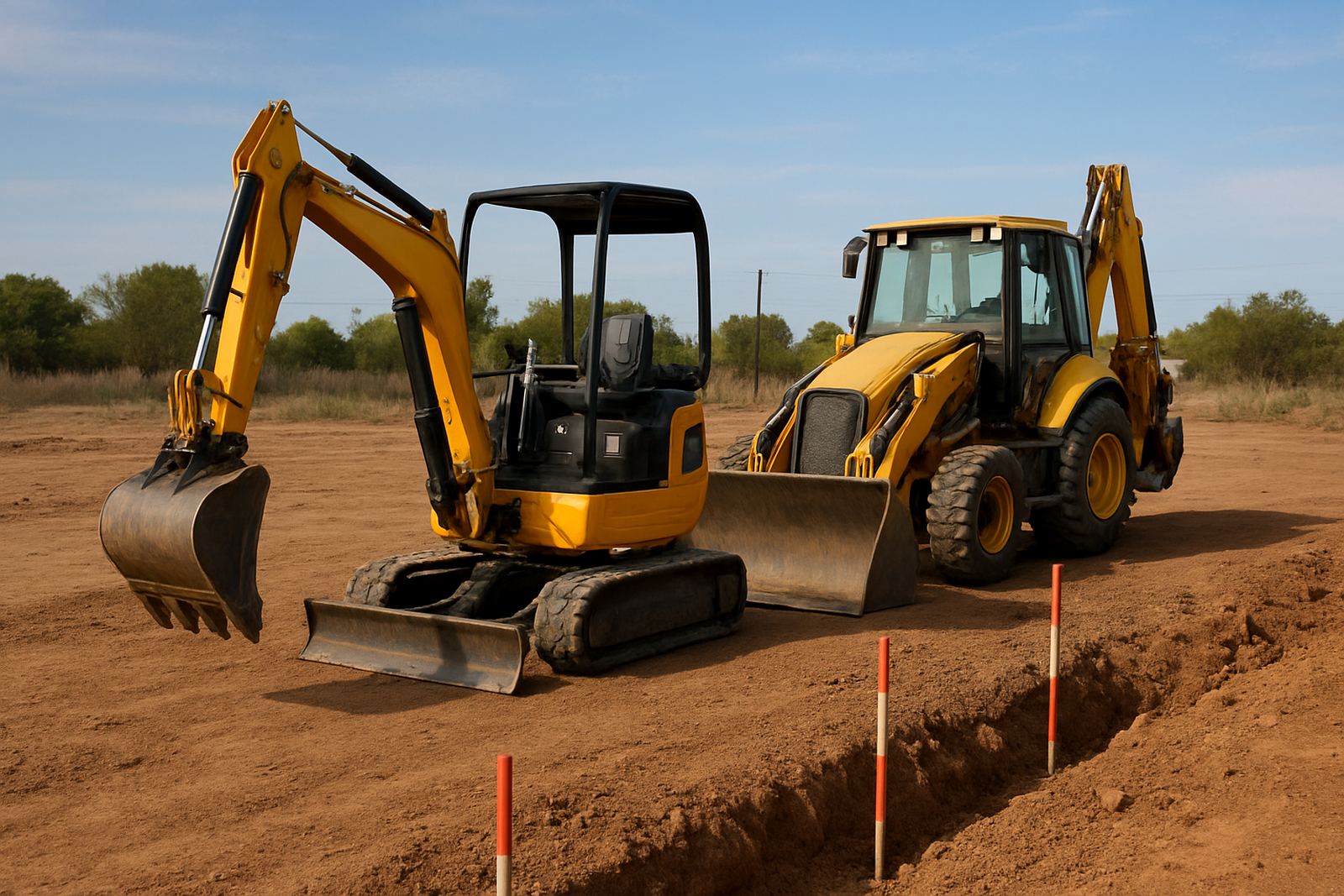
The quickest way to choose is to list the job in plain terms. Are you trenching for stormwater, cleaning out a channel, digging footings, lifting spoil into a tipper, or opening up a narrow service corridor between walls and fencing? A mini excavator is best when the work is mostly digging and placing spoil with precision. A TLB is the better option when you need one machine to dig, load and travel around a site with less planning.
On tight urban sites in Johannesburg, Sandton, Stellenbosch or central Durban, access often decides the answer before the task does. If gates are narrow, the ground is soft after rain, or the work area sits close to boundary walls, a compact excavator can get in and work with less disturbance. If you need to move material, backfill and clear rubble as you go, a TLB may be the better fit.
- Choose a mini excavator for trenches, small foundations and confined spaces
- Choose a TLB when the job needs digging plus loading and short-distance movement
- Check access width, ground bearing and turning space before you book
- Allow for spoil stockpiling, not just the hole you are digging
When a mini excavator makes more sense
A mini excavator is usually the safer choice where space is limited and accuracy matters. It works well for plumbing trenches, electrical ducts, drainage runs, small retaining wall footings and landscaping on finished properties. Because the machine sits lower and slews within its own footprint, it is easier to work close to structures, boundary lines and existing services.
Contractors also favour compact excavators where the ground is sensitive. If you are working on paving, inside a yard, or near a finished slab, the reduced machine size can mean less damage and fewer patch-up costs later. In coastal areas such as Durban and the Western Cape, a smaller machine is also easier to manage on wet or uneven ground after rain or morning mist.
- Best for narrow passages and backyards
- Best for clean trench lines and repeat digging
- Useful where you need less ground disturbance
- Better for working beside walls, curbs and services
For longer trenches, ask for the right bucket size and reach. A machine that is too small can slow the job, while one that is too large may force you to break up access or move fencing. That is where site planning pays off.
When a TLB is the better hire
A TLB earns its keep when the site needs more than digging. It can excavate, load, level and shift material without bringing in a second machine straight away. On building sites in Boksburg, Midrand and Pretoria East, that flexibility is often what keeps a small crew moving through the day. If you are lifting rubble into a truck, spreading base course or tidying after excavation, the front loader changes the pace of the job.
It is also a practical choice where the work area is open and there is enough room to swing the rear boom safely. A TLB handles mixed tasks well, but it needs space to operate and is not always the best pick for tight trenching against a wall. If the site has soft edges or uneven levels, you will need to plan the travel route carefully, especially after heavy rain or on freshly cut ground.
- Good for mixed dig and load work
- Good for open sites with space to manoeuvre
- Useful for rubble removal, backfilling and levelling
- Often chosen for general building and maintenance jobs
A practical decision checklist before you book
Before you confirm the hire, run through a simple checklist with your foreman or site agent. This prevents the common mistake of hiring a machine that arrives fit for half the job, but not the full scope. It also helps when you need same-day dispatch or a weekend swap on a live site.
- What is the main task: dig, load, clear, level, or all four?
- How wide is the access and is there a turning circle?
- How deep is the trench or excavation?
- Will the machine work on sand, clay, fill, paving or soft soil?
- Is there space for spoil, a tipper, or stockpiling on site?
- Will you need an operator, fuel management, or safety documents?
If the answer is unclear on any of these points, it is worth speaking to the hire coordinator before the machine goes out. A quick site brief can prevent wasted time and extra transport charges, which is always worth the effort.
Mini excavator vs TLB by job type
Different jobs point to different machines. Small contractors often ask for a TLB because it feels like the safest all-round choice, but that is not always the cheapest or fastest option. On the other hand, a mini excavator can be the better hire even when a TLB is available, especially if the task is mainly trenching and spoil placement.
- Drainage and sewer trenches: mini excavator
- Footings on a tight plot: mini excavator
- General site clearing and loading: TLB
- Backfilling after pipe runs: TLB or mini excavator, depending on access
- Working around services and tight edges: mini excavator
- Open site with mixed loading and digging: TLB
For larger phases of work, some contractors hire both over time rather than forcing one machine to do everything. That approach can keep production steady without overworking one unit or paying for unnecessary idle hours.
What to expect from a proper hire plan
A good hire plan should cover delivery, off-hire collection, fuel, safety paperwork and what happens if the machine stops unexpectedly. On busy Gauteng sites, the real cost is often not the hire rate alone, but the time lost waiting for the wrong attachment, a breakdown response or a late collection. That is why fleet planning matters just as much as the machine choice.
For longer jobs, ask for weekend support, plant swop-outs and on-site servicing if the schedule is tight. If your project runs across multiple locations, for example Germiston one week and Pinetown the next, it helps to keep the same standards for operator supply, breakdown response and safety documentation at every site. Small details like these keep site managers from chasing paperwork after a long day.
- Confirm delivery window and site contact person
- Check fuel and refuelling arrangements
- Make sure the ground is ready for offloading
- Keep the access route clear for collection too
If you are still unsure, describe the work in one sentence and include the site size, soil type and access. That gives the hire team enough detail to recommend the right machine without sending you something oversized or underpowered.