Start with the tool's actual power draw
Before you connect anything, check the running watts and starting watts of each tool. A grinder may seem light enough for a small generator, but compressors, saws, mixers and pumps can need a much higher starting surge. If you size only for the label on the tool body, the generator may bog down or trip the breaker as soon as the motor starts.
For multi-tool sites, total the load rather than guessing. Add a margin of about 20 to 30 percent so the set is not run flat out all day. That extra headroom helps when temperatures climb, or when you are starting one tool while another is already under load. On long projects, this is often the difference between steady work and repeated stoppages.
If you are unsure, separate the load into working groups. One generator can handle lighting and hand tools while another covers heavier equipment like mixers or cutting gear. It is usually better to split the job than to overload one machine and burn fuel for nothing.
Match the generator to the job site
Not every generator suits every site. Smaller frame units work well for hand tools, lighting and battery charging, while larger diesel sets are better for site cabins, welding sets and several tools running together. If the site is in Germiston, Midrand or Pretoria East and power is only needed for a few hours, a compact unit may be enough. For roadworks, basement pours or night shifts, a larger set with proper distribution is a safer choice.
Think about where the set will sit too. On coastal sites in Durban, Pinetown or Cape Town, humidity and salt air can affect electrical connections if they are left open or wet. Keep plugs covered, use weatherproof fittings and place the unit on firm ground with good airflow. Do not park it in a trench or a closed room where heat and exhaust can build up.
- Check the voltage and phase requirement before dispatch
- Allow space for fuel access and routine inspection
- Keep exhaust clear of workers, windows and material stockpiles
- Use a level surface so oil pressure stays correct
Use the right cables, plugs and protection
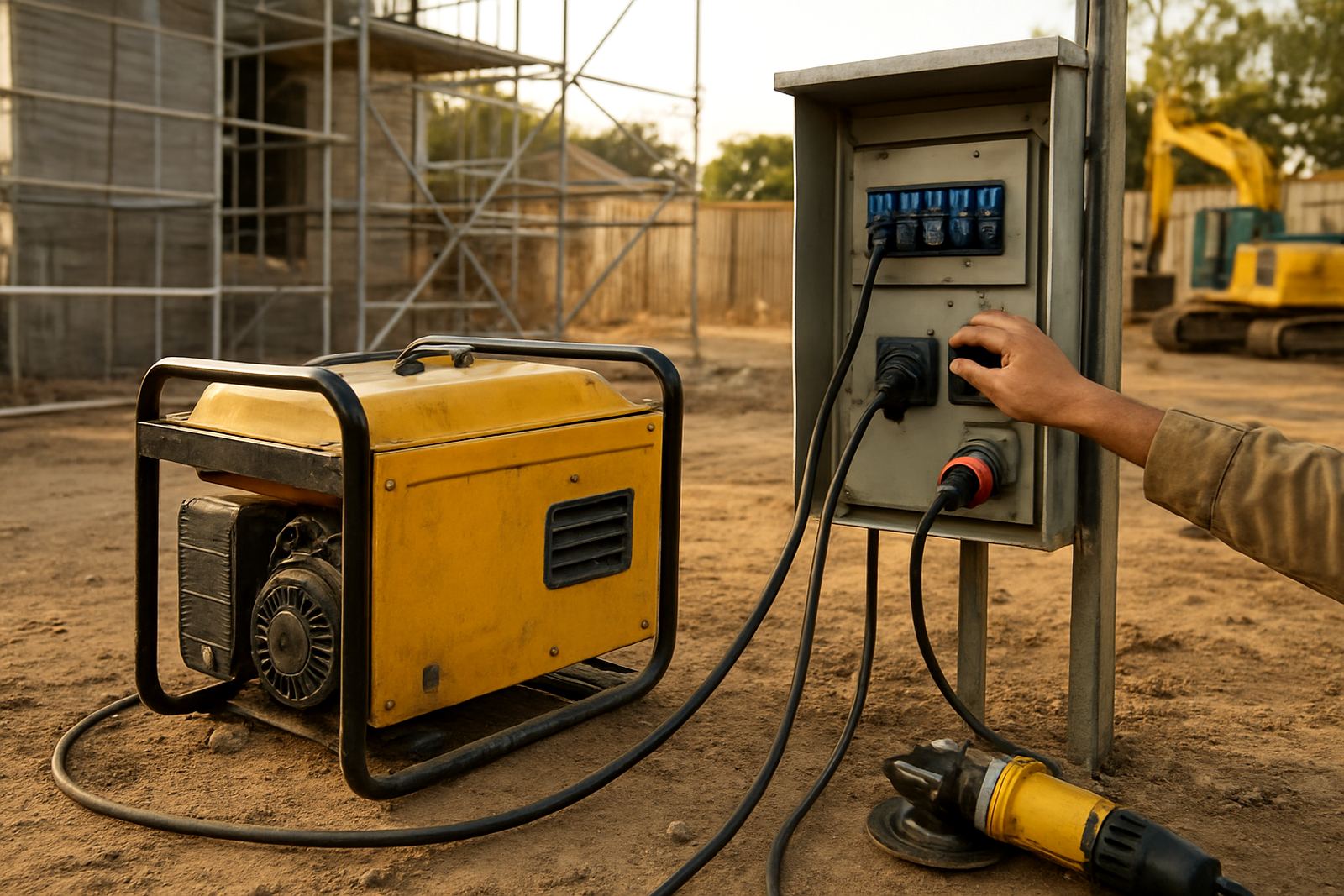
The cable run matters as much as the generator itself. Long, thin cables cause voltage drop, which means tools run weakly, overheat or trip. Use cable sizes suitable for the distance and the load, and uncoil extension leads fully before switching on. Coiled cable can heat up fast, especially when several grinders or drills are in use.
Every temporary power set-up should have proper protection. Residual current protection and correctly rated breakers help limit shock risk and protect the machine. On busy sites, label each outlet so labourers know which tool can go where. Keep joins off the ground and away from standing water, fresh concrete and traffic routes. A small puddle can become a serious fault very quickly.
If the site changes daily, mark each lead with its length and purpose. That makes swop-outs easier when one cable is damaged or when a longer run is needed to reach another work face.
Sequence tools so the generator is not slammed
Many problems happen at switch-on, not during normal running. If you start everything at once, the initial surge can trip the unit or stall the engine. Switch on heavy tools one by one, let each settle, then bring the next one into service. This matters for pumps, compressors and mixers, which pull harder at start-up than they do once moving.
A simple loading order helps on site:
- Start the generator and let it warm up for a few minutes
- Switch on lights and light-duty charging first
- Bring on one motor-driven tool at a time
- Watch for dimming lights, vibration or unusual sound
- Pause and reduce the load if the engine labours
If the machine struggles, do not force it to continue. Shut down some of the load and restart in stages. That is usually quicker than waiting for a breaker to reset every few minutes.
Plan fuel, servicing and backup before the shift starts
A generator that runs out of fuel or fails on a Friday afternoon can hold up the whole site. Check fuel levels at the start of each shift and build in top-up times, especially on longer days or during load-shedding windows. Diesel sets should be kept clean, with water drained if needed and filters checked regularly. On dusty Gauteng sites, dust around the air intake and radiator can cause overheating, so daily cleaning matters.
Keep a basic shift checklist with the unit. Include oil level, coolant if fitted, cable condition, earth connection, and any warning lights. If the set is being moved between sites, inspect for loose fittings and fuel leaks before it leaves the depot. A quick check at dispatch can prevent downtime later, and the crew can get on with work instead of waiting for a breakdown response.
- Fuel topped up for the planned shift
- Oil and coolant checked
- Cables and plugs inspected
- Fire extinguisher on hand
- Ground firm, level and clear of debris
Keep people safe around temporary power
Temporary power needs the same discipline as a permanent installation. Only trained staff should connect tools or move the set. Keep unauthorised people away from the unit, especially children, visitors and unbriefed labourers. Use barriers if the generator sits close to pedestrian routes or loading areas.
For commercial sites and municipal work, make sure the set-up follows the site safety file and any local by-laws that apply to noise, placement and working hours. If the generator is running overnight, reduce nuisance to neighbouring properties by placing it as far from boundary lines as practical and monitoring the noise level. Never refuel while the engine is hot. Wait for it to cool, and clean up any spills straight away.
Good housekeeping helps too. Keep scrap timber, packaging and loose cement away from the exhaust side. One small slip can become a bigger problem when a hot exhaust meets dry waste.
When to call for a swap-out or bigger set
If your tools keep tripping the supply, the generator is running at full noise all day, or the team needs to add more equipment than planned, it may be time to move up a size. The same applies when the site shifts from light finishing work to heavier plant support. A swop-out is often the quickest fix, especially when the programme is tight and the crew cannot wait for repairs.
For long-term hire, it helps to review the load every few weeks. Sites change, sections open and close, and tool demand can rise without warning. A generator that was fine for a small crew may no longer suit once you add more mixers, more cutting tools, or extra lighting after the sun sets early in winter. Reviewing the load keeps the plant matched to the work, and that saves fuel as well.
If you need site deliveries, breakdown response, operator supply or off-hire collections across Gauteng, KwaZulu-Natal or the Western Cape, the simplest approach is to plan the temporary power around the job from the start rather than patching it later.