Start with the surface and layer you are compacting
Before you book a roller, work out what you are compacting and how deep the layer is. A gravel parking area, a trench backfill, a road subbase and an asphalt wearing course all need different pressure and different drum action. If the roller is too light, the layer bridges and stays loose underneath. If it is too heavy for the material, you can overwork the top and still leave soft spots below.
As a rule, thinner layers need lighter equipment with more control, while thicker layers need more mass and more vibration effort. For most general building work, compacted layers should stay within the specification from the engineer or municipal inspector, especially near kerbs, service trenches and retaining walls.
Match roller type to the job on site
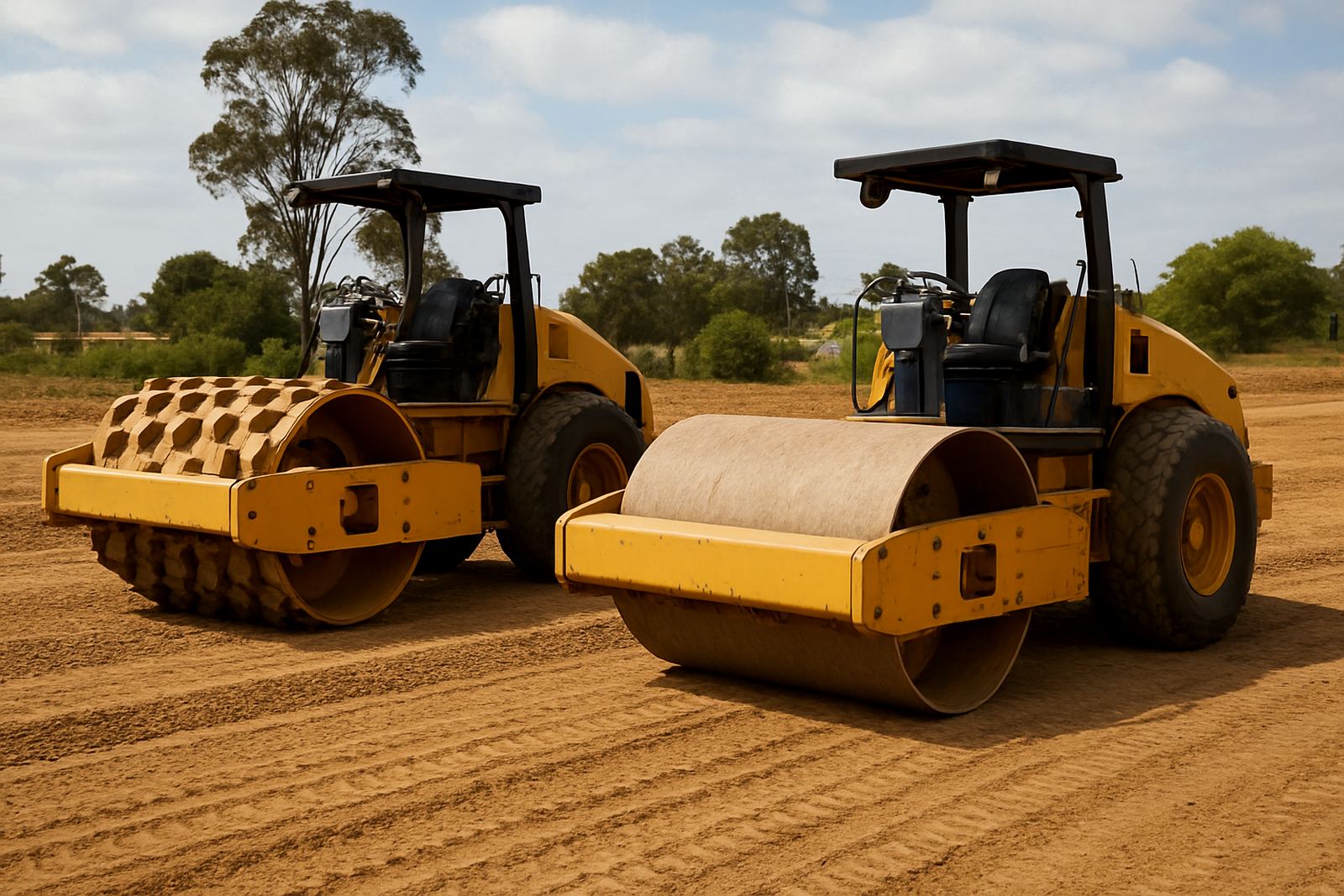
The type of roller matters just as much as the size. A smooth drum roller works well on granular material and asphalt. A padfoot roller is better for clay and mixed fill because the feet knead the material and help expel air. Pneumatic tyre rollers are useful when you need a sealed finish and good kneading across flexible layers.
On tighter sites in Germiston, Midrand or the older parts of Durban, turning space can be limited. In those cases, compact ride-on rollers or smaller walk-behind units can be more practical than a bigger machine. If the surface is uneven, steep or narrow, choose a roller that can move without marking the edge or damaging nearby services.
- Smooth drum: gravel, G5, subbase and asphalt finishes
- Padfoot: clay, wet fill and deeper embankment work
- Pneumatic tyre: finishing, sealing and mixed material layers
- Small roller: patch work, driveways and confined access areas
Use layer depth to guide weight and compaction effort
Layer depth is one of the clearest ways to narrow down your choice. A shallow layer of 100 to 150 mm can often be handled by a smaller roller, provided the material is at the right moisture level. Once you go deeper, the machine needs enough force to reach through the full thickness and not just press the top surface.
For thicker compacted lifts, do not assume more passes alone will fix the problem. If the layer is too deep for the roller, the top may look firm while the bottom stays loose. That leads to settlement later, especially on access roads, hardstands and loading zones where trucks will be moving daily.
- Under 150 mm: lighter roller, careful moisture control
- 150 to 250 mm: medium roller, more passes and good coverage
- Above 250 mm: check engineering spec and consider staged compaction
- Uneven fill: compact in layers instead of trying to finish in one go
Check moisture before you start rolling
Moisture can make or break the result. Dry material will not bind properly, while over wet material can pump under the drum and turn soft. This is common after rain in Gauteng summer storms and on coastal jobs in KwaZulu-Natal where humidity stays high through the day. On Cape sites, dry wind can pull moisture out of the top layer faster than expected.
Do a hand test before compaction. If the material crumbles and will not hold shape, it may be too dry. If water shines on the surface or the layer smears under foot, it may be too wet. Adjust the water, wait for the right window or rework the layer before bringing in the roller. It saves time and fuel in the long run and keeps the surface from failing later.
Plan for access, edges and site conditions
Not every roller suits every site. Tight urban plots, basement ramps, industrial yards and active construction sites all create different problems. In places like Boksburg, Pretoria East and Pinetown, access roads may also cross services, kerbs or live traffic areas, so the machine has to be easy to move and simple to control.
Check whether the ground can take the roller without bogging down. Look at turning circles, slope, overhead clearance and the route for getting the machine in and out. If the site has soft edges or recently placed fill, keep the roller back from the edge until the material has enough strength. That reduces slumping and keeps the finish neater.
- Measure entrances, ramps and turning space before delivery
- Check overhead lines, scaffolding and low clearances
- Keep clear of trench edges and fresh backfill until stable
- Plan access for fuel, servicing and off-hire collection
Use a simple selection checklist before you hire
A good hire decision is usually a practical one. Start with the material, then the depth, then the finish required. After that, look at how long the machine will be on site, whether you need an operator, and what support you may need if a breakdown happens after hours. For longer jobs, fleet planning and swop-outs can keep the programme moving with less waiting around.
Checklist before you book:
- What surface are you compacting?
- How deep is each layer in millimetres?
- Is the material dry, damp or too wet?
- Is the site open, confined or sloped?
- Do you need same-day dispatch or weekend support?
- Will you need safety documentation for the principal contractor or municipality?
If you are unsure, give us the surface type, layer depth and site location. That is usually enough to point you toward the right roller and keep the hire practical from the first day.