Start With the Site Edge and the Risk Around It
Before you order panels, walk the full boundary and note where the site meets a pavement, road reserve, school, shopfront, taxi rank or neighbouring yard. Those edges need the most care because they are the points where people pass closest to the work. In Johannesburg and other busy urban areas, a neat fence line also helps with by-law pressure and keeps unauthorised access down.
Look at the ground too. Soft fill, loose gravel, uneven concrete and sloped verges all change how the fence must be supported. If the site sits in a windy area, or near open land in places like the coast or highveld ridges, plan for stronger bracing and tighter fixing. A fence that is fine on level ground can move once the wind picks up, so check the whole line before hire is confirmed.
Choose the Right Panel Type for the Job
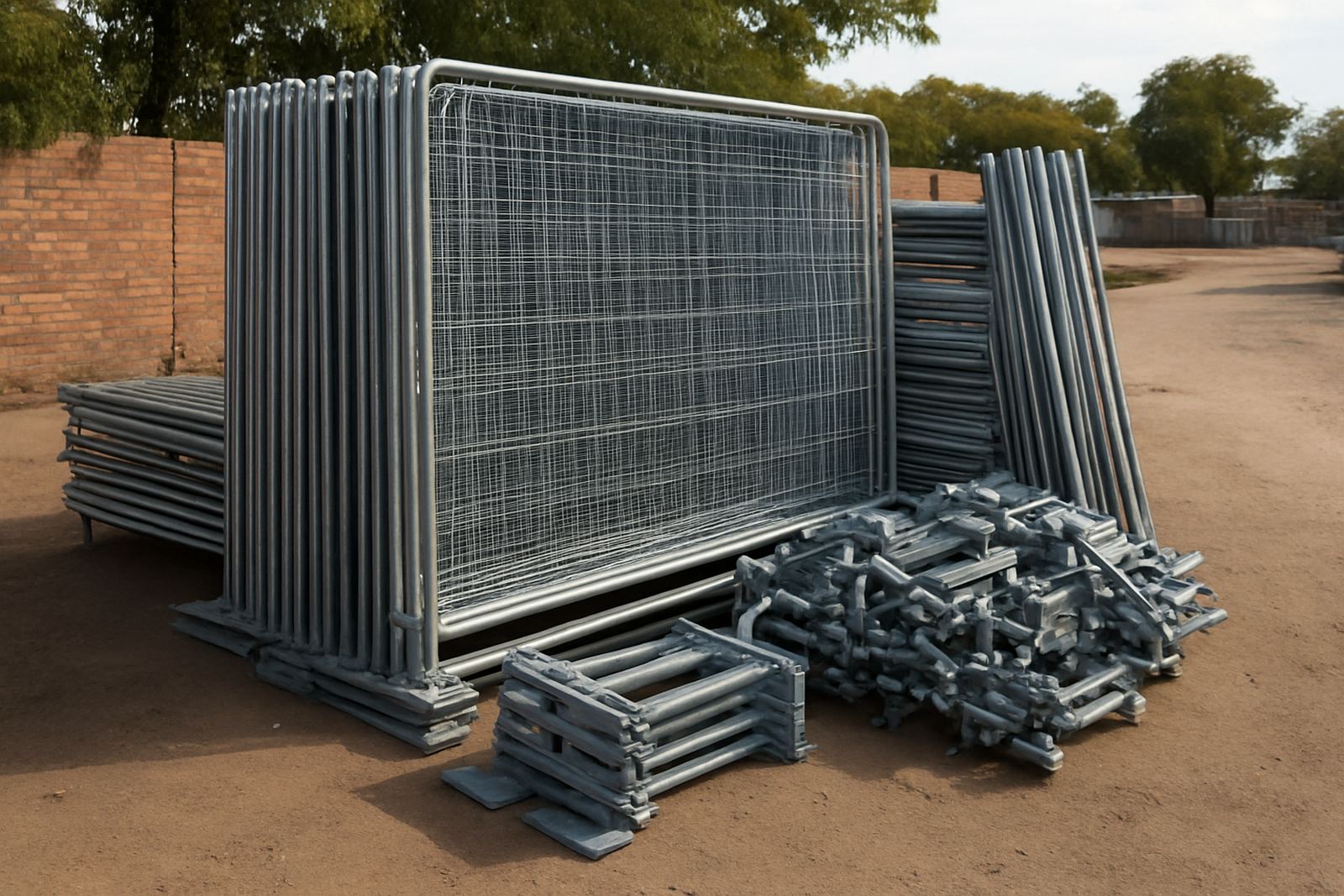
Temporary fencing is not one size fits all. For most construction sites, standard steel mesh panels work well because they are quick to install, easy to move and suitable for fast changing layouts. They suit housing developments, road works, warehouse upgrades and shutdown maintenance where access needs to change as the work changes.
Where public exposure is higher, you may need stronger visual control or tighter mesh spacing. If dust, loose material or tools must be kept out of sight, add screening or sheeting, but only where the fence can still handle wind load. A solid covering on a weak line can turn into a sail very quickly.
For tighter internal control, smaller barrier runs can help separate storage zones, loading areas and safe walkways. The right choice depends on the job, not only the budget. A cheap panel that needs constant attention costs more in the end, especially when labour is tight and every delay affects the programme.
- Standard mesh panels for general perimeter control
- Heavier duty panels for exposed, windy or high-traffic areas
- Privacy screening where public view or dust control matters
- Barrier sections for short internal routes and controlled access points
Stability Is the Part You Should Never Guess
Temporary fencing fails when the base is wrong. Stable feet, tied junctions, weights and braces are not extras, they are the main defence against tipping and gaps. On uneven surfaces you may need levelling blocks or adjusted foot positions so the panel sits straight instead of rocking. If the line snakes around corners, add extra support at each change of direction.
Wind exposure matters more than many people expect. In places like Durban or Cape Town, a fence that looks firm in calm weather can start shifting after a cold front or coastal gusts move in. On open sites in Gauteng, afternoon wind can still push panels over if they are under weighted or badly aligned. It is worth checking the line after the first day, then again after bad weather or heavy traffic near the fence.
- Use proper feet or base blocks on every panel
- Brace corners, gates and long straight runs
- Add weights where the ground is firm enough for them
- Inspect after rain, high wind or a vehicle strike
- Do not rely on loose bricks, rubble or off-cuts as a fix
Plan Gates, Deliveries and Public Movement Early
A fence line is only useful if people can still move safely through the site. Think through where trucks arrive, where workers enter, and where visitors or inspectors need to stop. A single gate that is too narrow can create congestion, while too many openings make the fence easy to bypass. The aim is controlled movement, not just enclosure.
For public-facing sites, keep pedestrian routes clearly separated from loading zones. Put gates where drivers can see them and where they do not swing into the road or walkway. If you are working near municipal roads or a shared boundary, confirm the placement before installation so you do not end up moving panels twice. That happens more often than people like to admit.
- Allow enough width for the biggest vehicle on site
- Fit gates where there is space for safe opening and closing
- Keep pedestrian access away from plant movement
- Use clear signage at every entry point
Add the Safety Items That Make the Fence Work Harder
Temporary fencing is a boundary, but safety comes from the full setup around it. Signage should tell people where to enter, where not to go and who controls the site. Reflective markers help at night or in low light, especially when a fence runs close to a road edge or parking area. If the site opens before sunrise or closes after dark, visibility becomes critical.
On busy sites, the fence also needs to support your safety documentation. Keep records of the layout, who installed it, when it was checked and whether any panels were moved. That way you can answer site audit questions quickly and show that the perimeter was managed properly. It saves time when the principal contractor or safety officer wants proof, not promises.
- Warning signs at access points and public edges
- Reflective strips or markers for night visibility
- Lockable gate arrangements where required
- Inspection notes for weekly checks and after stormy weather
Hire Duration, Servicing and What to Check Before Off-Hire
Temporary fencing hire should match the stage of the project. Short-term hire works for shutdowns, emergency works and small repair jobs. Long-term hire is better for developments, site camps and phased construction where the perimeter changes over months. If you expect the layout to move, ask about plant swop-outs and off-hire collections so the fence can be adjusted without holding the job up.
Before the fence is collected, check for damage, missing feet, bent panels and broken ties. Clean off mud where possible and make sure gates can be lifted safely. A proper handback saves argument and keeps the hire moving smoothly. It also helps the next site get equipment that is ready to go, which matters when dispatch is planned across Gauteng, KwaZulu-Natal and the Western Cape.
For contractors working from Germiston, Midrand, Pretoria East, Boksburg, Durban, Pinetown, Cape Town or Bellville, the best approach is to plan the fence as part of the site setup, not as an afterthought. When the boundary is right from the start, the rest of the work runs cleaner and with less interference.