Coldstore shell work in Kempton Park needed more than standard hire
The client was an industrial contractor working on a cold storage facility in Kempton Park, with the build focused on the shell, roof works and mechanical service installation. The site sat close to a busy logistics area, so deliveries had to be timed carefully and access around other trades was limited. In plain terms, they needed plant hire that would arrive when promised, fit the space available, and cope with a project that moved from concrete and steel into electrical and services work.
The brief was to support both the main structure and the follow-on fitout. That meant access equipment for overhead work, lifting gear for service units and materials, plus support equipment for power and site safety. The contractor wanted one hire point rather than juggling multiple suppliers, because every extra callout adds delay and more chance of confusion on site.
What made the site difficult to work on
Coldstore builds bring a few specific headaches. Once panels, roof sheets and service lines start going in, there is very little room to shuffle equipment around. Surfaces can be slippery from rain, condensation or dust on new concrete, and the work often carries on early mornings or late into the day to keep the programme moving. On this job the team also had to work around other contractors, which meant coordination was just as important as the machines themselves.
We planned the hire around three constraints that mattered most:
- Restricted yard and laydown space, so equipment had to be compact enough to stage cleanly.
- Mixed-height work, from low-level service routes to higher steel and roof access.
- Pressure on the schedule, with each trade relying on the last one to finish on time.
Because the site was in Kempton Park, the team also wanted a supplier that could respond quickly if a machine needed a swop-out or servicing. That is often the difference between keeping a crew productive and losing a day to an avoidable delay.
Equipment we supplied for the shell and service install
We supplied a practical mix of access and lifting plant sized for industrial use. The exact combination changed slightly as the job moved through the build stages, but the core hire package stayed centred on reaching height safely, lifting materials cleanly, and giving the contractor backup if one machine was tied up elsewhere on site.
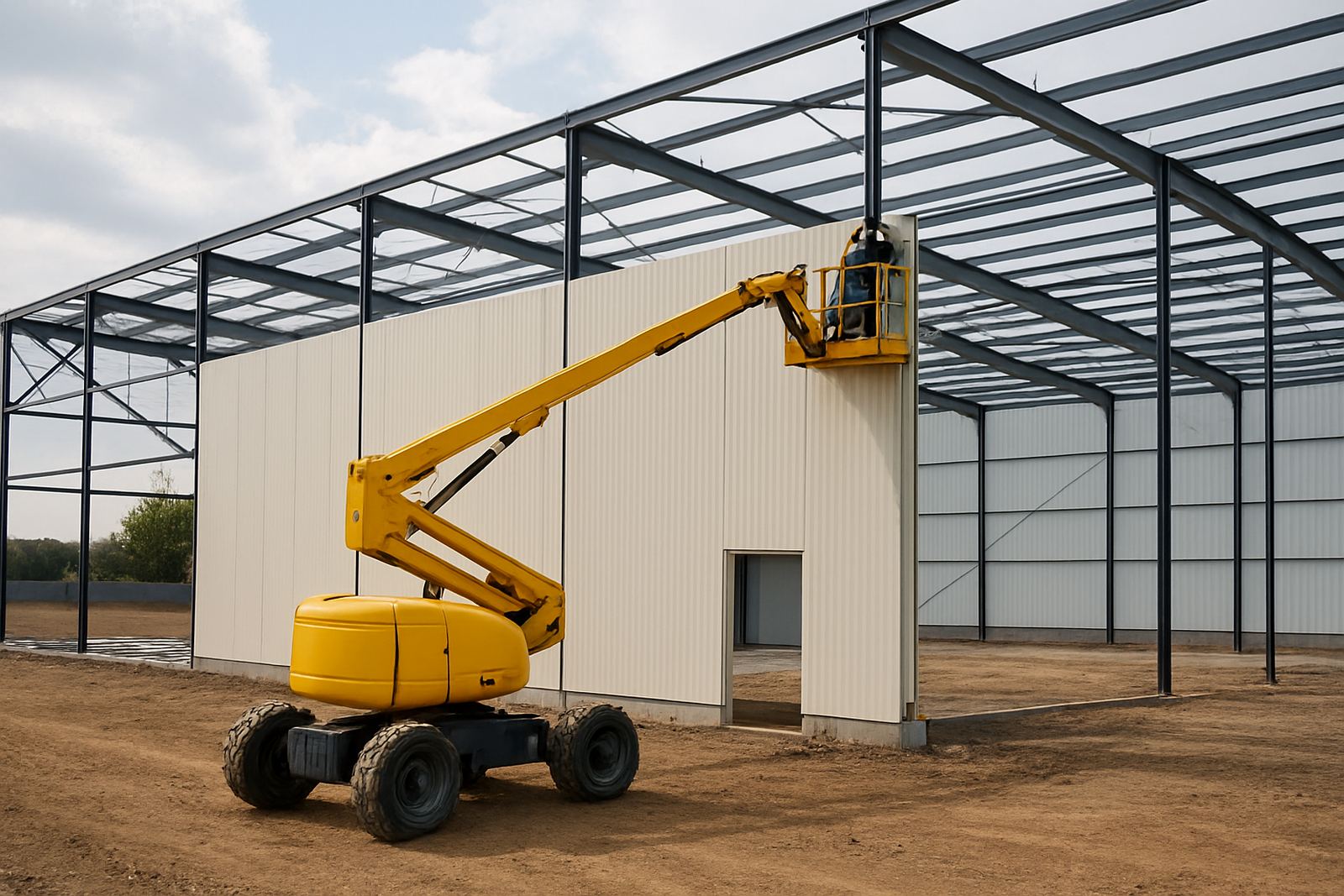
The main items included a rough-terrain boom lift for exterior steel and roof edge work, a scissor lift for internal ceiling and service runs, a telehandler for loading and placing materials, and a generator set to support tools where power supply was still being finalised. We also supplied mobile scaffolding for the smaller fixing tasks where a platform was more practical than a machine.
- 1 rough-terrain boom lift with working height suited to roof and cladding access
- 1 electric scissor lift for internal installation work in enclosed areas
- 1 telehandler for pallet movement, service lifts and general material handling
- 1 generator set for temporary site power during service installation
- Mobile scaffolding towers for spot work and fitoff tasks
- Safety documentation and handover checks before the equipment went to work
Every unit was prepared for site use, checked before dispatch and matched to the ground conditions and working envelope. On a project like this, under-speccing a machine can slow the whole programme down, while over-speccing just wastes space and money.
How we kept the programme moving week by week
The hire ran over a six week period, with the first delivery going in as the shell works started to open up and the last collection timed after the main service installation was complete. During the first two weeks we focused on the access equipment and telehandler, because that is when the heavy structural and envelope work needed most support. By week three the scissor lift and scaffolding were in regular use inside the building for ceiling and service routes.
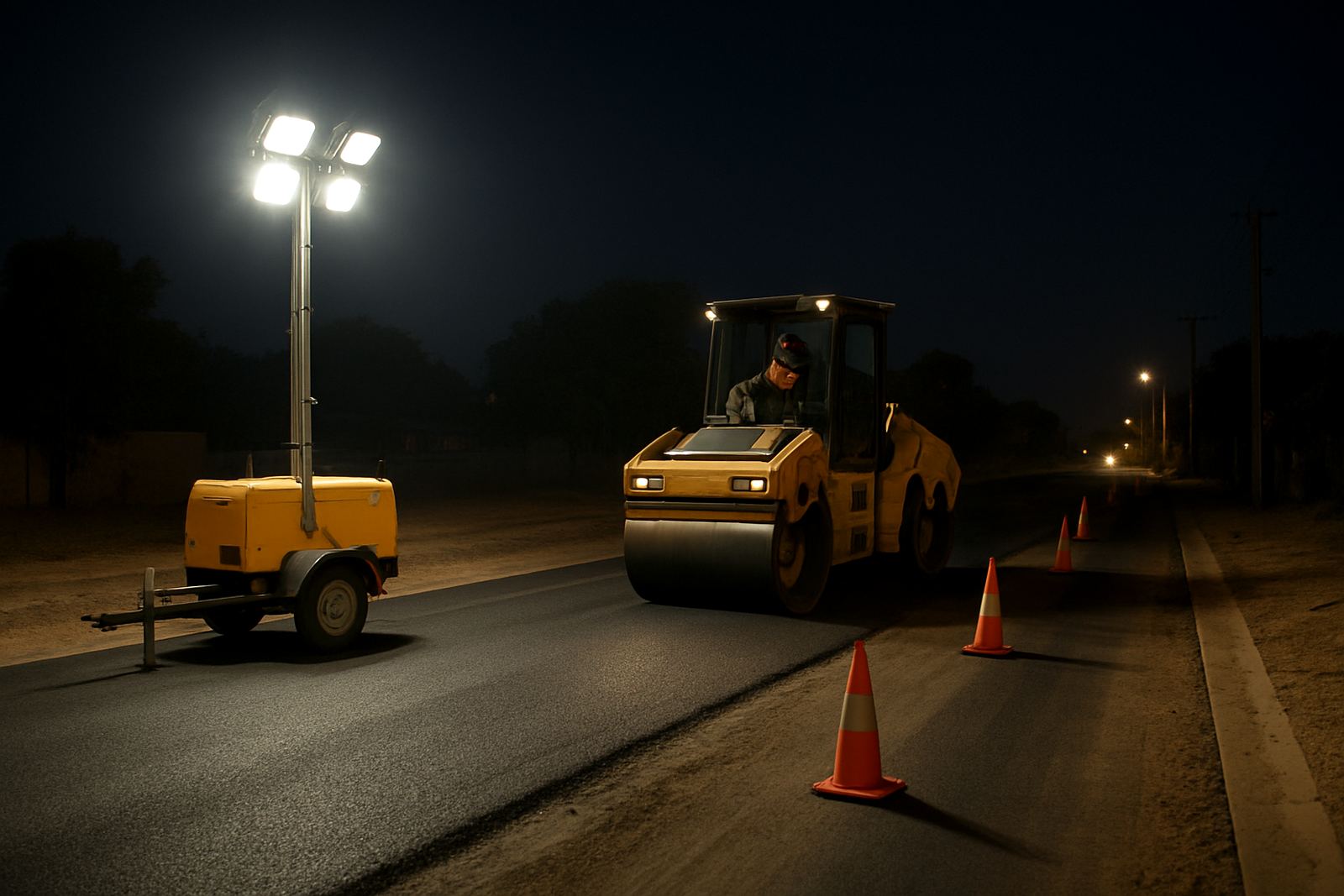
From week four onward, the emphasis shifted to keeping the follow-on trades moving without interruption. Our hire coordinator kept in touch with the site team on usage, and the fleet manager scheduled a swop-out check to make sure the machines stayed reliable. A generator was held ready for backup as the site loads changed, which helped avoid stoppages when the electrical install was still being completed.
We also arranged site deliveries in a way that suited the contractor's daily sequence. That meant avoiding traffic peaks and making sure the equipment landed where it could be put to work with minimal repositioning. It sounds simple, but on a live industrial site those small decisions save hours.
Safety controls and compliance support on a busy industrial build
Industrial coldstore work carries a strong safety requirement because there are multiple trades on site, regular vehicle movement and a lot of work happening at height. We supplied the equipment with the required safety paperwork and made sure the handover covered the basic operating checks, ground conditions and exclusion areas. The contractor also asked for support with ongoing documentation, which helped keep the site records in order for inspections and internal audits.
Our safety and compliance lead worked with the site team on the practical side of the job, not just the paperwork. That included confirming where access equipment could be parked without blocking routes, checking that the chosen machine was appropriate for the floor load and working area, and making sure the operator supply matched the task where requested.
- Pre-delivery equipment checks completed before each dispatch
- Safety documentation supplied for the hire period
- On-site servicing available if a unit needed attention during the job
- Breakdown response and off-hire collection planned around the build programme
That approach reduces confusion and keeps site management focused on the build itself rather than chasing hire issues. It also helps when several trades are sharing the same footprint and no one has time for repeated stoppages.
What the client gained and what we would repeat
The result was a smoother sequence on site, with the contractor able to move from shell work into service installation without waiting on access or lifting support. The equipment performed as expected, and the mixed hire package meant the team could handle different tasks as they came up instead of bringing in a separate machine for every small job. The site finished the programme with fewer interruptions and better control over day-to-day lifts.
What we would do again is keep the hire plan tight from the start and keep the communication lines open as the site changes. Coldstore projects often change pace quickly, especially once the building envelope is closed and the services team takes over. Having a supplier that can adjust the fleet plan, handle same-day dispatch where needed and respond to small changes without drama is worth a lot on a project like this.
For Kempton Park and similar industrial sites around Gauteng, that is the model we prefer: practical equipment, clear scheduling, and support that stays ahead of the job rather than behind it.
Key facts
| Project location | Kempton Park, Gauteng |
|---|---|
| Project type | Industrial cold storage shell and service installation |
| Hire period | 6 weeks |
| Main equipment | Boom lift, scissor lift, telehandler, generator, mobile scaffolding |
| Support included | Site deliveries, safety documentation, on-site servicing, breakdown response |
| Site conditions | Restricted access, mixed-height work, active multi-trade industrial site |