
The brief from a working school site
The client was a local school in Soweto adding new classrooms to a busy campus that still had to function every weekday. The build was split into phases, starting with earthworks, then foundations, blockwork, concrete pours and final tidy up around the new classroom blocks. The contractor needed hired plant that could arrive on time, fit through narrow access points and work safely alongside pupils, staff and parents coming and going.
They also needed a supplier who understood school site rules. Deliveries had to be planned around morning drop off and afternoon collection, with clear pedestrian separation and controlled material storage. The brief was simple on paper but strict in practice: keep the programme moving, keep the site neat, and avoid equipment that was too large or too noisy for the setting.
Access limits, noise control and phased delivery
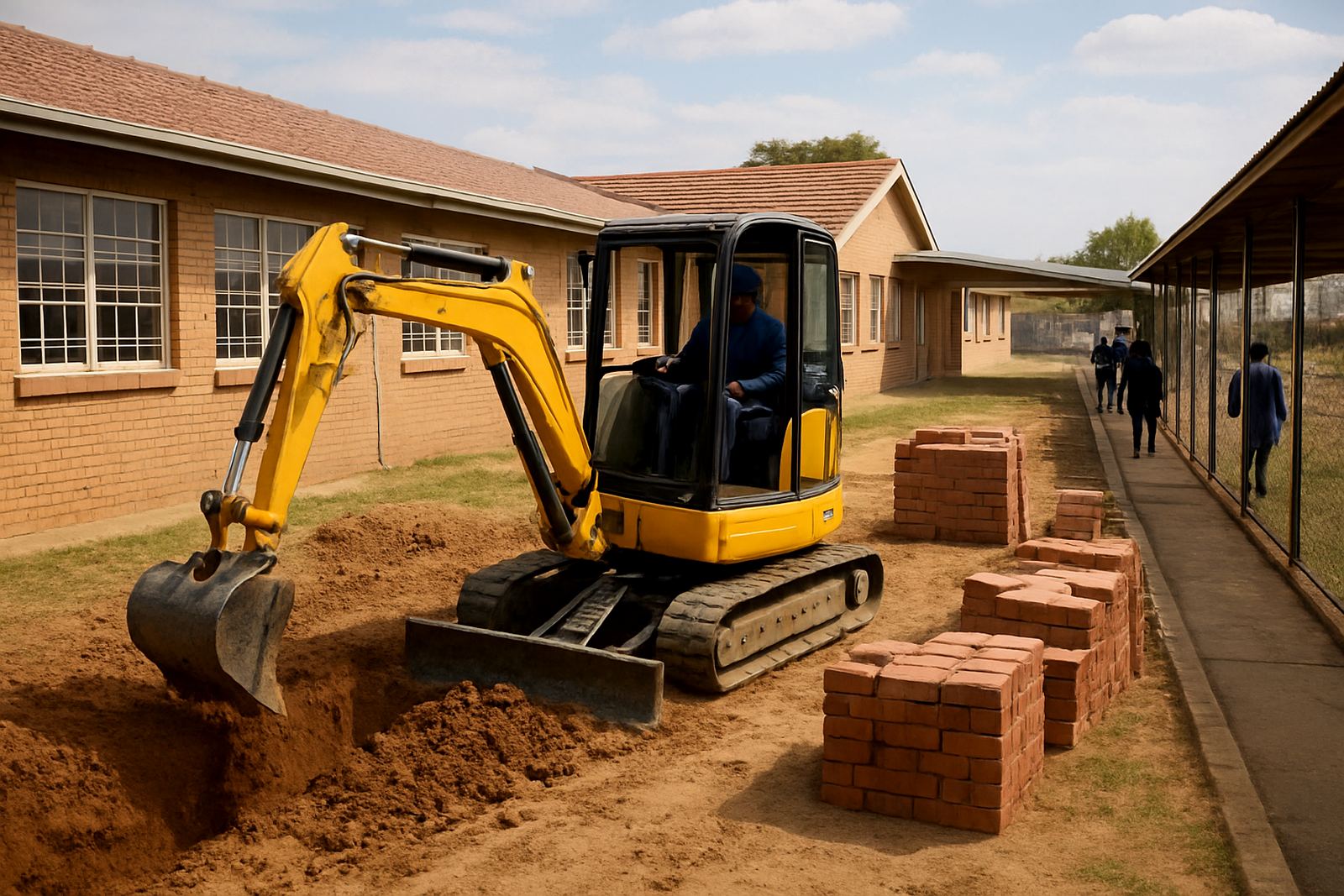
The school grounds had limited turning space and only one practical entry point for heavier kit. Certain work had to be done over weekends and during short school breaks, which meant equipment had to be ready to move in and out fast. The team also had to manage dust and noise, because classrooms nearby were in use during the first phase.
- Narrow access points meant we supplied compact machines instead of full size units where possible.
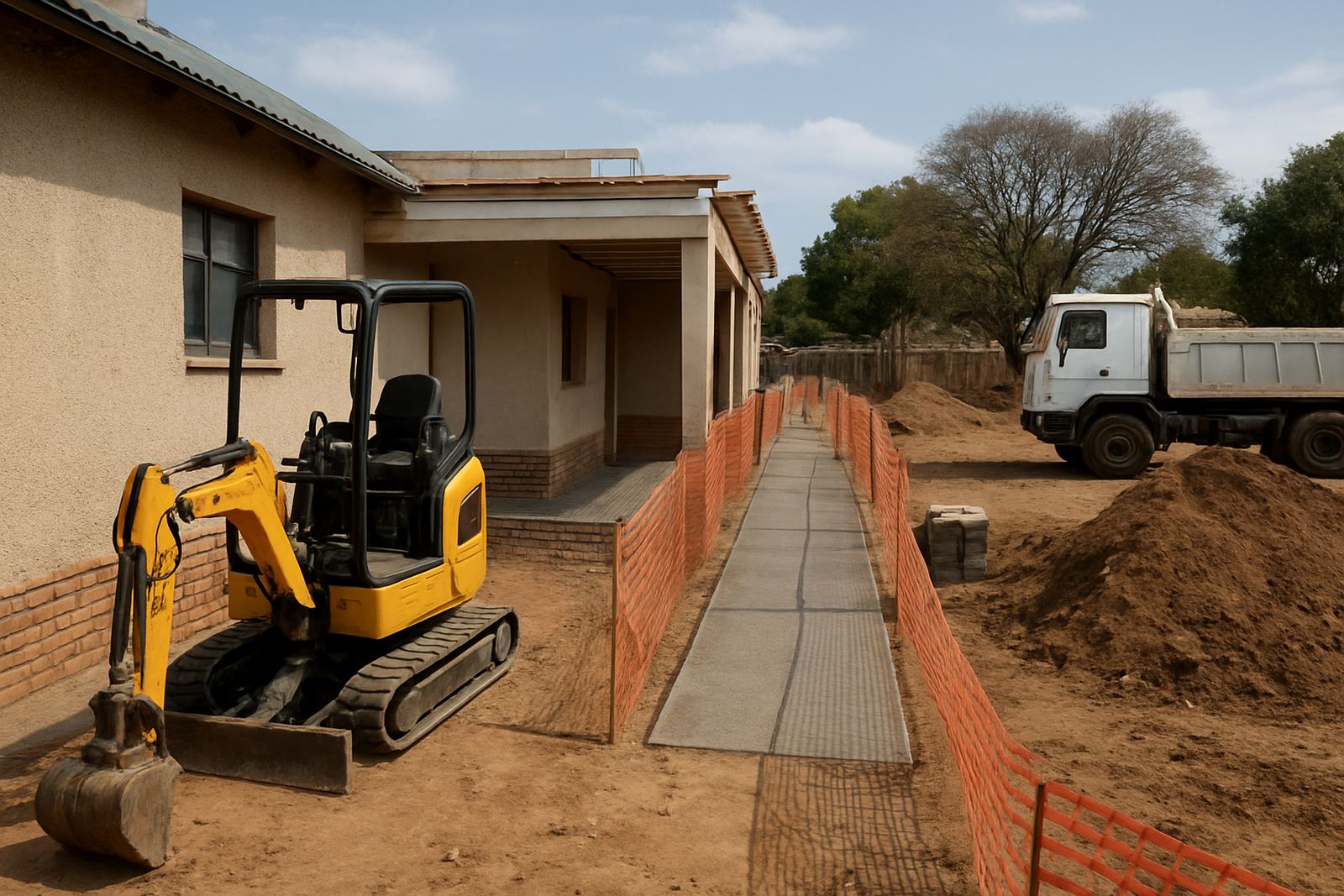
- Temporary fencing was used to split the active work zone from the learner circulation areas.
- Deliveries were scheduled to avoid peak traffic around the school gate and nearby roads.
- Fuel and servicing were planned around the programme so there were fewer stoppages on site.
Because the site sat in a built up part of Soweto, we also kept an eye on loading and off-loading times. That reduced congestion and made it easier for the site foreman to keep the work area controlled. It sounds small but it saves hours over a short project, especially when each phase depends on the one before it.
What we supplied for the build
We put together a hire package for the contractor that covered earthmoving, concrete preparation and site control. The equipment was scaled to the job so the team could move spoil, mix material on site and keep boundaries secure without bringing in oversized machinery that would be awkward to operate around the existing school buildings.
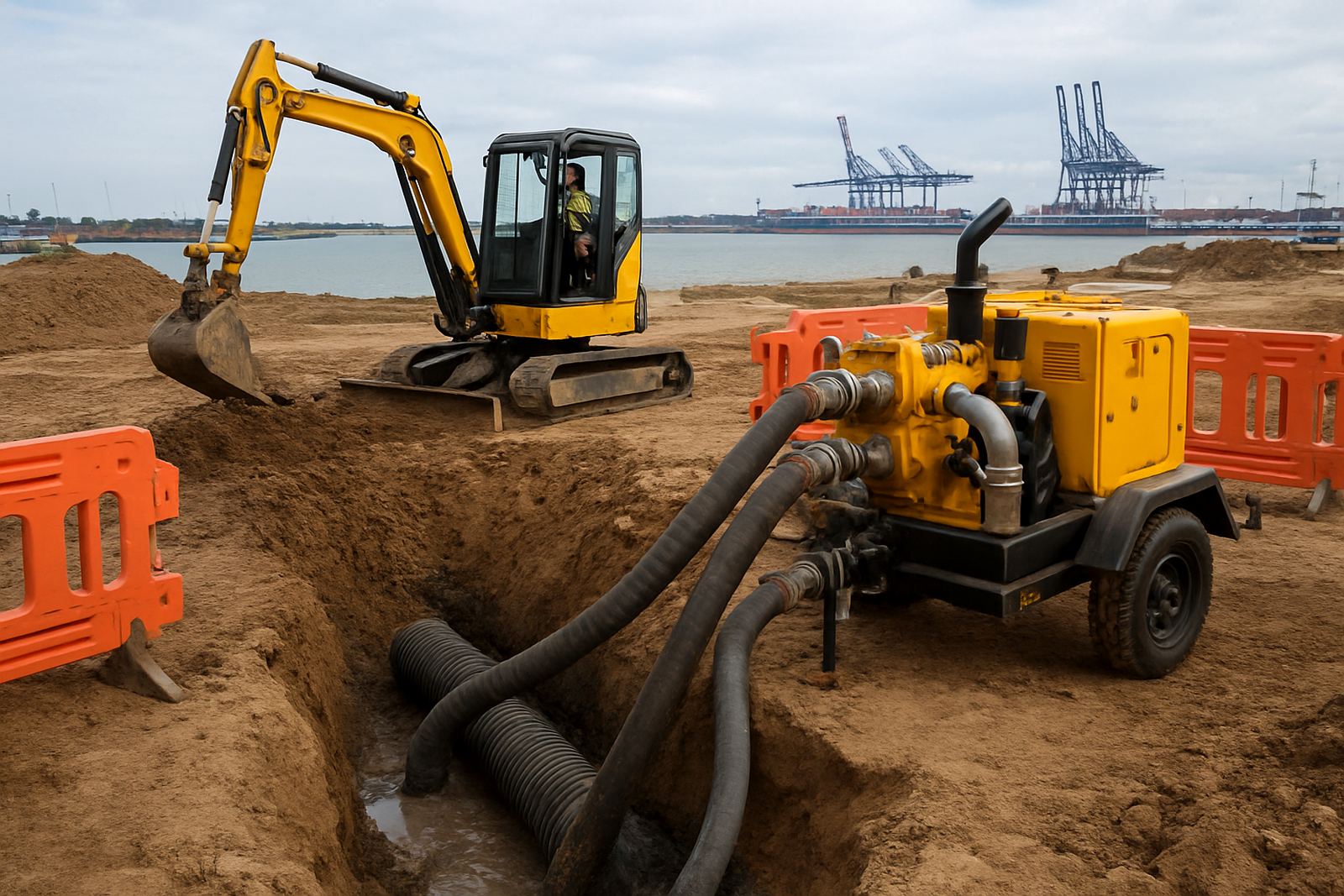
- 1 x compact excavator for trenching and levelling, suited to tight school-yard access
- 1 x small site dumper for shifting spoil and aggregate between work areas
- 2 x concrete mixers for foundation and slab preparation
- Temporary fencing panels with gates for controlled access and boundary marking
- 1 x generator set for backup power during intermittent supply interruptions
- Basic site lighting for early starts and safe pack-up during winter afternoons
For the mixers, the contractor wanted dependable batch output without standing around waiting for hand-mixing. The generator was important during load-shedding and for short periods when power was isolated on site. The fencing helped the team keep materials and tools out of learner areas, which made a real difference to day-to-day control.
How the hire ran across the four week programme
The first week focused on delivery, site set-out and the initial earthworks. Week two covered foundation preparation and early concrete work. In week three, the contractor moved into blockwork and service route preparation while keeping one section of the site live and another section closed off. Week four was used for finishing works, adjustments and off-hire collections.
We provided same-day dispatch on one replacement item when the original unit needed a quick swop-out. That kept the programme on track and prevented a delay to the pour schedule. Our workshop team checked the machines before each dispatch and the hire coordinator kept the client updated on timing, collection windows and any route changes from Germiston into Soweto.
The result was a steady hire pattern rather than a stop-start arrangement. That matters on education projects where deadlines are tied to term calendars and handover windows. The school did not have room for slack, so the contractor needed kit that was ready when promised and easy to move when the work phase changed.
Results on site and what changed for the contractor
By the end of the project the contractor had completed the classroom extension without blocking school movement or leaving the grounds in a messy condition. The compact plant made it easier to work close to existing buildings and the temporary fencing kept the site orderly. The school administration also had better peace of mind because access was controlled and the active work area was clearly marked.
- The build stayed within the planned four week hire period.
- Equipment handled repeated start stop use without major downtime.
- Site boundaries stayed clear, which reduced security concerns after hours.
- Fuel management and on-site servicing cut unnecessary trips off site.
- The client was able to phase the work without holding extra machinery idle.
From a cost point of view, the contractor avoided paying for bigger plant than the job needed. From a practical point of view, the school remained usable through the project with only the necessary areas restricted. That is usually the balance you want on an extension like this.
What we would do again on a school project like this
For a similar school extension, we would set up the same style of phased hire but with even tighter delivery windows around school times. We would also recommend early fencing and clear walkways from day one, rather than waiting until earthworks are already under way. On occupied school sites, the first few hours can decide how smoothly the rest of the job runs.
We would keep the machine mix compact and practical: one excavator, one dumper, mixers, fencing and a generator rather than overloading the site with excess kit. Where the programme stretches into winter, we would add more lighting and consider weekend support for final concrete or snag work. That approach worked well here and it suits school work in Gauteng, where weather, traffic and municipal conditions can change quickly.
For the next phase on a project like this, we would also review off-hire timing in advance so collections happen the same day a section is finished. It keeps the grounds clear, helps the client close out each phase cleanly and avoids equipment sitting around where children can see it or try to get near it.
Key facts
| Project | Soweto School Extension |
|---|---|
| Client type | Local school with appointed building contractor |
| Location | Soweto, Gauteng |
| Duration | 4 weeks |
| Scope | Compact earthmoving, mixers, temporary fencing and power support |
| Fleet supplied | Excavator, dumper, mixers, generator and fencing panels |