
Project brief for a working port environment
The client was a civil works contractor handling drainage improvement inside the Durban port area, where even a small hold-up can affect vessels, vehicle movement and follow-on trades. The brief was straightforward to say and harder to execute: move standing water, open up blocked runs, and support the crew with equipment that could work in confined spaces without slowing the programme.
We planned the hire around a short, time-sensitive window of 3 weeks. The work called for a mix of water removal, light excavation and compressed air tools, with enough backup on site to deal with soft ground and sudden rain. Because the site sat close to marine air and heavy traffic, the equipment also had to handle corrosion risk, limited staging space and a steady cycle of breakdowns if the wrong machine was sent in.
- Client type: civil contractor working on port drainage
- Area: Durban, KwaZulu-Natal
- Programme length: 3 weeks
- Main risk: water ingress, limited access and shifting ground conditions
Access, tide, and safety restrictions we had to work around
Port work is never just about the machine. Deliveries had to fit a controlled access route, with offloading times arranged around security checks and active traffic. The drainage line ran through an area where surfaces changed from hardstanding to soft patches after rainfall, so we kept axle loads sensible and matched the plant to the ground instead of forcing a larger unit into a tight corner.
There were also municipal and site rules to respect, including clean working practices, spill control and clear documentation for the team entering the area. The contractor needed equipment with reliable start-up during load-shedding and enough fuel discipline to avoid repeated refuelling trips. We also had to account for coastal humidity, which can shorten the life of hoses, seals and electrical parts if servicing is left too long.
- Controlled access and security checks
- Wet ground and limited turning space
- Load-shedding risk for support equipment
- Coastal conditions that demand regular inspection
What we supplied to keep the drainage crew moving
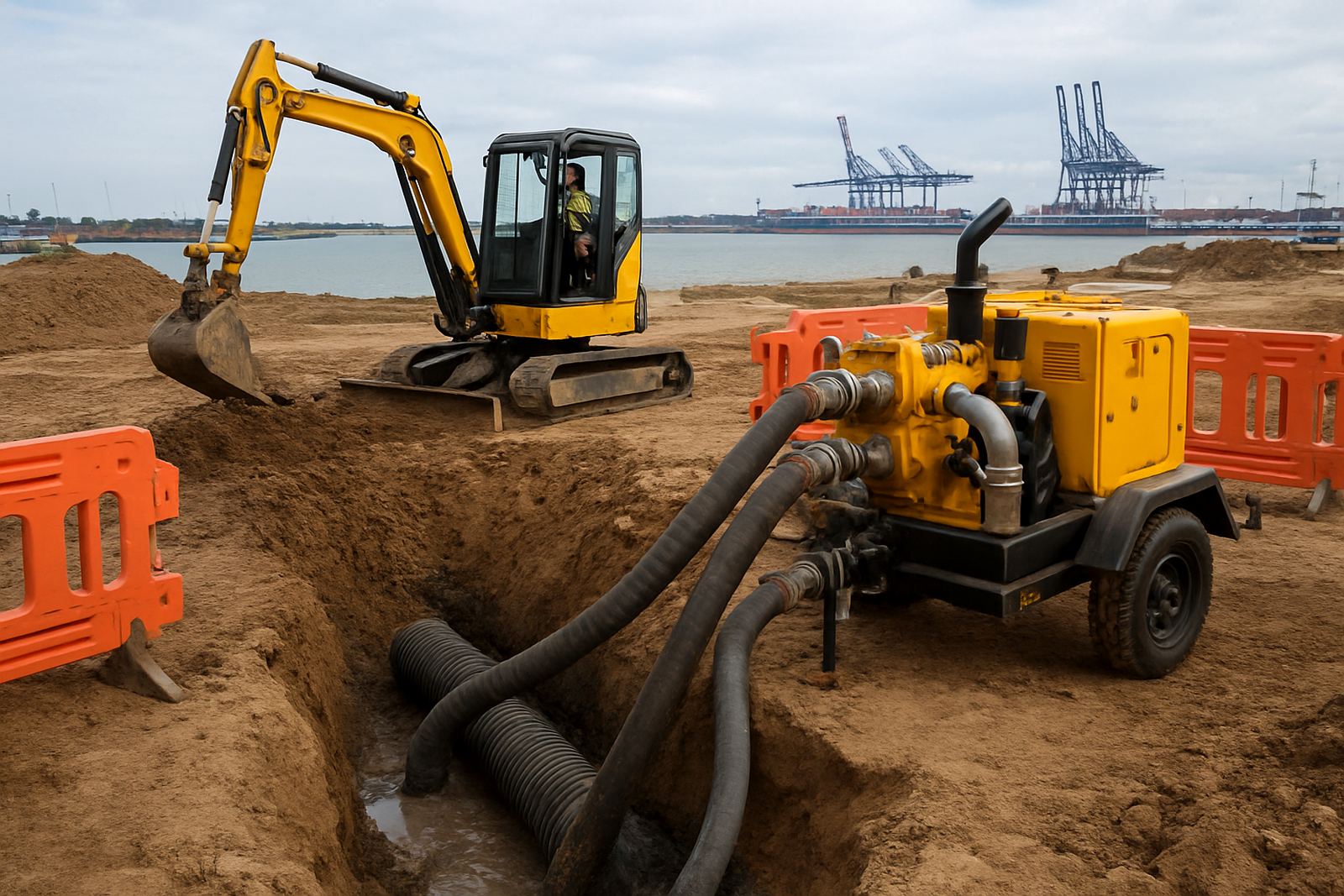
We supplied a combination of high-capacity water pumps, air compressors and compact excavation equipment so the contractor could work on the drainage runs without waiting on one task to finish before the next started. The pumps handled dewatering where water had pooled in low sections, while the compressors supported air tools for breaking out stubborn sections and clearing debris. Compact excavation equipment handled trench clean-out and repositioning of spoil where access was too narrow for larger plant.
The package was set up for practical use rather than oversupply. We kept machine sizes manageable for the port setting, with enough capacity to get the job done but not so much that the crew lost time squeezing through gates or around barricades. One or two units remained on standby for swap-out if a machine showed wear, which is the sort of planning that saves a shift when the weather turns.
- Pumps sized for fast dewatering of low-lying drainage sections
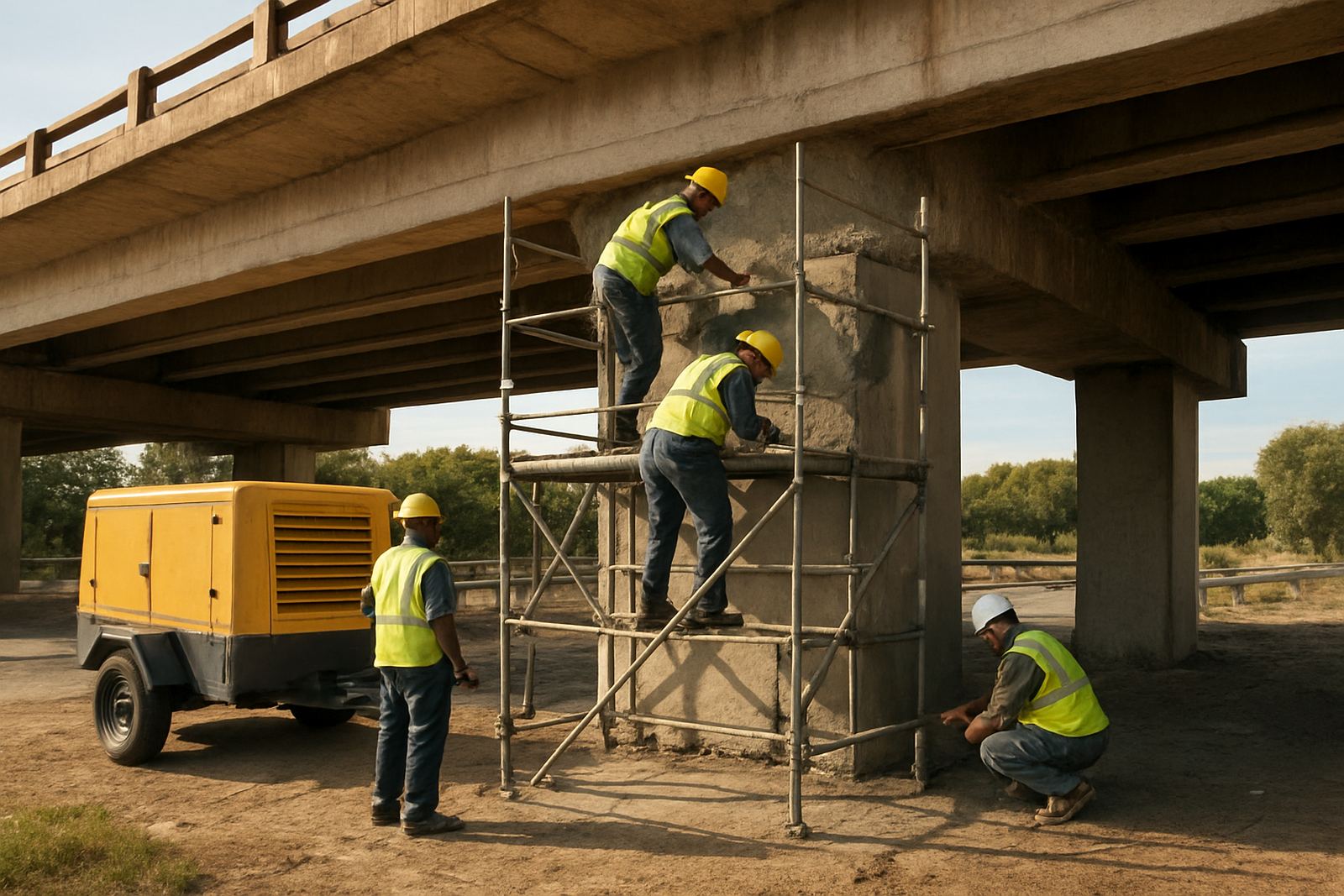
- Compressors for pneumatic tools and clearing duties
- Compact excavation plant for trench work and spoil handling
- Standby support for quick replacement if needed
Delivery, setup and breakdown response in week one
In the first week we focused on delivery timing, placement and handover. The site team needed the right gear on the ground before the drainage crew started cutting in, so we arranged same-day dispatch for the first load and a second movement shortly after once the access route was confirmed. Our workshop and hire team checked fluid levels, hoses, filters and safety items before each movement, then confirmed the equipment layout with the supervisor on site.
Once the machines were working, we stayed close to the programme with on-site servicing and breakdown response if required. That meant faster action if a pump needed a filter change or a compressor showed an air leak. We also kept the hire plan flexible enough for plant swop-outs, which helped when the contractor adjusted the sequence of works after discovering deeper silt in one channel. The best part was that the crew could keep going without waiting for fresh approvals every time the conditions changed.
- Same-day dispatch used for the first mobilisation
- On-site checks carried out during the hire period
- Quick swop-outs available if a machine underperformed
- Support kept in step with the contractor’s changing sequence
How the hire was managed over three weeks
By the second week the team had settled into a steady rhythm. We assisted with fleet planning so the contractor could keep the drainage works, spoil removal and cleanup moving in the right order, instead of having idle machines sitting on the edge of the site. Fuel management was especially useful because port work can run long hours and there is no room for unnecessary down-time when the weather changes mid-shift.
Weekend support helped too. Drainage improvement work often benefits from a shorter, quieter window when traffic eases, and the contractor used that time to push through the messy bits without pressure from other site activities. Our hire coordinator kept the paperwork clean, while the safety and compliance lead made sure the documentation stayed in order for the site controllers. That kind of admin matters, even if nobody gets excited about it.
- Fleet planning aligned equipment with each task
- Fuel management reduced unnecessary interruptions
- Weekend support helped the crew use quieter site windows
- Safety documentation stayed current throughout the hire
Results, and what we would repeat next time
By the end of the 3-week period the drainage runs were opened up, standing water had been cleared, and the contractor had a better working surface for follow-on civil tasks. The main win was not only the improved drainage itself but the fact that the crew kept moving without waiting for replacement gear or emergency fixes. That saved time and helped maintain a safer site, particularly in areas where water and mixed traffic can quickly create hazards.
If we were doing the same job again, we would repeat the same approach: match compact plant to access limits, keep pumps sized for real site conditions, and hold a backup plan for any unit working near salt air and heavy use. Durban port work rewards teams that plan ahead and stay practical. That is where reliable hire, prompt servicing and clear communication make the difference.
- Drainage improved within the planned 3-week window
- Less standing water on working surfaces
- Better continuity for follow-on civil work
- Safer access for crews moving through the site
Key facts
| Location | Durban Port area, KwaZulu-Natal |
|---|---|
| Programme | 3 weeks |
| Plant supplied | Pumps, compressors and compact excavation equipment |
| Service model | Site delivery, on-site servicing and breakdown response |
| Operating conditions | Coastal humidity, controlled access and wet ground |
| Support options used | Same-day dispatch, fleet planning and weekend support |