Bridge repair brief in Pretoria
The client was a municipal works team managing repairs to a busy bridge in Pretoria. The job called for safe access to the underside of the structure, reliable power for tools and lighting, and support equipment for patching, formwork and curing work. The site had to stay active around traffic, so the plan needed to fit around lane closures and short working windows.
Because bridge repairs do not allow much room for error, the first step was to match the hire list to the sequence of work. Access, power, material handling and safety controls all had to line up. We worked from Germiston with delivery into Pretoria East, and the order was staged so the crew could start without waiting on missing items.
- Project type: municipal bridge repairs
- Location: Pretoria, Gauteng
- Work scope: access, power and concrete support
- Site condition: live traffic, restricted working space
What the site needed to get started
The brief was practical. The contractor needed working platforms for the repair teams, a stable power source for hand tools and site lighting, and equipment to support concrete works in a controlled way. On a bridge, even a small delay can knock the whole programme off balance. That is why the hire plan included both the main items and backup cover for breakdowns and swop-outs.
We also had to consider the Pretoria weather. Summer heat can affect curing and crew fatigue, while sudden rain can slow prep work and make access routes slippery. The equipment mix was selected to handle a 10 to 12 hour shift pattern with enough reserve capacity for load-shedding or local power interruptions. It kept the team working even when the grid did not.
- Access requirements for underside repair points
- Backup power for lighting and hand tools
- Support gear for concrete pours, patching and curing
- Redundancy for power cuts and after-hours work
Scaffolding, generators and concrete support supplied
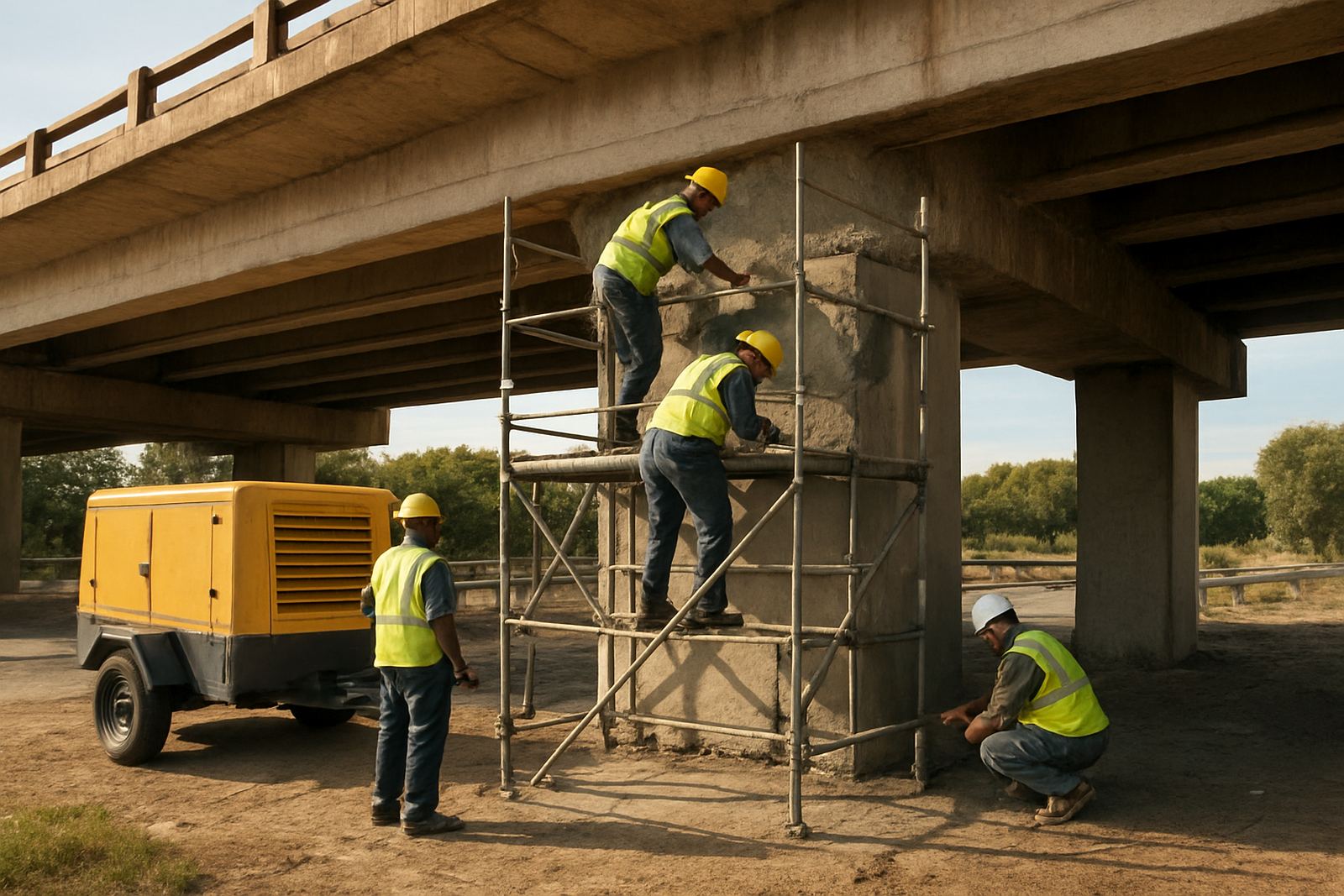
We supplied modular scaffolding sections for safe access around the bridge piers and edge zones, together with access boards, base plates and bracing components to suit the work area. The scaffold was configured in smaller runs so the team could move it without wasting time on overbuild. For power, we provided diesel generators sized for site tools and lighting, plus extension distribution to keep cables tidy and off wet ground.
For the concrete side of the job, we supplied concrete support equipment for formwork and patching works, including props, jacks, mixers and curing support items. The gear was chosen for repeat use rather than one-off tasks, which helped the contractor move between repair sections without stopping to reorganise the whole site.
- Scaffolding for safe working access and edge support
- Diesel generators for lighting and power tools
- Concrete support equipment for repair and finishing works
- On-site replacements if a unit needed attention
Delivery, setup and site coordination
The first delivery went out from our Germiston depot, with the balance of the hire moved as the job opened up more work fronts. That phased approach mattered because bridge repairs often start in one section and then shift once the area is checked and opened by the municipal team. We kept contact with the site supervisor so each delivery matched the actual progress on the bridge, not just the original drawing.
Our team handled off-hire collections and plant swop-outs as the sequence changed. That meant the contractor did not have to keep unused equipment on site, which is important when there is limited laydown area and municipal access rules. The setup was done to leave clear paths for workers, traffic control and emergency access, with no extra clutter around the repair zone.
- Phased delivery to suit the repair sequence
- Site coordination with the supervisor and safety lead
- Plant swop-outs where the programme changed
- Off-hire collections to free up space on site
Timeline and working conditions
The hire ran over six weeks in total. The first week covered mobilisation, delivery and scaffold setup. Weeks two to four focused on the main repair work, with generators running daily for lighting and tools. The last two weeks were used for finishing, curing support, inspection and tidy-down. A six-week window is not unusual for municipal bridge work, but only if the equipment keeps pace with the crew.
We also supported weekend work where the repair team needed extra hours to stay within the programme. The combination of same-day dispatch from Gauteng and local depot coverage made it easier to respond when a section needed additional support or a generator changeout. In a job like this, time saved on logistics is time gained on the bridge.
- Total hire period: 6 weeks
- Weekend support provided when required
- Same-day dispatch used for urgent items
- Generator support maintained through work shifts
Result for the municipal team
The project was completed with the repair crew able to work safely and keep to the municipal programme. The right scaffolding gave controlled access, the generators kept tools and lighting running, and the concrete support equipment helped the team manage patching and finishing in organised stages. There were no unnecessary stoppages caused by missing hire items, which is exactly what a bridge repair job needs.
From our side, the result was a clean handover and a straightforward off-hire at the end of the work. The site stayed manageable, the contractor kept control of the work area, and the municipality could see steady progress without the usual scramble for emergency equipment. It was a good example of what practical hire support should look like on an active infrastructure site.
- Safe access maintained throughout the repair period
- Power supply stayed steady despite load-shedding risk
- Concrete work support improved site organisation
- Equipment was removed quickly once sections were complete
What we would do again on a similar bridge job
For the next bridge repair in Pretoria or elsewhere in Gauteng, we would use the same approach: stage the hire in phases, keep a backup generator ready, and match the scaffold layout to the exact work face instead of sending out too much equipment too early. That keeps the site tidy and cuts down on handling time. It also makes life easier for the safety team when traffic is moving nearby.
We would also keep one point of contact for the programme, because bridge work changes fast when inspection results come in. With Sibusiso Mthembu and the wider team handling hire planning, fleet control and safety paperwork, it is easier to stay aligned with the contractor and the municipal representative. For projects that need discipline, that kind of support matters more than anything else.
- Phase the hire to match the repair sequence
- Keep backup power available for interruptions
- Use one coordination line for updates and changes
- Plan scaffold runs to suit the actual work area
Key facts
| Location | Pretoria, Gauteng |
|---|---|
| Client type | Municipal bridge repair team |
| Project duration | 6 weeks |
| Main equipment | Scaffolding, diesel generators, concrete support equipment |
| Supply model | Phased delivery with weekend support and swop-outs |
| Depot support | Germiston with Gauteng-wide dispatch |