Freight Yard Works in Paarl
The job was for a freight and storage yard on the edge of Paarl, where the owner needed a cleaner, stronger surface for trucks, container handling and stormwater control. The brief was straightforward on paper, but the site came with its own pressures: wet sections after rain, live operations at the perimeter, and limited room for stockpiling material. Work had to keep moving without blocking access for deliveries.
We were brought in to support the excavation, drainage runs and compacted hardstand build-up over a 9 week programme. The main aim was to get the yard serviceable for heavy vehicle movement and reduce standing water in the lower sections. Because the site sat in a mixed industrial area, dust control and orderly movements mattered just as much as machine output.
What the Site Needed and What Held It Back
The client needed machines that could move spoil fast, shape drainage lines cleanly and prepare sub-base layers for compaction. The ground conditions changed from dry gravel to damp clay in sections, so one machine type would not have carried the whole job. We also had to work around existing warehouse traffic, municipal stormwater requirements and the usual Paarl weather shifts that can turn a dry morning into a muddy afternoon.
- Limited laydown space for material and plant
- Active freight movements on the same property
- Stormwater falls had to be kept consistent across the yard
- Dust and mud control were both important for safety and access
- Weekend work was needed to avoid disrupting deliveries
There was also pressure to keep the programme tight because the yard had already committed to incoming freight bookings. That meant no long waits for repairs and no gaps between excavation and compaction. If a machine stood idle, the whole sequence backed up.
Plant Supplied for Excavation and Hardstand Prep
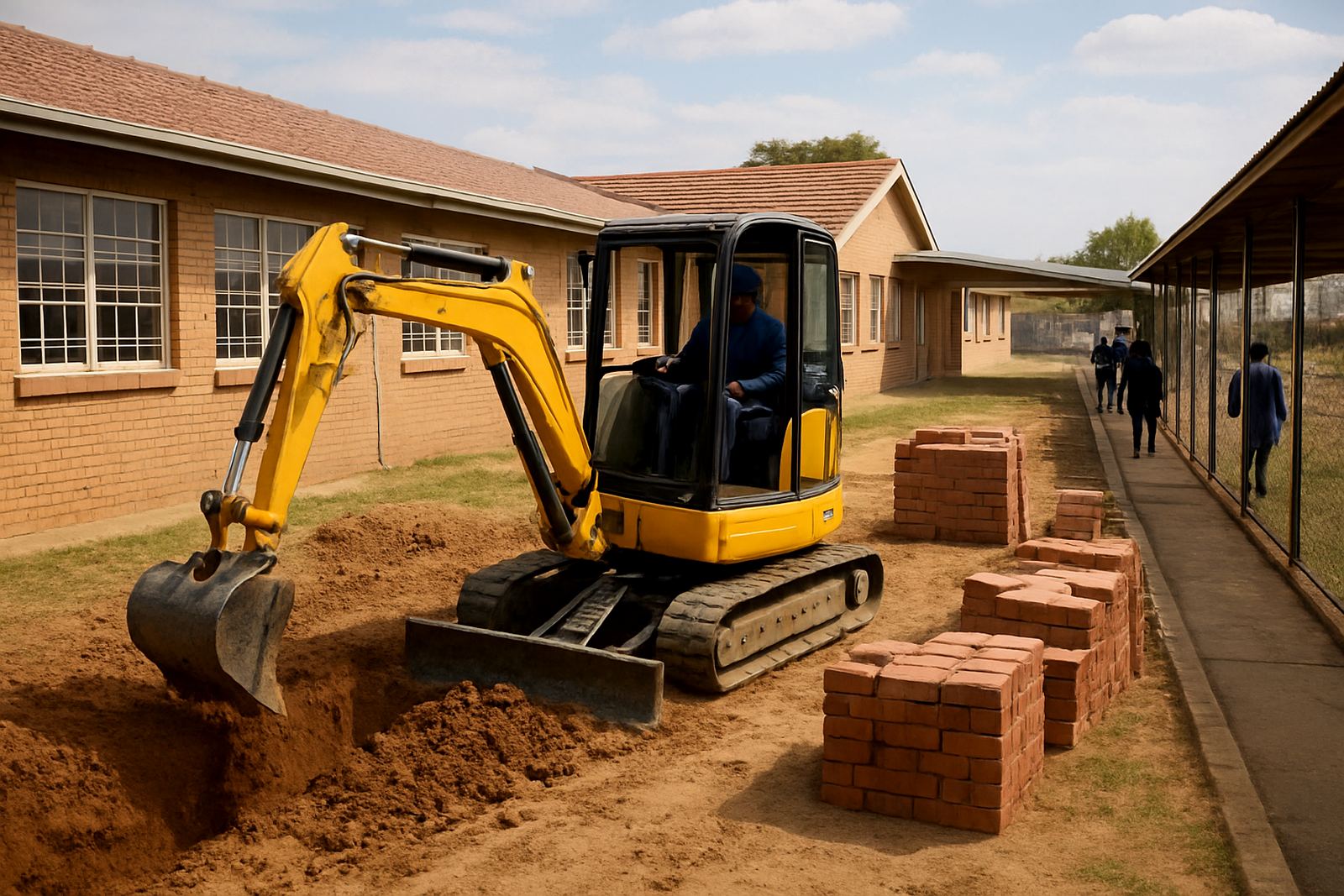
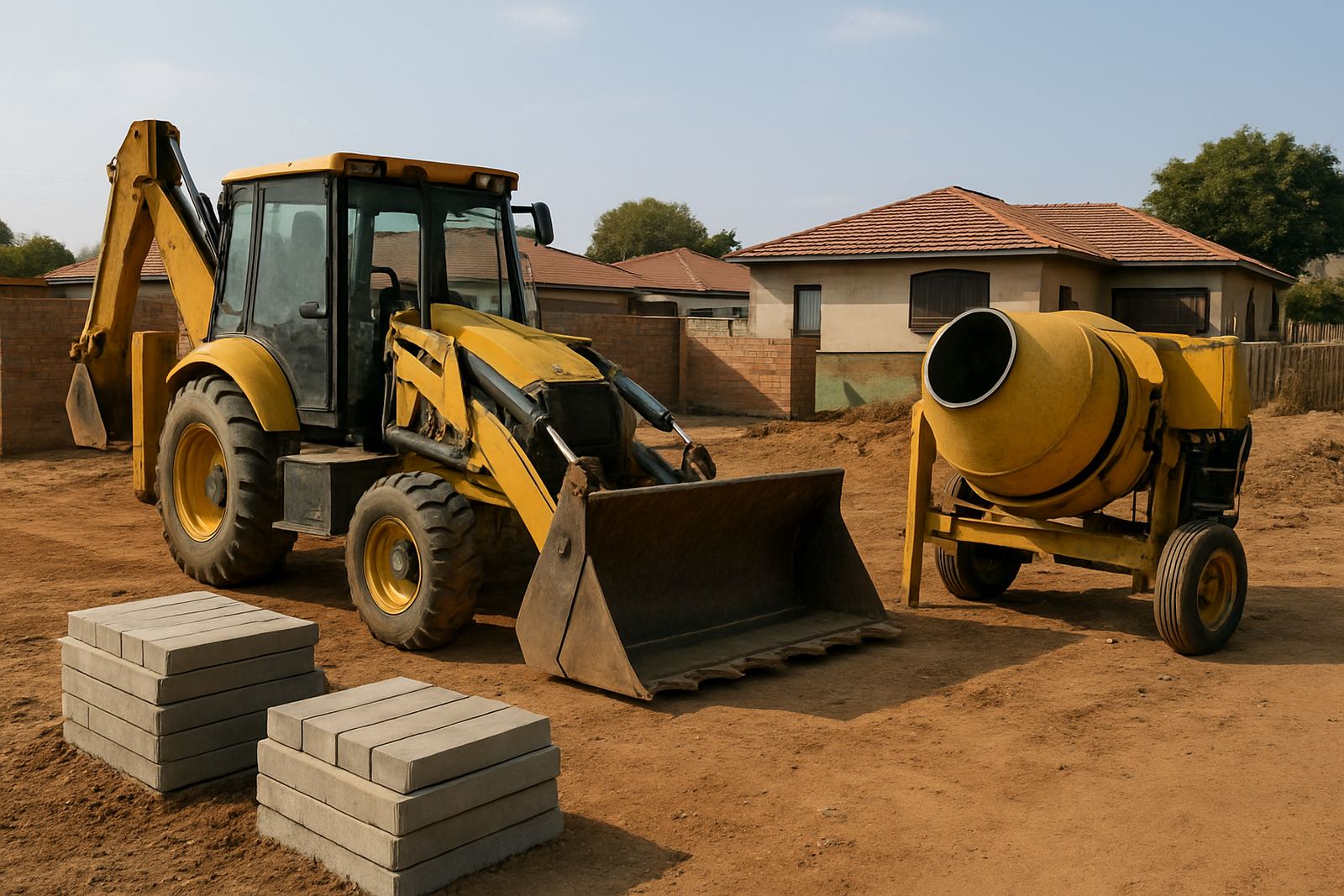
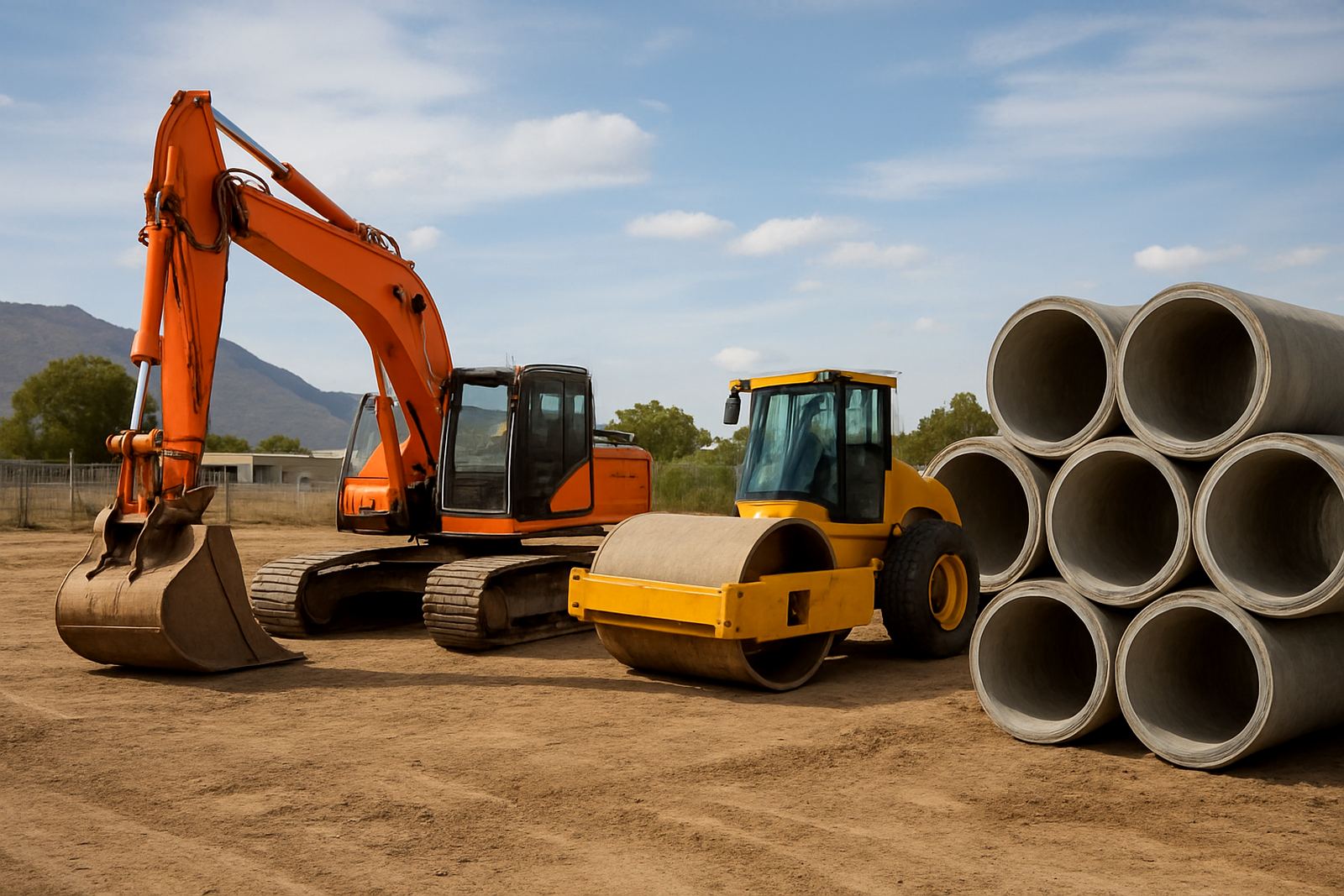
We set up a mixed fleet for the site so each phase could run on the right machine. The excavation side used a tracked excavator with a 20 tonne class reach for trenching and bulk dig, while a 10 tonne excavator handled tighter areas near edges and service runs. For haulage across the yard we supplied a tracked loader and a tipper setup for moving spoil, fill and crushed stone. A smooth drum roller and a padfoot roller were used at different stages to suit the material profile.
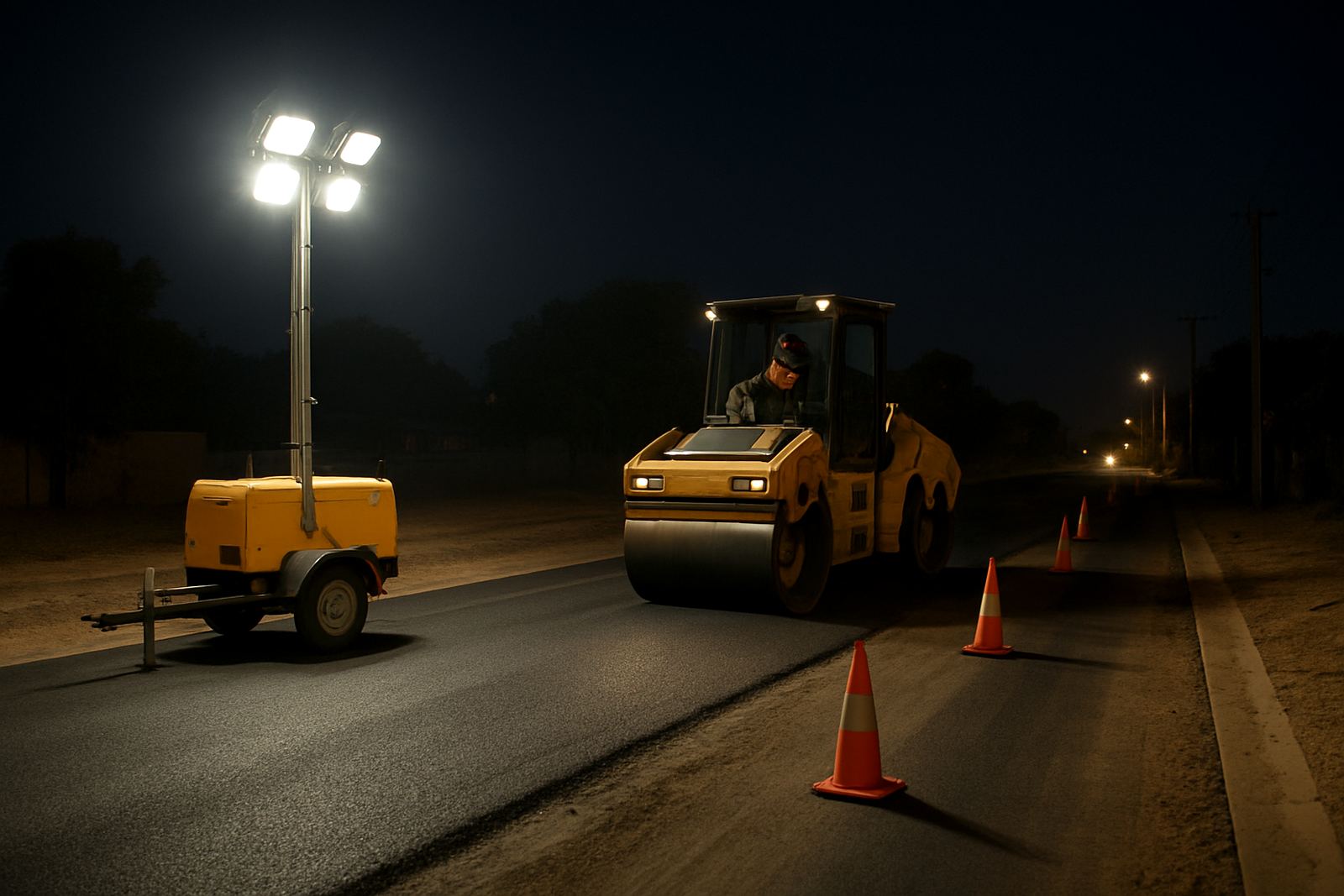
For power support, especially during early starts and load-shedding risk, we added site generators sized for tools, lighting and temporary office needs. Scaffolding was supplied for access at drainage outfalls and control points where the crew needed a stable working platform. We also arranged an operator supply package, so the client had experienced plant operators rather than trying to juggle labour from different subbies.
- 20 tonne class excavator for bulk earthworks and trenching
- 10 tonne excavator for tighter access and finishing work
- Tracked loader for spoil movement and stockpile control
- Rollers for compaction of sub-base and hardstand layers
- Generator support for lighting, tools and standby power
How We Kept the Programme Moving
We staged the machines to suit the work sequence and set up same-day dispatch from our depot network when the client needed extra support. The first week focused on stripping, bulk excavation and setting the drainage falls. Week two and three were spent opening the channels, bedding pipes and getting the yard levels right before fill placement started. By the middle of the programme the team was on compaction, shaping, testing and plant swop-outs where needed.
Our workshop team checked the fleet before delivery and our fleet manager kept a close watch on service intervals. That mattered because a small hydraulic fault can stall a whole yard job and nobody wants that when freight is waiting. We also had a breakdown response plan in place, though it was not needed in the end, and on-site servicing was scheduled around the client’s receiving times. The whole setup cut down on dead time and kept the site tidy.
- Pre-delivery checks on hydraulics, tyres, pins and safety systems
- On-site servicing to reduce machine downtime
- Weekend support for after-hours shifts
- Fuel management to avoid mid-shift stoppages
- Plant swop-outs when a task changed from digging to finishing
Safety, Drainage and Hardstand Results
Safety was handled from the start with the right documentation, traffic control and clear plant zones. The client’s team needed a yard that stayed usable in wet weather and did not collect standing water near loading points. Once the drainage lines were cut and the hardstand layers compacted, the surface became much more predictable for trucks and fork equipment. The finished areas were flatter, firmer and easier to clean after rain.
We also made sure the work aligned with site rules for movement and access. In a freight yard, one bad turning path can slow down every truck on the property. After completion, the client had better circulation, less mud tracking and a surface that could carry repeated loading without falling apart. It was a practical result, not a flashy one, but that is what counts on a working yard.
What We Would Repeat on the Next Freight Site
If we were doing the same sort of project again in Paarl or anywhere else in the Western Cape, we would use the same approach: break the work into clear phases, match the plant to each phase, and keep spare capacity ready for weather or access changes. Freight yards need discipline more than fancy kit. The better the planning, the fewer stoppages once trucks start rolling through.
For this job, the best decision was to pair reliable machines with a hands-on hire team that stayed available from start to finish. That gave the client room to push the schedule without losing control of the site. It also meant less stress around breakdowns, fuel, and operator cover. In short, the project ran better because the machine plan was built around the yard, not the other way around.
Key facts
| Project location | Paarl, Western Cape |
|---|---|
| Site type | Freight and logistics yard |
| Scope | Excavation, drainage and hardstand preparation |
| Programme | 9 weeks |
| Main plant | Tracked excavators, loader, rollers, generators |
| Support included | Operator supply, fuel management, safety documentation, weekend support |