The housing phase brief in Centurion
The client was a local building contractor working on a medium-density housing phase in Centurion, with a mix of unit construction, service trenching, backfilling and compacting, plus the first pass on internal roads. The site called for plant that could do short repetitive tasks all day, without sitting idle or taking up too much room between stands. The contractor wanted a hire partner who could keep the equipment arriving on time and handle swaps fast if the sequence changed.
The brief also had a few practical limits. Access roads were shared with other trades, so deliveries had to be timed around concrete pours and material offloading. Dust was heavy in the afternoons, and the team had to work around municipal service points, boundary lines and the usual stop-start pace of housing work. We planned the hire around those realities rather than forcing a one-size setup.
Compact plant chosen for repetitive work
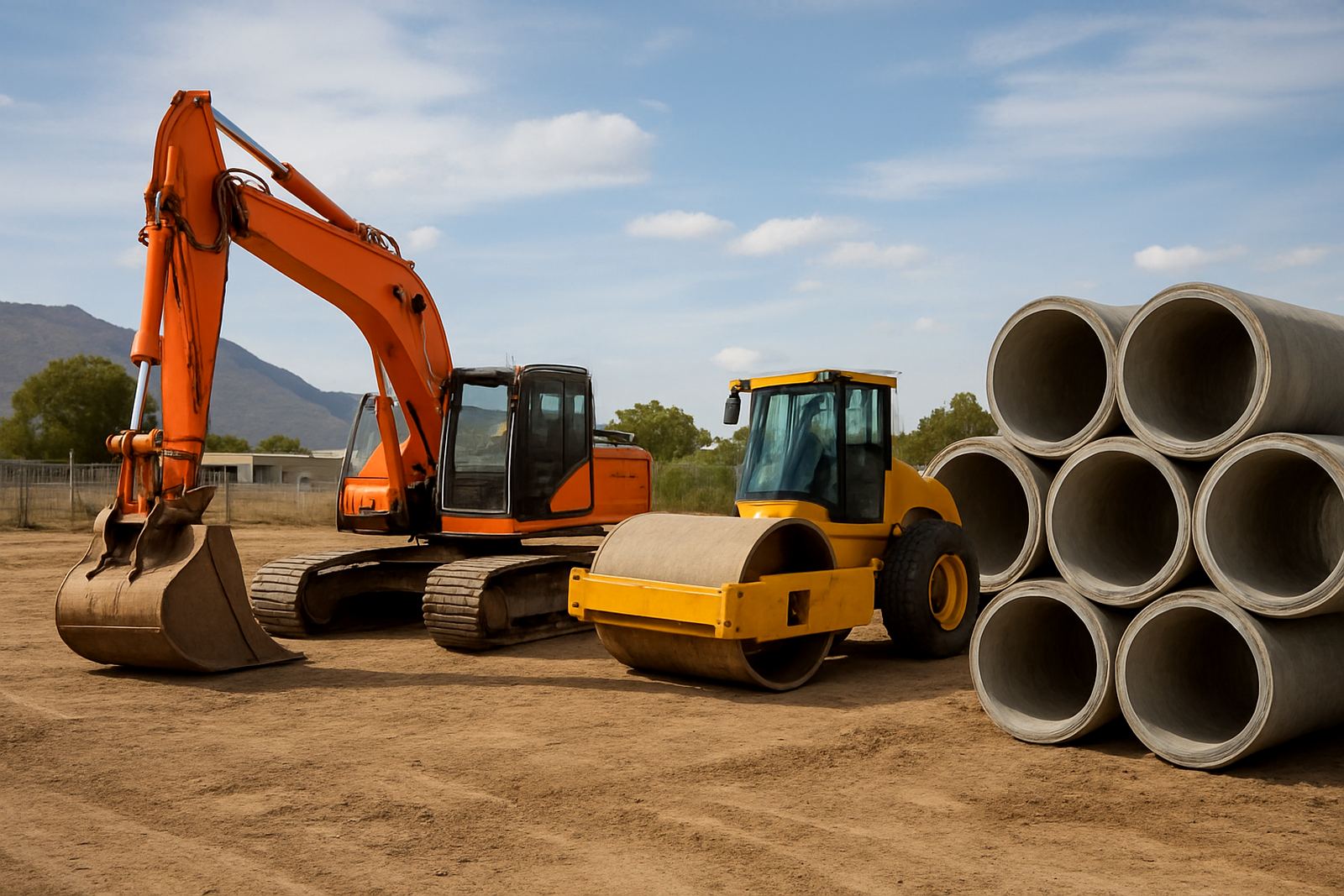
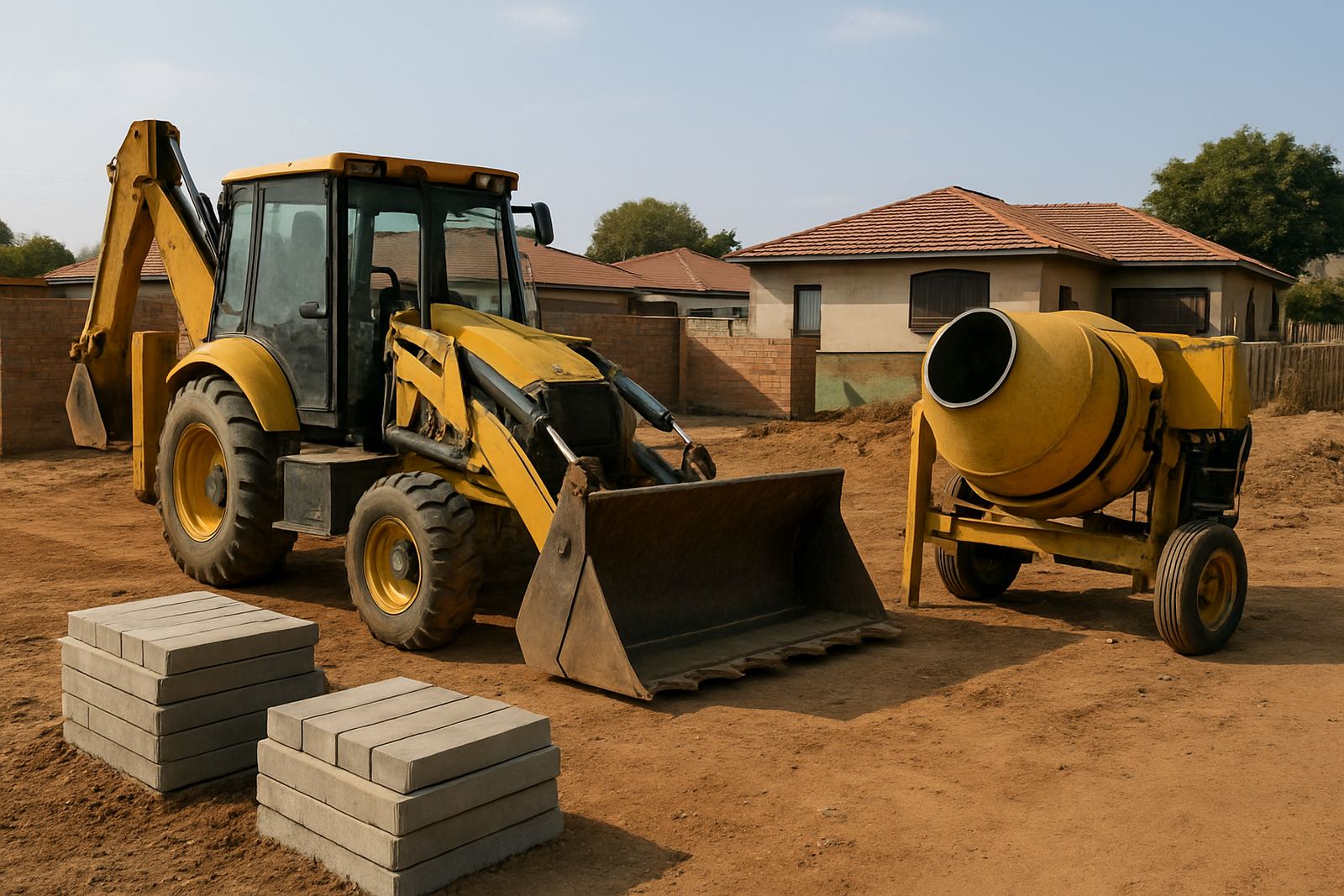
For this project we supplied a compact mix of plant suited to repetitive build stages and tight turning space. The core hire included a 5.5 tonne excavator for trenching and general site digging, a 3 tonne backhoe loader for mixed loading and clean-up, a 3 tonne roller for compaction on service runs and road layers, and a 2.5 tonne skid steer for spoil movement and housekeeping. A 100 kVA generator and a set of scaffolding frames were also included for support work and elevated access at selected plots.
We kept the fleet simple so the foreman could keep crews moving without unnecessary handovers. Where a machine had to shift from one use to another in the same day, the operators knew the pattern and the workshop team had the service records ready. That matters on housing work because a small delay on one stand can throw the rest of the row off by half a day.
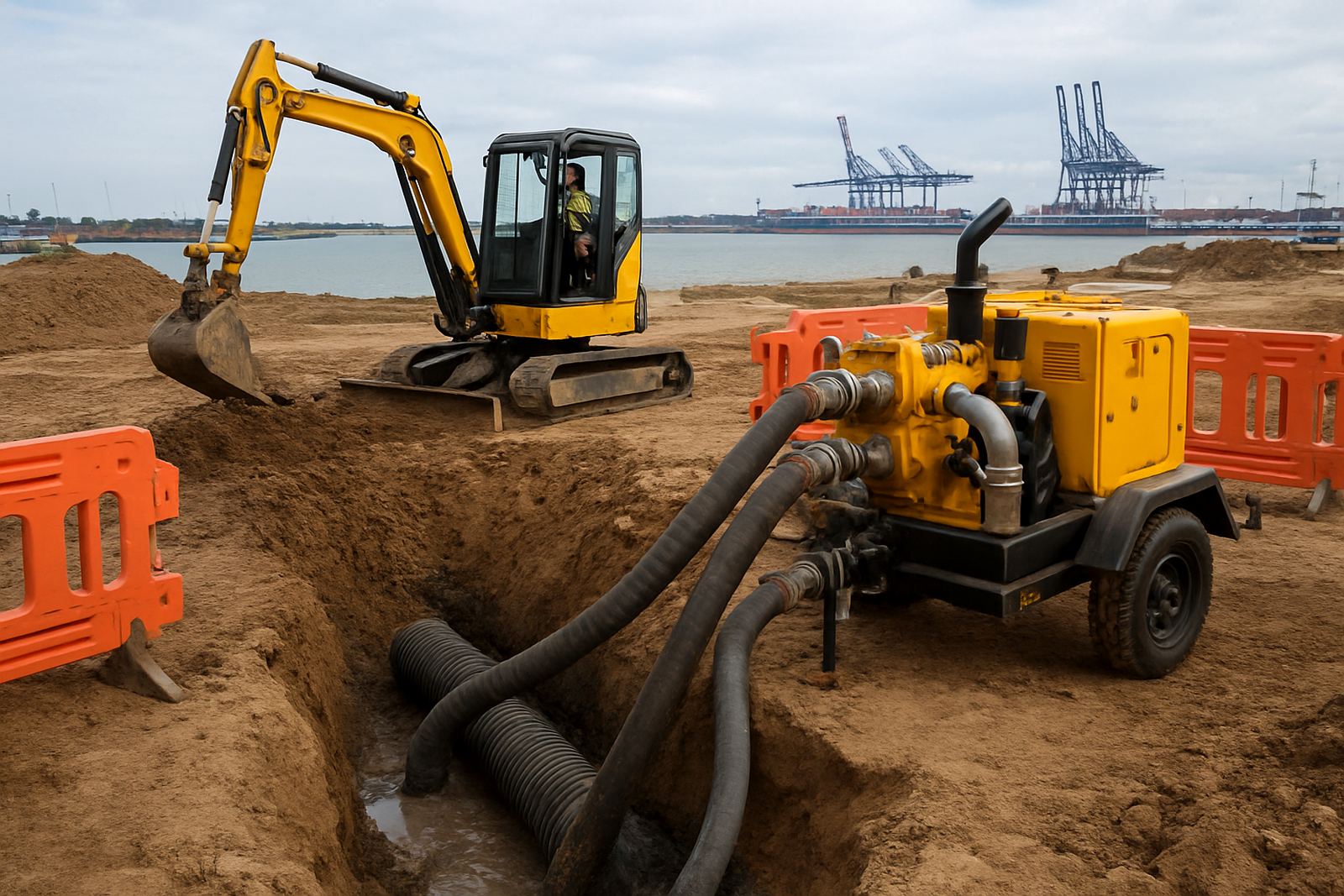
- Excavation for service trenches and footings
- Backfill and layer compaction on services
- Bulk movement of spoil and rubble
- Internal road preparation and final trim work
- Power support for tools during load-shedding or local outages
How we handled access, servicing and timing
The programme ran over 10 weeks in total, with the first two weeks focused on foundations, services and setting out, then a steady run of repeat house units and road formation through the middle of the job. We managed site deliveries in staggered drops from our Germiston base, with support from nearby depots when a quick swap or extra attachment was needed. That kept down dead time and helped the contractor avoid keeping surplus machines on site.
Because the site was busy and often dusty, our team planned on-site servicing at the end of shifts where possible. Filters, grease points and fluid levels were checked on schedule, and a breakdown response plan was in place so the crew could keep working if a machine showed warning signs. On a housing phase, you dont get many second chances with timing, so the idea was to solve problems before they became stoppages.
- Same-day dispatch used for urgent changes in sequence
- Weekend support arranged for catch-up work after rain
- Fuel management agreed for higher use periods
- Safety documentation issued before each machine went live
- Off-hire collections planned per zone to clear space for follow-on trades
Working around services, roads and safety rules
Centurion municipal conditions meant we had to be careful with dust control, site access and the route taken by plant entering and leaving the property. We also had to keep the working face clear for electricians, plumbers and bricklaying teams, which meant the hire plan had to stay flexible. On housing work, one blocked access road can slow three different crews at once, so the layout on site was just as important as the equipment itself.
Our Safety and Compliance Lead checked that the hire pack matched site rules, including operator induction, inspection logs and basic barricading requirements around active plant. Where the contractor needed operator supply, we sent experienced operators familiar with narrow housing stands and repetitive cycle work. That reduced damage risk on verges, service trenches and compacted layers.
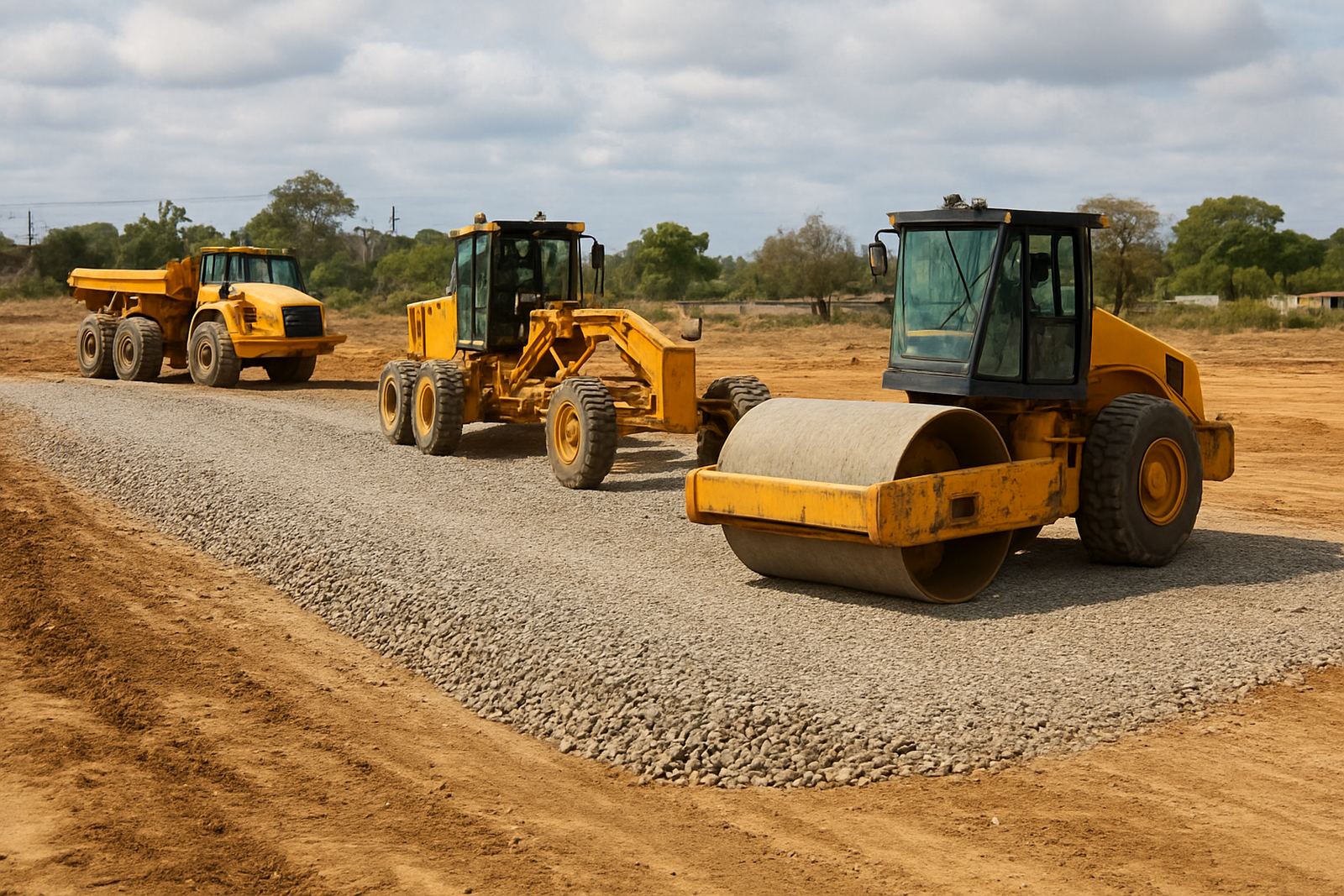
For the roads portion, we supplied plant that could work in thin lifts and keep the formation consistent. The roller and backfill equipment were used in sequence, with the excavator opening trenches and the skid steer cleaning up around pipes and edges. The result was a neater finish and less rework later on.
What the contractor got from the hire
The main result was rhythm. Once the sequence was settled, the contractor could run the housing rows without constant equipment gaps. The plant handled repetitive tasks well, and the same machines could be moved between plots as the build progressed. That cut down on idle time and helped the site team keep labour on task instead of waiting for the next available machine.
It also helped that the fleet was suited to Johannesburg conditions and Gauteng weather patterns. We see plenty of mixed ground, broken hardpan and long dusty days inland, so the machines had to tolerate that. The site team reported fewer delays tied to breakdowns, and the internal roads moved ahead in step with the units rather than becoming a separate late-stage headache.
- Cleaner sequencing between foundations and services
- Better use of labour across multiple stands
- Fewer stoppages linked to machine availability
- Safer movement of material around active trades
- More controlled progress on the internal roads
What we would do again on a similar phase
We would set up the same type of hire plan again for a Centurion housing phase, with compact plant, staggered deliveries and a clear swap-out structure. The best fit is always the equipment that can work on many small tasks rather than one oversized machine that blocks access. For a project like this, we would keep the fleet lean, add operator supply where the site is short-handed, and keep one spare unit ready for any critical item that becomes the bottleneck.
We would also repeat the early planning around fuel, servicing and safety paperwork. Those pieces dont sound exciting, but they save the most time on a live site. For this job, the contractor got a hire setup that matched the pace of house building, the internal roads and the service runs, which is exactly what a good plant hire partner should do.
MachinesAfrica Rentals works from Germiston and supports sites across Gauteng, KwaZulu-Natal and the Western Cape through nearby depots in Midrand, Pretoria East, Boksburg, Durban, Pinetown, Cape Town and Bellville. On projects like this, local response and practical planning are what keep the work moving.
Key facts
| Project | Centurion Housing Phase |
|---|---|
| Client type | Local residential building contractor |
| Location | Centurion, Gauteng |
| Timeline | 10 weeks |
| Main hire mix | 5.5 tonne excavator, 3 tonne backhoe loader, 3 tonne roller, 2.5 tonne skid steer |
| Support supplied | Same-day dispatch, operator supply, on-site servicing, fuel management, safety documentation |