
Why a marked route saves time on busy sites
On a working site, the fastest route is not always the safest route. When pallets, pipes, blocks and pallets of cement are moved along a defined path, crews spend less time waiting for each other and less time backtracking around parked plant. That matters on projects in Germiston, Durban or Bellville where multiple trades often work side by side and the laydown area is limited.
Defined movement routes also help with daily planning. A forklift, telehandler or small loader can move in and out without crossing the path used by hand labourers carrying finishes or fittings. That simple separation reduces near misses, and it gives the site supervisor a clearer way to control traffic during peak delivery times. In practice, it can mean fewer stoppages and better use of each shift.
Set the route before the first delivery arrives
The best time to plan material handling paths is before the first load is off the truck. Walk the site, identify the gate, the loading bay, the storage point and the waste removal route. Then link those points with a path that keeps heavy equipment away from soft ground, open trenches and pedestrian areas. If you are working on a tight urban site in Midrand or Pretoria East, that planning step can save a lot of rehandling later.
- Keep one route for delivery vehicles and a separate route for workers on foot where possible.
- Avoid turning points near scaffold stacks, fuel stores and open excavations.
- Leave enough width for the machine you are using plus clearance for the load.
- Mark blind corners, reversing points and loading areas with cones or barrier tape.
Where the site changes often, recheck the route at the start of each day. A stack of bricks moved five metres can narrow a lane enough to create a bottleneck, so small changes must be picked up early.
Choose equipment that matches the distance and the ground
Material handling is not only about lifting capacity. It is also about how far the material has to travel and what the ground can take. A short move over level concrete may suit a compact machine, while a longer run across broken ground may need a different unit with better clearance or tyres suited to rough conditions. On coastal jobs in Durban or Cape Town, humidity and salt air can also affect exposed components and stored materials, so the handling path should keep sensitive stock off wet ground where possible.
When planning hire, think about the full movement cycle: pick up, travel, place, return. If the route is long, it may be better to use a machine that can carry more in one trip instead of making repeated runs. That can reduce fuel burn, operator fatigue and wear on the fleet. It also helps when load-shedding or generator scheduling affects working hours, because every trip needs to count.
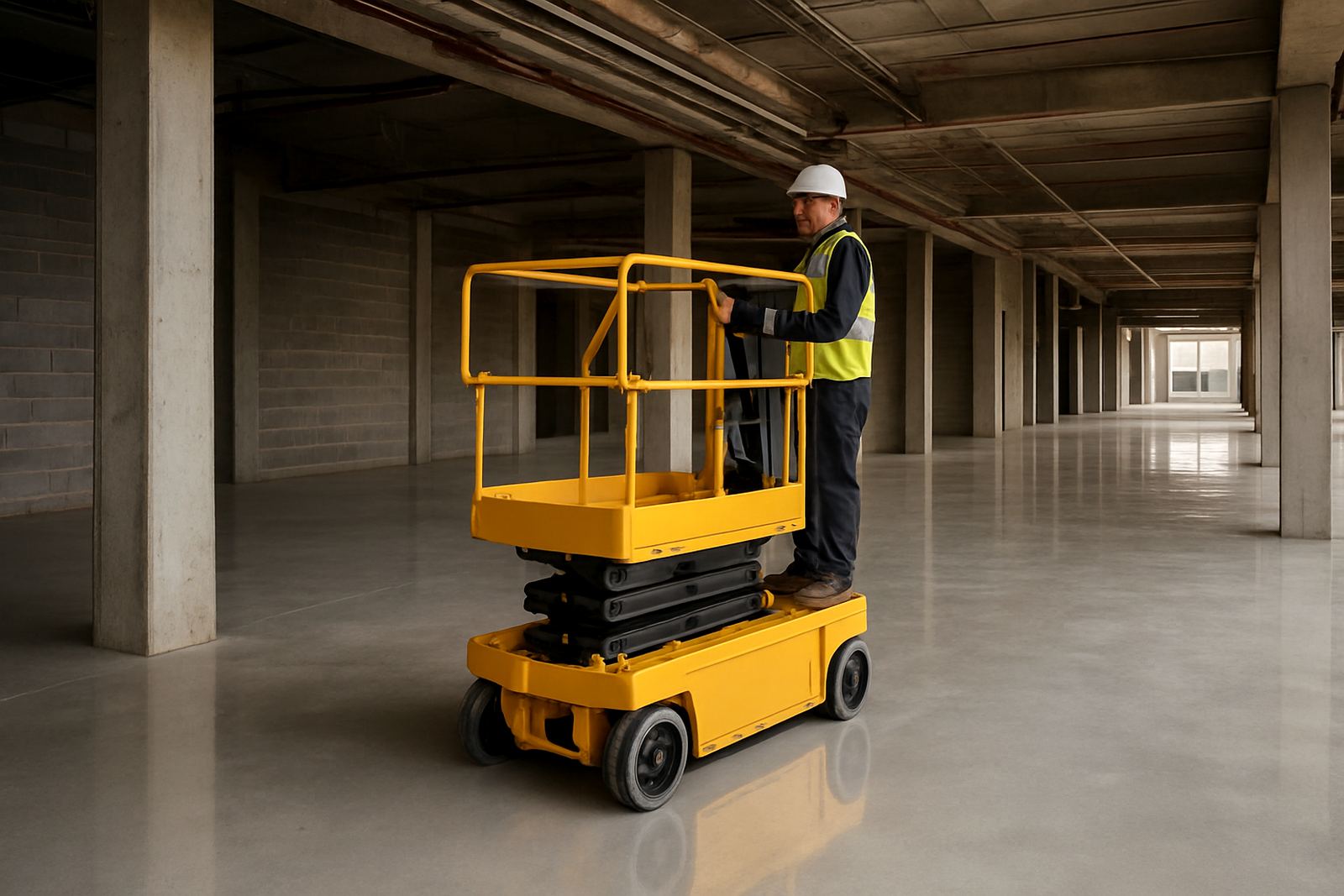
- Short lifts: compact equipment with easy turning and good visibility.
- Repeated pallet moves: equipment with stable forks or load support.
- Rough site access: machines with suitable ground clearance and tyres.
- Night or early shift work: clear lighting and reflective route markers.
Keep people, plant and stock out of each other’s way
The safest handling path is the one that keeps movement predictable. Workers on foot should know where machines will reverse, where loads are being lowered and where stacked material may shift. This is especially important when operators are working near shuttering, rebar bundles or roof materials that can roll or slide if placed badly. One missed step can damage stock or delay the next trade.
Good supervision makes a big difference here. The site lead should make sure the route remains clear after each delivery and that off-hire collections do not block the main access lane. If a load needs to be dropped closer to the workface, the route should be adjusted before the machine starts moving, not while it is already carrying weight. That small discipline keeps the site calmer and makes it easier to work to programme.
Use a simple route plan for daily control
A written route plan does not need to be complicated. It should show where materials come in, where they are stored, and how they reach the point of use. Many sites keep this as part of the toolbox talk so everyone understands the day’s movement pattern before work starts. On larger sites, a route plan can also help with safety documentation and contractor coordination, especially where multiple suppliers are arriving in the same hour.
A practical route plan should include:
- Entry and exit points for delivery vehicles.
- Main path for lifting and carrying equipment.
- Turning circles and reversing zones.
- Temporary storage areas for sand, blocks, pipes or formwork.
- Emergency access that must stay open at all times.
When the plan is clear, supervisors can spot problems quickly. If a trench is opened across the route or a scaffold stack starts narrowing the lane, it is easier to change the flow before delays build up.
A Germiston example: moving concrete blocks on a tight urban site
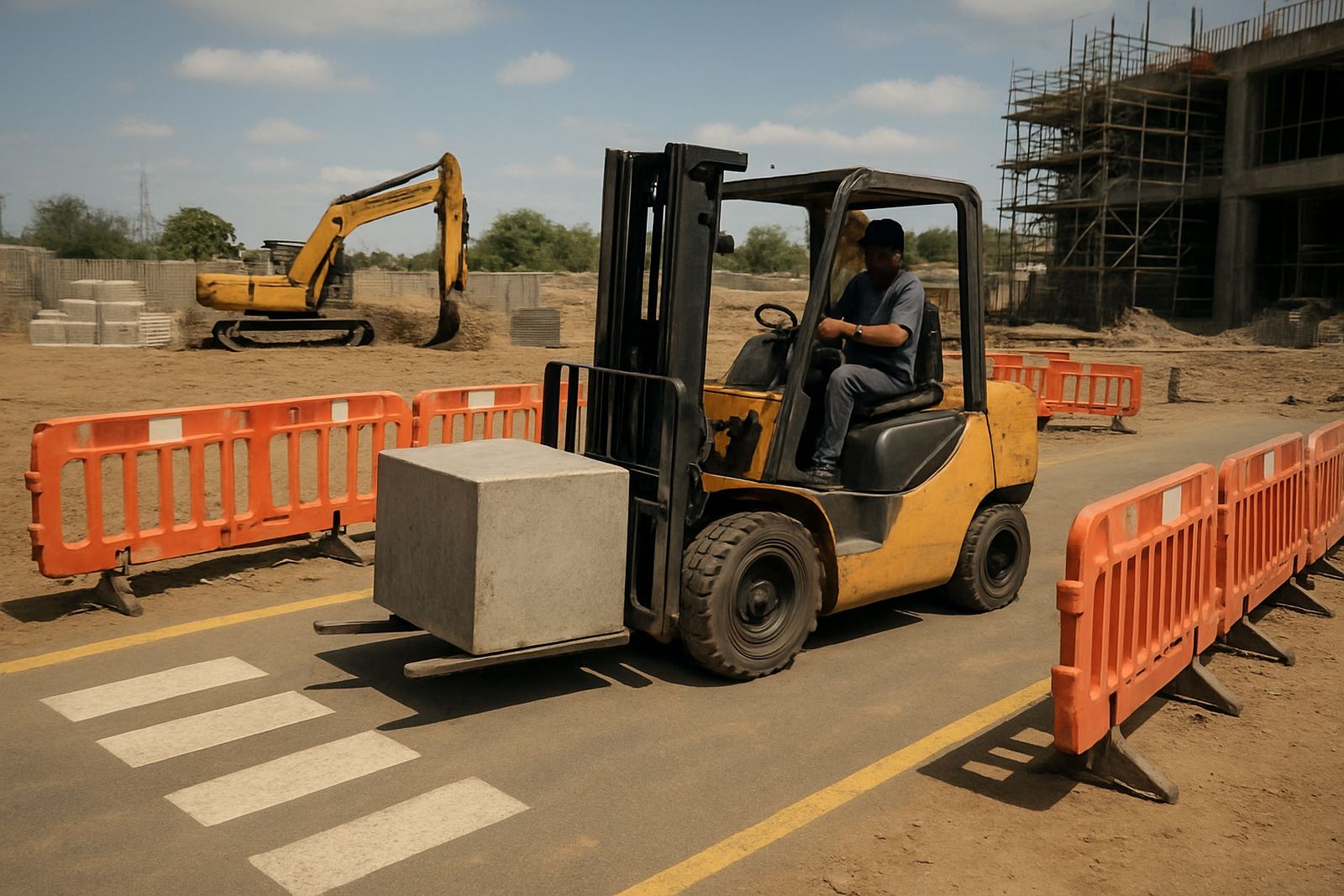
Consider a commercial build in Germiston with limited street access and a shared loading bay. The contractor needs to move concrete blocks from the delivery point to the rear of the site, but the same access is used by trades carrying fittings and by a skip for rubble removal. Without a defined route, trucks queue at the gate and workers end up crossing between moving loads.
The practical fix is to set a single handling lane from the gate to the storage point, keep pedestrian movement to the side, and schedule deliveries in short windows. A suitable machine can then make repeated runs without blocking the gate, while a separate route remains open for waste removal. That approach keeps the site moving and reduces the chance of damage to stock or plant. It also makes the day easier for the crew because everyone knows where to walk and where not to stand.
For projects across Gauteng, KwaZulu-Natal and the Western Cape, this kind of planning works well because sites vary so much. One day it is a compact city plot, the next it is a larger industrial yard with rough ground and long internal runs. The route must match the site, not the other way round.
Build route planning into hire decisions
Material handling paths should be part of the hire conversation from the start. When a contractor explains the site layout, access limits, delivery times and storage points, the hire team can suggest equipment and support that suit the route. That may include same-day dispatch, operator supply, breakdown response, on-site servicing or a plant swop-out if the route changes and the original machine is no longer the best fit.
Good planning also supports long-term hire. If a site will run for months, the handling path can be reviewed as work fronts shift. The route that worked during foundations may not suit the finishing stage, especially when interior access tightens and materials become more delicate. Keeping the path under review helps maintain pace without forcing the team into risky shortcuts.