Why temporary power should be planned before the first pour
Site power distribution is often treated as an add-on, but it is one of the first parts of a project that can hold everything together or slow it right down. If the supply is undersized or the runs are badly laid out, crews lose time resetting breakers, moving leads and waiting for equipment to come back on. That is costly on any site, whether you are working in Germiston, midtown Johannesburg or on a new build in Somerset West.
Good planning starts with a simple question: what will be running, at the same time, and for how long? Lighting, compactors, mixers, saws, welders and office cabins all pull different loads. A generator or incoming supply can look fine on paper, but if every trade connects at once, the system can trip. A site power plan helps you spread those loads across boards and phases, then match the cable size to the distance and current draw.
Match the board, cable and load to the site layout
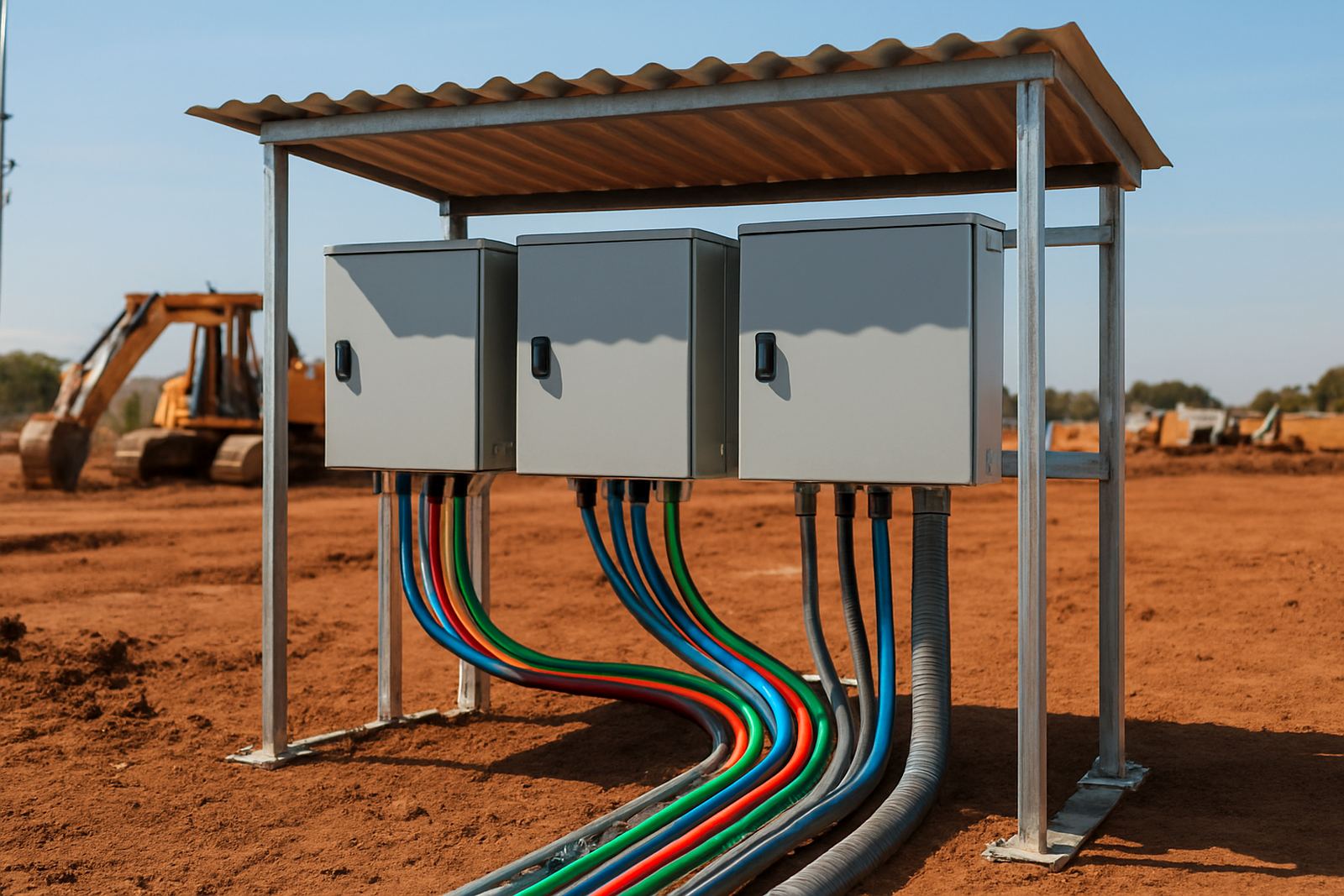
Temporary distribution boards should be selected for the actual work being done, not just for the biggest machine on site. On many Gauteng projects, the challenge is distance. A board placed too far from the point of use creates voltage drop, and that can affect motors, pumps and sensitive tools. Keeping the distribution point close to the workface usually means less cable, less mess and fewer faults.
For practical planning, think in terms of zones. One zone for plant charging or hand tools, one for lighting and welfare, one for heavier equipment. This makes it easier to isolate faults without shutting down the entire site. It also helps with load-shedding prep because you can keep critical areas live while non-essential circuits stay off. A tidy layout also makes inspections simpler when compliance checks are due.
- Keep cable runs as short as possible
- Use the right plug type and board rating for each circuit
- Separate lighting from heavy equipment where possible
- Label boards clearly so staff know what each point supplies
- Route cables away from vehicle paths and wet areas
The hidden costs of poor power distribution
When power is not distributed properly, the problems are rarely minor. A single overloaded board can trip repeatedly, which means stop-start work and damaged confidence among the crew. Replacing a cheap lead after it has been crushed by a telehandler is avoidable. So is losing half a day because the generator keeps running under the wrong load mix.
There is also the safety side. Loose leads across access routes create a trip risk, while badly protected joints can be affected by rain, dust or concrete slurry. On coastal sites in Durban or Bellville, humidity adds another layer of trouble because poor connections corrode faster. Once a connection starts overheating, the repair bill is only part of the issue. You can also face damaged tools, missed inspections and delays to subcontractors who are waiting on power.
Load-shedding, generator use and the need for smart swop-outs
Across South Africa, temporary power plans often need to cover both planned outages and site-specific interruptions. That means generator capacity, fuel management and changeover arrangements should be part of the same conversation as the cable schedule. If a site expects evening work, the system should be set up so that essential lighting, security and core plant can run without strain when the grid goes off.
Long-term hire sites benefit from regular review. A job that started with four small tools may later include welders, a site office, water pumps and a hoist. If the distribution boards are not adjusted, the original setup becomes too small for the real demand. Plant swop-outs and on-site servicing can keep the power side aligned with the project as it grows.
- Check generator capacity against actual concurrent load, not just nameplate ratings
- Plan fuel top-ups around shift times so work is not interrupted
- Allow for weekend support on critical pours or shutdowns
- Keep a spare board or lead available for quick changeover
- Test changeover procedures before the job depends on them
What builders should ask before hiring site power equipment
Before bringing in temporary power equipment, the contractor should know what will be powered, where the farthest point is, and which circuits must stay on during an outage. That information helps the hire team set up the right boards and cables first time. It also reduces the risk of under-hiring equipment and then trying to patch the gap with makeshift joints.
Some useful questions are simple ones. Will the site need operator supply for powered equipment? Will there be wet conditions, dust or frequent re-positioning? Is there enough room for a secure generator position away from pedestrian traffic? Are safety documents in place for inspections and site access control? Good answers lead to a cleaner setup and fewer interruptions later on.
- What equipment will run at the same time?
- How far is the last power point from the supply source?
- Will the site need night lighting or standby power?
- Are there municipal or site rules on generator placement and noise?
- Who is responsible for daily checks and fault reporting?
A Germiston example: keeping a mixed site live without overloads
A practical example from a Germiston project shows how much difference planning makes. The site had earthworks, a small concrete team, site offices and security lighting all running from temporary supply. At first, the crew kept adding leads to the nearest board, and the breaker started tripping during peak use. The issue was not the equipment itself, it was the way the loads were grouped.
After the layout was reviewed, the supply was divided into three zones, with heavier tools moved to a separate board and the lighting kept on a dedicated circuit. The cable runs were shortened, the generator load was balanced more carefully, and the team stopped losing time to resets. Work carried on more smoothly during evening shifts, and the site had fewer callouts for fault finding. It was a straightforward fix, but it changed the pace of the job quite a lot.
How MachinesAfrica Rentals supports site power distribution
MachinesAfrica Rentals supplies plant and machinery hire for construction sites across Gauteng, KwaZulu-Natal and the Western Cape, with depots in Germiston, Midrand, Pretoria East, Boksburg, Durban, Pinetown, Cape Town and Bellville. That local footprint matters when power is needed quickly, because same-day dispatch, breakdown response and off-hire collections can all reduce downtime. For contractors working under pressure, the ability to swap out equipment or add a board quickly is often what keeps the programme on track.
The team led by Sibusiso Mthembu works with site crews to plan the hire properly, from fuel management and safety documentation through to long-term hire and weekend support. Annelie van Wyk manages operations, Thabo Nkosi oversees the fleet, Zanele Dlamini coordinates hires, Willem Erasmus supervises the workshop and Nokuthula Khumalo handles safety and compliance. Clients reach the team through the enquiry form on the contact page, and the focus stays on practical supply, reliable equipment and a setup that fits the job rather than forcing the job to fit the equipment.