
Why cold mornings hit plant harder than most crews expect
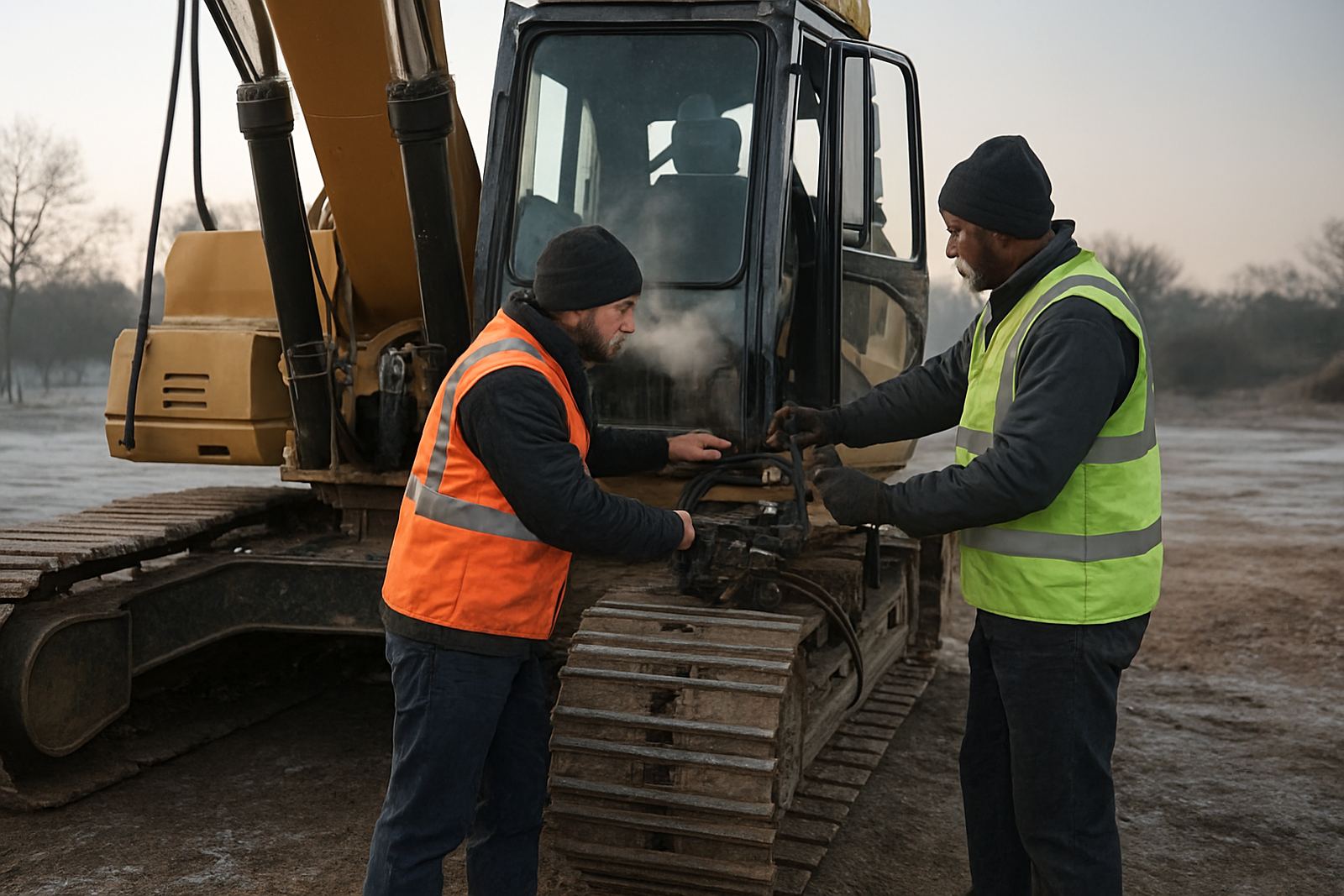
Winter startup issues usually show up before sunrise, when machines have sat through a cold night and the site team wants them running immediately. In Gauteng, a Germiston yard can feel noticeably colder by 6am than it did the previous afternoon, and that drop in temperature affects battery output, oil flow and fuel behaviour. You may still get the engine going, but it does not mean the machine is ready to work at full pace.
Contractors often notice the first signs as slow cranking, a delay before hydraulics move smoothly, or a machine that feels heavy for the first few minutes. On a tight programme, that extra wait can throw off loading, trenching, lifting and material handling. It becomes even more noticeable on multi-shift work where the same unit has to start, stop and restart more than once a day.
Battery strain, cable wear and overnight parking choices
Batteries are usually the first thing to feel winter stress. A unit that started cleanly in March may struggle in July if the battery is weak, terminals are dirty or the alternator has not been checked. Short trips between jobs make it worse because the battery never gets a proper charge. If a machine stands outside in Germiston, Midrand or Pretoria East, the cold alone can be enough to expose a battery that was already near the end of its useful life.
Good site practice can reduce the chance of an early morning failure.
- Park machines where they are sheltered from wind and overnight damp where possible.
- Check terminals for corrosion and loose fittings before shutdown.
- Ask for a battery test if cranking sounds sluggish or uneven.
- Keep jump-starting to a minimum, because repeated boosts can hide a bigger charging fault.
- Schedule equipment with the heaviest startup demand for after the first inspection round.
A small issue on the previous evening can become a no-start at first light. That is why a proper shut-down check matters just as much as the morning routine.
Hydraulic response slows down when oil is cold
Hydraulic systems do not like sudden pressure on cold oil. In winter the fluid thickens, which can make boom movement, steering, lifting and articulation feel delayed. Operators sometimes rush this stage because the team is waiting, but fast movement before warm-up puts extra strain on seals, hoses and pumps. If the machine is used near the coast, such as in Durban or Cape Town, moisture can also sit on fittings overnight and add to the morning check list.
The safest approach is to let the machine warm up properly and then cycle the controls gently. That gives the hydraulic oil time to move through the system and helps the operator feel whether anything is sticking or responding unevenly. It is also the right time to listen for unusual noise, which can point to low fluid, a blocked filter or another fault that needs attention before the day gets going.
- Warm the machine at idle for a few minutes before loading it hard.
- Work each control slowly at first to build oil flow.
- Watch for jerky movement, delayed lift or unexpected noise.
- Report any hose sweat, leaks or warning lights before the machine is put to work.
Fuel, condensation and the trouble that starts after sunset
Winter startup trouble is not only about batteries. Diesel can pick up condensation when tanks are left partly full, especially on sites with long overnight temperature swings. Water in the fuel system can cause poor starting, rough idle or filter blockage. That matters on larger sites in Johannesburg and Boksburg where generators, excavators and loaders may all be standing idle at the same time. If one unit fails to start, the knock-on effect can hold up the whole sequence of work.
Keeping fuel clean and tanks managed is basic but it saves hours later. On long-term hire, it is worth making a clear plan for refuelling, overnight storage and who is responsible for daily checks. Crews should also be careful not to ignore a machine that starts only after repeated cranking. That extra effort is often the warning sign, not the fix.
For colder inland areas, a simple winter routine helps:
- Keep fuel tanks topped up where site security allows.
- Drain water traps and check separators regularly.
- Avoid letting diesel sit for long periods without movement.
- Log any repeated start-up delay so the fault can be traced early.
What supervisors should check before the first shift begins
The best winter startup routine is short, consistent and done before the pressure rises. Supervisors do not need a complicated checklist, just a practical one that catches the common failures before they stop work. A quick walk-through in the dark or early cold is far better than discovering a dead machine once the crew is already waiting on tools and materials.
On a site in Germiston, a contractor waiting on a telehandler and a generator can lose an hour very quickly if both units need attention. That is why pre-start checks should be part of the morning handover, not something done only when there is spare time. If the site has multiple units, the first start should be the one most critical to the day, not the machine that happens to be nearest.
- Check battery warning signs before turning the key.
- Look for fluid leaks under parked machines.
- Confirm tyres, tracks and attachments are clear of overnight damage.
- Test lights, alarms and gauges while the machine is still at rest.
- Confirm that the operator knows the correct warm-up time for that unit.
How equipment support keeps winter delays from spreading
When a machine refuses to start in winter, the issue is rarely just the machine itself. It affects labour, delivery timing, plant sequencing and safety on site. A delayed excavator can hold up spoil removal. A generator that starts late can affect lighting, tools and security. That is why reliable hire support matters just as much as the equipment condition. If a unit needs a swop-out, a site should not have to sit and wait until later in the week.
Across Gauteng, KwaZulu-Natal and the Western Cape, the weather is different but the pressure is the same: keep crews moving safely and avoid downtime. For that reason, winter planning should include breakdown response, on-site servicing where possible, and clear safety documentation for the machines already working. Where a unit is struggling to start every morning, it is often better to replace it before it creates a bigger problem.
Practical support in winter usually comes down to three things: quick response, clean handover, and equipment that has been checked properly before it leaves the depot. That gives contractors a better chance of getting the day started on time, even when the mornings are cold and the site is still waking up.