
Start With the Site Boundary, Not the Panels
Before any fencing goes up, walk the full perimeter and decide what needs to be protected. Temporary fencing should follow the real working edge of the site, not just the easiest line to string together. On a tight Germiston yard, that can mean working around stored materials, loading zones and a live access gate for trucks.
Measure the boundary in sections and mark where the public path, neighbour access and plant movement sit. A fencing plan that looks neat on paper can fail fast if it cuts across a delivery route or blocks emergency access. The aim is simple: keep people out, keep workers moving, and make the site easier to manage from day one.
- Map the full boundary before the first panel arrives
- Mark gates, corners, slopes and uneven ground
- Keep a clear route for emergency vehicles and deliveries
- Allow space for materials, not just the work face
Choose the Right Fence for the Job Size
Not every job needs the same fence spec. A small residential build in Pretoria East may only need a short run around the front boundary, while a roadworks job in Durban can need long stretches, added bracing and better control at public crossings. The more exposure a site has to foot traffic, theft or weather, the stronger the setup should be.
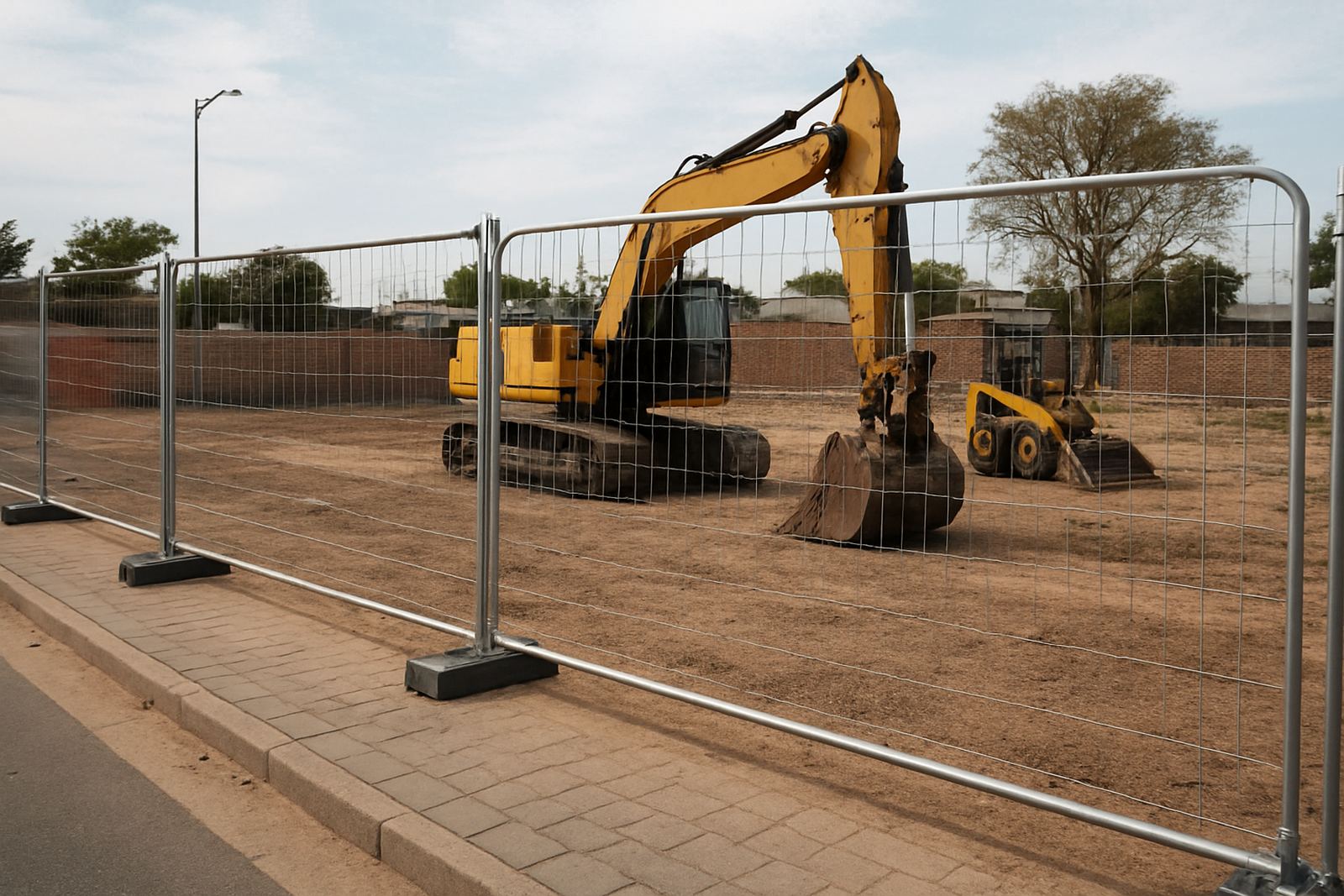
Look at panel height, panel condition, base weight and how the fence will be anchored. On windy coastal sites, light panels can shift if they are not tied down and braced properly. In Gauteng, the bigger concern is often unauthorised entry and vehicles edging too close to the work area. The fence should suit the site risk, not just the budget.
- Match fence height to the level of public exposure
- Use sound bases on level ground and extra support on slopes
- Check for bent frames, loose welds and damaged feet
- Plan for wind, dust and vibration near busy roads
Place Gates Where the Work Actually Happens
A fence is only useful if it still lets the job move. Gates should be placed where labour, plant and materials enter most often, not where they are simply convenient to install. If the site has a single entry point, keep it wide enough for trucks, telehandlers or generators to pass without repeated panel removal.
Access control is also about discipline. A well positioned gate makes it easier to log visitors, check PPE and keep unauthorised people off the site. In practice, that means fewer interruptions and less confusion when a delivery arrives early or a client wants a walkabout. On busy projects, one poor gate position can slow the whole day.
It also helps to keep pedestrian access separate from vehicle access where possible. That small step reduces conflict between workers on foot and plant operators moving in and out.
Stability Matters More Than Looks
Temporary fencing often looks fine for the first few days, then starts leaning once the wind picks up or the ground softens. That is why the base setup matters as much as the panels themselves. Uneven ground, loose gravel, wet clay and freshly cut verge edges all need different treatment. In Cape Town winter conditions, for example, soaked ground can shift quicker than people expect.
Use the right support points and do not leave long unsupported runs on exposed corners. Corners, gates and changes in level take the most strain, so they need extra attention. If the site sits next to a public pavement or school, add stronger anchoring and inspect it more often. A fence that moves is a fence that invites trouble.
- Check upright alignment after heavy wind or rain
- Add bracing at corners, ends and gate openings
- Repack feet where the ground settles
- Do not leave gaps low enough for children or animals to squeeze through
Use the Fence to Improve Site Discipline
Good perimeter control does more than stop trespassers. It changes the way a site behaves. When workers know the boundary is clear, material storage becomes tidier, deliveries are easier to direct, and the chance of tools going missing drops. On a site with several contractors, fencing also helps separate active work areas from finished sections that must stay protected.
Temporary fencing can also support better housekeeping. Keep waste skips, fuel storage, and service equipment inside the controlled area, but away from the public edge. That reduces the chance of spills or awkward contact with passers-by. If the site runs after hours, the fence becomes a simple visual reminder that the area is not open to the public. Small thing maybe, but it changes behaviour quickly.
- Use clear access points and keep them closed when not in use
- Store loose materials away from the fence line
- Keep high-value equipment deeper inside the site
- Separate live work zones from completed sections
Think About Local Rules, Neighbours and Public Access
Temporary fencing is not just a private decision. In built-up areas, it affects pavements, neighbouring driveways, stormwater flow and the public right of way. On projects near busy streets in Germiston or Midrand, fence placement may need to protect pedestrian movement and leave enough room for safe access to adjacent properties. If the site sits near a municipal service route, check that the fence does not block access to manholes, metres or overhead work zones.
Neighbours notice bad fencing quickly. A line that leans into a pavement, sheds dust onto a driveway or blocks sight lines at a gate can lead to complaints and delays. Where loading vehicles are entering and exiting often, keep the fence line neat and the warning signage visible. The cleaner the boundary, the fewer arguments you deal with later.
For longer hires, it also helps to review the fence weekly and adjust it before small problems become site stoppages. That kind of routine saves time and keeps the project moving.
A Practical Germiston Example
On a mixed-use project in Germiston, the contractor needed a temporary perimeter around a storage laydown, a concrete pour area and a daily delivery entrance. The first concern was keeping pedestrians away from the delivery path without choking the site. The solution was to run the fence line tight to the active work zone, place the main gate where trucks could reverse safely, and add extra support at the corners nearest the road.
Because the site was open to wind and dust, the crew checked the fence every morning before work started. That simple habit prevented panels shifting after night-time weather and kept the front edge tidy enough for inspections. The result was fewer site interruptions, better access control and a safer boundary for everyone passing by.
That is the real value of temporary fencing. It is not only there to mark a boundary. It helps the site run properly, which is what every contractor wants when time and pressure are both tight.