Start with the space you actually have
Before you choose a compact access unit, measure the working area and the route in. A machine that fits the lift height but cannot turn, park or pass through a gate is the wrong hire. On many Germiston and Midrand sites the issue is not height alone, it is how little room there is around services, materials and other trades.
Check gate widths, slab load limits, floor opening sizes and turning space at the base. If the surface is uneven or freshly poured, you may need a lighter unit or a different tyre setup. It helps to think about the full shift too, because a short access route in the morning can become blocked once deliveries arrive.
- Measure the narrowest point from site entry to work area
- Confirm ground bearing capacity on slabs, paving or fill
- Allow space for outriggers, barriers and material staging
- Plan for manoeuvring with other trades on site
Reach profile matters more than one number
Many people only ask for the highest platform, but compact access is chosen by reach profile. You need the right working height, the right outreach and the right up-and-over ability for the task. For example, a unit that reaches vertically may still struggle where pipework, parapets or steelwork sit in the way.
For internal maintenance, warehouse lighting or shopfront installations, a smaller machine with tight turning is often better than a bigger model with more lift. For external work on boundary walls or upper levels, outreach can matter more than vertical height. Get the task mapped out clearly and you will avoid paying for unused capacity.
- Vertical work: choose for direct up-and-down access
- Up-and-over work: check outreach and boom movement
- Mixed tasks: allow extra margin for obstructions
- Fast repositioning: look at travel speed and ground clearance
Indoor jobs need cleaner planning
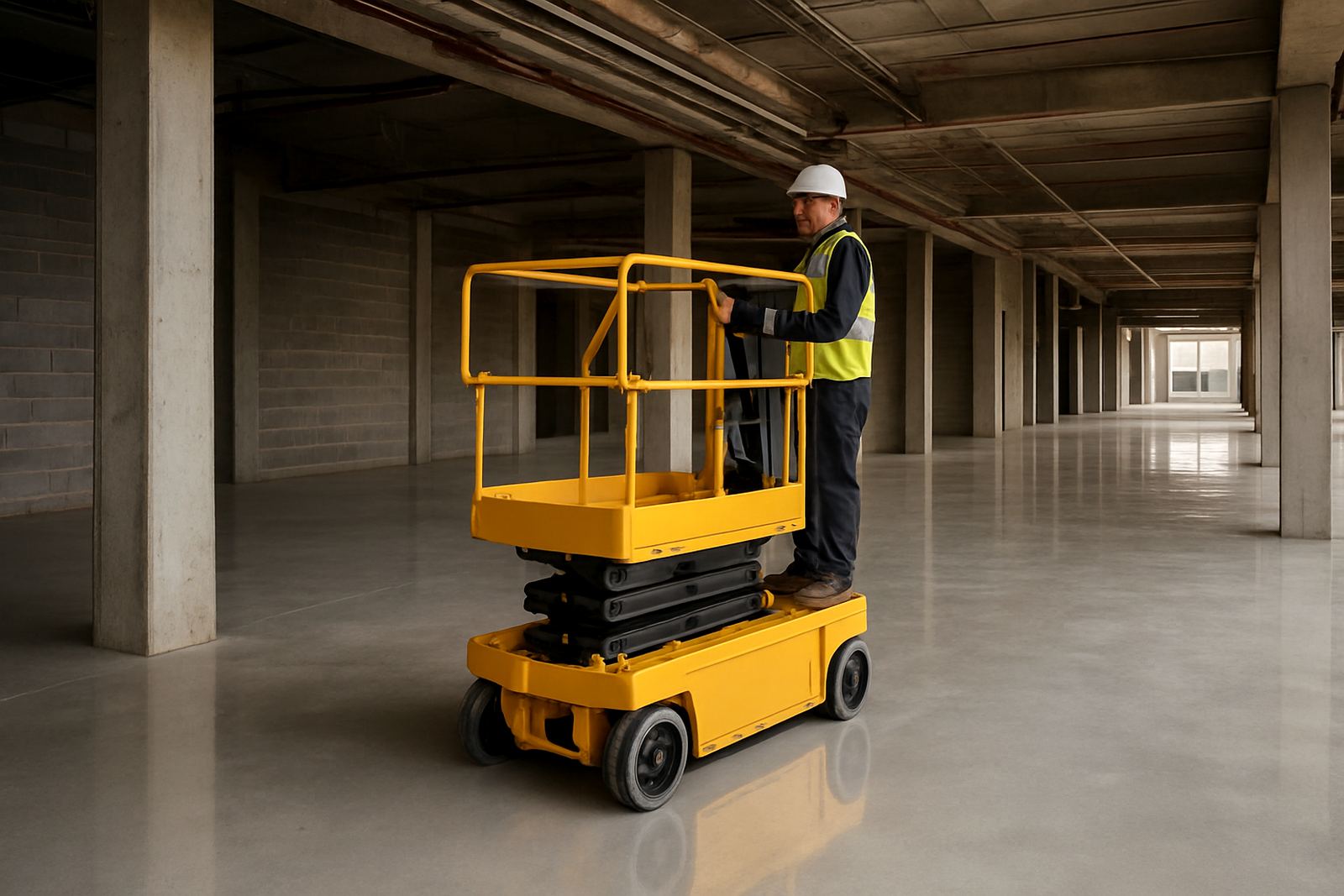
Indoor compact access hire has its own rules. Ventilation, floor loading and noise all count, especially in shopping centres, factories and finished interiors where the handover date is fixed. If the job sits inside a live building, the hire plan should also allow for access times, lifts, loading bays and security checks.
In Johannesburg and Pretoria, many contractors work around municipal or building manager restrictions on after-hours access. That means the machine has to arrive when the site is ready, not when it is convenient for the yard. A good hire plan keeps the lift on site for only as long as needed, which helps on jobs where space is tight and every metre matters.
- Check floor loading and slab condition before delivery
- Confirm whether low-noise operation is required
- Allow for building access times and loading bay limits
- Keep charging, refuelling or battery swap access practical
Outdoor conditions change the hire choice
Outdoor compact access work across Gauteng, KwaZulu-Natal and the Western Cape often shifts with weather and surface condition. In Durban and Pinetown, coastal humidity can affect stored equipment and make site housekeeping more important. In Cape Town, wind can stop certain high-level tasks even when the weather looks fine on the ground.
On rough surfaces, soft verge areas or half-finished roads, ground clearance and stability become more important than speed. If the site is exposed, ask how the machine behaves in wind and whether the work can be done safely in afternoon conditions. For long hire periods, regular inspections and on-site servicing are worth planning from day one, not after a fault shows up.
- Coastal sites: check corrosion exposure and daily cleaning needs
- Windy sites: plan work windows and safe operating limits
- Rough ground: confirm clearance and tyre or track suitability
- Long hire: schedule routine checks before delays build up
Choose compact access that keeps labour moving
A compact access unit should support the crew, not slow them down. If the platform is too small, material handling becomes awkward and the team spends time making extra trips. If the access machine is too large for the site, it can block walkways, loading points and work zones. The best hire is often the one that lets other trades keep moving without rework.
That is why site deliveries, same-day dispatch and operator supply matter on active projects. When a machine goes down or a site changes shape, a fast swop-out can save the shift. It also helps to have fuel management and weekend support lined up when the programme runs into tight handover dates. One delay can push three other trades back, so the machine plan needs to stay practical.
- Match the platform size to the number of workers and tools
- Keep access routes clear for other trades and deliveries
- Use operator supply when the site needs experienced hands
- Plan swop-outs for jobs with changing access requirements
A Germiston example: small footprint, big difference
On a refurbishment job in Germiston, a contractor needed access for ceiling work inside a busy commercial unit while deliveries kept coming through the same loading area. A full-size unit would have blocked the route, so the team used a compact option with the right height and a tighter turning circle. The result was simpler site control, less waiting time, and fewer interruptions to other trades.
That kind of planning is common across Gauteng. The right compact access choice depends on the site, the timing and the people working around it. Once those three things line up, the job usually feels easier, safer and less rushed. It is a practical decision, not just a hire order.
For contractors managing multiple sites, fleet planning also helps keep the right machines where they are needed most. A good hire partner should be able to support long-term hire, off-hire collections and safety documentation without creating extra admin.