

Why dust control needs a proper plan
On a busy building site, dust is usually the first thing people notice and the last thing they want to deal with. It can affect visibility for operators, irritate workers, dirty finished work and trigger complaints from nearby homes, schools or businesses. On some municipal projects it can also lead to stoppages if the site is not keeping to basic nuisance control and safety requirements.
The most effective dust control starts before the first truck arrives. A practical plan should look at where dust will come from, which areas will carry the most traffic, and when weather will make matters worse. In Gauteng, dry winter conditions and strong afternoon winds can turn a rough access road into a problem within hours. At the coast, fine material can stay airborne longer and settle on equipment, electrics and stored materials. The point is simple: once dust starts moving, it spreads fast.
A good plan also assigns responsibility. Someone must check water supply, watch the haul roads, and make sure housekeeping happens during the day not only at knock-off. If no one owns it, dust control becomes reactive and expensive.
Water application that works on the ground
Water is still the most common dust control method, but it only works if it is applied correctly. Too little water and the dust rises again as soon as a truck passes. Too much and you create mud, rutting and slippery surfaces that slow the job down. The aim is to dampen exposed surfaces enough to keep fines in place without turning the site into a mess.
Watering should be timed to site activity. Spray the haul road before peak traffic, not after the dust cloud has already built up. Reapply after grading, after high winds, and after long dry spells. On sites with heavy vehicle movement, water bowsers or controlled spray systems are more effective than a hose held by hand because they give steadier coverage and save time.
For sites in Germiston, Boksburg and the wider East Rand, a practical routine is often early morning, mid-day if temperatures rise sharply, and again before the afternoon rush. That is especially useful when bulk earthworks and concrete deliveries are happening on the same day. It is also worth checking water access early because load-shedding and municipal supply interruptions can affect pumps and filling points.
- Apply water to exposed soil before it becomes loose and powdery.
- Focus on entry points, turning areas and stockpile edges.
- Use enough coverage to hold the surface, but avoid pooling.
- Adjust the schedule for wind, temperature and traffic volume.
Haul roads are usually the main dust source
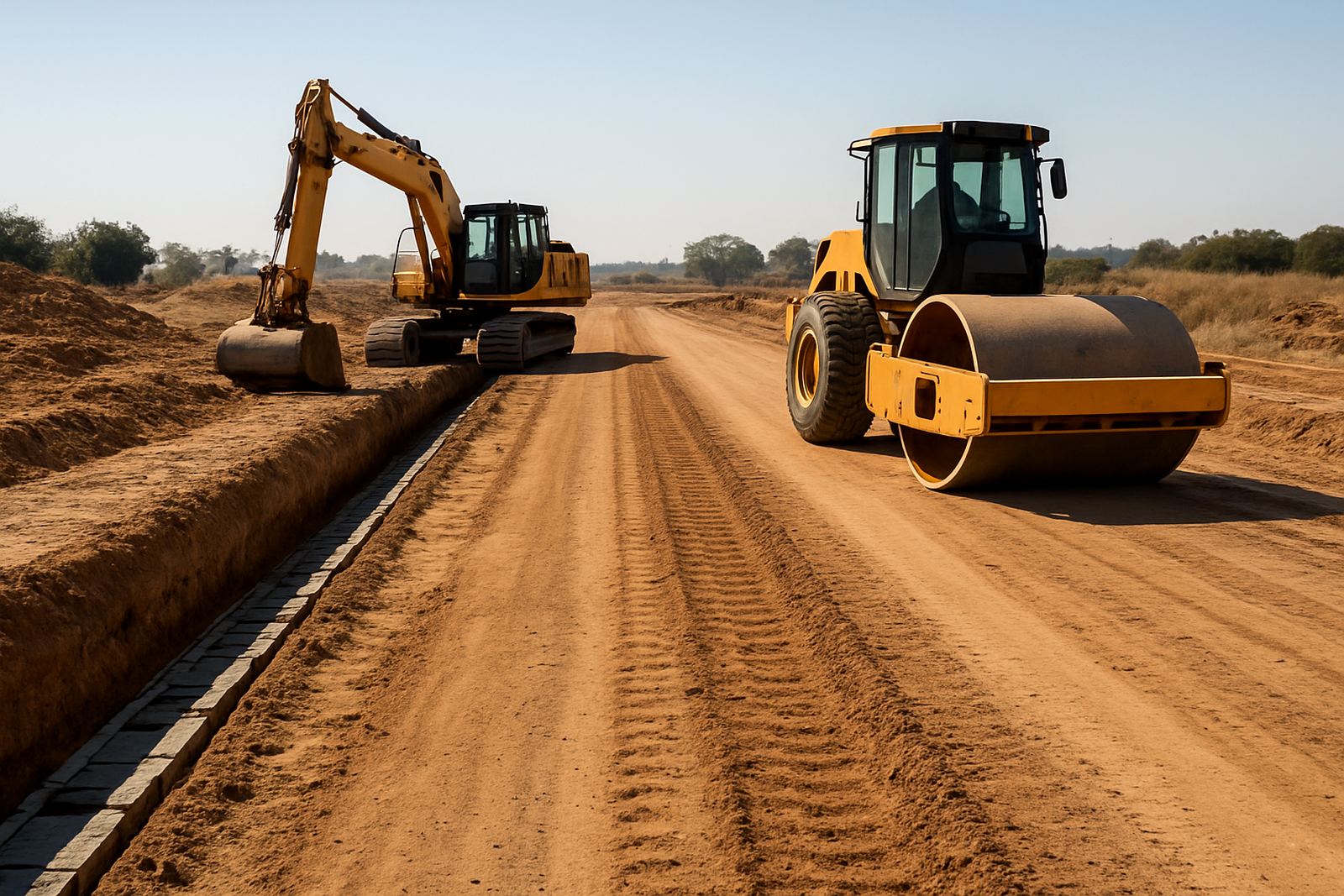
Most site dust comes from movement, not from the open ground alone. Haul roads, plant turning circles and access gates take constant punishment from trucks, excavators, loaders and light vehicles. If those areas are not built and maintained properly, even regular watering will struggle to keep up.
A clean, well-compacted haul road with controlled speed limits can reduce dust more than extra water alone. Loose surface material should be graded back into shape before it becomes corrugated. Sharp potholes and ruts collect dry fines, then throw them into the air when tyres pass through. Speed limits matter too because a vehicle moving too fast lifts far more dust than one moving slowly and steadily.
Where possible, keep heavy traffic on one route rather than letting vehicles cut across open ground. Mark turning points clearly and use track mats or stone where soil conditions are poor. On long-term projects, a dedicated access route is often easier to manage than trying to fix several short cuts every week.
- Keep haul roads compacted and free of loose soil.
- Grade out corrugations and ruts before they spread.
- Set a firm speed limit for all site traffic.
- Separate delivery routes from pedestrian walkways.
Housekeeping keeps dust from building up again
Housekeeping is one of the cheapest ways to control dust, yet it is often the first thing to slip when the programme gets tight. Scraps of soil, broken brick, cement fines and sweepings all dry out and become airborne. If those materials are left in piles or scattered around the site, they will keep feeding the problem every time the wind picks up.
Good housekeeping means removing waste regularly, covering stockpiles, and keeping work areas free of excess loose material. Skip bins should be emptied before they overflow. Sand, aggregate and spoil should be stored neatly with clear edges. If a site has several trades on the go, each team should leave its work area in a condition that does not create extra dust for the next crew.
It also helps to think about the clean-up zone outside the gates. Mud and dust tracked onto a public road can lead to complaints within minutes. Wheel wash points, sweepers and short daily checks at the entrance can prevent that. On a project near a busy road in Midrand, for example, a contractor can lose an hour each morning if trucks keep carrying fine soil out onto the tar and then back onto site again.
The local example that makes the point clear
Consider a civil site on the edge of Germiston, where earthworks are moving quickly and several subcontractors are coming and going through the day. The soil is dry, the afternoons are windy and the access road is being used by delivery trucks, light vehicles and a telehandler. Without regular watering, the road starts to break up. By lunchtime the site office windows are coated, the operators are working in a dust haze and the nearby pavement is covered with fine material.
Now compare that with a site that has a simple dust routine. The haul road is compacted and watered before the first deliveries. The turning area is kept clear of loose spoil. Stockpiles are shaped neatly and checked after lunch. A sweeper clears the gate area before the main road gets dirty. The result is not only less dust, but smoother site movement and fewer complaints from surrounding businesses. That is what practical control looks like. It is not fancy, it is just consistent.
In Durban or Pinetown, the pressures are slightly different. Coastal humidity can help keep some dust down, but when dry spells arrive and the wind picks up, fines still move quickly. The same basics apply: road control, sensible watering and clean working areas.
Choosing plant and support that helps reduce dust
The right equipment makes dust control easier because it supports the site routine instead of fighting against it. Water trucks, compactors, graders, loaders and access equipment all play a part in keeping surfaces stable and work areas orderly. If the plant is unreliable, the site loses time and dust control slips behind the programme.
For longer hire periods, it helps to plan the fleet around site conditions rather than just the task list. A site with soft access points may need different equipment at the start compared with a site that is already formed. If a machine goes down, a fast swap-out can keep the dust plan intact instead of leaving a broken road unmaintained for the rest of the day.
At MachinesAfrica Rentals, the practical approach is to match the plant to the site condition, the traffic load and the schedule. That may mean using the same machine for several tasks, or bringing in support equipment for watering, servicing and cleanup. When dust control is built into the hire plan from the start, the whole site runs better.
- Plan plant around road condition, traffic and weather.
- Use reliable support for watering and site clean-up.
- Book long-term hire where dust control is ongoing work.
- Arrange off-hire collections and plant swaps quickly if needed.
A simple weekly dust checklist for site teams
A weekly check keeps dust control from becoming guesswork. It is easier to fix small issues early than to wait until neighbours complain or the road is already failing. The checklist does not need to be complicated, but it should be done properly and by someone who understands the site.
Start with the access road, then move to turning areas, stockpiles, pedestrian routes and the boundary line. Check whether water is reaching the right spots, whether loose material has built up, and whether traffic is creating new problem areas. If the forecast shows wind or a hot dry spell, adjust the plan before the problem starts. This is one of those parts of site management that looks minor until it is ignored, then it becomes a daily issue.
Dust control is really about discipline. Keep water available, keep roads in shape and keep the site clean. Do that well and the rest of the job gets easier too.