Why hose routing matters before the first litre moves
A pump can be sized correctly and still cause trouble if the hose line is laid badly. A poor route can kink under pressure, snag on rebar, sit where trolleys and trucks pass, or let discharge run where it should not. That means delays, extra wear and avoidable clean-up.
On construction sites around Germiston, Midrand and Pretoria East, the biggest mistakes usually happen when crews treat the hose as an afterthought. The route should be planned with the same care as the pump position and the discharge point. If the line is too long, too exposed or badly supported, the pump works harder and the whole setup becomes harder to control.
Good routing starts with three questions: where is the source, where must the material go, and what can move across that path during the shift? Once those are clear, the hose can be laid out in a way that protects workers and keeps flow steady.
Choose a route that keeps people and plant apart
The safest hose path is usually not the shortest one. It is the one that avoids foot traffic, turning circles, lifting zones and blind corners. On busy sites, especially near formwork, blocklaying and reinforcement work, a hose lying across a walkway becomes a real trip hazard in minutes.
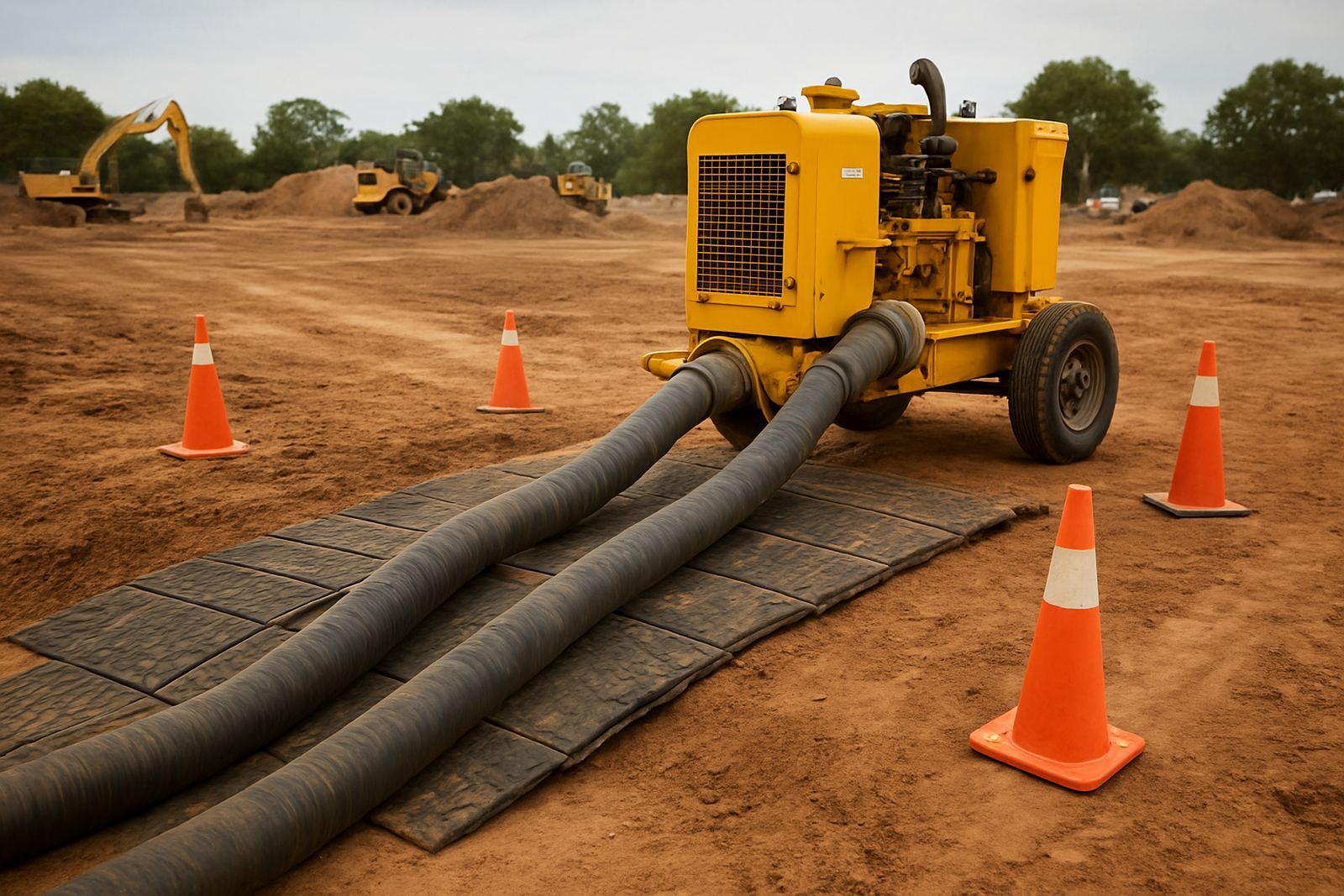
Keep hoses away from vehicle routes where possible. If a crossing cannot be avoided, protect it with proper covers or ramps and make the crossing point obvious. A bright marker, barrier tape or cones can help, but the route itself should still reduce risk rather than depend on warnings alone.
It also helps to avoid placing hoses where they will be dragged over sharp edges or scraped by moving steel. Friction wears through outer layers fast, particularly where the hose rubs against concrete, broken stone or metal shutters. In coastal areas like Cape Town and Durban, moisture can sit on fittings and create extra slip risk, so hose support and clean surroundings matter even more.
- Keep the route outside main walkways where possible
- Use protected crossings if people or vehicles must pass over the line
- Avoid sharp edges, open trenches and stacked material zones
- Mark changes in direction so the line stays visible
Support the hose so pressure does not do the damage
Hoses should not hang, twist or pull against couplings. Pressure and vibration can make a poorly supported line move more than people expect, which loosens joints and increases wear at the bends. If the pump is working continuously, the hose needs regular support points and enough slack to absorb movement without forming loops on the ground.
Use the layout to reduce sharp bends. Every tight bend creates drag and can slow the discharge or increase strain on the system. A gentle curve is better than forcing the hose into an S-shape just to fit a narrow route. If the line must rise, then drop again, check that the supports are secure and the hose will not settle into a low point that traps material.
In practical terms, the crew should walk the route before start-up and look for anything that could pinch the line, including scaffold feet, stacked pipes, brick pallets and rough slab edges. A few minutes spent adjusting the route can save a hose failure later in the day.
- Support long runs at sensible intervals
- Avoid tight bends and sudden height changes
- Check couplings after the first pressure test
- Recheck the line when the site changes during the day
Match the hose route to the site conditions and the job type
Different sites need different routing choices. A basement pour in Johannesburg is not the same as a long discharge line on a slope in Durban or a windy open slab in the Western Cape. Ground conditions, access space and weather all change how the hose should be laid.
If the ground is muddy or uneven, keep the hose off low spots where it can collect water and silt. On hot sites, hoses left in direct sun can become harder to handle and fittings can loosen under repeated movement. In windy conditions, unsecured lines can whip or shift, so more restraint may be needed. When the job is near public walkways or municipal boundaries, tidy routing helps with compliance and keeps the site looking controlled.
For long-term hire, it is worth planning the hose route as part of the full site logistics rather than just on the day of delivery. A line that works for a single shift may not suit a two-week programme where other trades come and go. That is where good coordination saves time.
A Germiston example: keeping a route clear on a busy build
On a Germiston site near a main access road, a contractor needed a pump line to run from the plant area to a slab pour behind stacked blocks and steel. The shortest path cut across a delivery lane, so the hose kept getting shifted by forklift traffic and one coupling was nearly damaged. The crew changed the route to follow the inside edge of the fence line, added a protected crossing at one narrow point, and lifted the hose onto supports where workers needed to pass underneath.
The result was not just safer. The discharge stayed steadier because the line had fewer sharp turns and less movement. The site supervisor said the setup was easier to monitor too, because everyone could see where the hose ran and where it was not supposed to move. That is the kind of practical adjustment that keeps a pour on track.
For sites across Gauteng, KwaZulu-Natal and the Western Cape, the same principle applies: plan the hose route around people, plant and access, not around convenience alone.
Check the route before start-up and again after the first run
Before the pump starts, one person should walk the line from end to end and check for trip points, loose fittings, rubbing, pinch points and any section that may move under pressure. This should also include a quick check of signage, barriers and whether the route still makes sense after other trades have arrived.
Once the system is running, recheck the line after the first few minutes. Hoses settle, supports shift and people sometimes move barriers to make space. A route that looked fine on paper can change quickly once concrete, water or slurry begins moving through it.
Good hose routing is part of site discipline. It protects the crew, reduces wear and keeps the discharge where it belongs. When the line is set properly from the start, the pump does its job with fewer interruptions and less risk of a problem later in the shift.
- Do a walk-through before start-up
- Assign someone to monitor the first run
- Reset barriers if other trades alter the area
- Log any wear or movement for the next shift