
Start with the actual site load, not a guess
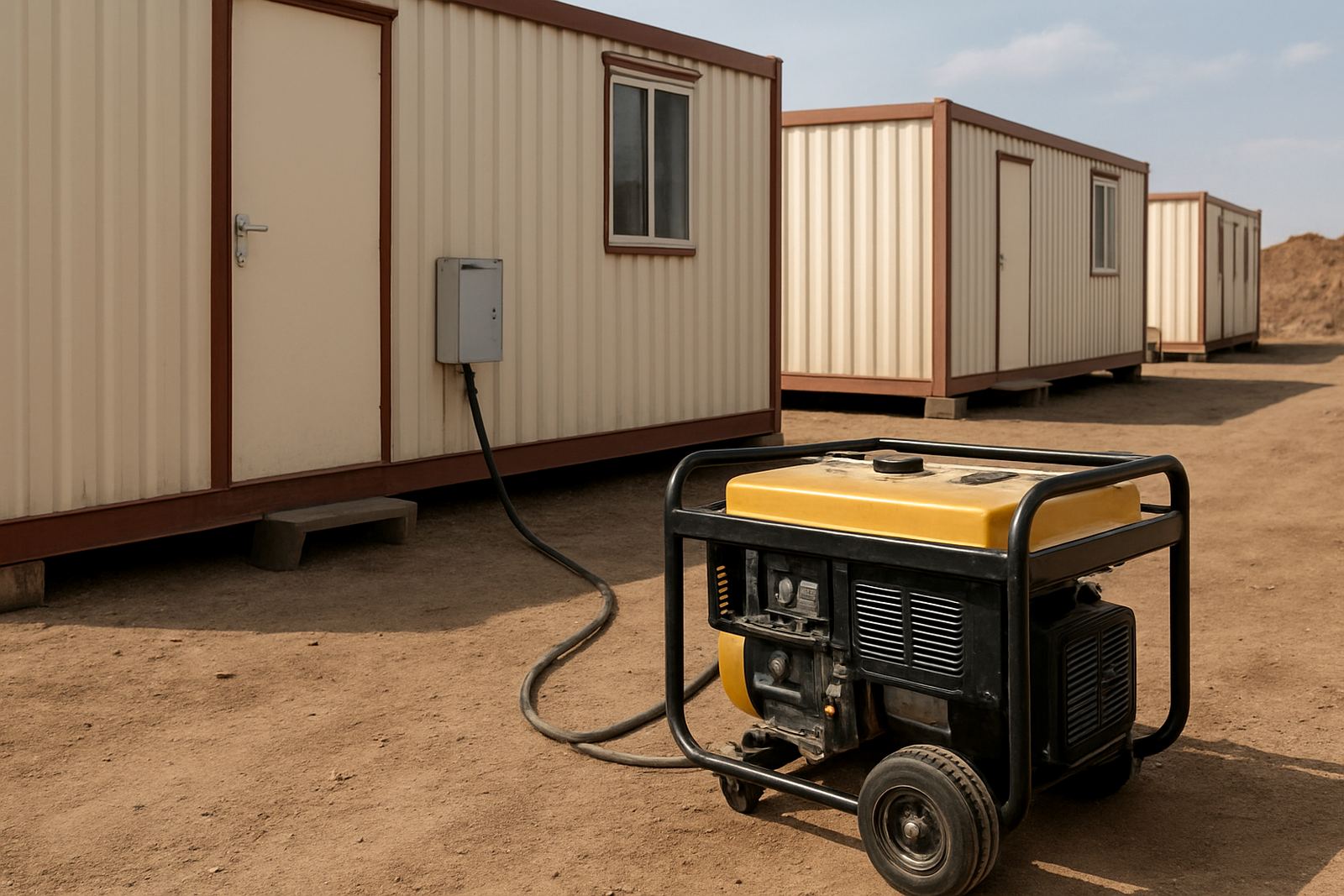
The first step is to list every item that must run at the same time. On many sites that means lighting, small power tools, mixers, welding sets, a container office, security lights and maybe a dewatering pump. If you only size for one machine at a time, the generator will struggle as soon as the crew turns on a few extra loads. That is when trips start, and the whole programme slips.
Write the load in kilowatts where possible, then check the starting surge for motors. A pump or compressor can draw several times its running load for a short period. A 40 kW load does not always mean a 40 kVA set will do the job. It depends on power factor and how much spare capacity you keep in hand.
- List all equipment that may run together during a normal shift.
- Separate constant loads from intermittent loads.
- Allow extra capacity for starting currents and future additions.
- Check whether the site will use single phase or three phase power.
Why motor start-up matters on building sites
Most temporary power problems happen at switch-on, not while the load is steady. Excavator refuelling pumps, site pumps, compressors and hoists can all create a hard start. If the generator is too small, voltage dips can damage sensitive equipment and cause nuisance shutdowns. In a warm month in Durban or a windy day on the Cape coast, poor starting margins become even more noticeable.
A practical rule is to treat heavy motor loads with care and avoid running too close to the set’s limit. If the generator is working at 90 percent all day, you have very little room for tool use, weather-related spikes or a change in site activity. A bit of spare capacity usually saves money in the end, because it reduces callouts and downtime.
- Identify any motor larger than 5 hp or any equipment with a high starting surge.
- Check whether soft-start control is fitted on pumps or compressors.
- Plan for morning start-up when several loads come on together.
Single phase, three phase and what the site really needs
Construction sites often need both single phase and three phase supply. A small site office may only need single phase lighting and sockets, while plant, welders and larger tools may need three phase power. If the generator cannot support the correct output, you may end up running long leads across the site and causing voltage drop. That is risky and untidy, especially where access is tight or trenches are still open.
In Germiston and the wider Gauteng area, many projects run in phases. The foundation team may need a different supply from the finishing crew. On a mixed-use project, it can make sense to plan for the peak phase and then step down later. That gives better fuel use and less wear on the machine.
- Confirm the voltage and phase required by each item of plant.
- Make sure the distribution board matches the site setup.
- Keep cable runs as short as practical to limit losses.
- Use proper earthing and cable protection where vehicles cross the route.
How site conditions change the answer
Generator sizing is not only about the load sheet. Altitude, heat, humidity and dust all affect performance. Johannesburg sites sit at altitude, so engine output can be lower than the same unit at sea level. On coastal jobs in KwaZulu-Natal or the Western Cape, moisture and salty air call for extra care with covers, connections and servicing intervals. A generator that is fine on paper may need a little more margin in real site conditions.
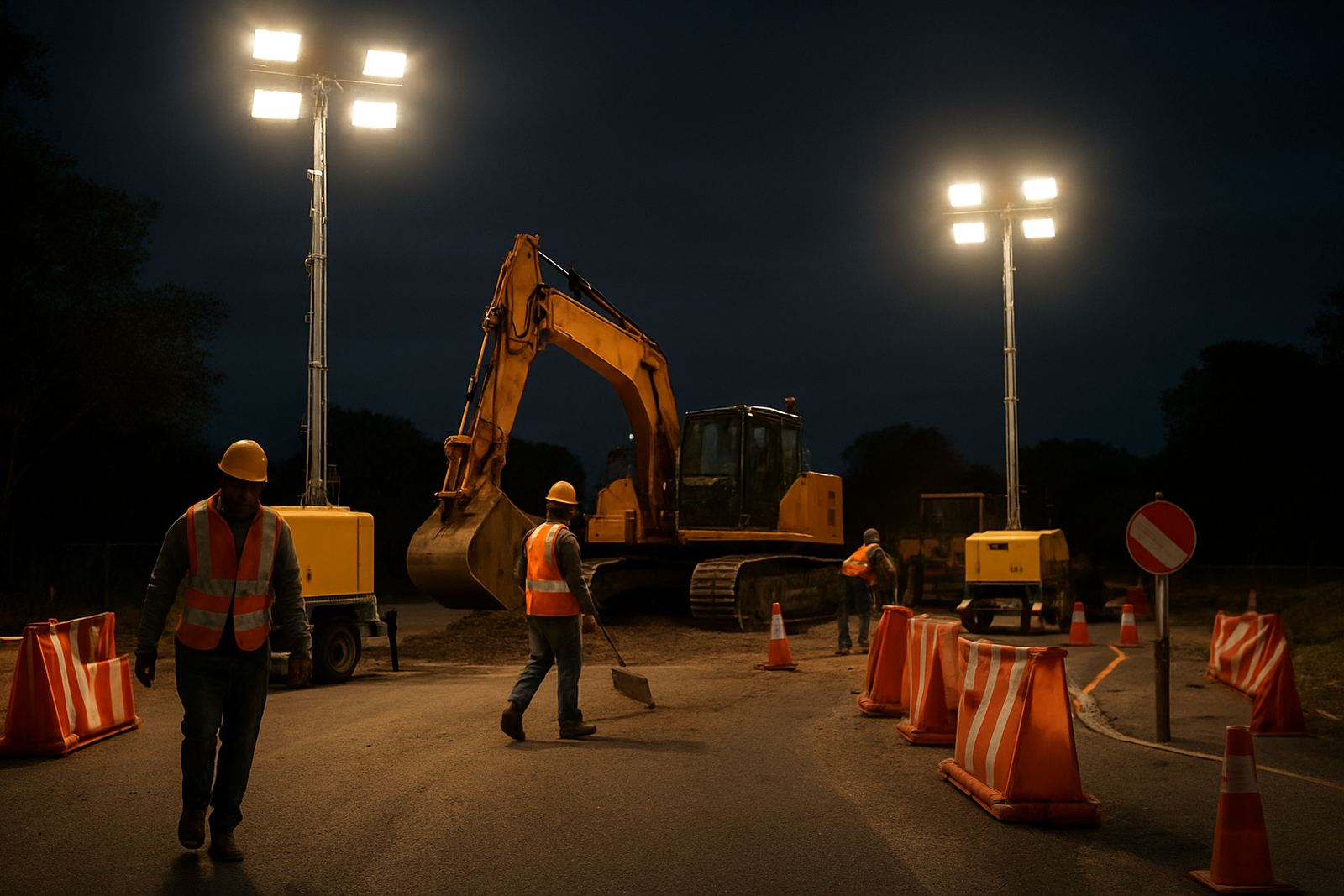
Think also about how the machine will be used. A generator standing in full sun next to a breaker may overheat faster than one in a shaded yard. If the site is in a residential area, noise rules can matter too, especially with evening pours or weekend work. In some municipal areas you may need to keep to approved working hours and control fuel storage carefully.
- Check altitude and ambient temperature before finalising size.
- Allow for dust, moisture and long cable runs.
- Plan fuel storage and refuelling access so the set can keep running safely.
A Johannesburg example: sizing for a phased concrete pour
Take a project in Germiston where a contractor needs temporary power for a site office, two 32 A mixers, a vibration poker set, security lights and a water pump. At first glance the load seems modest. But during a concrete pour the pump and mixers may start together, while the office air cooler and laptop charger are also on. Add a power tool or two and the load moves up quickly.
A better approach is to map the day hour by hour. Early morning may only need office and lighting. During the pour the generator must carry the peak. Later in the day it may drop back to a lighter load. That is where good planning helps. You do not need the biggest machine available, you need the right one for the busiest part of the job.
- Build a simple load schedule for the day, not just a total kVA number.
- Separate essential loads from optional ones.
- Consider plant swop-outs if the site load changes after each project stage.
Practical checks before the generator arrives
Before delivery, confirm where the generator will sit, how it will be secured and how fuel will be managed. Make sure the ground is level, accessible by truck and clear of overhead hazards. On sites with changing traffic routes, keep enough space for off-hire collection later. It helps to have the cable routes marked too, because a neat setup is safer and faster to hand over.
Good hire support also matters. If the project runs long or the load changes, the supplier should be able to assist with breakdown response, on-site servicing, fuel management and weekend support. That way the power plan stays aligned to the site instead of forcing the crew to work around a weak supply.
- Confirm delivery access and collection access before the first drop.
- Check fuel fill points and spill control arrangements.
- Keep safety documentation on site for inspections and inductions.
- Review the load again if the scope changes mid-project.
When to ask for a sizing review
If the site keeps tripping, if motors are slow to start or if the crew keeps asking for another extension lead, the generator is probably undersized or the load plan needs a rethink. A sizing review is also useful when a project moves from site clearing to structure work, or from daytime only work to night shifts. The power demand changes with each stage.
For contractors working across Gauteng, KwaZulu-Natal and the Western Cape, a local supplier can help match the set to the job, the climate and the site conditions. That saves time and keeps the crew focused on the build instead of the power supply. The aim is simple: enough capacity for the real load, with room for the day to go a bit sideways, because it often does.