Why night shift lighting changes the job on site
After sunset, the same trench, slab or access road can feel like a different site altogether. Shadows hide uneven ground, glare can wash out hand signals, and small objects become trip hazards. On construction sites around Germiston, Midrand and Pretoria East, we often see teams under light at the start of a night shift only to find that the first setup was too narrow or too weak for the full work area.
Good night lighting is about more than brightness. It needs to spread evenly, avoid harsh contrast, and keep workers visible from one task zone to the next. That matters whether you are pouring concrete, moving spoil, installing services or loading plant for the next day. It also helps with compliance because a site that is properly lit is easier to control, supervise and document.
Start with the work zone, not the equipment
The best layout begins with the task, not the lamp. Mark the areas where people will walk, lift, cut, pour, reverse and park. Then place lights so the beam covers those points without throwing glare into the eyes of operators. If a forklift or telehandler is moving in and out of the work face, the driver should be able to see the edges of the route, not just the brightest patch ahead.
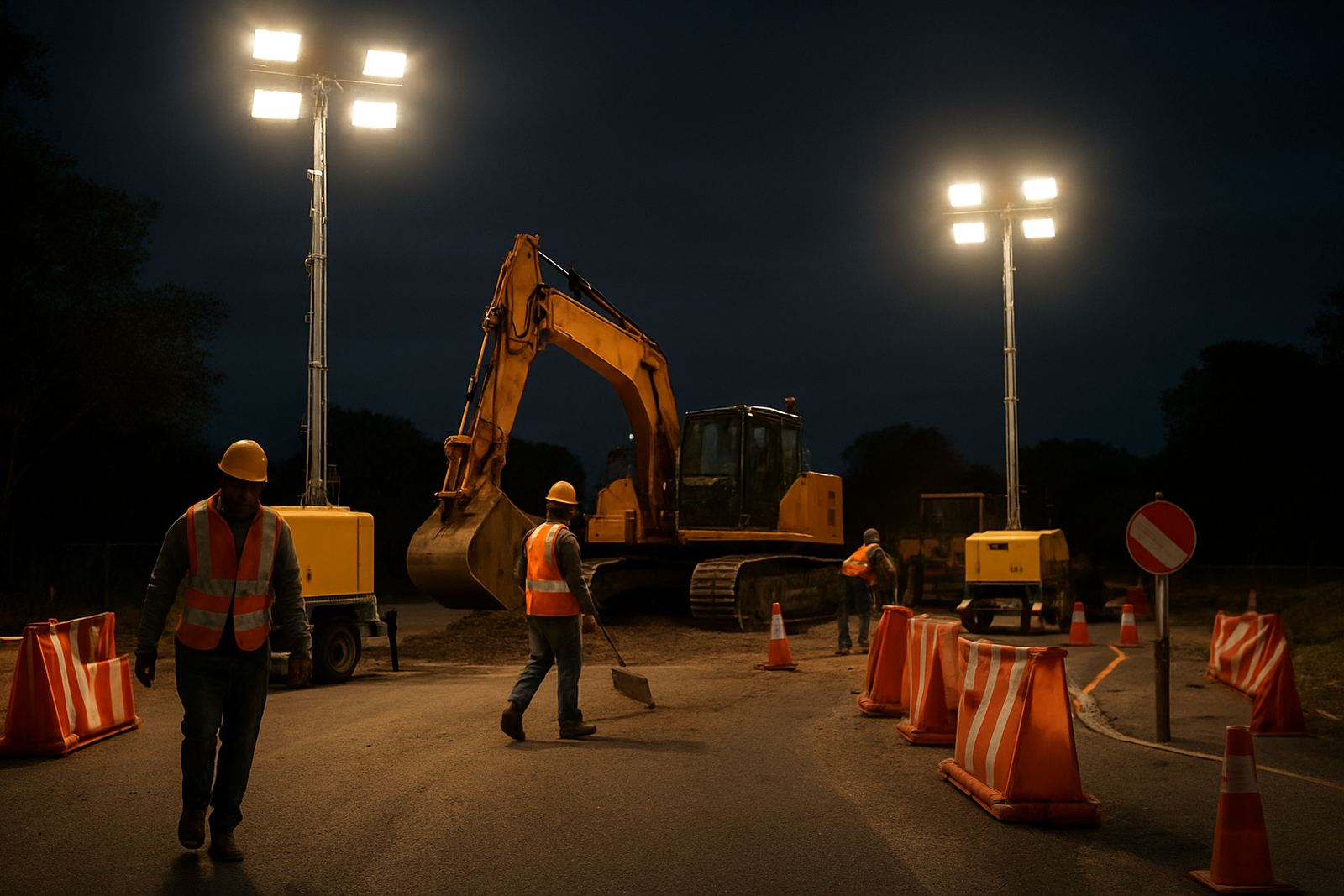
For many sites, a mix of mast lights and portable flood units works well. Mast lighting suits wider areas like laydown yards, batching zones and scaffold stacks. Portable units help on smaller work fronts where the crew shifts every few hours. If the job changes often, it is smarter to plan for movable lighting points than to fix everything in one position and hope it fits the whole shift.
- Light the access route first, then the task area.
- Keep control panels and fuel points visible.
- Avoid aiming lights directly at operator cabins.
- Check for dark corners near bunds, steps and ramps.
Power planning for load-shedding and long shifts
Night shift lighting is only useful if it stays on. In South Africa, that means planning for load-shedding, voltage drops and long hours on site. A generator sized too small will struggle once lights, tools and support equipment all start at once. It can also lead to dim output that looks acceptable from a distance but is weak where the crew actually works.
For remote or temporary sites, fuel planning is just as important as the lights themselves. The generator, the fuel storage point and the refuelling routine must all be arranged so that work can continue without interrupting the crew. On larger projects, it is worth separating lighting circuits from heavy equipment circuits so a fault in one part of the site does not knock out the entire shift. That small detail often saves hours.
In coastal areas such as Durban and Cape Town, moisture and salty air can also affect fittings, cables and connectors. Equipment should be checked regularly for corrosion, loose plugs and damaged insulation, especially where it is moved often or left out between shifts. A lamp that survives a dry inland site may fail early near the coast if it is not looked after properly.
What good night lighting should actually do
Many contractors ask for “more light”, but what they need is better light distribution. A bright spot in the middle of a site can still leave walkways, rigging points and loading areas too dark. The goal is to reduce shadow pockets and keep the whole job legible to the eye. That includes the edges, not only the centre.
Lighting should also support the way the crew works. If one team is setting scaffold while another is moving materials, both need clear sight lines. If plant is reversing near workers, the driver needs enough light to see hand signals, banksman positions and ground conditions. It sounds basic, but many incidents happen because a worker was visible for only part of the move, then lost in a blind patch.
- Use even light instead of one harsh hotspot.
- Match the beam pattern to the job, not just the wattage.
- Recheck lighting after equipment is moved or stacked.
- Plan for weather, dust and evening fog on open sites.
A Germiston example: keeping a concrete pour moving through the evening
Take a concrete pour running late on a commercial project in Germiston. The crew needs to see the formwork edge, the pump hose, the walking route and the finished surface as it cures. If the light only covers the pour point, then the labour team is left to guess where to step and the finishers struggle to spot marks, ridges and missed sections.
A better setup would place the main lights to wash across the full pour area, with extra light on access points, power cables and the washout zone. The generator should be positioned where noise and fumes do not interfere with the work face, but close enough to avoid long cable runs that become a trip risk. A tidy site with clear lighting is easier to supervise, and it usually keeps the shift calmer too.
On jobs like this, operators and site supervisors often prefer a lighting plan that can be adjusted as the work front moves. That way the crew does not spend half the night working around shadows. It may sound like a small thing, but on a long shift, it makes a proper difference.
Checks before the night shift starts
Before the crew clocks in, someone should walk the site and check the lighting as if they were working through it. Look for broken globes, loose stands, dead spots, cable damage and any light that is aimed where it should not be. If a unit has been moved during the day, assume the beam needs to be reset. Do not leave that for later, because once work starts people adapt to bad light and carry on in unsafe conditions.
It also helps to keep a simple log of what was checked, what was repaired and what fuel was added. For larger sites, that record is useful when a client wants proof that the lighting plan was in place and maintained properly. Safety documentation should be part of the shift routine, not a box ticked after the fact.
Good lighting does not remove the need for discipline, but it makes every other control measure work better. On a night site, that is half the battle won.
Hiring the right lighting setup for your site
Different sites need different lighting setups. A compact internal fit-out in Sandton will need something very different from a roadworks section in Pinetown or a storage yard near Bellville. The right hire partner should help match the equipment to the job size, the power available and the hours required, rather than pushing a one-size-fits-all solution.
For contractors working across Gauteng, KwaZulu-Natal and the Western Cape, the practical benefits are clear: site deliveries when needed, same-day dispatch for urgent changes, weekend support when the programme slips, and plant swop-outs if a unit is not doing the job. That kind of support keeps the night shift moving. If the lighting is wrong, the whole site feels it by 8pm.
Night work already asks a lot from the crew. When the lighting is planned properly, people can see, move and finish the job with fewer interruptions. That is the standard worth aiming for.