
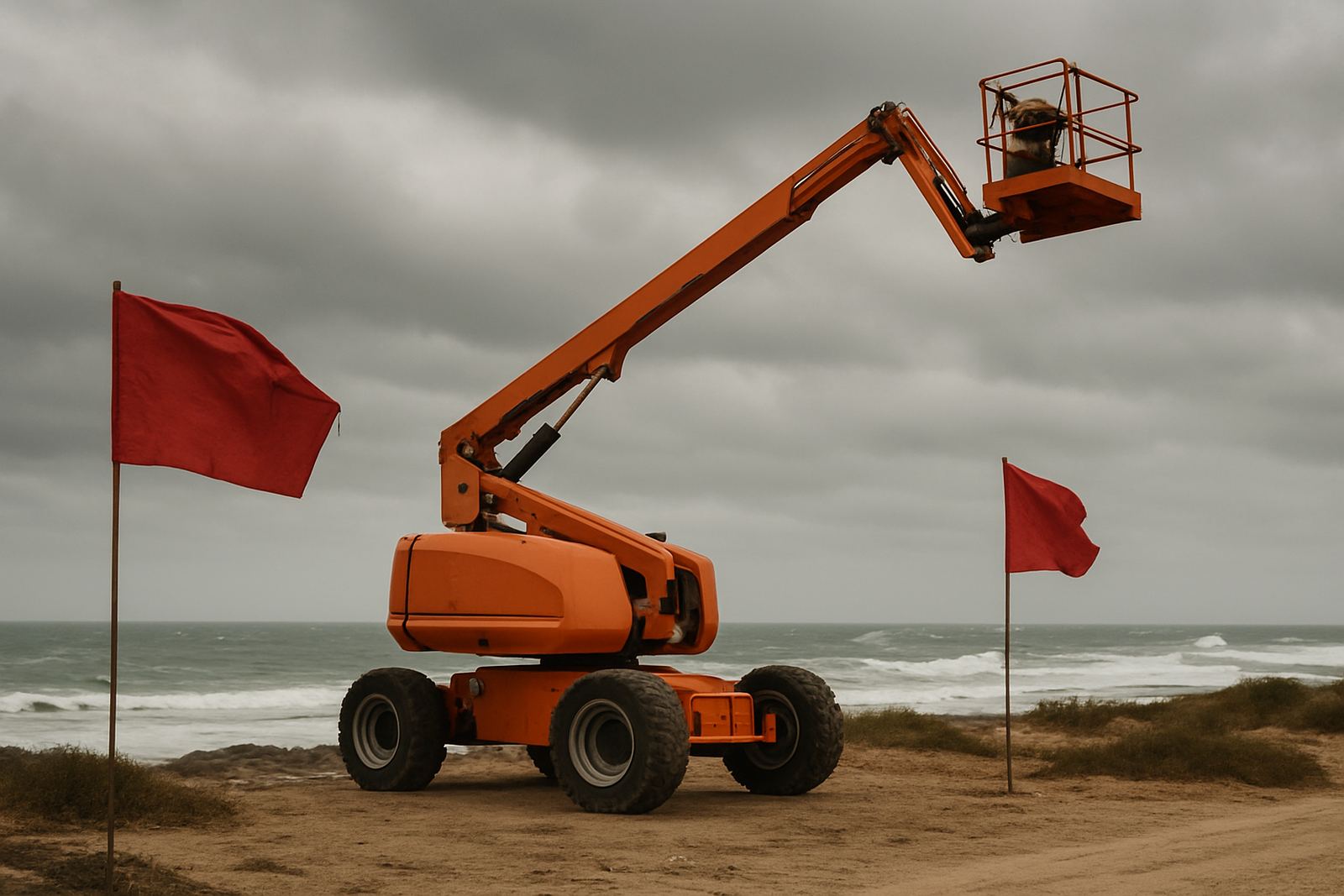
Why wind matters before anyone goes up
High wind is not just a comfort issue. It affects balance, visibility, load control, scaffold stability, and the way suspended materials behave around a structure. On a site in Germiston, a gust can turn a routine roof edge task into a delay, while at the coast in Durban or Cape Town the same job may need a different plan by mid morning because the wind has picked up off the bay.
For elevated equipment, wind can cause lateral sway, boom movement, sheet material lift, and unsafe footing on platforms or scaffold decks. The higher the working point, the more wind exposure the crew gets, so a calm ground level reading can still be misleading up top. That is why supervisors should treat wind as a live site condition, not a once a day check.
Good planning starts with the actual task. A light inspection using a manlift is one thing. Lifting cladding, stacking scaffold boards, or working with large signage panels is another. Even if the machine is mechanically sound, the job may not be safe if the wind is pushing the load around.
Set a wind rule before the crew arrives
Every site should have a clear wind trigger written into the work method statement or daily briefing. Do not wait for a foreman to make it up on the spot. The team needs to know when work stops, who makes the call, and what happens to equipment already in the air.
- Check wind forecasts before dispatch and again on arrival at site.
- Assign one person to monitor conditions during the shift.
- Stop work early if gusts are increasing, not after the first unsafe movement.
- Secure loose materials, boards, netting and signage before lunch breaks or knock-off.
- Keep a record of the decision in the site diary or safety file.
As a general rule, the higher the access point and the lighter the load, the stricter the wind control should be. Some equipment types cope better than others, but no operator should be expected to guess. If the platform is shaking or the load starts acting like a sail, the job has already gone too far.
How different access gear reacts in strong wind
Not all access equipment behaves the same in windy conditions. A fixed scaffold tied correctly to a building is different from a mobile access unit on wheels, and both are different from a boom that extends high above the ground. Site managers should match the gear to the task and the forecast, not only the budget.
Scaffolding needs proper bracing, ties, base support and clear exclusion zones. Mobile elevated work platforms need firm ground, correct tyre or outrigger setup, and careful attention to swing and drift. Any loose sheeting, debris netting or tarpaulin can add a lot of sail area, which is where trouble starts.
- Scaffolding: check ties, ledgers, planks and edge protection before wind picks up.
- Booms and lifts: avoid side loading, keep tools restrained and lower the basket if gusts build.
- Roof access: never treat open edges and strong gusts as manageable just because the job is short.
- Generators and fuel stores: secure them against movement and protect them from debris.
Where possible, use the least exposed method that still gets the job done. Sometimes that means changing the sequence, bringing in a different machine, or waiting an hour for the conditions to drop.
A Johannesburg example that saved a shutdown
On a mixed-use build in Germiston, a contractor had planned facade work and signage installation for a Friday morning. The forecast was poor, but the site team still hoped the wind would ease after sunrise. By 8:30, the wind was already lifting loose packaging and shaking lightweight panels against the scaffold line.
The hire coordinator and site supervisor agreed to hold off on the highest work, kept only the ground level prep going, and switched to internal tasks. Later that day the gusts strengthened enough to make the original plan unsafe. Because the crew had already tagged the materials, lowered the access gear and moved the lighter items into storage, there was no damaged equipment and no rushed recovery at knock-off.
That is the practical side of wind rules. The site did not lose a day to panic. It lost a few hours of high access work and kept the rest moving. That is a far better outcome than forcing the job and dealing with a fall hazard, broken sheet material or a complaint from the principal contractor.
What supervisors should check at the gate and on the floor
Wind management works best when the first check happens before the crew starts unpacking. At the gate, the supervisor should look at the forecast, the site exposure, the type of lift, and any nearby structures that can channel gusts between buildings. On the floor, they need to watch for localised gusts, not just the general weather report.
- Look for tree movement, dust lift, loose sheeting and fluttering warning tape.
- Check whether the ground is dry, level and stable for outriggers or scaffold feet.
- Inspect tie points, anchors and temporary barricades.
- Confirm the stop-work signal is understood by everyone on site.
- Make sure the off-hire or plant swop-out plan is ready if the weather turns.
Coastal humidity can also make the site feel manageable when the wind is actually gaining strength. In Durban, Pinetown or Bellville, the issue may not be rain at all, but a steady breeze that becomes a lifting hazard by mid afternoon. Small site observations matter, and they often tell the truth sooner than a phone forecast.
Planning for Gauteng, KZN and the Cape without wasting time
Wind rules are easier to follow when the hire plan already includes a back-up. A contractor in Pretoria East may need one access unit for the morning and a second option if the afternoon gusts rise. A coastal site in Cape Town may need weekend support, a second delivery window, or a plant swop-out if the original machine is no longer suitable for the conditions.
For longer projects, it helps to match the hire period to the risk profile. Long-term hire can give the site team more flexibility, while same-day dispatch and breakdown response reduce the pressure when conditions change unexpectedly. If the wind is persistent, it may be wiser to complete low-level work, on-site servicing, or fuel management first and save the elevated tasks for a safer window.
The main point is simple: wind is part of the working day in South Africa. From open Gauteng sites to exposed coastal projects, the safest crews are the ones that plan for it early, keep their equipment serviced, and know when to stand down without argument.