
Why refuelling needs its own site routine
On a busy construction site, fuel handling is often treated as a quick stop between shifts. That is where mistakes happen. A drip on compacted ground may look harmless, but it can spread into standing water, run into stormwater channels, or leave a slippery patch where people climb in and out of machines.
A proper refuelling routine does more than protect the ground. It helps keep generators, excavators, telehandlers and other plant ready for work, especially when load shedding or long operating hours put pressure on fuel use. When one person knows where fuel goes, when it is delivered, and how spills are contained, the whole plant zone stays calmer and cleaner.
For contractors working around Germiston, Sandton, Durban, or Cape Town, the weather also changes the risk. Coastal humidity can increase corrosion around caps and fittings, while strong wind can carry vapour and light contamination across a neat laydown area before anyone notices it.
Set a refuelling point before the first machine starts
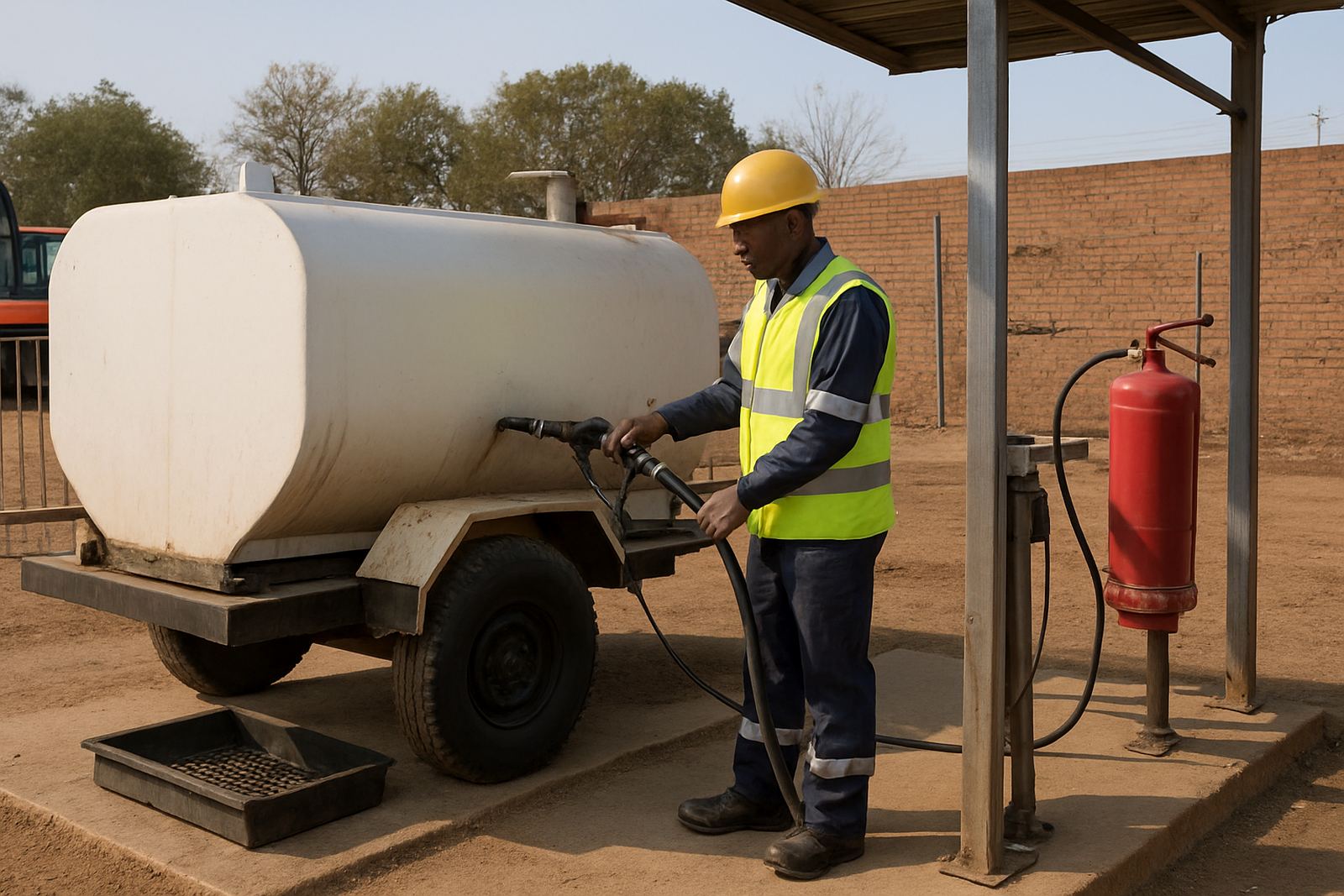
The safest fuel point is not the nearest open patch of ground. It should be planned in advance, marked clearly, and kept away from drains, ignition sources, welding areas, and pedestrian routes. On smaller sites that may mean one fixed corner with cones, drip trays and a spill kit. On larger civil works, it might be a dedicated fuel bay with controlled access and a register for every refuel.
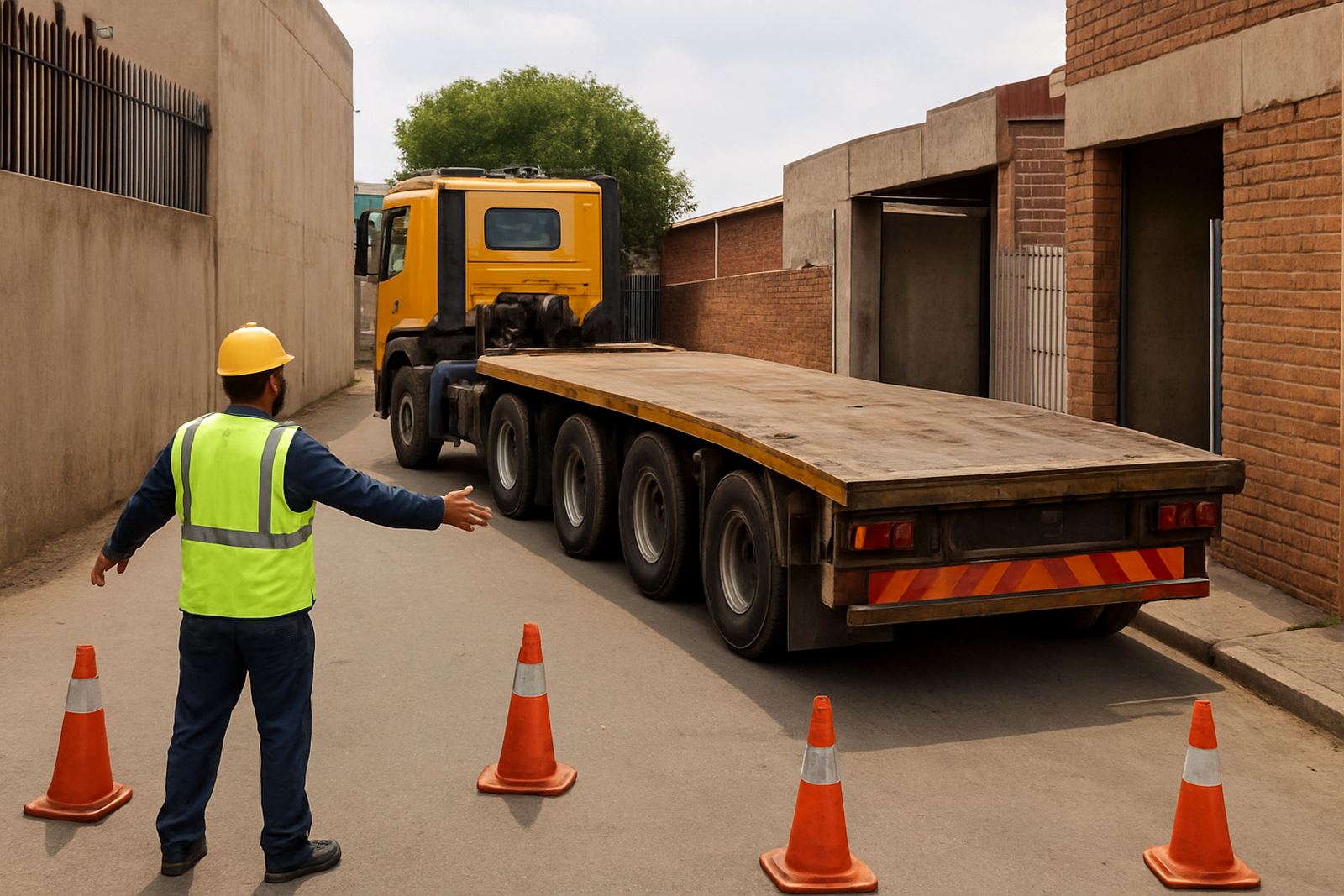
Good layout saves time too. If the fuel point is near the parking zone and easy for the tanker or service vehicle to reach, operators are less likely to improvise with jerry cans or move a machine to an awkward spot. That reduces the chance of overfilling, hose damage, or vehicles blocking access to emergency routes.
- Keep fuel storage and refuelling away from drains, hot work and public walkways.
- Use a level surface where spills can be seen quickly and cleaned up properly.
- Mark the area with cones, signage and a clear no-smoking rule.
- Store spill kits, absorbents and a fire extinguisher where operators can reach them fast.
Fuel handling steps that stop avoidable spills
Most fuel spills happen because someone is distracted, rushed or trying to top up too quickly. A slow, repeatable process works better. Before opening any cap, check that the machine is parked securely, the engine is off, and the area is free from other activity. If refuelling happens at night or early morning, use proper lighting so the filler neck and hose connection are visible.
Operators should also know the machine they are filling. Different plant has different tank positions and vents, and that affects how the fuel enters. Overfilling is a common mistake, especially when a tank is hard to see from ground level. Fuel management on site is not only about supply, it is about control.
- Inspect caps, hoses and nozzles before use.
- Do not smoke, weld, or use open flames near the fuel point.
- Keep a drip tray or absorbent pad under fittings where practical.
- Wipe up small drips straight away before they track into cab steps or soil.
Even a small leak can become a bigger issue if the machine is then moved across the site. Mud sticks to fuel residue and carries it into the next work area, which creates extra clean-up and a poor safety record.
Why clean plant zones matter to compliance and productivity
A tidy plant area makes inspections easier. It also helps with safety documentation, because site managers can show that fuel handling is controlled rather than left to chance. On municipal projects and larger private developments, tidy fuel practices support the safety file and reduce the risk of complaints from neighbouring properties.
Clean plant zones are also faster to work in. Operators can check fluid levels, walk around the machine, and spot leaks before they become breakdowns. A site that keeps refuelling areas neat usually sees fewer delays from contaminated ground, broken seals or equipment that has been left standing in pooled fuel.
This matters on long-term hire projects where machines stay on site for weeks or months. If the fuel point is well managed from day one, there is less chance of small problems turning into off-hire arguments or damage claims later.
A Germiston example from a live construction yard
In Germiston, where many sites sit close to transport routes and busy industrial traffic, space is often tight. A contractor running excavators, compactors and a generator had fuel delivered at the edge of a laydown area, but the point kept moving as materials arrived. Spills started appearing near a drain line and the yard became awkward to keep clean.
The fix was simple but disciplined. The team set one marked refuelling point, scheduled fuel top-ups for quieter periods, and kept a spill kit beside the area. The generator was also placed where it did not need to be shifted every few days. Within a week, the site was easier to walk, the ground stayed tidier, and the foreman spent less time chasing minor clean-up jobs.
That kind of practical change is often enough. It does not need complicated equipment, just clear rules and enough planning to make the right action the easiest one.
What good fuel management looks like across different sites
Refuelling is not identical on every project. A building site in Pretoria East will not handle fuel in the same way as a coastal job in Durban or a windy site in Cape Town. Still, the basics stay the same: plan the point, control the flow, and keep the area safe for operators and visitors.
For hire fleets that move between Gauteng, KwaZulu-Natal and the Western Cape, the best approach is one that travels well. The same set of rules should work for a small builder with one excavator and for a large contractor running multiple machines across different phases of a project.
- Use the same checklist for every refuel, no matter the machine size.
- Schedule fuel supply before low levels start affecting shift output.
- Keep records of litres delivered, site location and machine hours.
- Check for leaks after refuelling and again before the next shift starts.
When fuel management is treated as part of the job rather than an afterthought, machines stay available and the site stays cleaner. That saves time, avoids unnecessary callouts, and keeps everyone working in a safer space.