Why a rammer works best in narrow trenches
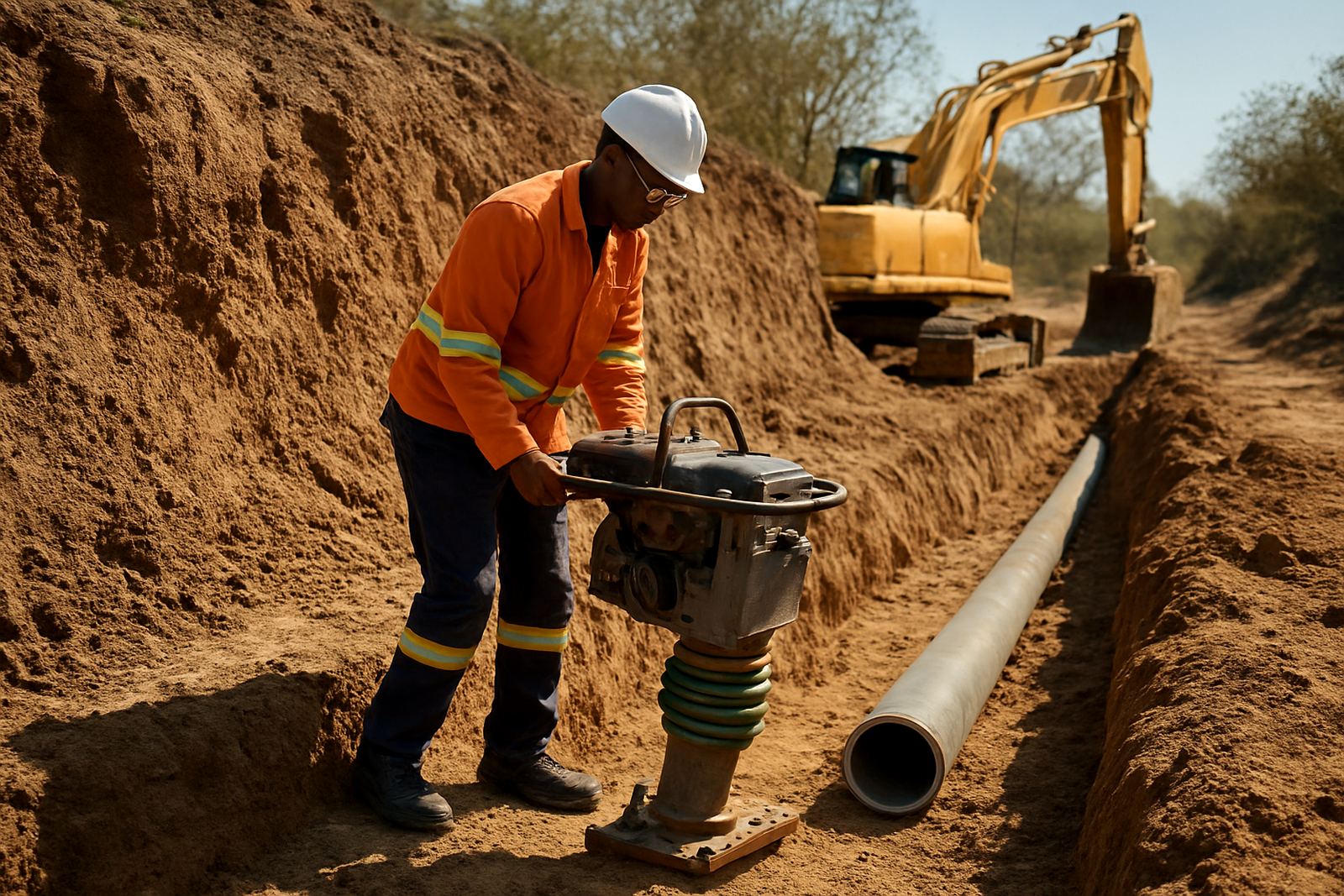
Rammers are made for confined spaces where a plate compactor cannot move freely, especially around service trenches, manholes and wall backfill. Their forward, punchy action is better at driving material down in deeper, narrower sections, which is why they are often the first choice on small utility jobs and repair work.
The mistake many crews make is treating the rammer like a quick finish tool. It is not there to rush the trench closed. It is there to compact each layer fully so the ground can carry load later. That matters on driveways, kerb lines, footpaths and any area where settlement would cause a problem after the handover.
In practice, a rammer is only as good as the material and the person using it. If the backfill is too wet, too dry or laid too thick, the machine will keep bouncing while the lower layer stays loose. That is where rework starts and the repair bill grows.
Layer thickness decides the result
Most trench compaction failures come from putting in too much material at once. For a rammer, thinner layers are safer and easier to compact properly. As a general site rule, work in layers of about 100 mm to 150 mm, depending on the material and the spec from the engineer or site agent.
Thicker layers can look faster on the day, but they trap air and leave soft spots below the surface. If the trench is being backfilled with selected fill, sand or gravel, keep the lift even across the width of the trench. Uneven lifts are a common reason for sinkage near edges, especially where the trench crosses a slab or paving line.
- Keep each lift even before compacting.
- Do not add the next layer until the previous one is firm underfoot.
- Check moisture as you go, since dry material may need light watering and wet material may need time to drain.
- If the trench is deep, compact in stages instead of trying to finish the whole section in one pass.
How to run the machine without wasting passes
The operator should guide the rammer, not force it. Let the tool work at its own pace and overlap each pass slightly so there are no missed strips. A common error is standing in one place too long, which can overwork one patch while leaving the rest loose.
Good compaction is about rhythm. Move along the trench, then come back for a second pass if the material needs it. The machine should rise and strike cleanly, without bogging down. If it starts to labour or sink, stop and check the layer below, because the problem is usually in the base not the rammer.
On live sites in places like Germiston industrial areas or new housing work in Midrand, there is often pressure to open the trench, lay the service and move on. That pressure is real but the backfill still needs proper treatment. A few extra minutes on compaction can save a lot of complaint from the client later.
Material, moisture and trench conditions in South Africa
South African sites bring all sorts of ground conditions. In Gauteng you may get dry, hard fill that needs conditioning before it compacts. On the coast, especially around Durban and the Western Cape, moisture can make the trench behave differently, with sticky material clumping and falling back into the hole. Both extremes affect realy how a rammer performs.
The operator should look at three things before starting:
- Is the fill granular, clayey or mixed with rubble?
- Has rain softened the trench base or side walls?
- Will the finished surface carry people, vehicles or only light foot traffic?
If the trench is close to services, use care near pipes, sleeves and cable routes. A rammer can shift loose material fast, but it can also disturb poorly supported edges if the trench was not prepared correctly. Where municipal requirements call for particular backfill or warning layers, follow those instructions exactly.
When to choose a rammer instead of a plate
There are jobs where a plate compactor is the better tool, but narrow trenches are usually not one of them. A rammer is easier to control beside retaining walls, in service runs and where access is tight. It also handles cohesive material better than a plate in many trench situations.
Use a rammer when the job involves:
- Electrical or plumbing trenches with limited width.
- Backfill around foundations and boundary walls.
- Service repairs where the crew must work in a small opening.
- Sites with uneven access or steps between levels.
If the trench opens out into a wider area, the team may switch tools once the narrow section is done. That sort of fleet planning keeps the work moving without overcomplicating the task. It also helps when the site needs same-day dispatch because the next phase cannot wait until tomorrow.
A Germiston trench job done the proper way
On a service repair in Germiston, a contractor had a 600 mm trench running across a yard that would later carry light delivery vehicles. The fill was a mix of sand and excavated clay, and the first attempt at backfilling left soft spots after rain. Rather than closing it in one lift, the crew reopened the surface, re-laid the backfill in thinner layers and compacted each lift with a rammer.
The result was a firmer line with less movement at the edges. The client could move ahead with paving without waiting for remedial work later, which saved time and avoided a second call-out. It also showed a simple point: the machine did its job, but the layer thickness and operator discipline made the difference.
That is why trench compaction should always be treated as part of the build, not as a quick cleanup step. If the surface is going to be loaded, walked on or sealed, the backfill needs to be sound from the start. A hurried finish almost always comes back as a repair issue.