Why smaller plant often does more on tight sites
On a compact site, the biggest machine is not always the best choice. Access gates can be narrow, storage may be limited, and in built-up areas there is often no room to keep unused plant standing around. A smaller excavator, loader or compaction unit can be the difference between steady progress and repeated stoppages while crews move equipment in and out.
In Johannesburg and Germiston, many jobs are squeezed between boundary walls, live services and active roads. In Durban and coastal suburbs, moisture can affect idle equipment quicker than many teams expect, so hiring only what you need reduces standing time and helps with upkeep. Smaller plant also makes it easier to work around neighbours, delivery trucks and safety lines without crowding the whole site.
Start with the access route, not the machine list
Before choosing plant, measure the route from the street to the workface. Check gate width, turning space, overhead cables, low tree branches, manhole covers and the bearing strength of any temporary access road. A machine that fits on paper can still fail on site if it cannot turn into position or cross a soft verge.
It helps to think in practical steps rather than only machine type. Ask where the off-load point is, where spoil will go, and whether the machine must pass through an occupied yard or completed section. Small site planning is often about reducing manoeuvres, not only choosing lighter equipment.
- Measure gate openings, ramps and any blind corners before booking hire.
- Confirm ground conditions after rain, especially on clay or freshly filled areas.
- Allow space for delivery trucks, loading off the side of a road, and safe pedestrian flow.
- Check whether the site needs municipal permits for road occupancy or pavement use.
Match the machine to the job, not the habit
Many contractors keep hiring the same type of machine because it is familiar. That can work on some sites, but small projects often need a different mix. A compact excavator may be better than a larger model if the trench is short and access is tight. A smaller generator may be enough for lighting and hand tools where load-shedding is the main issue. On a busy residential site, a scaffold system that can be moved in sections may be more useful than a fixed setup that blocks the whole frontage.
The best hire choice depends on output per shift, not just power. If a machine is too large, it may spend half the day repositioning. If it is too small, the crew burns time waiting on cycles. Getting the balance right keeps labour productive and lowers the pressure on fuel, transport and supervision.
- Excavation and trenching: compact excavators are often better for services, drainage and boundary work.
- Ground prep: small compactors and rollers suit patch work, walkways and yard repairs.
- Power: generators should match the actual load, with headroom for start-up draw.
- Access and work-at-height: modular scaffolding can suit smaller footprints and phased work.
Why load-shedding changes the hire decision
Load-shedding changes how small sites are run. If power is unreliable, the right generator can keep pumps, lights, mixers and charging points working without dragging the whole programme off course. But oversizing is expensive, while undersizing can trip the unit and stop work at the worst time. It is better to list the actual equipment on site and plan for the peak draw rather than guess.
Fuel management also matters on small sites because storage space is limited and theft risk is real. A tidy fuel plan, with monitored top-ups and clear handover records, can prevent waste and help the crew stay on schedule. On sites in Gauteng and the coast, this is not just a convenience it is part of keeping plant available when the crew needs it most.
Keep smaller sites safe and easier to manage
Safety on a compact site depends on discipline. When plant, people and materials are all sharing a small area, every movement has a consequence. Clear walkways, marked turning zones and defined off-load points cut down on close calls. Operators also need enough visibility to work without guessing where spotters or labourers are standing.
Good documentation helps too. Site teams should have the correct safety paperwork, service records and operating checks in place before the first machine starts work. For longer jobs, planned servicing and quick breakdown response are worth more than rushing in a back-up machine later. That kind of planning keeps the site moving and helps with municipal or principal contractor inspections.
A local example from Germiston to a tight residential build
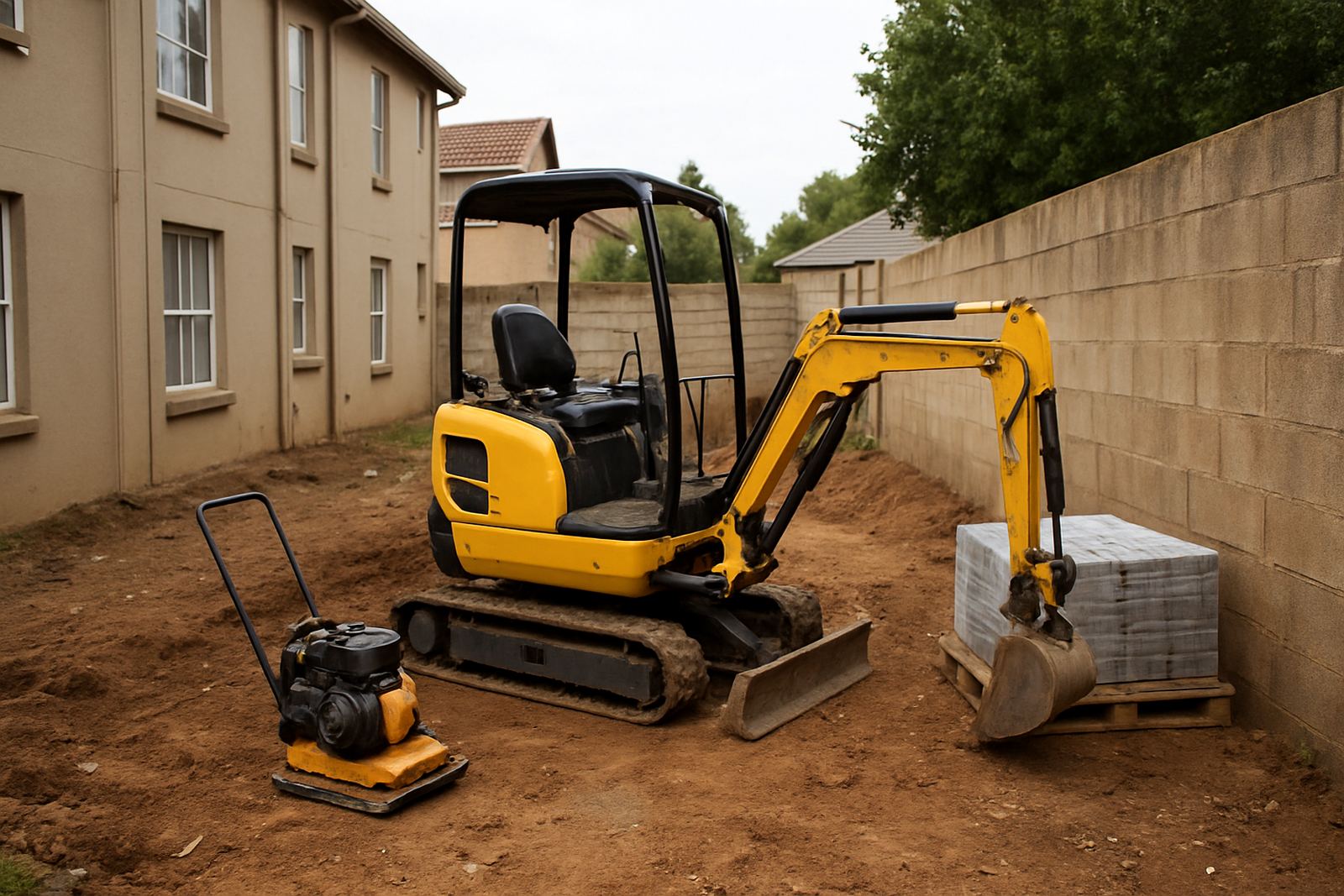
A contractor working on a narrow infill build near Germiston needed excavation for foundations, spoil removal, temporary power and short-term scaffold access. The street had limited parking, the yard entrance was tight and neighbouring properties were occupied. Rather than sending in larger equipment, the crew used a compact excavator, a smaller generator and sectional scaffolding delivered in stages. The result was less congestion at the gate, quicker setup and fewer hold-ups when deliveries arrived.
That kind of setup is common across Johannesburg, Pretoria East and the smaller industrial pockets around Boksburg and Midrand. The point is not to use the smallest machine possible, but to use the one that fits the site and still does the job properly. When access is tight, every metre of movement counts and a machine that suits the space will save time from the first day.
- Use phased delivery so plant arrives only when the site is ready for it.
- Keep off-hire collections planned, so idle equipment does not block access.
- Consider weekend support when a short programme needs extra working hours.
- Ask for operator supply if the job needs experienced hands on a compact machine.