
What housing developers usually need on a busy site
On a housing project, the work is repetitive but the conditions change every week. One day you are opening up for earthworks, the next you are shaping internal roads, digging service trenches or clearing spoil after a rain delay. That is why the hire plan has to suit compact plots, narrow access and steady turnaround, not just big bulk movement.
We work with developers, civils contractors and smaller builders who need dependable plant for clustered units, sectional title estates and low-cost housing layouts. In Germiston and across Gauteng the pressure is often speed, while in coastal areas like Durban and Cape Town the concern is corrosion, soft ground and keeping the programme moving when weather gets in the way.
Typical equipment set for plots, roads and services
A housing development normally needs a mix of excavation, loading, compaction and site support equipment. The exact list changes with the stage of the job, but most programmes benefit from a core set that can handle repetitive cuts and short moves between work fronts.
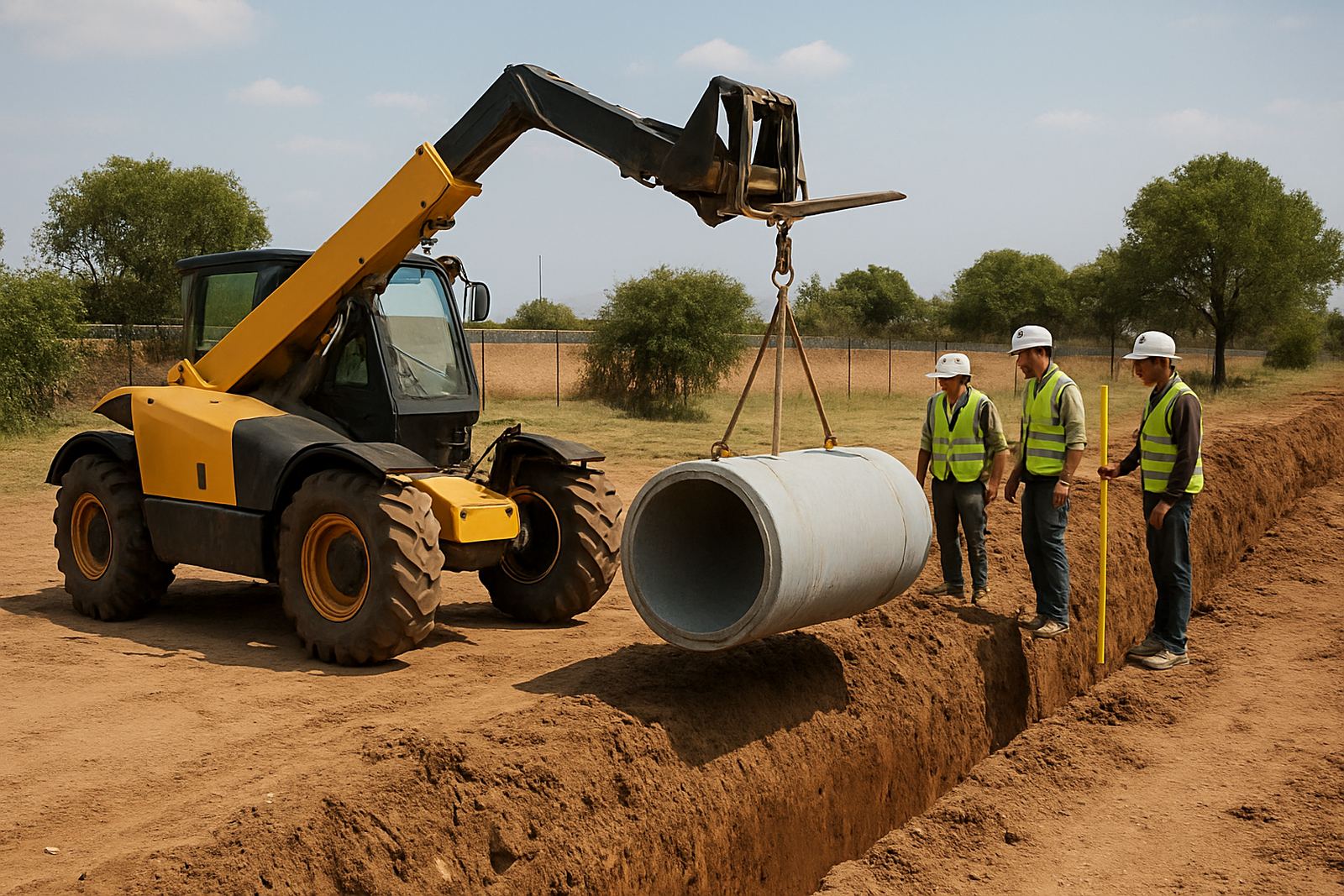
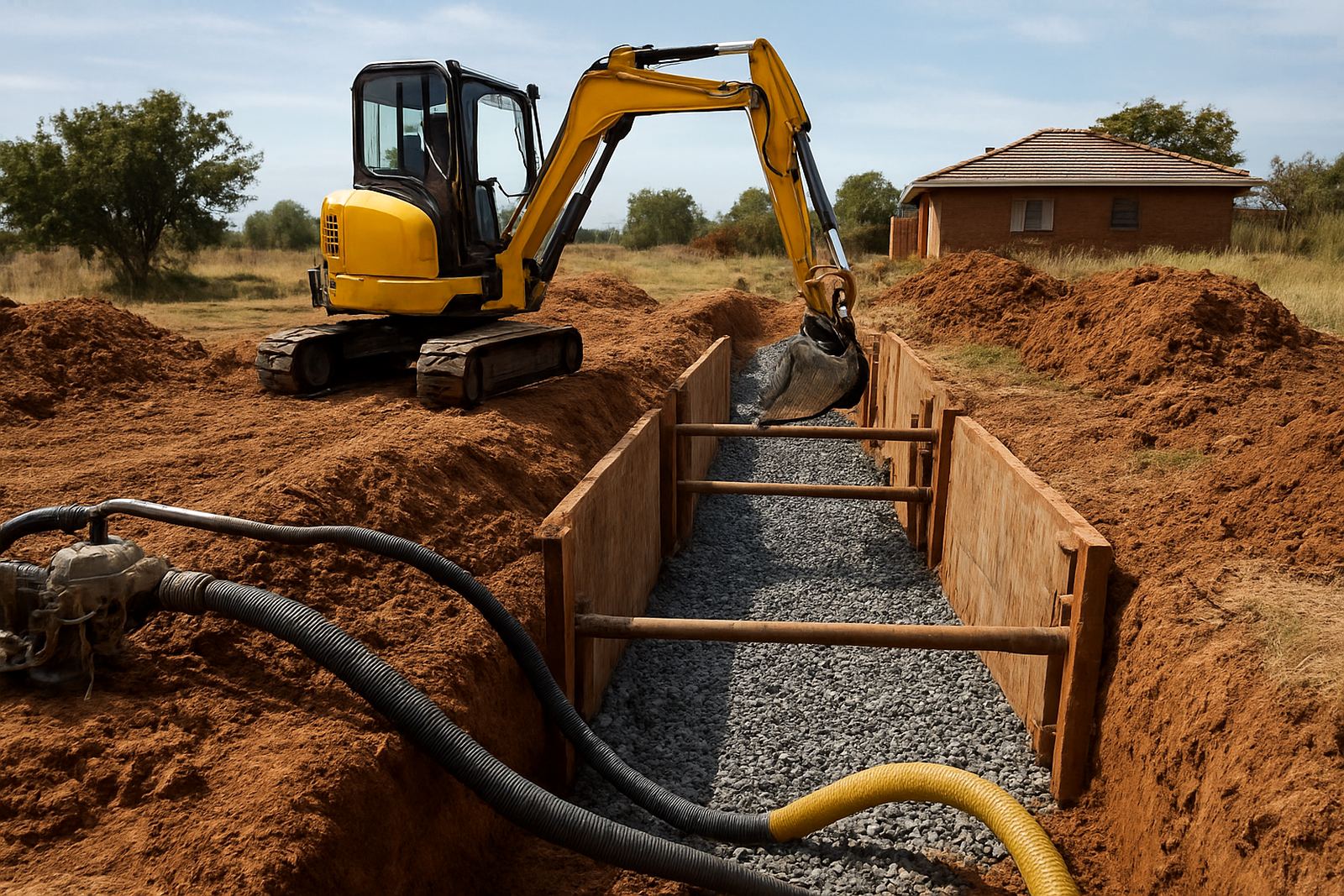
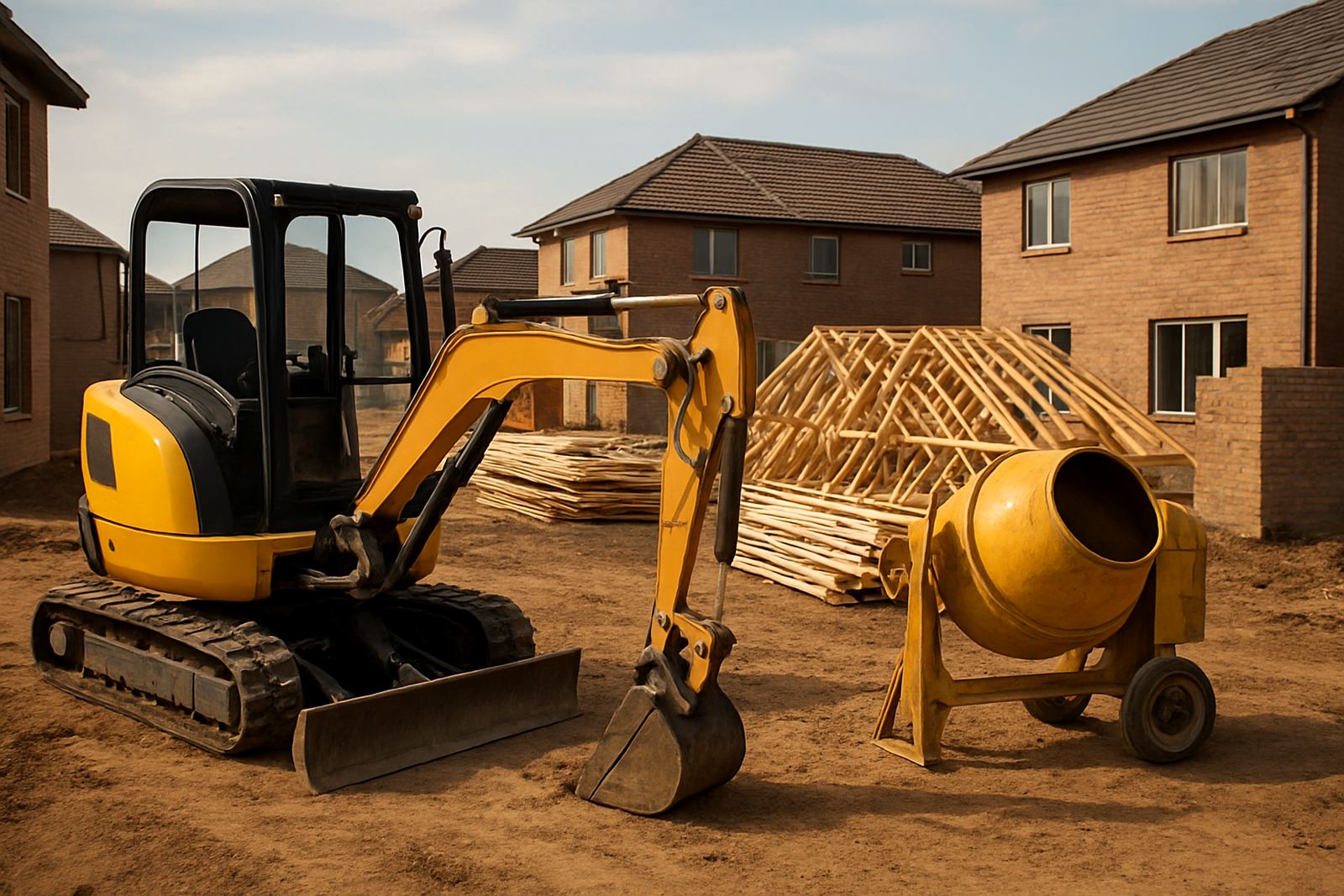
- Mini excavators for trenches, stormwater lines, water reticulation and tight access areas
- Mid-size excavators for bulk earthworks, service crossings and loading spoil
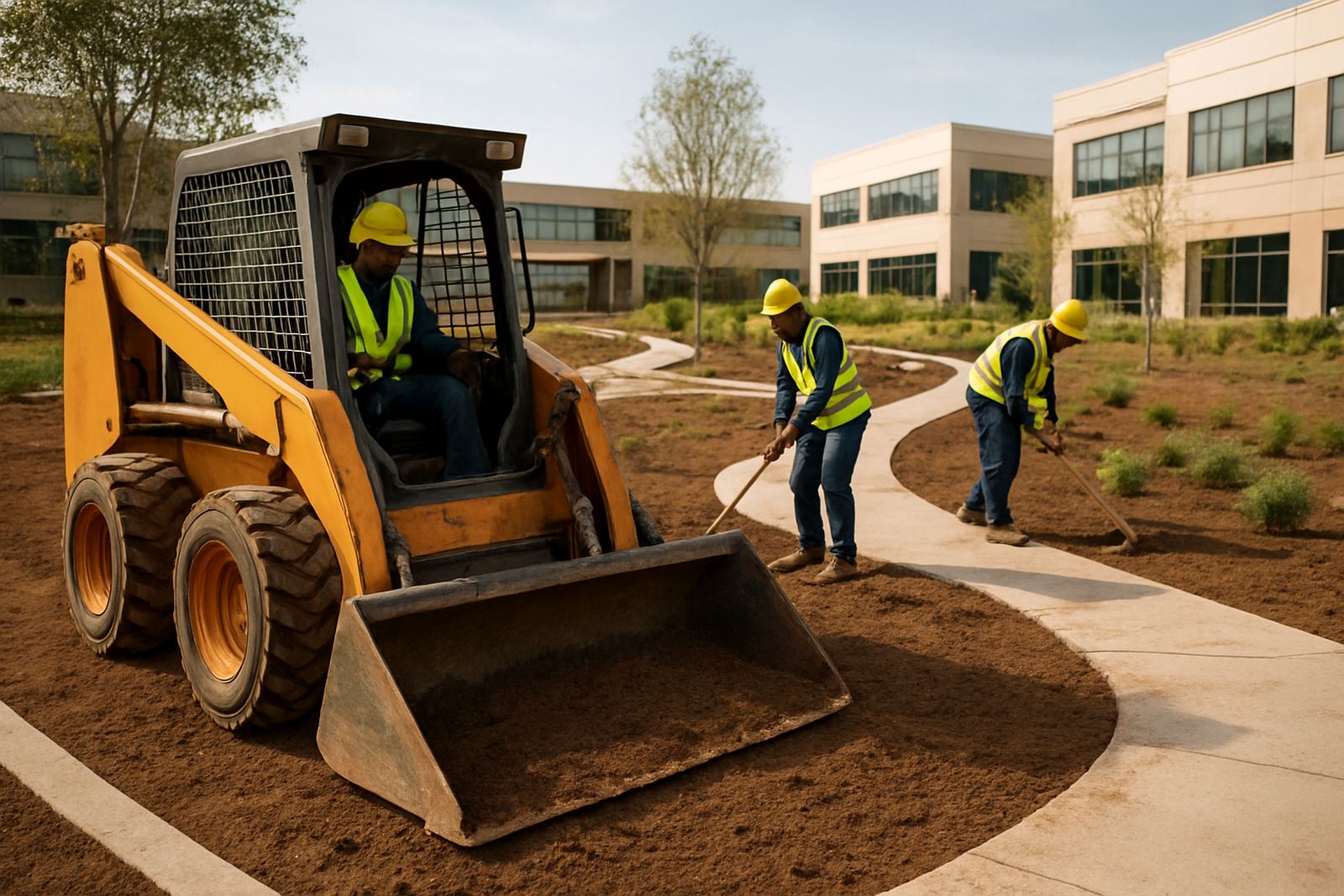
- Loaders and skid-type machines for material handling, backfill and clean-up
- Compaction rollers and plate compactors for sub-base, trenches and footpath layers
- Dumpers or site tippers for moving spoil, gravel and bedding material
- Generators for tower lights, tools and backup power during load-shedding
- Scaffolding and access gear for brickwork, plastering and façade repairs
Where the site has long internal roads or repeated trenching, it often helps to keep one machine dedicated to service work and another to bulk movement. That reduces waiting time and keeps the crew from standing around for a machine thats already committed elsewhere.
Planning the layout so the hire list works properly
A good hire plan starts with the site layout. Mark the access gate, stockpile area, turning space, spoil dump and the service corridor before the first machine arrives. On tighter sites, a 6 tonne excavator may be a better fit than a larger unit because it can work around partially completed units without disturbing finished ground.
Think in phases. For example, earthworks and roads may need a heavier machine for a few weeks, then the programme shifts to trenching, backfilling and compaction. If the hire list is set up around those phases, you avoid paying for underused plant. It also helps to schedule deliveries early in the morning when the site is clear and deliveries can get in and out without blocking trades.
- Leave enough space for off-loading and turning, especially on gated estates
- Keep fuel storage, generator placement and tool holding areas away from traffic routes
- Plan trenching and backfill in sections so the same plant is not pushed too far across the site
- Allow for wet weather access, especially on greenfield developments or clay soils
Keeping the programme moving during power cuts and weather delays
Housing projects often suffer from stop-start work. Load-shedding can interrupt mixing, welding and lighting, while heavy rain can leave roads soft and trenches open for longer than planned. That is where generators, fuel management and same-day dispatch make a real difference. A generator sized for your tools and lighting can save a full day of lost labour when municipal power is unstable.
In humid coastal areas, equipment storage matters too. Machines should be parked on level ground, cleaned often and checked for corrosion on pins, hoses and electrical fittings. On inland sites the main issue is dust and uneven compaction, so regular servicing and breakdown response matter just as much. A small fault can quickly become a bigger delay if the machine is needed for a repetive task across several plots.
Common mistakes that cost time and money
The biggest mistake is hiring too much heavy plant for too long. A developer may need a bulldozer for clearing and initial shaping, but once the internal roads and plot levels are established, that same machine can sit idle while smaller units do the daily work. Another common error is leaving compaction too late, which creates rework on roads and service trenches.
We also see sites underestimating access constraints. If the gate is narrow or the internal road is not yet formed, a large truck may not reach the work face. That is why site inspections, proper planning and off-hire collections matter. It saves time, and keeps the contractor within budget and within the practical limits of the site.
- Hiring a machine before the access route is ready
- Ignoring breakdown cover and losing a full shift to one fault
- Using one machine for too many jobs, which slows production
- Skipping safety documentation for visitors, operators and subcontractors
Budget ranges for housing development hire
Costs depend on machine size, duration, transport, operator supply and whether you need weekend support or on-site servicing. As a working guide, a compact housing package for short-term plot work can start from around R18 000 to R45 000 per week for a mixed set of smaller plant. A mid-size package for bulk earthworks, roads and services often sits between R55 000 and R140 000 per week, depending on the number of units and the support required.
Long-term hire can lower the weekly rate, especially on developments that run for several months. It is usually better to plan the full phase, then swap plant as the site changes. That way you are not paying premium rates for equipment that is no longer the right size. If you need a clear figure, we can quote from your site programme, access conditions and the stage of work you are at.
How we support housing projects from Germiston outward
From our Germiston base, we support housing developments across Gauteng, with hire depots in Midrand, Pretoria East and Boksburg for quicker turnarounds. We also serve sites through Durban, Pinetown, Cape Town and Bellville when the programme calls for wider regional support. That helps with same-day dispatch, site deliveries, plant swop-outs and off-hire collections when the schedule changes.
Sibusiso Mthembu leads the business with support from Annelie van Wyk, Thabo Nkosi, Zanele Dlamini, Willem Erasmus and Nokuthula Khumalo. The result is practical support on the ground, not just machine hire on paper. For housing developments, that means the right plant arrives ready for the stage of work, with the paperwork and safety side sorted from the start.