Pipe laying jobs need plant that can move fast and fit the site
Most pipe laying projects start with a clear route and a tight programme. Whether you are laying stormwater, water mains, sewer lines or utility ducts, the job usually needs trenching, safe lifting, bedding material placement and reinstatement before the surface can reopen. On city roads or service lanes, delays cost money, so the hire plan must match the chain of work from day one.
For contractors working in Johannesburg, Pretoria East, Midrand, Germiston, Durban, Pinetown, Cape Town or Bellville, the main challenge is not only digging the trench. It is keeping the trench open for as little time as possible, handling pipes without damage and returning the surface to a usable condition before the municipality starts asking questions.
Typical equipment set for trenching and pipe handling
The right mix depends on pipe diameter, trench depth, soil conditions and access. In clay soils you may need more breakout force, while sandy or loose ground calls for careful support and frequent trimming. For road crossings and narrow servitudes, smaller machines often work better than one big unit.
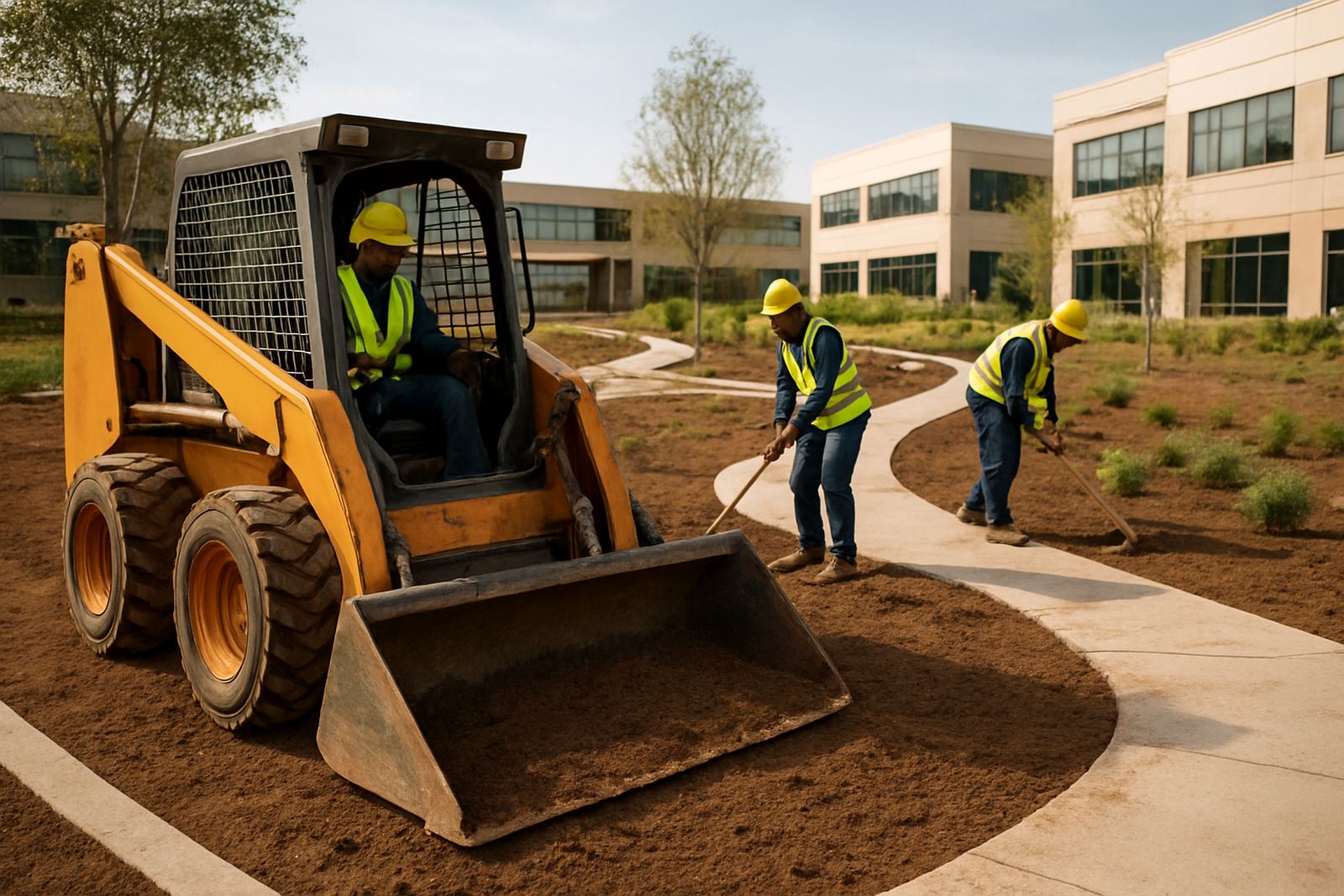
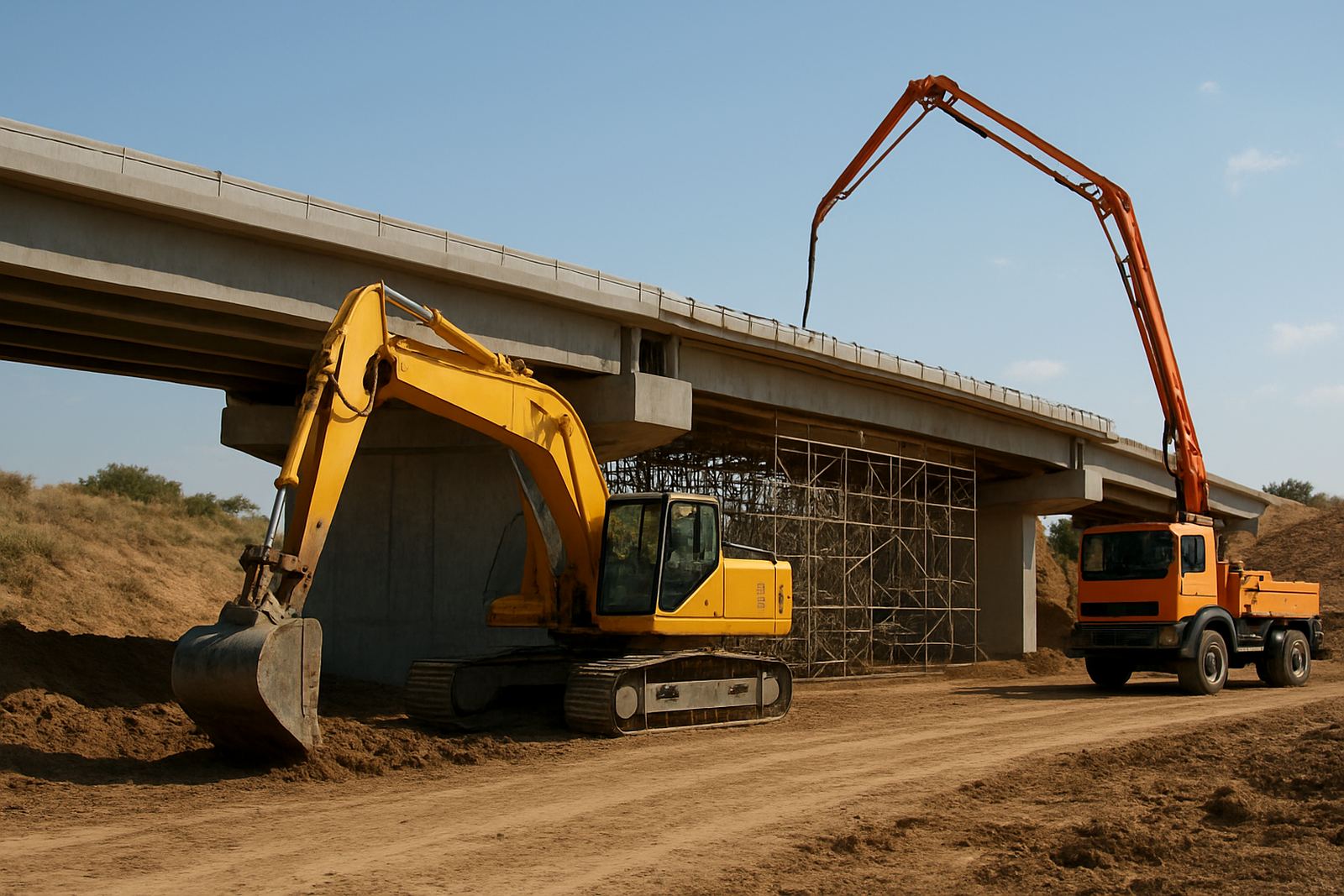
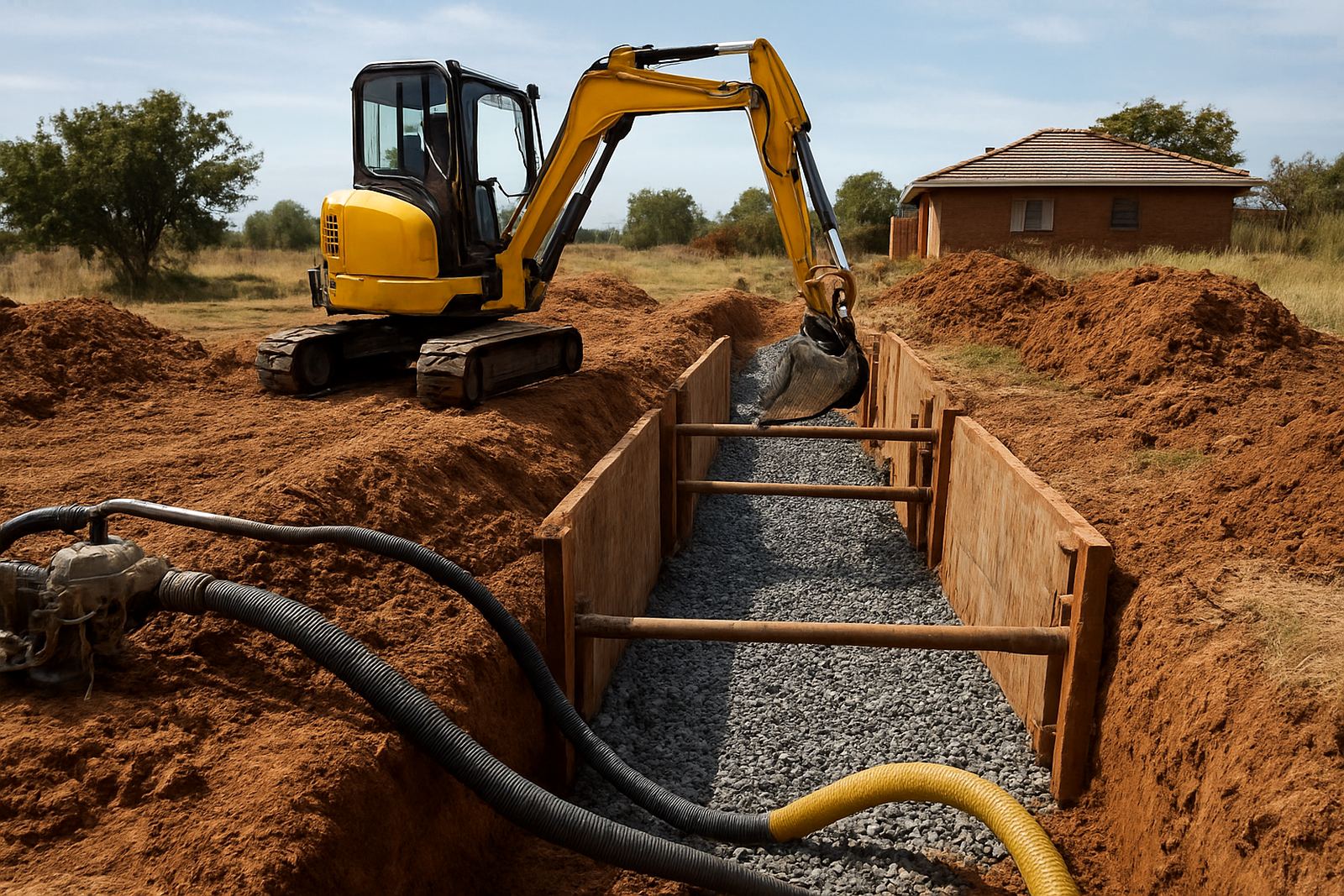
- Excavators for trenching, loading spoil and placing bedding material
- Backhoe loaders for shorter runs and mixed digging jobs
- Tipper trucks for spoil removal and imported fill
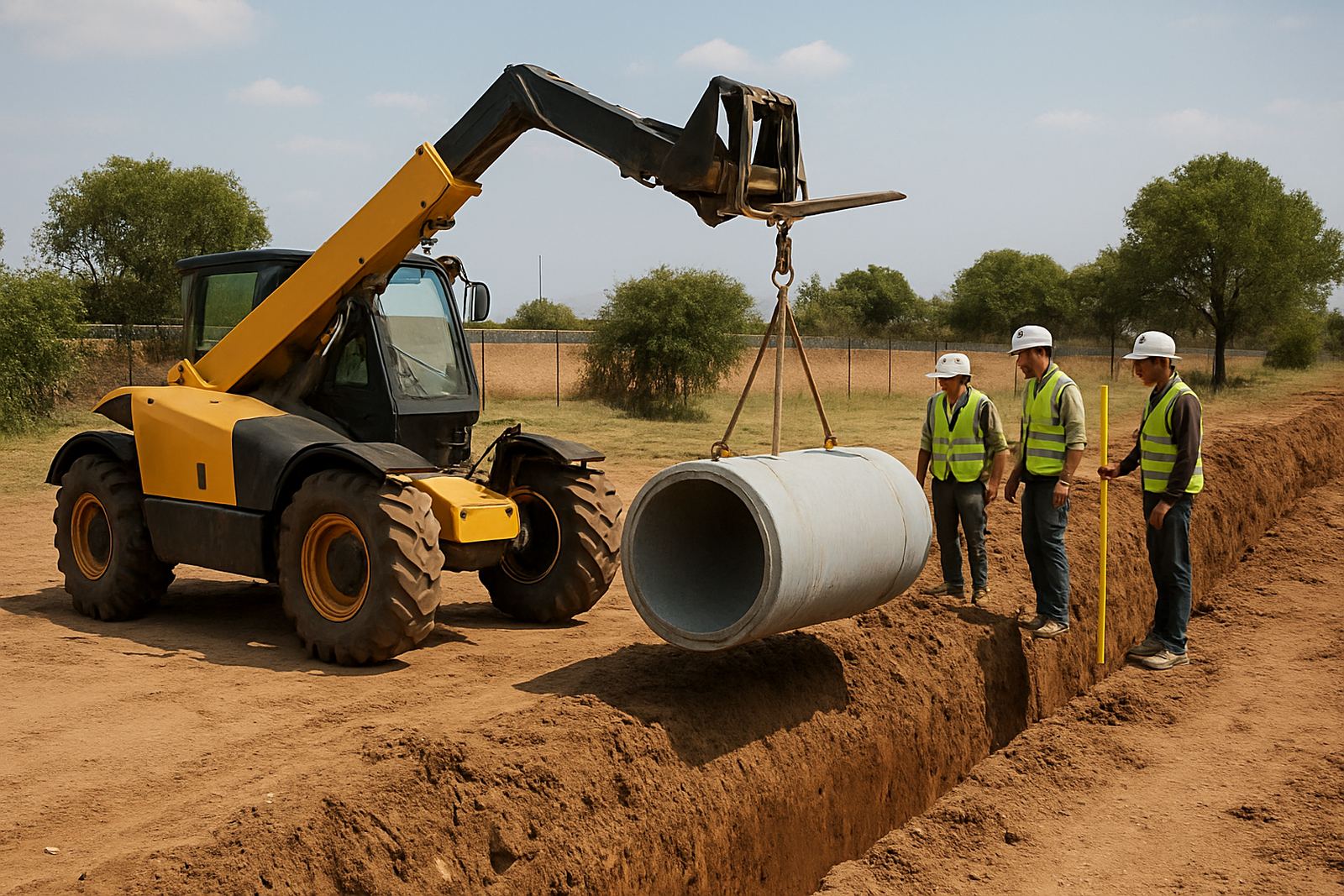
- Lifting equipment for pipes, manholes and precast sections
- Compaction equipment for backfill and reinstatement layers
- Generators and lighting for early starts, night work and load-shedding
- Scaffolding or access gear for chamber work and raised sections
If the site has limited access, ask for a smaller excavator with the right reach rather than forcing a machine that is too large for the trench line. That saves time and keeps the edges neater, which matters when the reinstatement must pass inspection.
Layout planning that keeps the trench moving
Pipe laying is easiest when the site is set up in working zones. One zone for excavation, one for pipe lowering, one for backfill and one for compaction and finish. If those tasks overlap in the same narrow strip, the crew starts waiting on each other and the programme slips.
Plan for spoil stockpiles, turning space and delivery access before the first machine arrives. In dense suburban areas, leave room for delivery trucks to enter and exit without blocking the whole street. On longer routes, especially along municipal servitudes, stage the equipment so the excavator does not have to travel long distances between open trenches. A bit of planning here saves a lot of fuel and downtime, nogal.
- Mark utility crossings before excavation starts
- Keep pipe sections in sequence for easy lifting
- Allow space for bedding sand, shoring and compaction
- Separate wet spoil from reusable material where possible
- Schedule deliveries so the trench does not sit open overnight unless required
Common mistakes that slow pipe laying work down
One common mistake is hiring plant by habit instead of by trench size. A machine that is too small spends the whole day struggling with depth and spoil. A machine that is too large can damage kerbs, driveways and service lines. Another mistake is underestimating how much time backfill and compaction take compared with the digging itself.
Contractors also run into trouble when they forget about local conditions. Coastal humidity can affect stored material and work sequences, while Gauteng summer storms can flood open trenches in minutes. If load-shedding is on the schedule, generators and fuel management need to be part of the hire plan, not an afterthought. Safety documentation matters too, especially where public traffic, pedestrians or municipal inspectors are involved.
Common errors to avoid include:
- Hiring only for excavation and forgetting lifting, compaction and lighting
- Not checking trench width against pipe diameter and bedding requirements
- Leaving reinstatement equipment to the last day
- Ignoring access for collection and off-hire swaps
- Waiting until a breakdown happens before planning a backup unit
Budget ranges for pipe laying hire in Rand
Budget depends on trench length, soil type, duration and whether you need operators or just machine hire. Short urban jobs may run on a smaller daily budget, while longer utility routes often work better on weekly or monthly hire. The cheapest option is not always the best if it means delays, extra labour or rushed reinstatement.
As a practical guide, smaller support machines and compaction gear can start from a few hundred Rand per day, while excavators, loaders and lifting plant usually sit higher depending on size and attachment needs. For full pipe laying support on a medium project, contractors often look at budgets from around R8 000 to R35 000 per day, with larger multi-machine spreads moving well above that. Long-term hire can reduce the daily rate, especially when the site runs for several weeks or months.
Ask for a hire plan that includes dispatch, breakdown response and collection timing so the total cost stays predictable. A machine sitting idle because one link in the chain was missed is money lost, simple as that.
How MachinesAfrica Rentals supports pipe laying crews
Our Germiston base and hire depots across Gauteng, KwaZulu-Natal and the Western Cape help crews get the right equipment to site without long delays. We support same-day dispatch where possible, operator supply when required, on-site servicing, fuel management and plant swop-outs if a unit goes down.
For pipe laying work, that means the hire can be set up around the actual task and not just the machine list. If you need trenching plant for a utility route in Midrand, a replacement unit for a Durban project or a reinstatement spread in Cape Town, we can plan the hire around the route, the timing and the access conditions. Sibusiso Mthembu leads the business with Annelie van Wyk, Thabo Nkosi, Zanele Dlamini, Willem Erasmus and Nokuthula Khumalo supporting the day-to-day running, so the equipment and compliance side stay aligned from start to finish.
Use the enquiry form on our contact page to tell us the pipe size, site location, expected duration and whether you need operators or weekend support. From there we can match the hire to the job and keep the work moving without fuss.