
Concrete vibrator hire for clean, solid pours
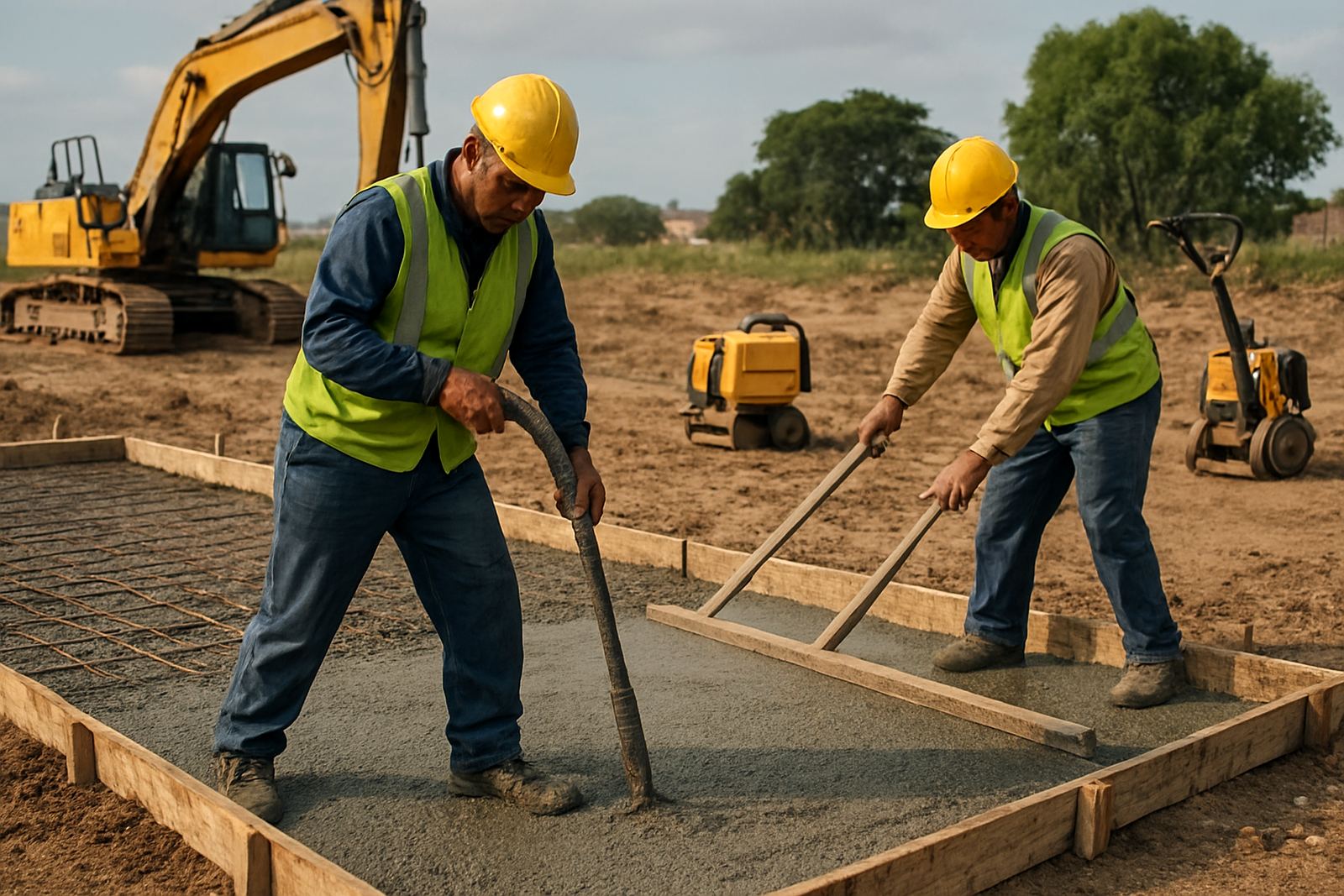
A concrete vibrator is used to remove trapped air from freshly placed concrete so the mix settles tightly around rebar, into corners and along formwork. On site, that means fewer honeycombs, better finish quality and less patching later. For builders working in Johannesburg, Pretoria East, Midrand, Boksburg, Durban, Pinetown, Cape Town and Bellville, hiring the right vibrator helps keep pours moving even when the weather, labour or pump schedule is not ideal.
Our hire fleet includes internal poker vibrators for general structural work and selected site duties where consolidation matters most. They are suited to foundations, retaining walls, columns, slab edges and beam work, with options for different shaft lengths and head sizes depending on the pour depth and cage spacing.
- Suitable for footings, columns, slabs, beams and wall sections
- Helps reduce voids and improve compaction around reinforcement
- Available for short-term and long-term hire
- Can be matched to small builders or larger crews on busy sites
Sizes and options to match the pour
Not every pour needs the same vibrator setup. A narrow column cage calls for a smaller head, while a deeper footing or thicker slab edge may need a larger head and a longer flexible shaft. We help you choose a unit that fits the concrete mix, the access on site and the amount of work planned for the day. If you are pouring in a tight urban site or working with limited access around scaffolding, size choice makes a difference.
Typical hire options include electric units for sites with reliable power and petrol driven sets where mains supply is not available. In areas affected by load-shedding or where temporary power is still being arranged, fuel-driven options are often the practical choice. For coastal jobs in Durban, Pinetown or Cape Town, we also consider corrosion exposure and recommend proper cleaning after every shift to keep the gear in good order.
- Electric internal vibrators for powered sites
- Petrol driven options for remote or temporary setups
- Various shaft lengths for reach into deeper forms
- Different head diameters for columns, slabs and narrow formwork
Where concrete vibrators suit best on site
Concrete vibrators are used wherever compacting the mix properly is important. They are common on housing developments, commercial builds, boundary walls, drainage structures and industrial slabs. If the pour includes dense rebar, a vibrator helps the concrete settle around the steel instead of bridging over the top. That is especially useful on footings, pump bases and vertical work where gaps can be hidden until after striking formwork.
They are also useful when a team is working against tight curing windows or a municipal inspection programme. On Gauteng sites, contractors often want same-day dispatch so a pour does not wait over a weekend. On the coast, humidity can affect curing and formwork handling, so getting the consolidation right first time matters even more.
- Footings and strip foundations
- Columns and walls with tight reinforcement
- Slabs, edges and beam pours
- Drainage works, plinths and pump bases
Power needs, setup and safe installation
Before the first pour, check what power is available and where the unit will be used. Electric concrete vibrators need a suitable supply point, extension leads in good condition and enough cable length to reach the pour without strain. Where mains power is not practical, petrol driven options remove the need for a generator, though fuel handling and refuelling discipline still matter on site.
Installation is straightforward but it must be done properly. The shaft and head should be checked for wear, the unit should sit on stable ground and the operator should test the vibration before the concrete is placed. Never force the head through rebar or use excessive side pressure. A light hand and a steady rhythm usually give the best consolodation. Our team can advise on what suits your site layout, whether you are working in Germiston, Midrand or on a remote block in the Western Cape.
- Confirm power source before dispatch
- Check cable lengths and extension lead condition
- Allow safe access around the pour area
- Keep a clean refuelling point for petrol units
Care, servicing and breakdown cover
We keep hire equipment serviced so it arrives ready for work. That includes checks on motor performance, shaft condition, bearings, fasteners and general wear. On site, a concrete vibrator should be cleaned soon after use while the concrete is still fresh enough to remove. Dried concrete on the head or shaft can shorten service life and make the next shift harder than it should be.
If a unit loses power, sounds rough or runs hot, stop and report it early. Continued use can turn a small issue into a missed pour. We offer breakdown response, on-site servicing and plant swop-outs where needed, which is useful on long-term contracts or multi-phase developments. For larger sites around Pretoria, Boksburg and Durban, that support can save a full day of lost labour.
- Regular inspection before and after each shift
- Cleaning after every pour to limit concrete build-up
- Prompt reporting of noise, smoke or vibration loss
- Support for long-term hire and weekend work
What to confirm before you place the order
To get the right vibrator first time, have a few job details ready. The size of the pour, the depth of the formwork, access around the reinforcement and the power available all influence the best option. It also helps to know whether you need operator supply, fuel management or safety paperwork for the site file.
Our hire coordinators can arrange site delivery across Gauteng, KwaZulu-Natal and the Western Cape, and collections once the work is complete. If your programme is tight, same-day dispatch may be possible depending on depot stock. That is useful for contractors dealing with short-notice pours, municipal timing or weather delays that shift the schedule at short notice.
- Pour type and approximate depth
- Power available on site, or if petrol is needed
- Access details, including lifting or stair constraints
- Hire duration and delivery point
- Whether you need operator supply or safety documentation
Key facts
| Type | Internal concrete vibrator hire |
|---|---|
| Power options | Electric or petrol driven units |
| Typical use | Footings, slabs, walls, columns and beam pours |
| Shaft options | Various lengths for shallow to deeper pours |
| Head sizes | Multiple diameters for different reinforcement spacing |
| Service area | Gauteng, KwaZulu-Natal and Western Cape from Germiston depots |