Compact digging for sites that do not leave much room
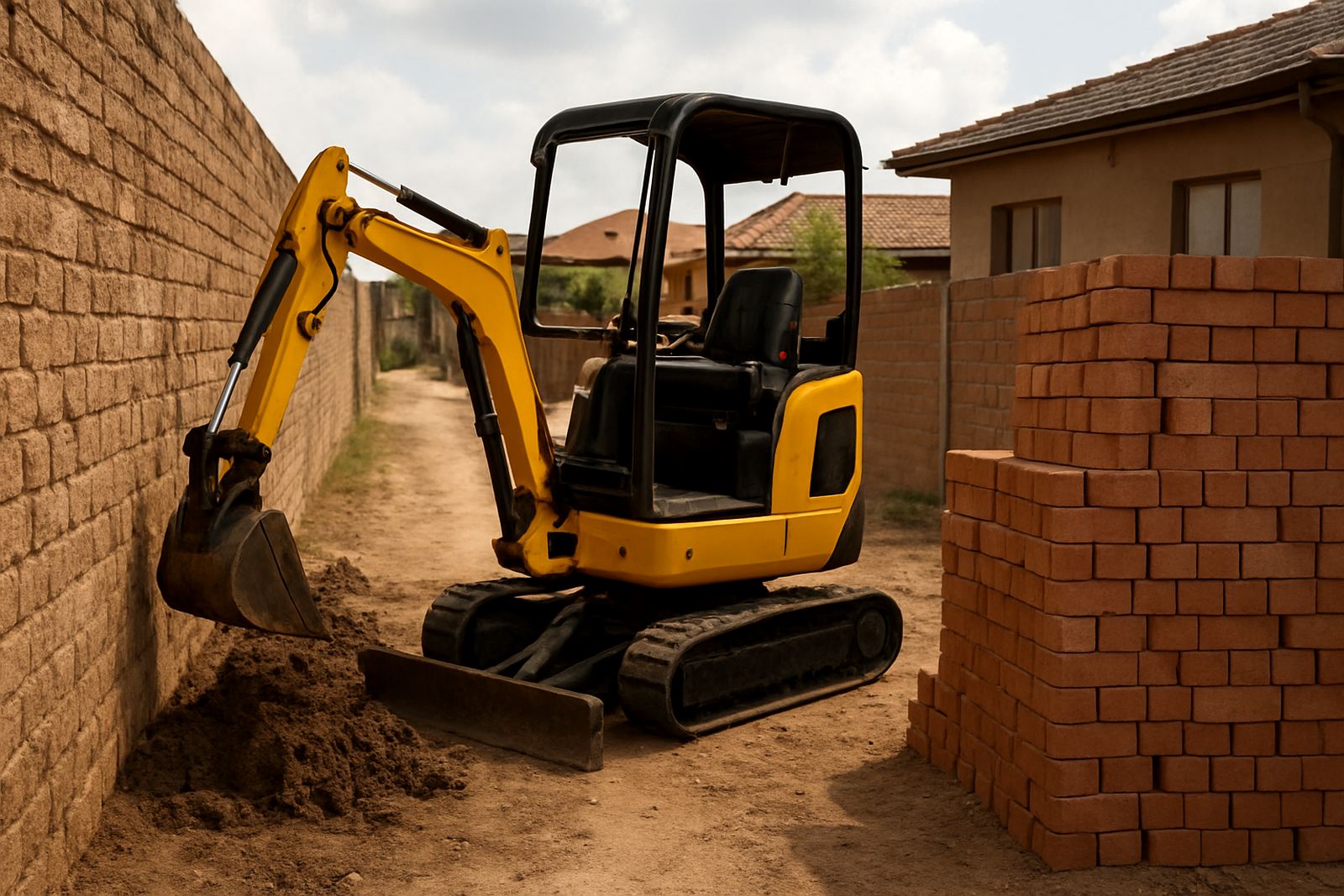
Mini excavators are tracked digging machines built for work where access is limited and disruption must stay low. They turn inside narrow spaces, cross uneven ground better than wheeled equipment, and can work next to boundary walls, pavements, driveways and live services with care. For builders, plumbers and civils crews, they save a lot of hand digging and speed up trenches for pipes, cabling and drainage.
These units are commonly used on home additions, estate maintenance, school repairs, service connections and small roadworks. They are also useful on sites with soft ground after rain, because the tracks spread the weight better than tyres. In Gauteng dust, KZN humidity and coastal air, the right machine choice matters because poor uptime leads to delays very quickly.
- Suitable for confined yards, side passages and back garden access
- Good for trenching, stump removal, small demolition and site clearing
- Available with digging buckets, trenching buckets and grading buckets
- Can be hired for short jobs or longer project phases
Mini excavator sizes and working options
We supply mini excavators in practical size classes so you can match the machine to the access and the job. Smaller units are useful where gate width or passage width is tight, while heavier models give more reach and breakout force for deeper trenching or heavier soil. If you are unsure which size to book, tell us the trench depth, site access and what material you are digging through.
Typical hire options include open canopy or enclosed cab machines, rubber tracks for reduced surface damage, and machines set up with quick couplers for faster attachment changes. Some projects need a simple dig-and-load setup, while others need the machine to shift spoil across a cramped site. Our fleet planning team can help you choose the most practical option, which avoids paying for extra size you do not need.
- Micro to mid-size compact excavators for very tight or general access
- Canopy and cab options depending on weather and site rules
- Rubber track machines for paving, finished yards and light surfaces
- Attachment choices to suit trenching, grading or breaker work
Where mini excavators work best on South African sites
Mini excavators are used across domestic, commercial and light civil work. In Johannesburg and Pretoria they are ideal for plumbing upgrades, driveway drainage and pool work. In Durban and Pinetown they are often booked for sewer connections, retaining wall prep and wet ground jobs. In Cape Town and Bellville, they are a useful choice on narrow residential plots, estate work and projects where space between structures is limited.
They also suit sites with municipal and estate rules that limit heavy traffic or require controlled ground protection. If you need to work close to services, use the correct excavation permits and call before you dig where required. On some projects, the mini excavator is paired with a tipper, compaction equipment or a generator so the crew can keep moving without waiting for site power. That keeps the job moving when load-shedding hits or the supply is unstable.
- Residential building and renovation projects
- Drainage, stormwater and sewer trenching
- Garden and landscaping preparation
- Small demolition and debris handling
- Utility and cable route excavation
Power, fuel and installation checks before the machine arrives
Mini excavators do not need site electricity to operate, but the job still needs sensible planning before delivery. Check the access route for width, height and turning room, and confirm whether the machine must pass over paving, lawns or fresh concrete. If the site is soft, wet or uneven, ground protection mats or a revised delivery point may be needed to avoid unnecessary damage.
We will also confirm fuel arrangements, operating hours and whether the machine will work inside a boom lift zone, near live traffic or under overhead lines. If the job needs night work, weekend access or a long term hire period, let us know early so the correct support can be arranged. The hire team can also assist with operator supply where a trained machine hand is needed on site.
- Check gate width, overhead clearance and turning space
- Confirm trench depth, spoil removal and bucket size needed
- Plan fuel top-ups for longer shifts and remote sites
- Tell us about wet ground, slopes, overhead cables or permit limits
Keeping the machine working properly on hire
A mini excavator works best when it is cleaned regularly, fuelled correctly and used within its safe working limits. Tracks should be checked for tension, bucket pins watched for wear, and daily inspections done for leaks or damage. On dusty inland sites and humid coastal sites, basic care goes a long way because dirt and moisture both shorten service life if ignored.
Our workshop team handles servicing, breakdown response and plant swop-outs where needed. If a machine develops a fault, report it early so we can respond before a small issue becomes a stoppage. We also support on-site servicing for longer hires and can help with off-hire collections once the work is complete. Good care protects productivity and it also keeps the site safer for your crew.
- Daily walk-around checks before starting work
- Keep the machine free of excess mud, rubble and spoil
- Use the correct bucket and do not overload the arm
- Report hydraulic leaks, warning lights or track damage quickly
What to confirm when ordering a mini excavator
Before you book, give us the site address, start date and the type of digging you need done. We will then check the machine size, attachment needs and delivery timing. If you are working on a live site in Germiston, Midrand, Pretoria East, Boksburg, Durban, Pinetown, Cape Town or Bellville, we can plan around access times, security gates and municipal restrictions.
The most common mistake is booking a machine that is too large for the access route or too small for the trench depth. It is better to confirm the width of the passage, the soil type, the working space around the trench and whether spoil must be loaded into a truck or moved on site. That way the equipment arrives ready for the job and there is less wasted time on day one.
- Site address and preferred delivery time
- Access width, ground condition and overhead clearance
- Trench depth, material type and expected duration
- Need for operator supply, fuel management or weekend support
Key facts
| Machine class | Mini excavator, tracked compact digger |
|---|---|
| Typical operating weight | 1.7 to 8 tonnes, depending on site access and job size |
| Digging depth | About 2.4 m to 4.5 m |
| Power source | Diesel |
| Track type | Rubber tracks on most compact units |
| Common attachments | Standard bucket, trenching bucket, grading bucket, hydraulic breaker |