Start with the job, not the pump
Before you ask for a pump, define what it must do on site. Are you clearing a trench in Germiston, keeping a basement excavation dry in Midrand, or moving storm water off a low-lying plot in Durban after heavy rain? The type of water, the amount of silt, and how often the level changes all affect the hire choice.
A pump that works well on clean water may choke on muddy water with grit or stringy debris. If the site has sharp falls in level, long hose runs, or a high discharge point, the pump must have enough head to move water without straining. It is not only about getting water out, it is about keeping the whole site workable.
- Measure the area that needs dewatering
- Check whether the water is clean, dirty, sandy, or full of solids
- Note how far the discharge point is from the pump
- Record any height difference between suction point and discharge point
- Allow for rain, seepage, and overnight water return
Understand flow and head before you book
Flow is how much water the pump moves in a given time, usually measured in litres per minute or cubic metres per hour. Head is the vertical lift plus the resistance the pump must overcome to push water to the discharge point. If the head is too high for the pump, flow drops and the job slows down.
For short shallow trenches, a smaller pump may be enough. For excavations, sump pumping, or long hose runs across a site, you may need a pump with stronger lift and better pressure performance. A supplier should ask where the water is coming from, where it is going, and how far it must travel. That simple check saves a lot of trouble later.
- Low head, short run: smaller dewatering pump may suit
- Medium head, longer hoses: confirm pressure and pipe size
- High lift or elevated discharge: ask for a pump with extra head allowance
- If flow drops during rain, size up rather than hoping for the best
Match the pump to the water on your site
Not all sites are the same. Coastal humidity in places like Durban and Cape Town can affect metal fittings and storage conditions, while sandy soil and stormwater often bring grit into the sump. In Gauteng, trenching and basement work can produce muddy water with fine solids that will wear out a pump if it is not suited to the task.
If the water carries stones, slurry, or fibrous debris, ask for a pump that can handle dirty conditions. For clean water from temporary drainage or controlled dewatering, a lighter pump may be more efficient. If the site is changing daily, tell the hire team what changed so the pump can be adjusted or swapped out before you lose time.
- Clean water: temporary drainage, standing rainwater, tank transfer
- Dirty water: trenches, excavations, washdown areas
- Slurry or grit: ask about wear parts and strainer protection
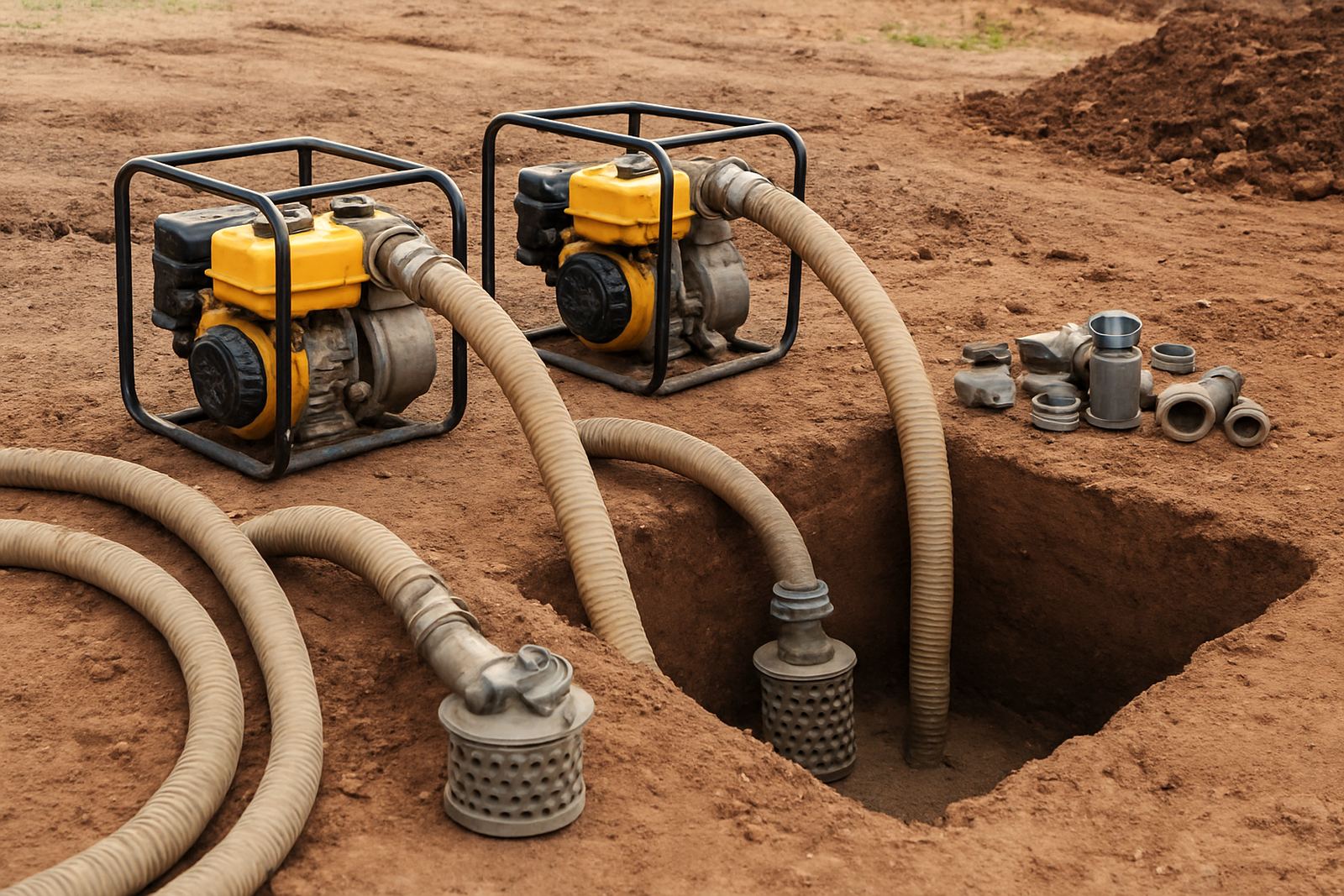
- Debris risk: keep the suction end raised off the base and clear of rubble
Check power, fuel, and the realities of site work
Many dewatering jobs run in the background for hours or days, so the power source matters as much as the pump itself. On sites affected by load-shedding, a fuel-driven unit may be a better option if you need continuous operation. Where power is stable, an electric setup can be simpler and quieter, but you still need proper supply, cable length, and protection from water.
Think about refuelling access, night shifts, and whether the pump must run over weekends. Also consider whether the site has space for safe hose routing and a dry point for the unit. It helps to plan for a spare hose, clean fuel storage, and a clear off-switch that the crew can reach fast. Small details make a big difference when conditions turn rough.
- Confirm available power or fuel on site
- Allow for load-shedding and backup running time
- Keep electrical connections dry and raised
- Plan refuelling and daily checks into the shift
- Make sure the crew knows who watches the pump after hours
A simple hire checklist before delivery
When you place the hire, give clear information so the right unit can be prepared and sent out quickly. Site address, access time, ground conditions, and delivery constraints all matter. If the pump needs to move between locations, say so. If the site has security rules, boom gates, or a narrow entrance, mention that too.
Our hire teams in Germiston, Midrand, Pretoria East, Boksburg, Durban, Pinetown, Cape Town, and Bellville work with contractors who need fast decisions and clean handovers. A proper checklist keeps the job moving and helps avoid wasted trips. It also makes breakdown response and plant swop-outs much easier if conditions change during the week.
- Exact site location and contact person on arrival
- Type of water and expected volume
- Distance to discharge point and height lift
- Power or fuel arrangement
- Delivery window, access route, and any municipal or site restrictions
Keep the pump working once it is on site
A hired pump still needs attention. Check the suction end for blockages, keep hoses secure, and watch the water level so the pump does not run dry. If the site starts pulling in more sand or silt than expected, clean the intake before it causes damage. A small amount of maintenance each day can prevent a stoppage that costs far more in time.
Ask for safety documentation, operating guidance, and service support if the job is long-term. If your site changes from clean water to dirty water, or the discharge point moves, tell the hire team early. That allows a switch in equipment before the system starts to struggle and the crew loses a shift.
- Inspect hoses, clamps, and strainer points daily
- Keep the intake clear of rubble and mud
- Listen for unusual noise or loss of prime
- Report leaks, overheating, or reduced flow straight away
- Arrange off-hire collection only when the area is fully clear