Maintenance shutdown brief in Pinetown
The client was an industrial maintenance contractor working on a manufacturing site in Pinetown, Durban West. The shutdown had been booked in advance and the team had a tight window to complete inspections, repairs and replacement work before production had to restart. Their main need was simple on paper but tricky on site: safe access at height, stable power for welding and light fabrication, and enough flexibility to move equipment between work faces as the shutdown progressed.
They did not want a large mixed fleet sitting idle. They needed the right units in the right places, on time, with support on standby if one section ran longer than planned. Access had to suit internal floors, loading bays and service corridors, so footprint and turning space mattered as much as lift height.
What the site conditions called for
Pinetown factories often mean narrow service roads, busy loading areas and strict entry control. In this case the shutdown ran under normal industrial park rules, so deliveries had to be planned around shift changes, security checks and limited laydown space. There was also the usual KZN humidity to think about, which can affect stored cables, fittings and generator performance if equipment is not kept in good order.
Power continuity was a real concern. The maintenance team needed welding work to continue even if site supply was switched off for safety. We also had to allow for load-shedding risk and the fact that some work was happening before first shift and after hours. That meant fuel planning, earthing checks and enough cable length to position the generator away from pedestrian routes.
- Restricted access points and narrow manoeuvring space
- Planned electrical isolation during shutdown periods
- Mixed-height maintenance areas, including plant rooms and external service zones
- Wet weather risk and humidity near open bays
- Need for safe night work and early-morning turnaround
The hire package we supplied
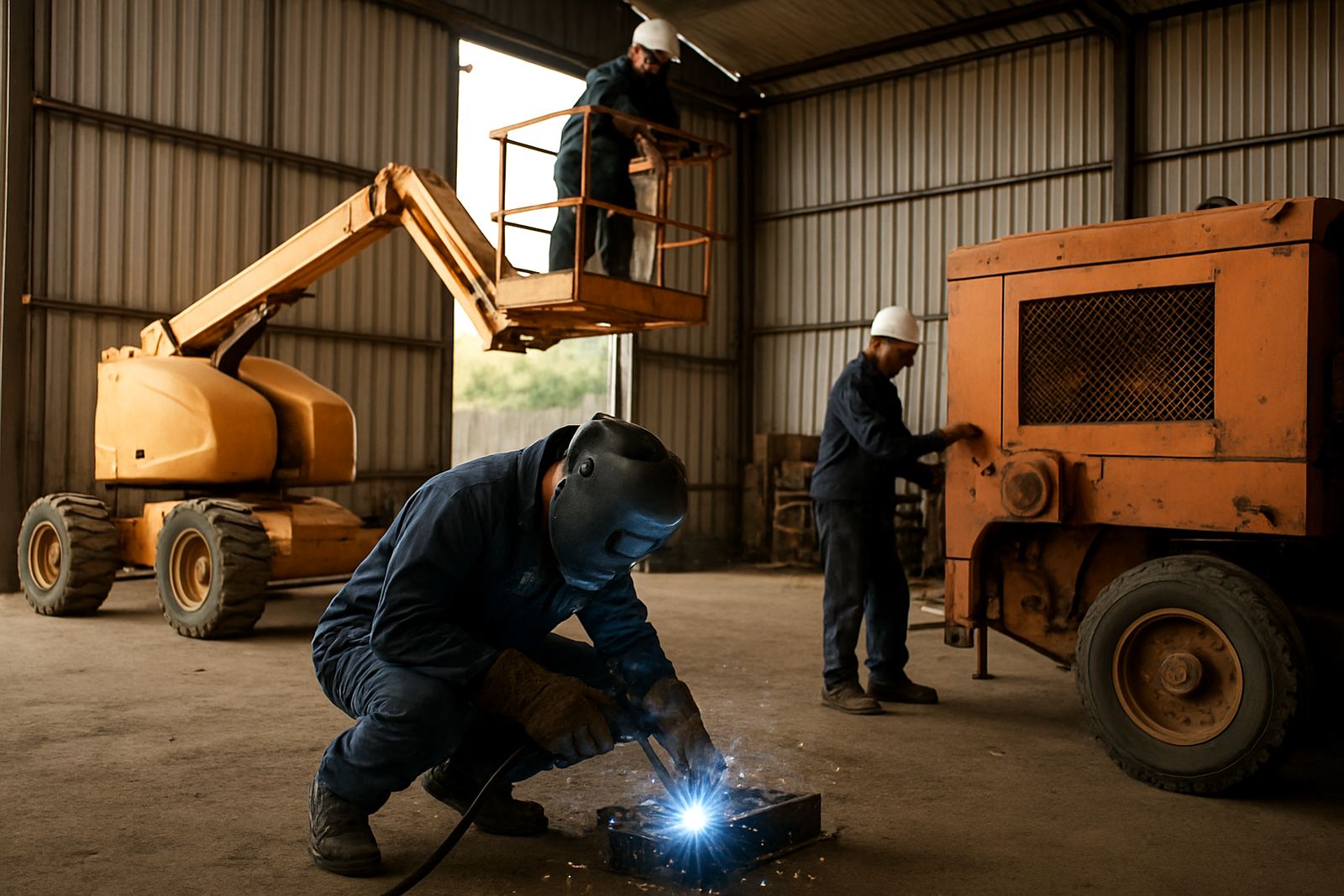
We put together a compact hire package that could cover the whole shutdown without overcomplicating the site. The package included a mobile access unit for reaching overhead services, a welding-capable generator set with adequate output for maintenance tools, and light support items such as cable runs, fuel management and off-hire planning. Where the crew needed to change working zones, we arranged swop-outs so they did not lose hours waiting on equipment movement.
Specifications were matched to the work rather than to a standard bundle. The access unit had a working height suited to ducting, pipe runs and overhead trays, while the generator was sized to handle intermittent welding loads plus grinders and lighting. We made sure the fuel plan covered the long day shifts and the weekend window, so the team did not get caught out mid-task. A small typo in the schedule would have cost time, so every delivery and collection slot was confirmed twice.
- Short-term access equipment for internal and external maintenance points
- Generator hire for welding and light fabrication work
- Fuel management to suit long operating hours
- Operator supply available where the client wanted extra hands
- On-site servicing and breakdown response during the shutdown period
Timeline and job flow over two weeks
The project ran over two weeks. In week one, we staged delivery, positioned the access equipment and completed checks with the site safety lead before shutdown started. That gave the client time to set exclusion zones, mark pedestrian routes and brief the maintenance crew. In week two, the shutdown work moved into the heavier repair phase, with the generator running through extended shifts and the access unit used across different work faces as the team completed each section.
Because the programme changed slightly once inspections opened up hidden repairs, we kept the hire flexible. One machine was held on site longer than first planned, while another item was collected earlier and replaced with a better-suited unit. That kept the workflow steady and avoided over-hiring. The site manager said the biggest help was not having to stop and chase kit, which is usually where maintenance jobs lose time.
Safety, compliance and site control
Industrial maintenance work leaves little room for confusion, so safety documentation was part of the hire from the start. We supplied the papers needed for site induction, equipment registers and basic operating checks, and our team worked with the contractor’s safety and compliance lead to keep the shutdown moving in a clean sequence. Access routes were marked, fuel handling was controlled and the generator sat in a position that reduced fumes near work areas.
We also factored in municipal expectations around noise and after-hours activity. Where work stretched into the evening, the crew kept lighting focused on the task areas and avoided unnecessary disturbance outside the bay. The result was a shutdown that stayed orderly, with fewer stoppages for paperwork and fewer arguments about who was using which area. That kind of control matters just as much as the machine itself.
- Site-specific safety documentation supplied with the hire
- Clear induction support for maintenance crews and supervisors
- Fuel and cable handling managed to reduce trip and spill risk
- Night work kept within the client’s shutdown controls
What the client got out of it
The shutdown was completed within the planned maintenance window and production restarted on schedule. The client kept welding work going without depending on unstable site supply, and the access equipment gave the crew safe reach without bringing in oversize plant that would have crowded the bays. There were no unnecessary hold-ups from off-hire confusion or waiting on collections, which is often where these jobs go sideways.
From our side, the main result was a clean handover at the end of the two weeks. Equipment came back in good order, the fuel account was straightforward and the contractor left with a clearer idea of what to book next time. If we were doing the same job again, we would stage the generator a little earlier for the first shift and keep a backup access unit on standby in case the maintenance scope expands, which it often does on factory shutdowns.
Why maintenance crews call us again
Factory shutdowns need more than a machine drop-off. They need a hire partner who understands access, power, timing and the pressure that comes with a fixed restart date. In Pinetown and across the Durban industrial corridor, we regularly support maintenance teams that need short-term access, welding support, weekend cover and fast response when something changes on site.
For this project, the value was in keeping the job practical from day one. No fuss, no waiting around, just equipment that matched the work and support that stayed available until the final collection. That is the approach we would use again on the next planned shutdown, whether it is a single bay repair or a full plant maintenance programme.
Key facts
| Project location | Pinetown, Durban West |
|---|---|
| Client type | Industrial maintenance contractor |
| Hire duration | 2 weeks |
| Primary equipment | Access unit and welding-capable generator |
| Support included | Fuel management, safety documentation, breakdown response |
| Service model | Short-term hire with staged delivery and collection |