Pump Placement Matters More Than Many Crews Think
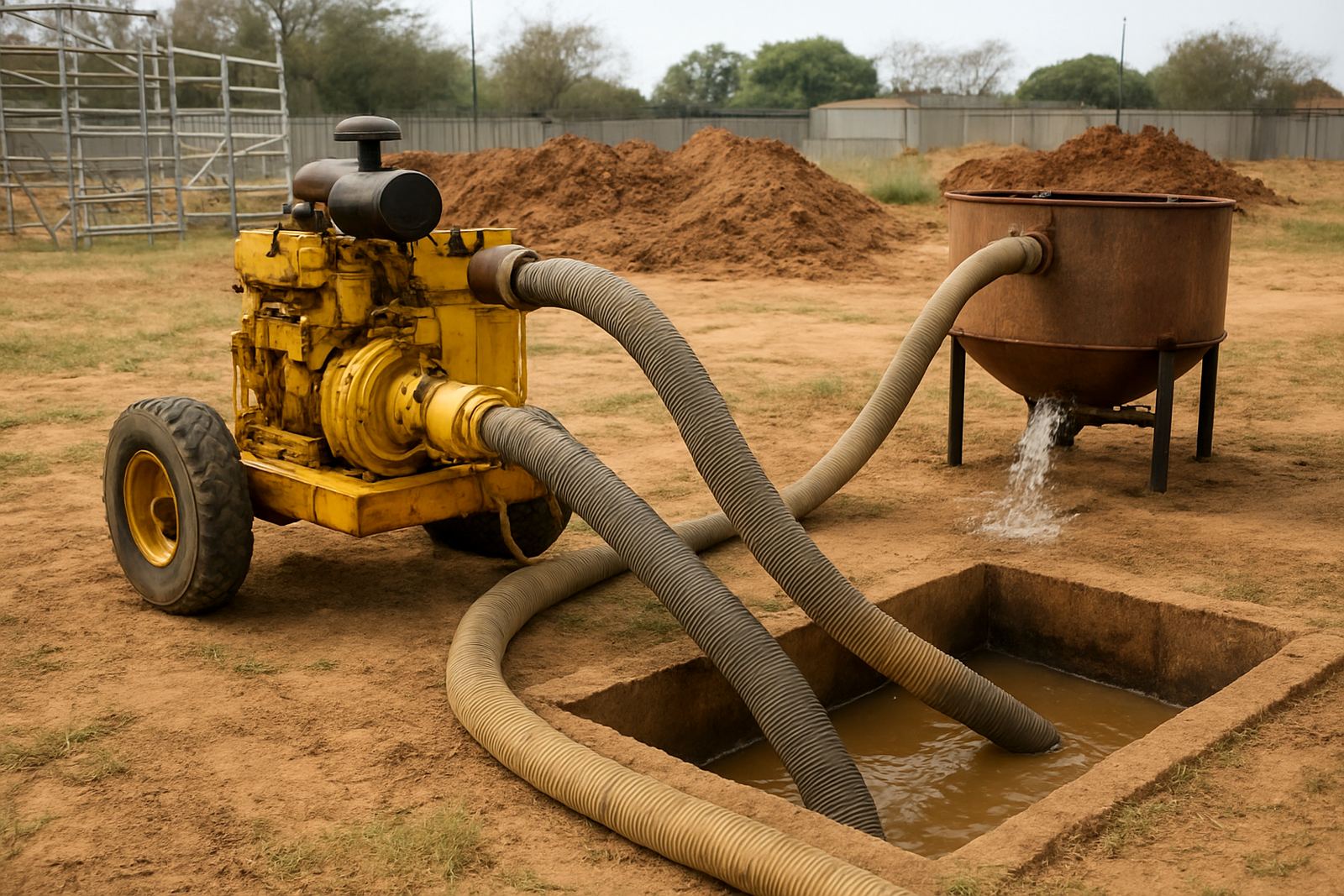
A pump that is dropped into the wrong point in the excavation will fight the site all day. Place the intake where water naturally gathers, but not in loose silt that can choke the suction. If the pump sits on soft mud it may draw debris, wear faster, and lose prime. A small stand, sump or settled pocket helps keep the intake cleaner and the system steadier.
Keep the pump accessible for checks and refuelling. On a tight urban site in Pretoria East or central Durban, the equipment must not block the excavator swing path, scaffold access or the route for delivery trucks. Hoses should be secured so they do not kink, flap in the wind or cross pedestrian paths. That small bit of planning saves time and reduces trips and slips.
- Keep suction lines as short and straight as practical
- Set the pump on firm ground, not loose spoil
- Protect hoses from tyre traffic and sharp edges
- Leave enough space for maintenance and refuelling
Match the Hire to the Job, Not Just the Machine Size
Different dewatering jobs need different tools. A basement excavation in the Western Cape may need continuous pumping through wetter months, while a service trench in Gauteng may only need intermittent transfer after storms. The right hire choice depends on depth, flow rate, lift, hose length and power availability. Where grid power is unreliable, a generator may be needed to keep the pump working through load-shedding and outages.
Fleet planning matters when a site has more than one wet point. Sometimes one pump is not enough, and a swop-out unit on standby prevents delays if the first machine needs servicing. For contractors running multiple crews, keeping the pump count aligned with the programme avoids the common problem of too little capacity on Monday and too much cost by Friday.
- Consider depth, flow and expected rainfall before booking equipment
- Use generator supply where power interruptions are likely
- Keep a standby unit for higher-risk excavations
- Plan for weekend support if the hole cannot sit full until Monday
Safety Checks Must Be Part of the Pumping Routine
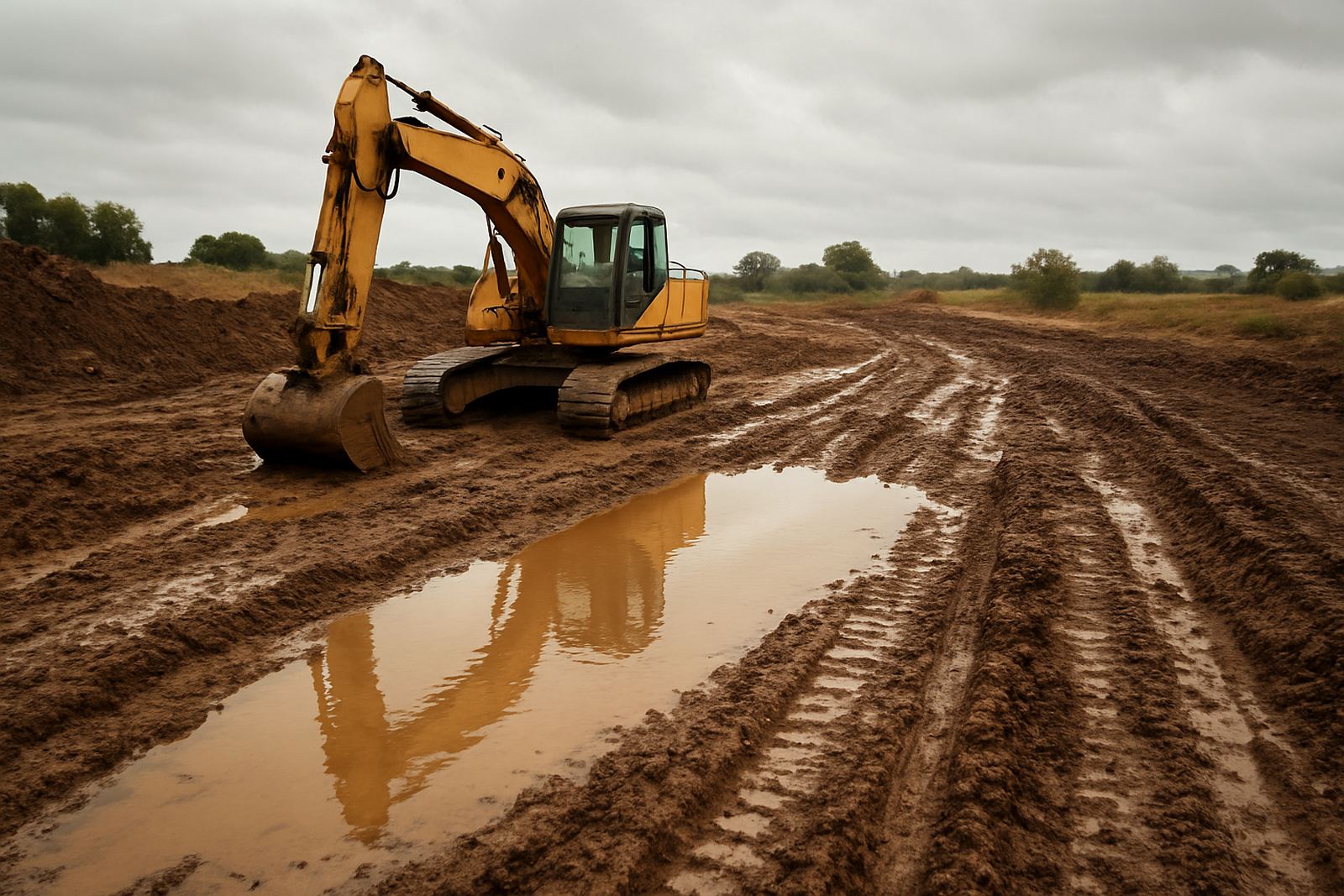
On a commercial project in Germiston, a basement dig kept taking in water after summer storms. The first issue was not pump capacity, it was poor placement. The intake sat in loose mud at the lowest corner and kept choking. The discharge line also ended too close to the excavation, so water returned to the same area. Once the pump was lifted onto a firmer base and the outlet carried further away, the site settled down and the crew could keep the excavation workable.
That kind of fix is common. The right answer is often a mix of better placement, cleaner discharge planning and more reliable servicing. For contractors working across Gauteng, KwaZulu-Natal and the Western Cape, the lesson is simple: dewatering works best when it is planned with the rest of the job, not treated as an afterthought.
MachinesAfrica Rentals supports that approach with site deliveries, same-day dispatch where possible, operator supply, breakdown response, on-site servicing and off-hire collections across Germiston, Midrand, Pretoria East, Boksburg, Durban, Pinetown, Cape Town and Bellville.