
Why haul road condition changes the whole production run
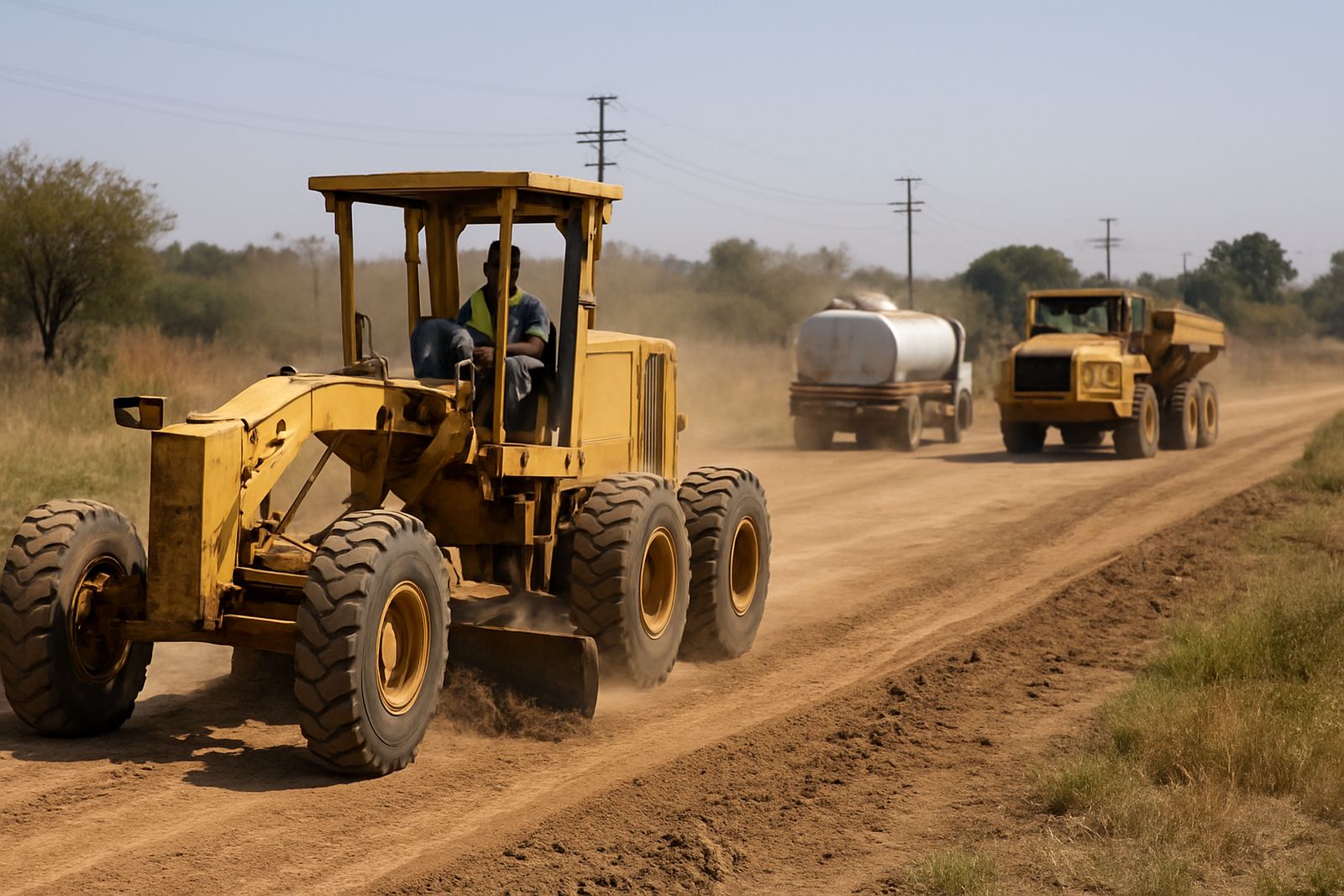
On a construction or mining earthworks site, the haul road is not just a path between two points. It is part of the production system. If the road is corrugated, muddy, too narrow or badly graded, every trip takes longer and every machine works harder. That means lower cycle counts, more fuel burned and more wear on suspension, tyres and undercarriage components.
The problem is often visible before it becomes expensive. Operators start slowing down to protect the machine, loads arrive later than planned, and the foreman begins adjusting the shift around transport delays instead of the other way round. In Johannesburg and Germiston especially, sites can move from dry dust to slippery ground after one afternoon storm. On coastal jobs in Durban or Cape Town, moisture in the soil can change the road structure by the hour.
Keeping haul roads usable is really about protecting time. If you can keep the route firm, drained and predictable, the rest of the earthworks operation settles down too.
Set the road for the machine you are actually running
A common mistake is building one road for every purpose and hoping it will cope. Haul roads should match the size, weight and turning pattern of the equipment using them. A route that suits a TLB and a light tipper may not hold up under repeated passes from loaded dumpers or excavators moving in convoy.
Before work starts, it helps to map the route and decide where traffic will enter, turn, wait and reverse. That is where edge breakage usually begins. Corners need enough width for safe movement, and passing points should be planned early instead of added after the road has already started failing. Good planning also reduces confusion when different contractors are sharing the same route.
- Match road width to the largest machine plus safe clearance
- Keep turning areas firm, not just the straight sections
- Separate loaded and empty traffic where possible
- Mark soft edges, blind bends and crossing points clearly
Drainage is the difference between usable and unworkable
In South Africa, rain is often the real test of a haul road. A well shaped road can still fail if water sits on top of it or runs through it. Once water starts cutting channels, the surface loosens, the grader work gets harder and the road becomes uneven. On clay sites this can happen fast, especially in Gauteng after summer storms or in KwaZulu-Natal where humidity keeps the ground wet for longer.
The fix is not complicated, but it needs consistency. Keep the camber right so water sheds off the surface, keep side drains open and do not let runoff from higher ground pour straight onto the main route. Culvert inlets and outlets need checking after heavy rain, and any low spots should be packed and corrected before they become bog holes. Small defects at the edge of the road often become the worst damage because tyres push water into the weak point again and again.
When a road stays drained, the surface lasts longer and the site crew spends less time reacting to damage. That alone can save a shift.
Dust control and surfacing that protects tyres
Dry roads bring a different problem. On dusty sites, visibility drops and small stones get flicked into tyres, windscreens and moving parts. Dust also hides potholes and broken edges, so operators do not see the damage until they are already in it. In hot, dry months around Pretoria East, Midrand and Boksburg, this can become a daily issue.
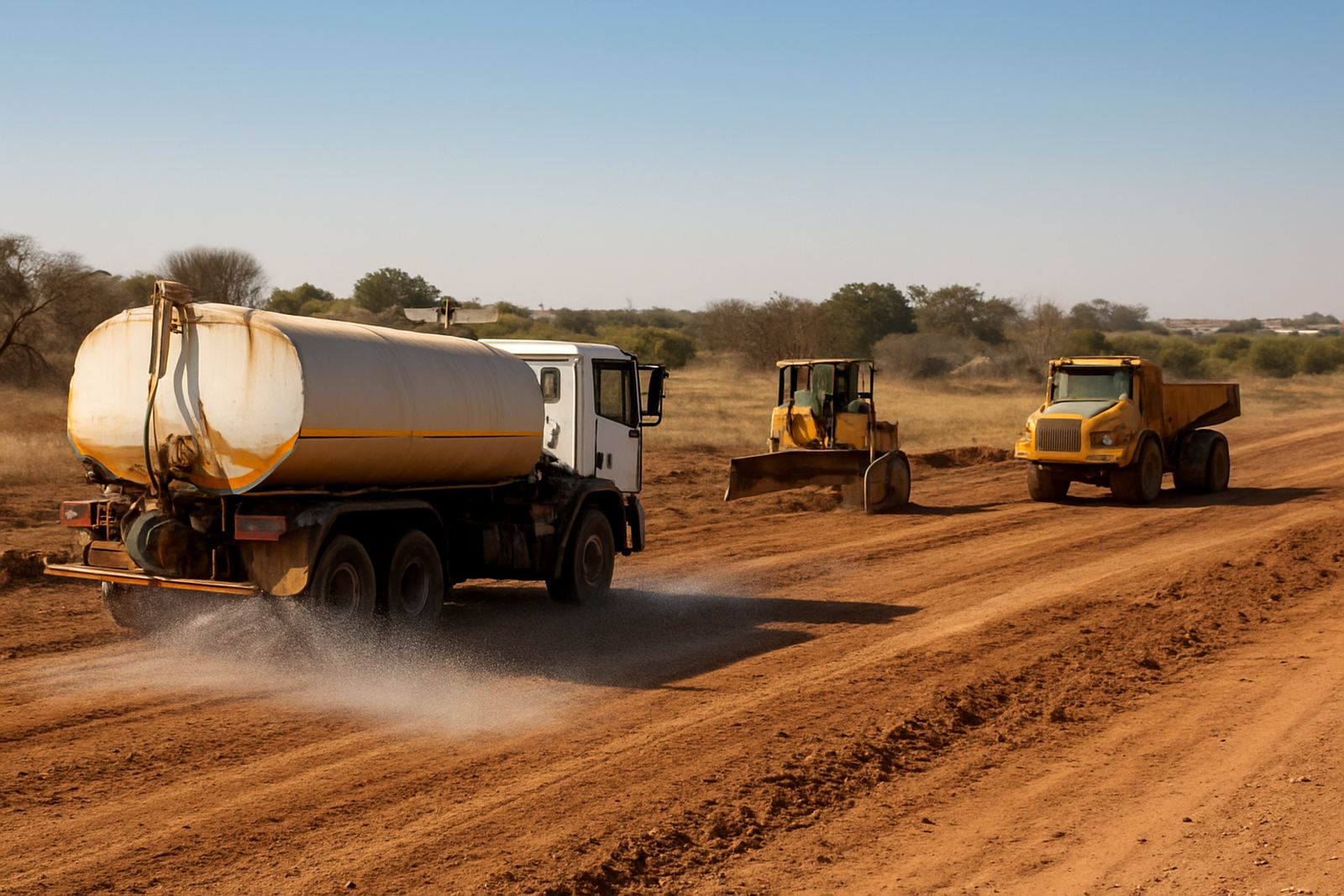
The right surface depends on the job, but the principle stays the same: keep it compacted, even and free from loose material. Where traffic is heavy, a wearing layer may be worth adding and compacting properly. Where the road is temporary, regular blading and watering can keep it workable without over spending. The key is to avoid overwatering, which turns the same road into a slick strip that slows everyone down.
- Compact after shaping, not only after rain
- Remove sharp stone and loose rubble from the wheel path
- Use controlled watering to keep dust down without softening the base
- Repair ruts before they become tyre traps
How tyre wear and fuel burn expose a weak route
When a haul road is poor, the cost does not stay on the surface. Tyres wear faster on broken edges and rough aggregate, and fuel use rises when machines have to climb out of ruts or crawl through soft patches. Operators may not mention it at first, but the machine is working harder all day long. That extra strain shows up in maintenance bills and missed production targets.
This is where daily checks matter. A quick morning drive along the route can tell you a lot. Look for wheel ruts, loose shoulders, wet patches, exposed rocks and any place where the road has narrowed because of stockpiles or spoil. If the same area keeps failing, there is usually a drainage or traffic pattern issue behind it. Fixing the cause is cheaper than grading the same section every second day.
It also helps to track where the failures happen. If the damage is always in one bend or one crossing, then the road design rather than the equipment may be the problem.
Keeping roads open during load-shedding and after-hours work
Load-shedding, night shifts and weekend work change how haul roads perform. Without good lighting, operators travel more cautiously and they may miss surface damage until it is too late. Dust control can also be harder when pumps, spray systems or site services are interrupted. On a busy project, that can slow the whole chain from loading to tip-off.
For this reason, it pays to plan road maintenance the same way you plan plant availability. If work will continue after dark or through a long weekend, the road must be checked before the shift starts. Temporary lighting at blind points, clear traffic signs and a standby plan for breakdown response all help keep the route usable. A narrow detour that looks fine in daylight can become a serious problem at 7 pm.
On sites near Germiston and the broader East Rand, we have seen a simple road swop-out make the difference between a smooth night shift and a stopped one. The crew had the machines ready, but the road had cut up after rain. Once the route was shaped, compacted and signed properly, cycle times returned to normal and tyre damage dropped almost immediately.
A practical site routine that keeps haul roads working
There is no single fix for every site, but there is a routine that helps most projects. Start with the route, not the complaint. Check the road before the first load, after weather changes and again at the end of the shift. If one section is soft, fix it before the traffic repeats the damage. If a machine is leaving deep marks, adjust the route or traffic flow before the surface breaks apart.
For longer projects, a planned approach works best. That can include long-term hire of the right plant, site deliveries, operator supply, on-site servicing and weekend support when the programme is tight. If a road section needs a different machine for a few days, a quick plant swop-out is often better than pushing the wrong equipment through the problem.
Haul roads do not need to be perfect, but they do need to be controlled. When the road is in good shape, the whole job runs with less friction and the earthworks team gets more out of every shift.