
Start With the Neighbourhood, Not the Machine
Before a machine arrives on site, look at what surrounds the property. A townhouse complex in Midrand, a school in Boksburg or a clinic boundary in Durban all need a different plan from an open industrial stand. The trick is to match the work method to the setting, not the other way round.
In many cases, the loudest part of the job is not the main machine itself but the starting, stopping, reversing alarms and repeated short bursts of activity. If you can group noisy tasks into fewer time blocks, you cut the impact on people living or working nearby. That also helps the crew stay organised and reduces stop-start delays.
Noise planning works best when it happens at the quoting stage. Decide which tasks can be done early in the day, which can wait until later, and which can be done with a different attachment or lighter plant. A bit of planning now saves a lot of explaining later.
Choose Plant That Fits the Task and the Surroundings
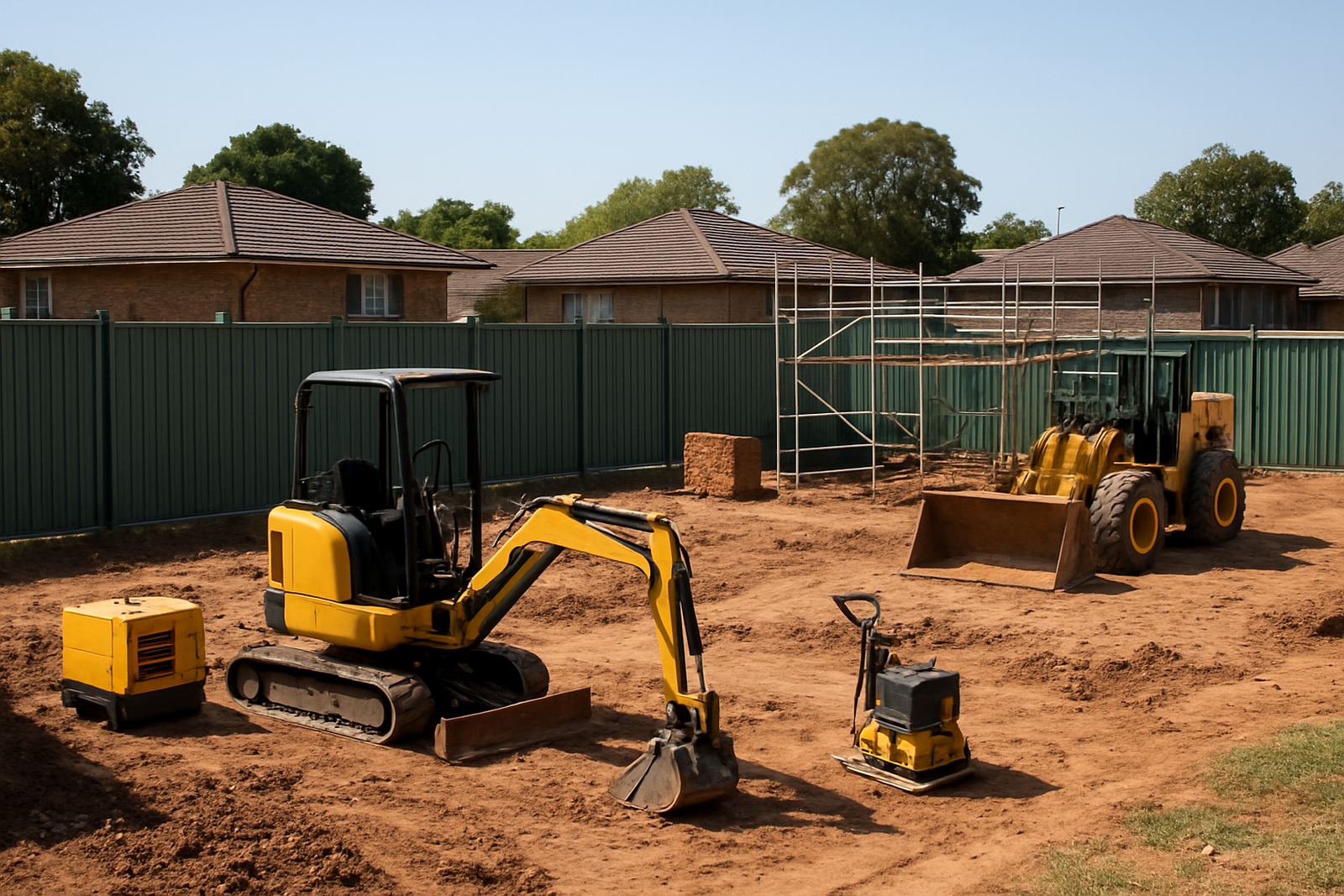
Heavy equipment has its place, but it is not always the smartest choice close to occupied property. A smaller excavator with the right bucket may do the same trenching job with less engine noise and less ground vibration than a bigger unit. The same goes for compact site support equipment, where a smaller machine can get the job done without disturbing the whole street.
For noise-sensitive work, consider these points:
- Use the smallest machine that can complete the task safely.
- Match the attachment to the job so you are not forcing one tool to do three jobs.
- Use generators sized properly for the load, not oversized units that run louder than needed.
- Avoid unnecessary idling during breaks, toolbox talks or waiting for materials.
- Plan plant swop-outs so a louder machine is only on site for the shortest practical time.
On a refurbishment in Germiston, for example, the team may need excavation, rubble handling and concrete breaking in the same week. Doing the noisiest work in one block and scheduling lighter work afterwards makes it easier for the site to stay productive without upsetting the neighbours. Timing matters just as much as the machine selection.
Work Hours and Sequencing Make a Big Difference
Many noise issues can be avoided by working around the sensitive hours of the day. Early mornings, lunch periods and late afternoons are usually the hardest times for nearby residents and businesses. If your local rules or site agreement limit noisy operations, build that into the programme from the start.
Sequencing is just as important. Do the loudest work before finishing touches begin. Move deliveries, breakouts and loading activities into one window, then switch to quieter tasks such as fixing, measuring, clearing and setting out. That way the site still feels active, but the sound level does not spike all day.
For long-term hire on a tight boundary, our team often helps clients plan a practical sequence around noise constraints and access. A clear hire schedule can make it easier to keep the right machine on site only when it is needed, with weekend support available where a short, controlled window is better than stretching noisy work over several weekdays.
Use Site Set-Up to Hold the Noise on the Job
Good site set-up can reduce how far sound travels. Position noisy plant away from shared walls, boundary fences and occupied windows wherever possible. Even a few metres can make a difference. If the site layout is tight, place quieter activities nearest to neighbours and move the heavier work deeper into the site.
Practical set-up steps include:
- Keep generators and compressors behind hoarding or temporary barriers where possible.
- Face machine exhausts away from occupied buildings.
- Use solid boundary protection to break up direct sound paths.
- Schedule deliveries so trucks are not reversing and waiting during peak residential hours.
- Mark separate routes for plant and workers to reduce unnecessary movement and noise.
On sites in the Western Cape, coastal wind can carry sound further than expected, especially in open areas near Bellville or the northern suburbs. In KwaZulu-Natal, humidity can also make sound feel heavier on still mornings. Small layout changes help in both cases.
Maintenance and Operator Skill Reduce Unwanted Noise
A machine that is poorly maintained usually makes more noise than it should. Loose panels, worn parts, damaged tracks and rough idling all add to the sound level. If a machine starts rattling or the engine note changes, it should be checked before the problem becomes a complaint.
Operator skill matters just as much. A careful operator can lower noise by using smooth movements, avoiding sudden throttle changes and keeping unnecessary revving to a minimum. That is one reason operator supply can be useful on sensitive sites. The person in the cab should know how to work to the programme, not just how to move the machine.
Our workshop and fleet teams check hire equipment before dispatch and respond quickly when a unit is not performing as it should. If a machine is causing excess noise, a breakdown response or swop-out can prevent a small issue from turning into a full site headache.
Keep Neighbours Informed Before the Complaints Start
Most neighbours can cope with planned noise if they know what is happening and for how long. A short notice on the gate, a conversation with the body corporate or a quick update to the site manager can prevent frustration. People are usually far more patient when they know the noisy phase is temporary and the crew is working to a schedule.
Good communication should cover:
- What kind of noisy work will happen
- Which days or hours it is likely to take place
- Who to speak to on site if there is a concern
- What steps the team is taking to reduce disturbance
In Johannesburg and the surrounding suburbs, many sites are close to active businesses, schools or residential complexes. A calm explanation often avoids a formal complaint. It also helps the contractor stay in good standing with the client, the municipality and the people living next door.
A Germiston Example: Less Noise, Less Delay
Picture a commercial upgrade near our Germiston base, with occupied properties along one boundary and a tight access road on the other. The team needs excavation, spoil removal and a generator for temporary power while the main supply is off. If all of that happens at once, the noise carries all day and the neighbours feel it immediately.
Instead, the job can be split into quieter blocks. Early morning is used for the noisiest excavation. Midday is reserved for off-haul and lighter work. The generator is positioned behind temporary screening and only runs when required. With the right plant mix and a sensible hire plan, the contractor keeps moving without making the site unbearable for the people nearby. It is practical, not fancy, but it works.
That is the real value of thoughtful plant hire on sensitive sites. You are not just hiring machines, you are managing time, sound and access in a way that keeps the work going.