Why lighting layout matters more than lamp size
A site can have plenty of lights and still be badly lit. If the fittings are too low, pointed the wrong way, or spaced too far apart, workers get hard shadows across trenches, formwork and access routes. That is when the eye keeps adjusting, tasks slow down and small mistakes start showing up.
On construction sites around Germiston, Midrand and Pretoria East, we see the same problem on night pours and maintenance shutdowns: teams add more lights when the real issue is positioning. A proper layout looks at the work area, not only the wattage. The aim is even coverage over active tasks, walkways, loading zones and plant movement paths.
Good layout also helps with safety documentation and site compliance. If a municipal inspection or client safety audit asks how night work is controlled, you need more than a generator and a few lights. You need a simple plan that shows where the shadows fall and how glare is managed.
Start with the task, not the pole
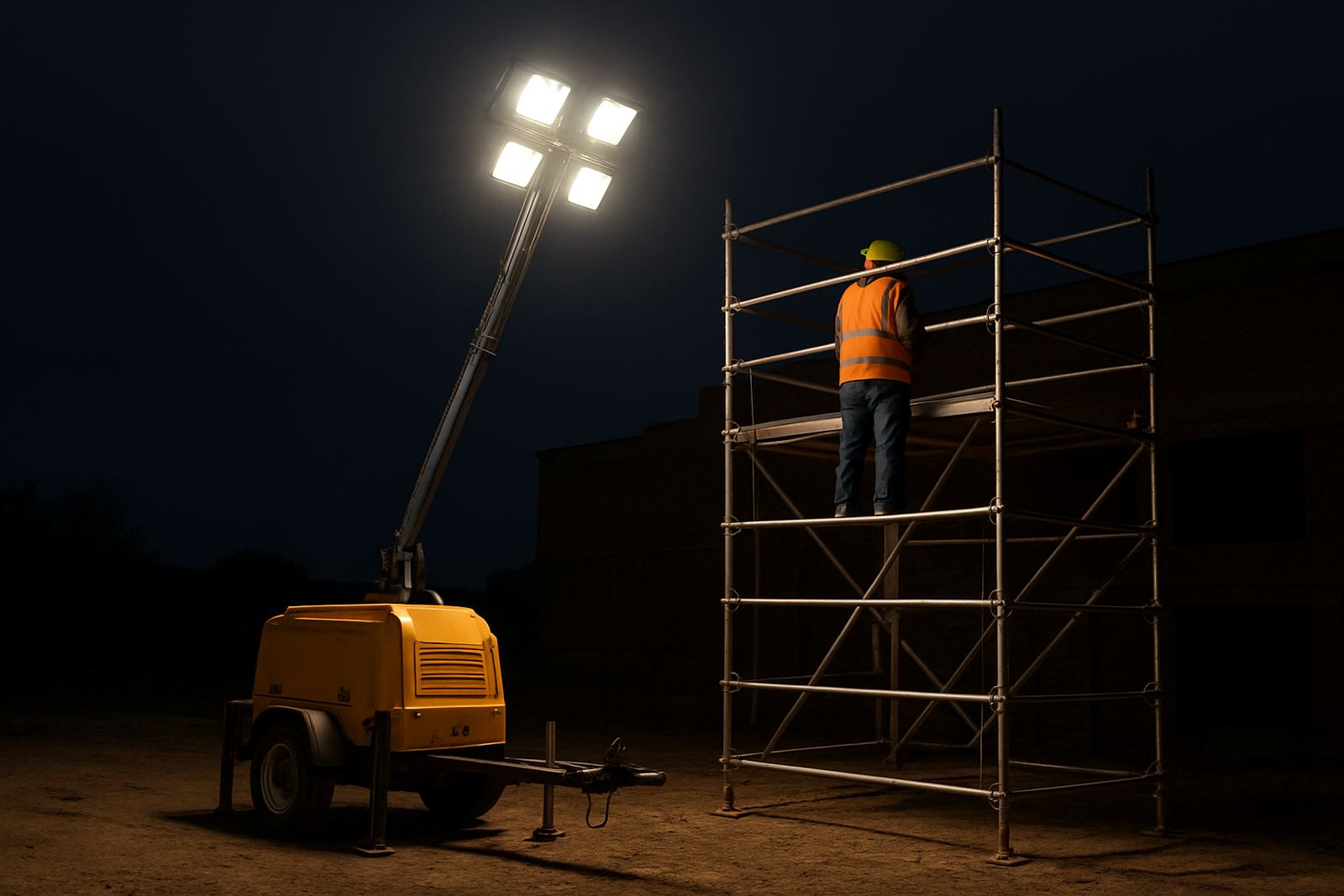
Portable lighting works best when it follows the work sequence. If a crew is placing shutters this evening and stripping forms tomorrow morning, the light plan should support both stages. That may mean moving a tower, changing the beam direction or adding a smaller unit near a narrow workface.
For trenching, lights should be set to reduce deep side shadowing. For steel fixing, they need to reach down into the work area without shining directly into eyes. For offloading and telehandler movement, the key is to light the route before the loading point. This is where a simple site walk helps. Stand where the worker stands and check what can be seen from that position.
In many cases, the better answer is not one very bright unit but two or three smaller units placed with intention. That gives better contrast and fewer dark patches. It also keeps the site calmer during load-shedding recoveries, when teams are trying to restart work quickly and safely.
Good practice includes:
- Placing lights higher than head height but not so high that the beam spreads too thin
- Angling fittings away from roads, neighbours and security offices
- Keeping cab doors, mirrors and windows free from direct glare
- Checking the site again after sunset because shadows change as the workface changes
Controlling glare for crews, drivers and neighbours
Glare is often the biggest complaint on night jobs. It reduces visibility and can also bring trouble with nearby properties, especially in denser parts of Johannesburg or along mixed-use streets in Durban and Cape Town. A light that shines too straight out can distract drivers, confuse site security and create complaints from adjacent erven.
To control glare, use the beam where it is needed and shield what does not need direct light. Aim fittings slightly downward and avoid placing them at eye level near entrances. If workers have to look into the beam to do their job, the lighting is wrong.
Dust, mist and coastal humidity can make glare worse. In the Western Cape, fine moisture at night can scatter light and make the whole area look bright while the actual task area stays patchy. In KwaZulu-Natal, humid conditions can do the same. That is why on-site testing matters. A layout that looks fine at 6 pm may fail once the air cools and the mist settles.
When you are setting up a lighting layout, watch for:
- Bright spots on wet surfaces that blind operators
- Reflective edges on steel, shutters and wet concrete
- Shadows behind stockpiles, skips and parked plant
- Light spill beyond the fence line
Shadow control around moving plant and active trades
Shadows are part of any site lighting plan, but uncontrolled shadows can hide people and hazards. A moving excavator or loader creates its own dark zones, especially when the boom turns and blocks the beam. The solution is not only more light, it is cross-lighting from different angles.
Cross-lighting means placing portable units so one beam supports another. That reduces black patches around plant and gives operators better depth perception. It also helps with handovers between trades, where plumbers, electricians and concrete crews may all be working in the same space.
On a Germiston industrial site, for example, a contractor may need to pour a slab beside an existing warehouse while trucks still come in through one gate. If lights are only on the pour area, the gate and turning circle stay dark. A better setup lights the pour, the access road and the reversing zone separately so the driver can see the whole movement path.
Useful checks for shadow control include:
- Walk the route from gate to task area after the lights are on
- Ask one person to stand where a driver would reverse from
- Check the edges of trenches, rebar cages and concrete formwork
- Move one unit at a time and see how the shadow changes
Matching portable lighting to generators and fuel management
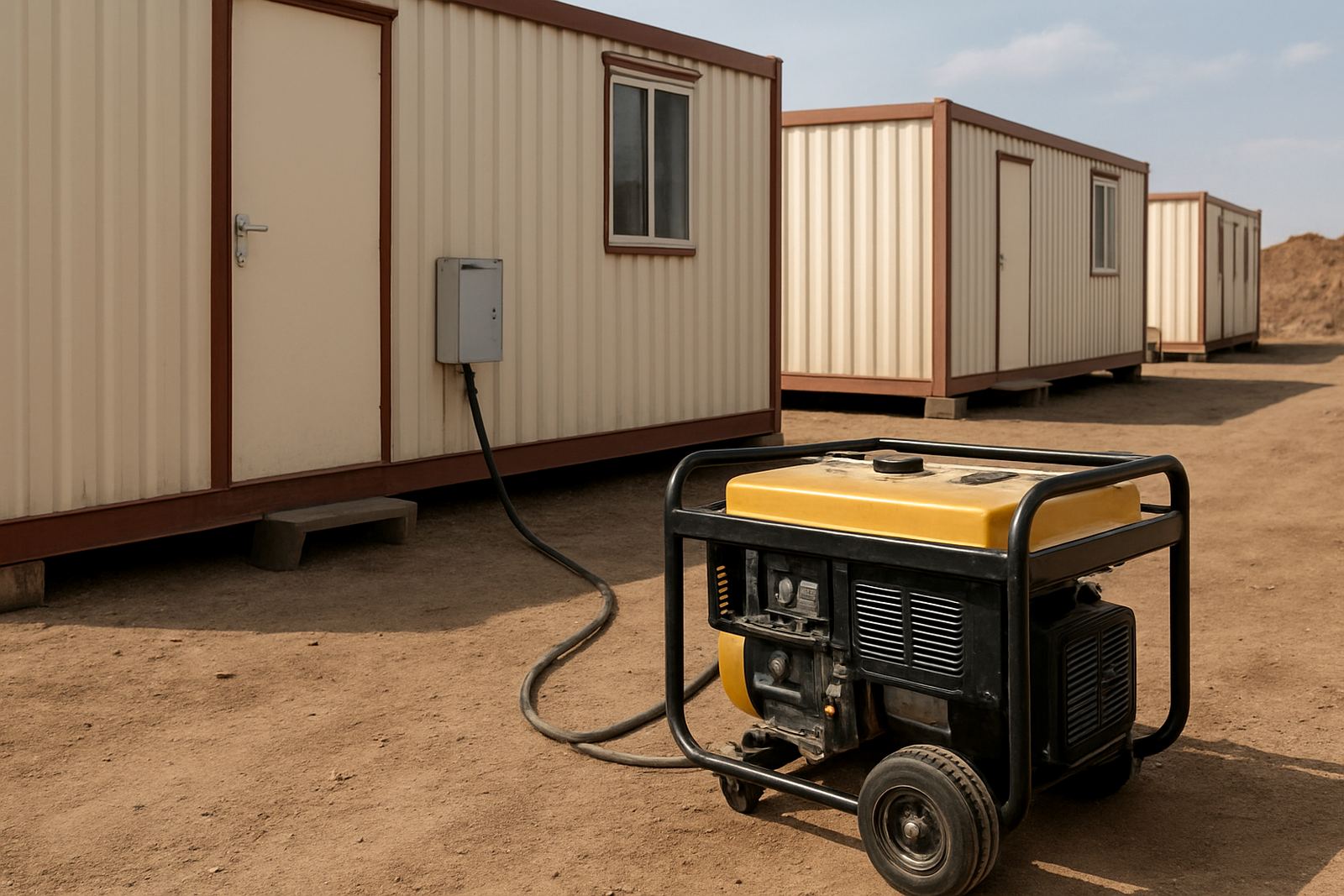
Lighting layout is tied to power planning. A lamp that works for four hours but forces a generator to run flat out all night can push up fuel use and maintenance. On longer hire periods, this becomes expensive very quickly. The better approach is to match the load to the work hours and use the right number of fittings for the real task.
Where site power is unstable, especially during outages or planned load-shedding, crews should plan for quick start-up and safe restart. That means the lighting and generator set should be placed where refuelling is practical and where service access does not block the workface. It also helps to keep the fuel point away from traffic and welding areas.
A practical hire plan should cover:
- How many hours the lights will run each night
- Whether the site needs full-night cover or only task lighting
- Where the generator can sit without creating noise or access problems
- How fuel will be monitored during long-term hire
For sites in Boksburg, Pinetown or Bellville, where work may run across different shifts, it is worth checking early whether weekend support or plant swop-outs may be needed. Lighting should be part of that plan from the start, not added at the last minute.
A simple lighting check before night shift starts
Before the crew starts, do a short inspection once the light is running. This takes only a few minutes and can prevent a long night of poor visibility. The person in charge should check the task area, the route in and the edges of the site, then adjust the fittings if needed.
A good checklist should answer four questions: Can the crew see the workface? Can machines move without blind spots? Are there hard shadows across steps, trenches or platforms? Is the light spilling where it should not?
That same check should be repeated after any layout change. If a scaffold stack is moved, a generator is relocated or a trench gets longer, the lighting may need to shift too. Small changes make a big difference. A well planned setup keeps the job moving and helps crews finish without unnecessary stops or close calls.
For contractors hiring across Gauteng, KwaZulu-Natal and the Western Cape, portable lighting works best when it is treated as part of the site method. Angle, glare and shadow control are not extras, they are part of safe production.