
Farm upgrades that keep the work moving
Farm infrastructure jobs are rarely one thing only. A new shed may need a level platform, stormwater channels, a compacted access road and a trench for power or water reticulation all in the same week. On working farms around Germiston, Midrand, Pretoria East, Pinetown and Bellville, the challenge is to keep stock movement, deliveries and harvest traffic going while the build is underway.
That is where the right hire fleet matters. You need machines that can get onto site quickly, cope with uneven ground, and keep working when the weather turns or loadshedding interrupts fixed services. For some farms the job is a new produce shed. For others it is upgrading loading bays, installing a pump house, repairing washdown areas or forming a new gravel road to a distant camp.
We keep the hire mix practical so contractors can order what they need for the task at hand rather than paying for idle equipment. If the site is in a muddy dip near Heidelberg or exposed to salty air near the coast, the equipment choice and servicing plan should reflect that from day one.
Typical equipment for sheds, roads and water points
Most farm infrastructure builds need a combination of earthmoving, lifting, access and power support. The exact mix depends on whether the site is greenfield, already under production, or being upgraded between seasons. For example, a shed on the outskirts of Paarl may need a compact machine for confined spaces, while a new access road in northern KwaZulu-Natal may call for heavier earthmoving and compaction.
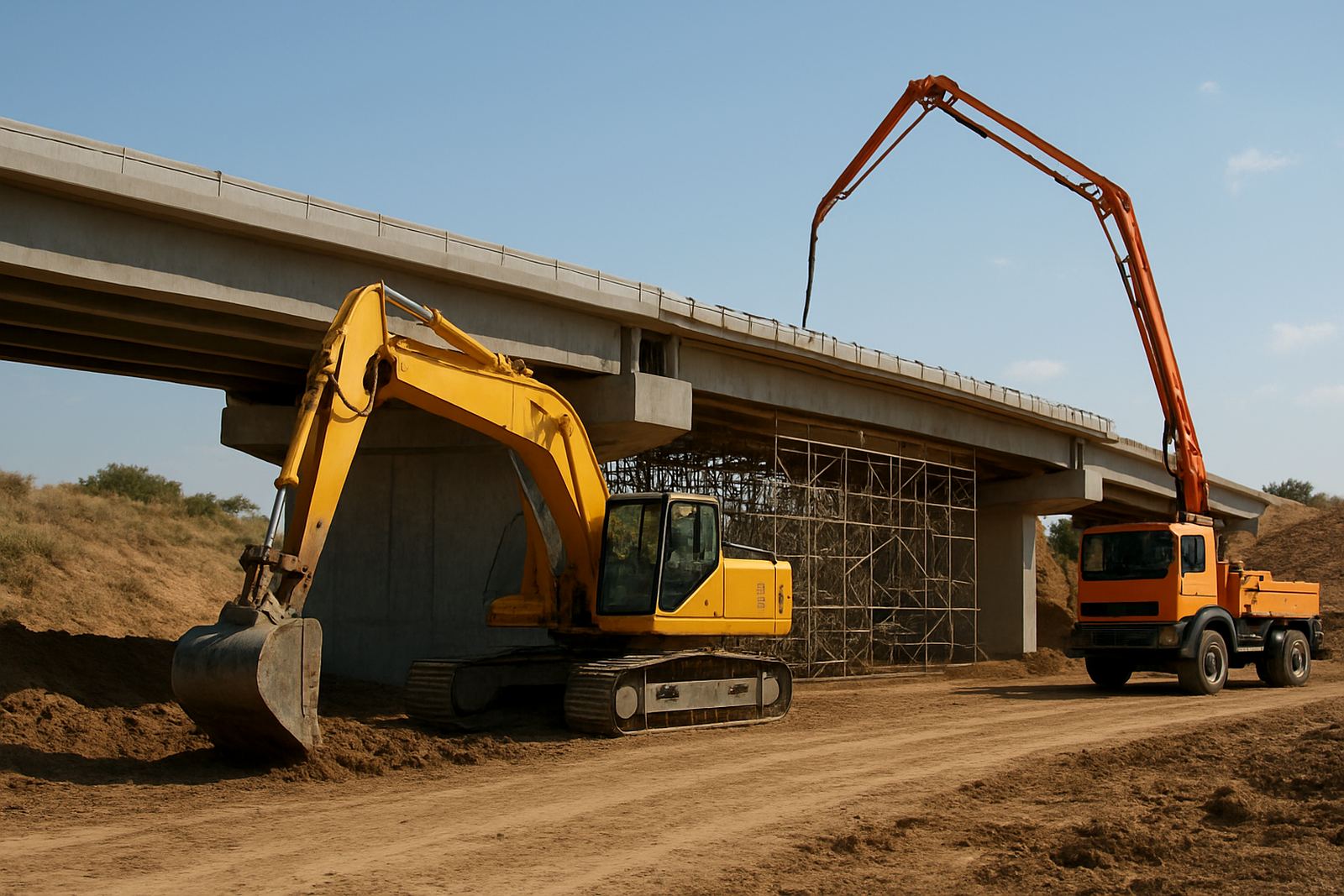
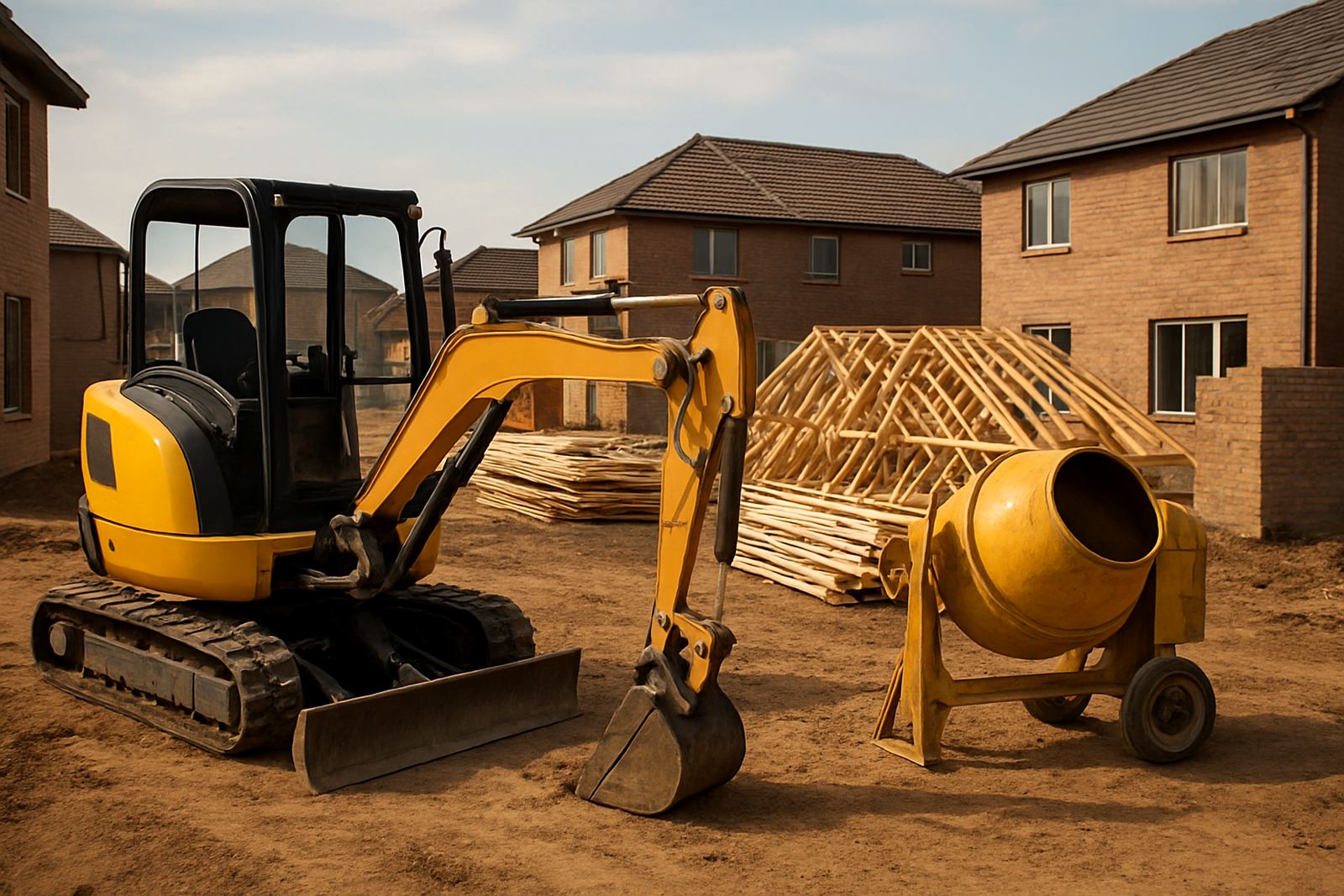
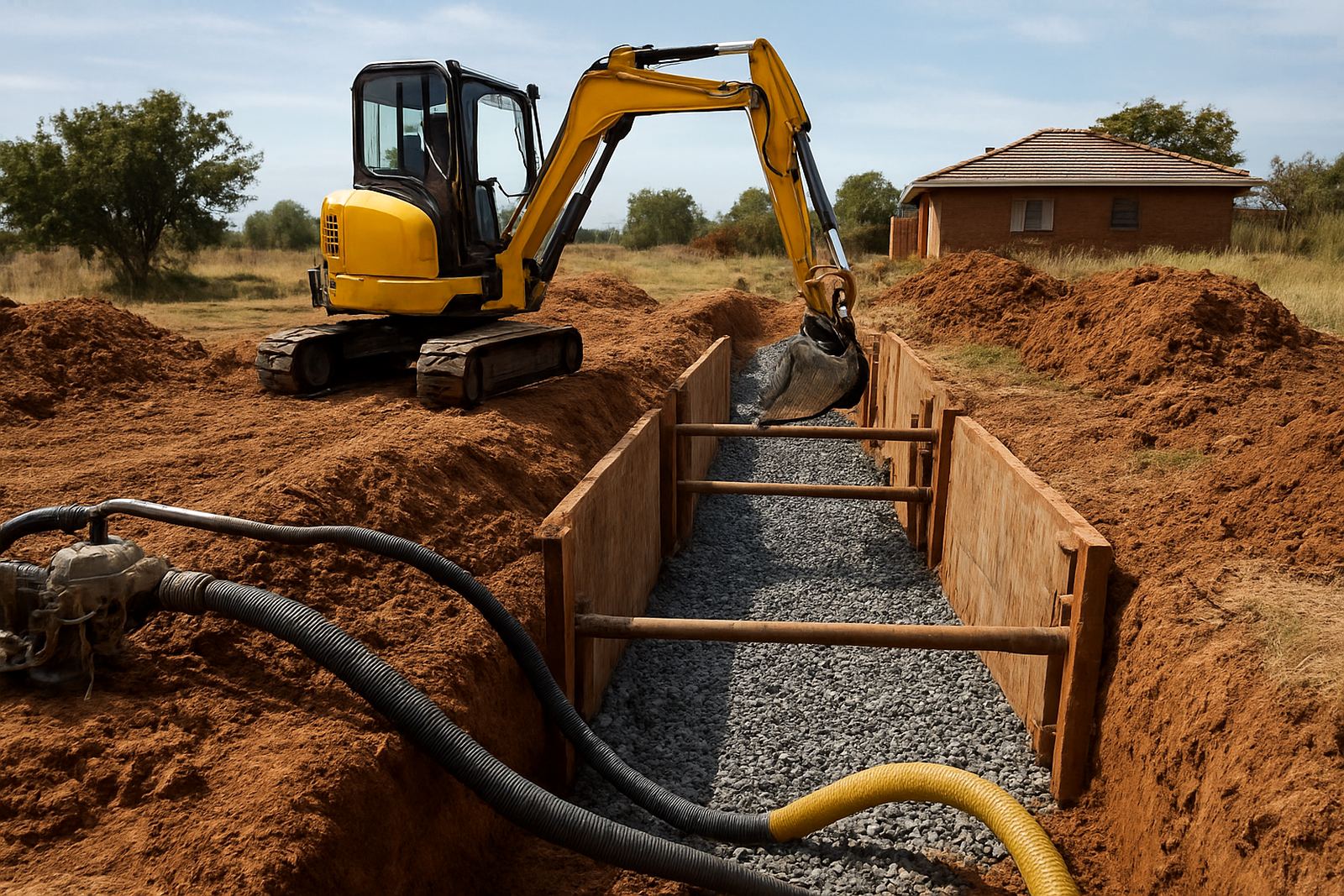
- Excavators for trenching, drainage, foundations and clearing rocky sections
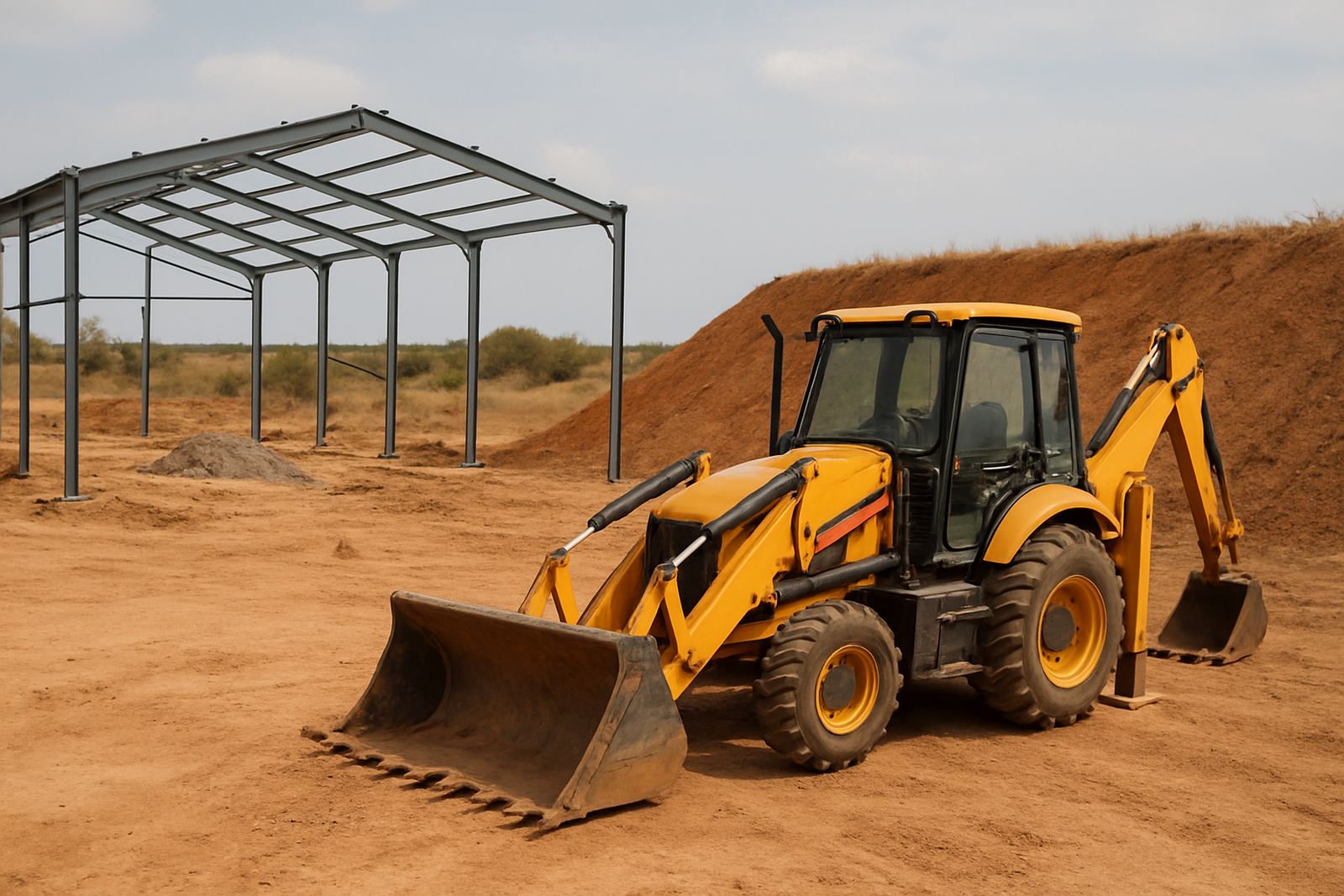
- Loaders and TLBs for moving stone, backfilling, spreading gravel and site clean-up
- Dozers for shaping access roads and levelling larger working areas
- Generators for backup power during loadshedding or where the grid is not yet live
- Scaffolding and access gear for roof work, cladding and maintenance on sheds
- Compaction equipment for road base, apron areas and service trenches
- Pumps and water support equipment for borehole tie-ins, washdown points and drainage work
Where a job needs people as well as plant, operator supply can help keep the site moving without waiting on labour at short notice. For longer projects, a planned fleet mix is usually cheaper than chasing individual machines one by one.
Planning the site before the hire starts
Good farm work starts with a clean layout. Before the first machine arrives, mark vehicle routes, stock exclusion zones, turning points, spoil areas and the sequence for deliveries. On active farms, this stops confusion between the build team, farm staff and suppliers. It also reduces damage to roads, gates and fencing.
A simple plan should show where the shed will sit, how water will run off in heavy rain, where the generator will be placed, and which sections must stay open for tractors, trucks or livestock. If the site sits on municipal boundary land or near a drainage servitude, it is worth checking the local rules early. Some jobs need formal approval for access changes, stormwater discharge or temporary road works.
Our team helps clients think through the order of work so the hire is not wasteful. A trenching team should not be waiting on road preparation. A generator should not be hired before the electrical work is ready. The best sequence is usually compact, practical and focussed on keeping each trade busy.
- Confirm ground conditions and access width before selecting machine size
- Measure shed footprint, aprons and turning circles for delivery trucks
- Allow space for fuel storage, service access and safe machine parking
- Plan for rain, dust, coastal humidity and temporary power interruptions
- Keep livestock, workers and machinery separated with clear routes
Common mistakes that slow farm projects down
One of the biggest mistakes is hiring equipment that is too large for the site. A machine that suits a maize depot in open country can be awkward around a narrow yard, existing shed or irrigation line. The opposite also causes problems, because undersized plant takes longer and puts pressure on the programme. The right fit is not always the biggest option.
Another common issue is forgetting about service access. If a generator has to run for days, it needs a protected position, fuel handling space and regular checks. If a road is being built, there must be enough room for stockpiles, turning and water suppression. If the farm is operating during the build, a poorly planned layout can block deliveries and create avoidable safety risks.
We also see projects under budgeted for safety paperwork. Farm infrastructure work still needs the basics: risk controls, site rules, machine inspections and a clear off-hire process. That paperwork can feel like admin, but it helps prevent stoppages and keeps the contractor ready for inspections or client checks. If a site is in a windy coastal area or subject to corrosive moisture, regular checks become even more important because wear can move faster than expected.
What a realistic budget looks like in Rand
Farm infrastructure budgets vary a lot depending on distance, soil type, machine size and how long the hire runs. A short job to prepare a water point on level ground will cost far less than a full shed platform with access roads, drainage and power backup. The budget should also allow for delivery, fuel, operator time and any off-hire collection, because those items can change the final figure quite a bit.
As a rough planning guide, smaller support jobs can start from a few thousand Rand per day for basic hire, while mixed plant on a medium site may run into tens of thousands of Rand per week. Larger agricultural building works, especially where several machines are needed at once, can move well above that depending on duration and location. Long-term hire usually works out better on ongoing farm upgrades, especially when the programme runs over several weeks or months.
If the project is remote, add a transport allowance. If the work is in a high-wear environment such as coastal KZN or dusty western parts of Gauteng, allow for stronger maintenance support too. It is usually cheaper to plan for the real site conditions upfront than to deal with breakdowns, delay claims and extra mobilisation later.
Why farms call MachinesAfrica Rentals
Our team supports construction and agricultural building work from Germiston and surrounding depots to sites across Gauteng, KwaZulu-Natal and the Western Cape. With same-day dispatch on selected equipment, weekend support and on-site servicing where needed, we help keep urgent farm work on track. That matters when a shed roof, water line or access road has to be ready before the next delivery or harvest cycle.
Sibusiso Mthembu leads the business, with Annelie van Wyk, Thabo Nkosi, Zanele Dlamini, Willem Erasmus and Nokuthula Khumalo supporting the operation, fleet, hire coordination, workshop and compliance side. The aim is simple: supply equipment that turns up ready for work and gets collected without fuss. For farmers, contractors and agri-build teams, that kind of support saves time and keeps the site moving.
If your farm project is in Germiston, Durban, Pinetown, Cape Town, Bellville, Midrand or Pretoria East, send the job details through the enquiry form and we will help match the hire to the site. A clear scope, a realistic sequence and the right equipment are usually enough to keep the project steady from the first dig to the final handover.