Why shutdown work needs a tighter hire plan
Plant shutdowns are different from normal site hire because the work has to fit into a short, fixed window. You may have a few days or a few weeks to complete inspections, repairs, replacements and safety upgrades before production must restart. That means equipment has to arrive ready, operator cover must be confirmed, and the hire plan needs to match the sequence of work rather than just the list of machines required.
In Gauteng industrial areas like Germiston, Wadeville, Alberton and Midrand, shutdown teams often work around night shifts, restricted access points and site permit systems. On coastal sites in Durban and Cape Town, weather and humidity can also affect access, storage and electrical protection. Good planning avoids lost time, and it helps you keep labour, crane calls and standby costs under control.
Typical equipment used on shutdown sites
The exact mix depends on whether the job is mechanical maintenance, civils repairs, electrical upgrades or structural alterations. Most shutdowns need a combination of access, lifting, earthmoving and standby power support. We also help with swap-outs if a machine is underused or if the scope changes after the first shift.
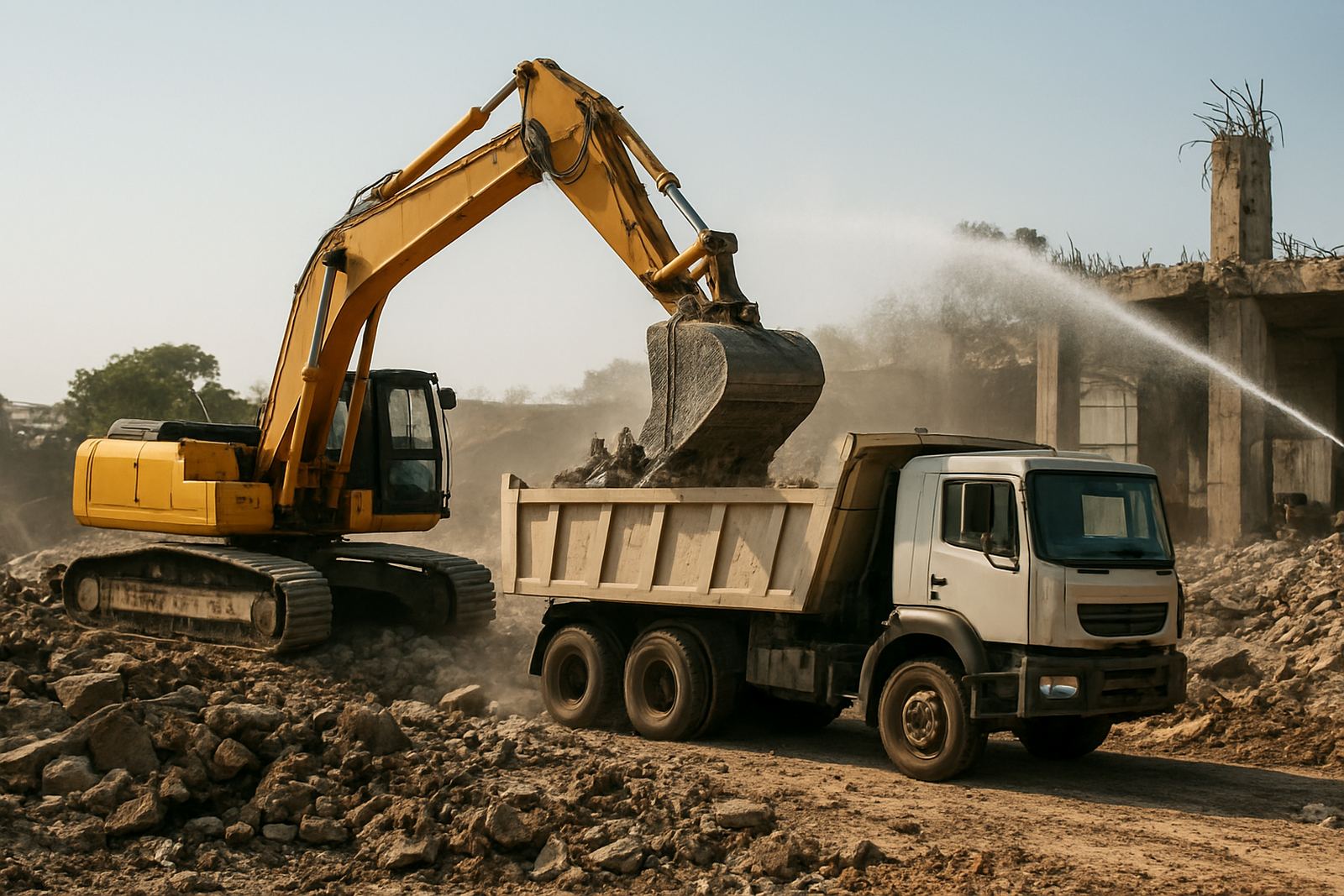
- Excavators for breakouts, trenching, spoil handling and general plant support work
- Backhoe loaders and compact loaders for tighter access and material movement
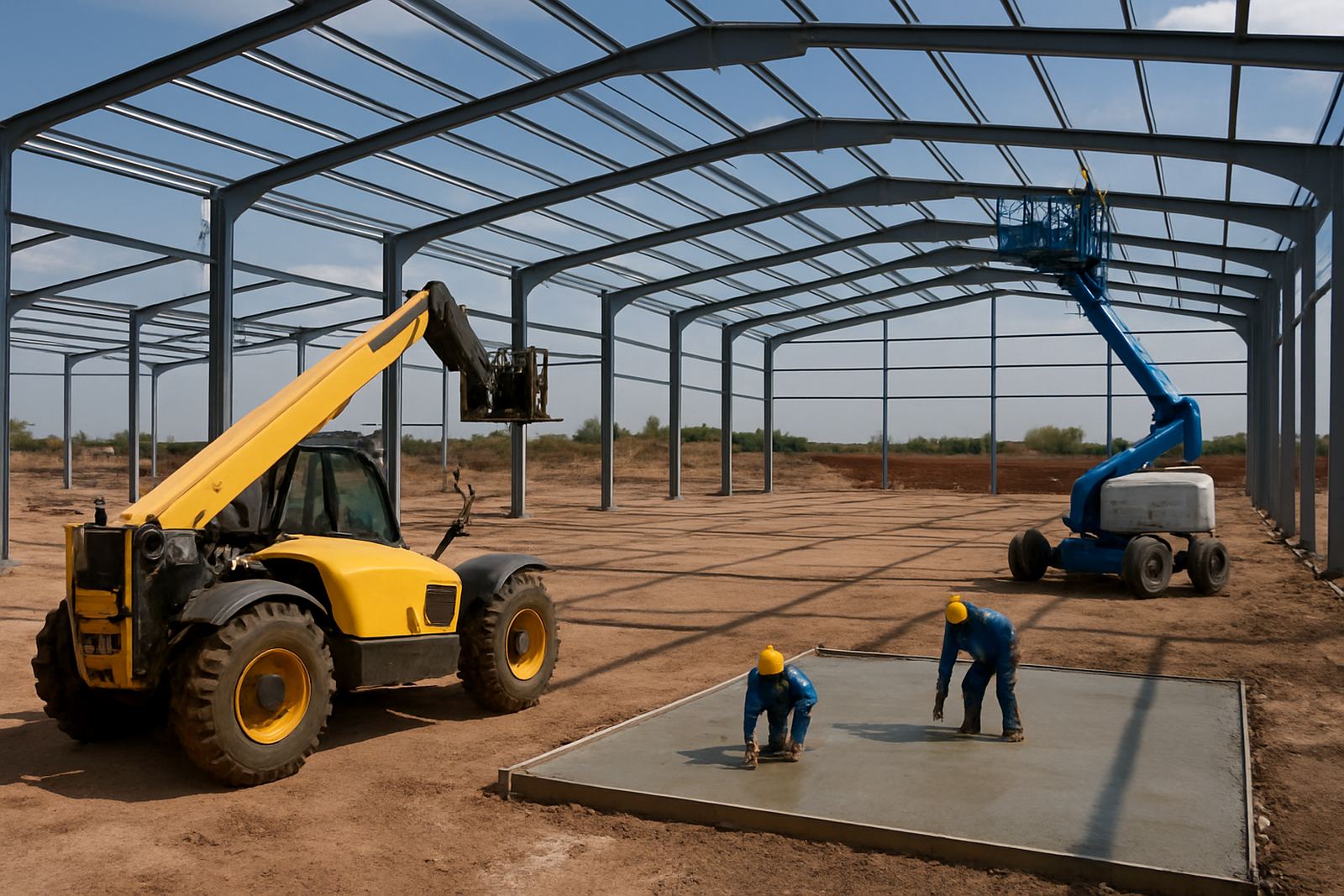
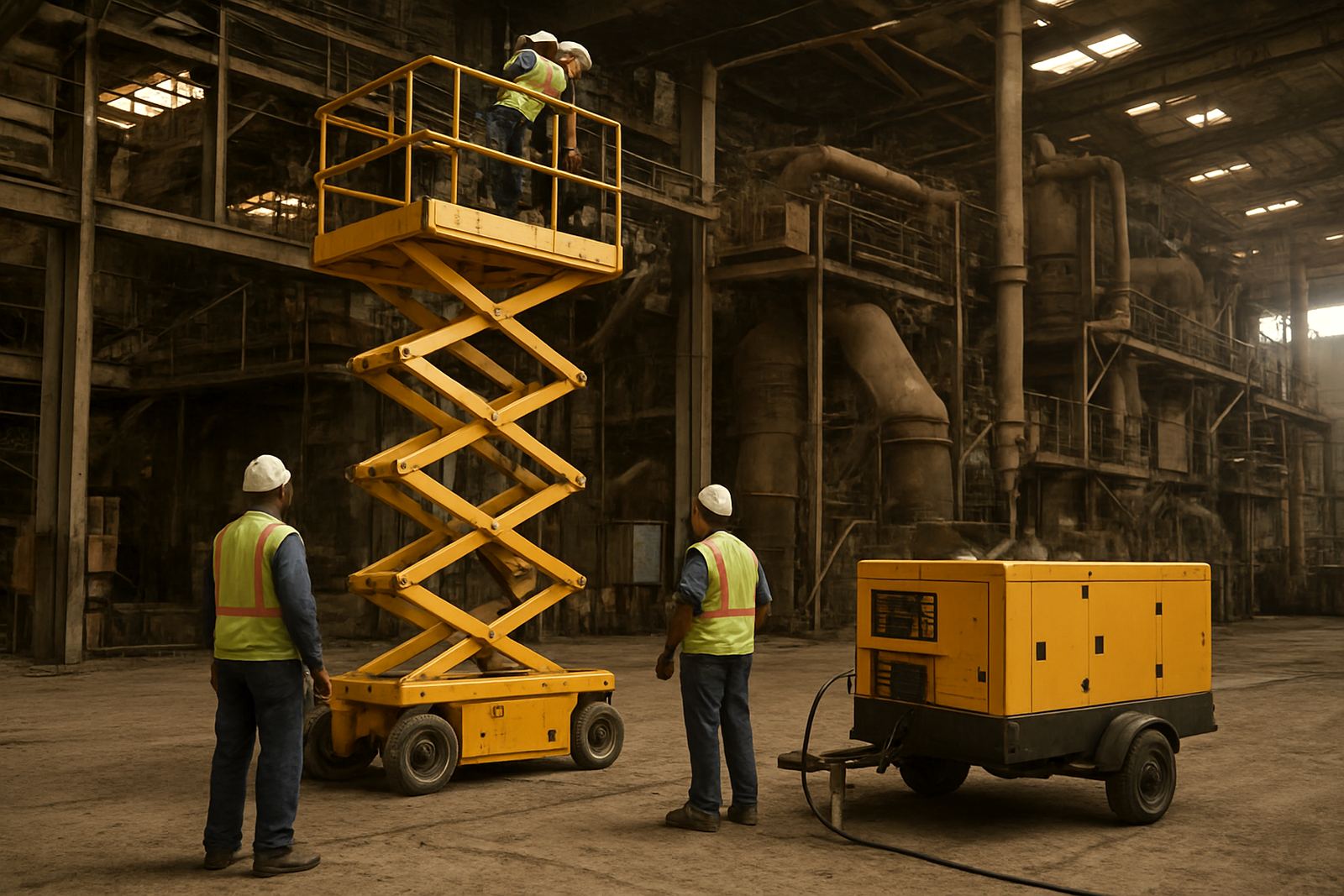
- Telehandlers, forklifts and cranes where lifting and positioning are part of the shutdown
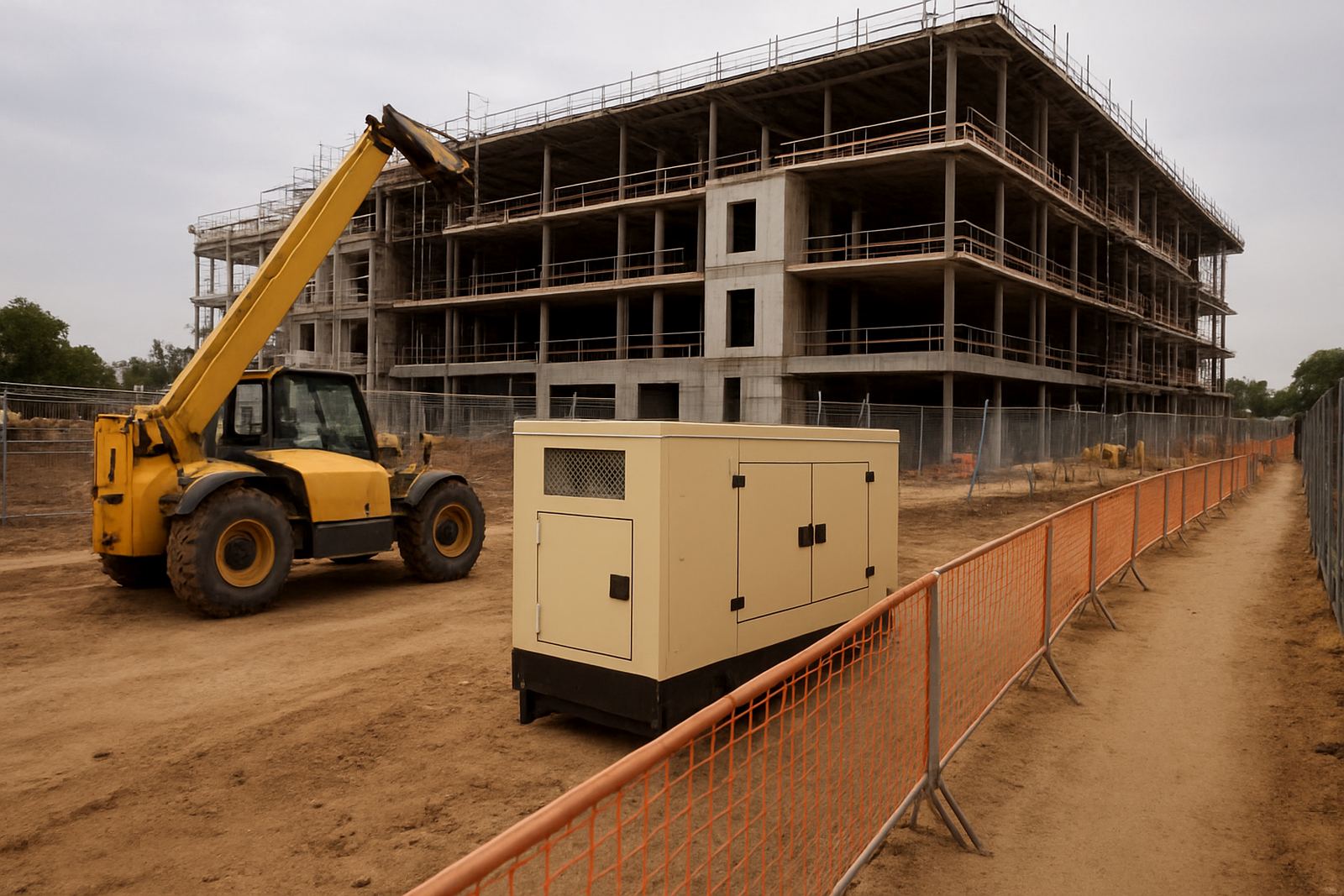
- Generators and lighting towers for load-shedding, night shifts and temporary power needs
- Scaffolding and access equipment for maintenance at height
- Water bowsers, pumps and dust control items for cleaner, safer work zones
- Compressors and small tools for intermittent maintenance tasks
For many sites, the real value is not just the machine itself but having the right combination of plant in the right order. A generator with no fuel plan or a scissor lift with no access route can slow the whole job down very quickly.
How to plan the shutdown layout before day one
A shutdown yard or work area should be laid out with clear traffic flow, safe pedestrian routes and enough turning space for delivery trucks. If the site is in a live industrial environment, keep the heaviest machines near the work front and plan where service vehicles, tool trailers and waste bins will sit. In a busy plant, one badly placed machine can block a route and cost hours.
We usually recommend confirming four things before the hire starts: ground conditions, access hours, lifting points and power requirements. If the ground is soft or uneven, mats or a different machine size may be needed. If the site has limited gate access, measure the opening properly before dispatch. And if the plant has noise limits or weekend rules, the hire schedule should reflect that from the start.
- Mark delivery points and offloading areas clearly
- Separate incoming spares from removed equipment and scrap
- Plan fuel storage and refuelling times before shifts begin
- Keep emergency routes open, especially around boilers, tanks and confined spaces
- Confirm who signs off on daily inspections and handovers
Common shutdown mistakes that waste time and money
One of the biggest mistakes is ordering too late and expecting same-day availability on everything. Shutdown work often needs specialist machines, and a shortage of one item can delay several trades at once. Another common issue is hiring the wrong size equipment, which leads to poor manoeuvrability, extra transport charges or unsafe working angles.
It is also easy to overlook support items like fuel management, operator supply, safety documentation and breakdown response. If those are not planned in advance, the site team ends up solving small problems while the clock keeps running. A shutdown budget can be eaten up by standby labour and late changes, so it pays to keep the scope tight and the hire list realistic.
For industrial customers, another risk is forgetting municipal or site-specific rules. Some locations need noise control, waste segregation or restricted delivery times, especially near residential areas or on sites with shared access roads. If your shutdown runs over a weekend or public holiday, check those rules early because they can affect both labour and machine movement.
Budget ranges for short-term shutdown hire
Shutdown budgets vary a lot because the job may involve a single access machine or a full package with power, lifting and on-site servicing. As a practical guide, smaller maintenance windows can start from around R8,000 to R25,000 for basic short-term plant and support items. Mid-sized shutdown packages often sit between R35,000 and R120,000 depending on the number of machines, duration and operator needs.
For larger industrial shutdowns with multiple machines, long shifts and standby support, budgets can move well above R150,000. Transport, fuel, after-hours dispatch, weekend support and plant swop-outs can all add to the final cost, so it helps to get a clear scope before the first delivery. If you know the shutdown dates, working hours and site conditions, we can help structure a hire package that stays within budget and still gives the team room to work.
Why contractors use us for shutdown windows
Shutdowns need quick decisions and steady follow-through. Our Germiston base gives us good reach into Gauteng industrial zones, and our depots in Durban, Pinetown, Cape Town and Bellville help us support work across KwaZulu-Natal and the Western Cape. That matters when a machine has to move quickly, or when a backup unit is needed because the job scope changed overnight.
Clients also value practical support from a team that understands site pressure. From fleet planning and safety documentation to off-hire collections and on-site servicing, the aim is to keep the shutdown moving without fuss. Sibusiso Mthembu leads the business, with Annelie van Wyk, Thabo Nkosi, Zanele Dlamini, Willem Erasmus and Nokuthula Khumalo helping keep operations, compliance and equipment readiness on track.
If your next shutdown is for a factory line, warehouse, processing plant or heavy industrial site, the safest approach is to plan the hire around the work sequence not the other way round. That keeps the project moving and helps your team hand back the plant on time.