What warehouse builds usually need on site
Most warehouse projects start with bulk earthworks, then move into slab prep, service trenches, steel erection and final fit-out. That means the hire list changes fast. One week you may need an excavator, roller and tipper support, the next week access platforms, a generator and lighting for early starts or after-hours work.
For contractors in Germiston, Midrand, Pretoria East, Boksburg and along the coastal corridor, planning must account for wet ground, tight yard space and delivery windows set by the client or the municipality. We help match the plant to the stage of the build so you are not paying for idle kit or chasing missing items.
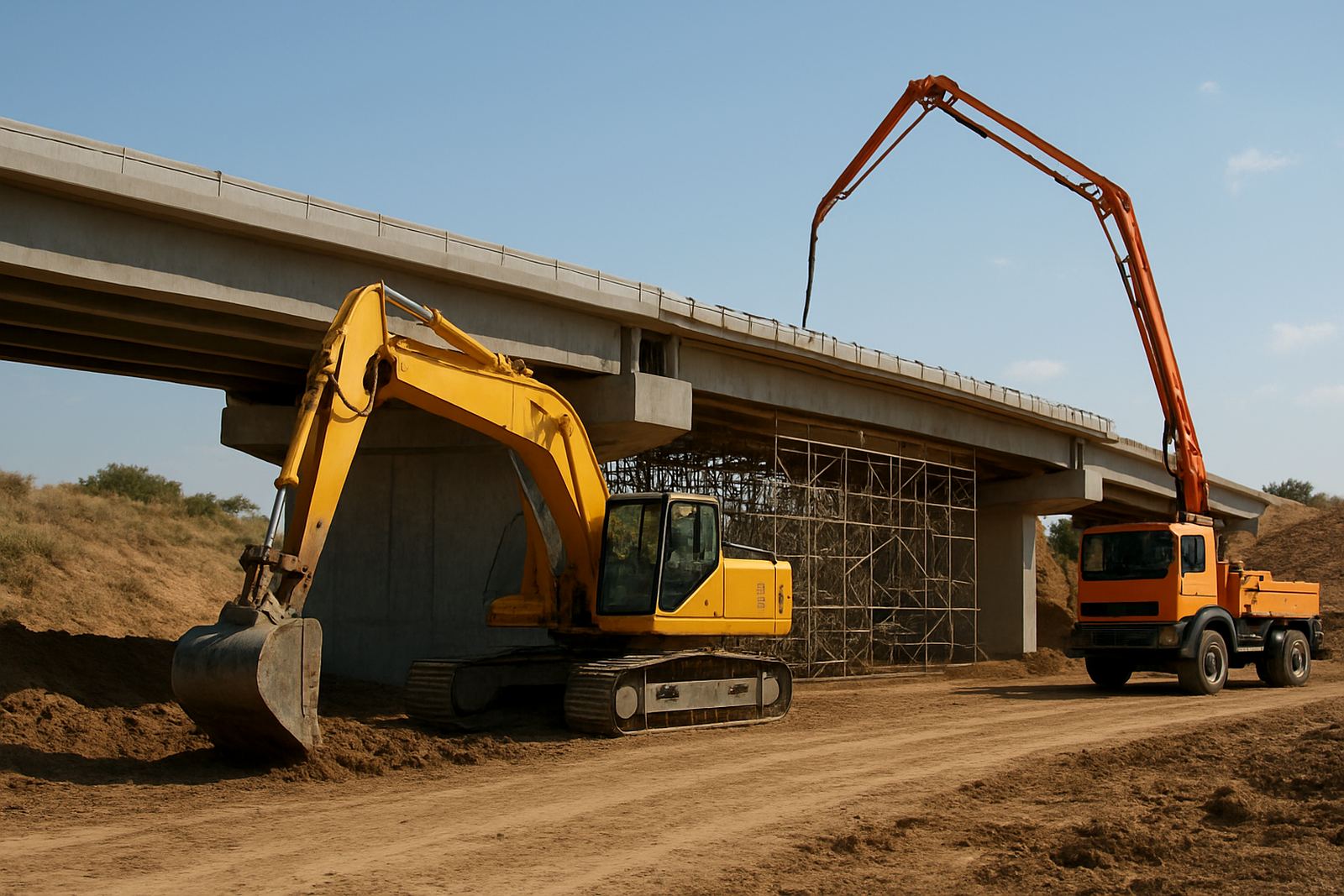
- Excavators for bulk dig, trenching and backfilling
- Loaders and dumpers for moving spoil, stone and bedding material
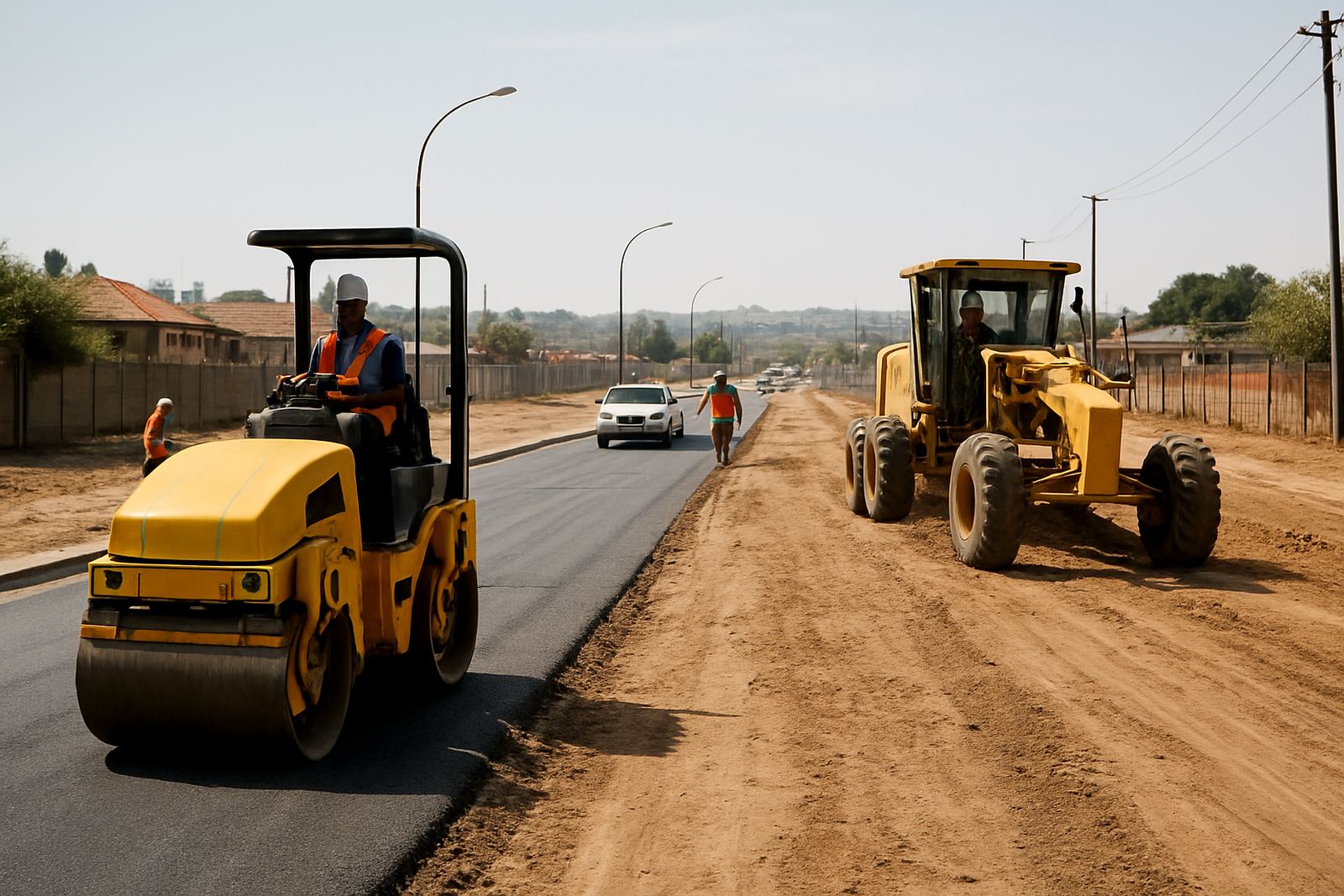
- Rollers and compactors for subbase and platform preparation
- Generators, distribution boards and lighting for site power
- Scaffolding, access equipment and lifting support for steel and roof work
Access, lifting and power for tight warehouse footprints
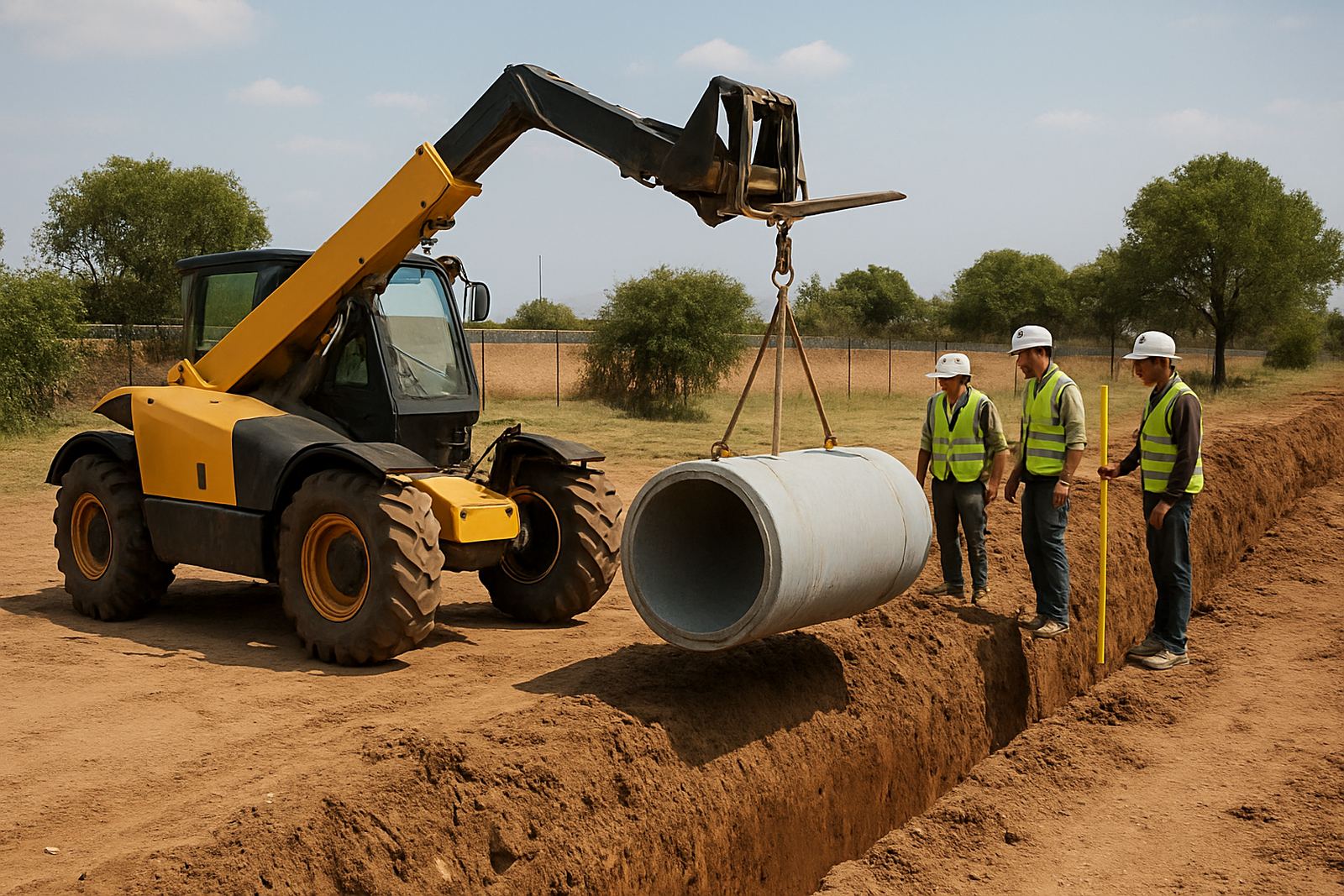
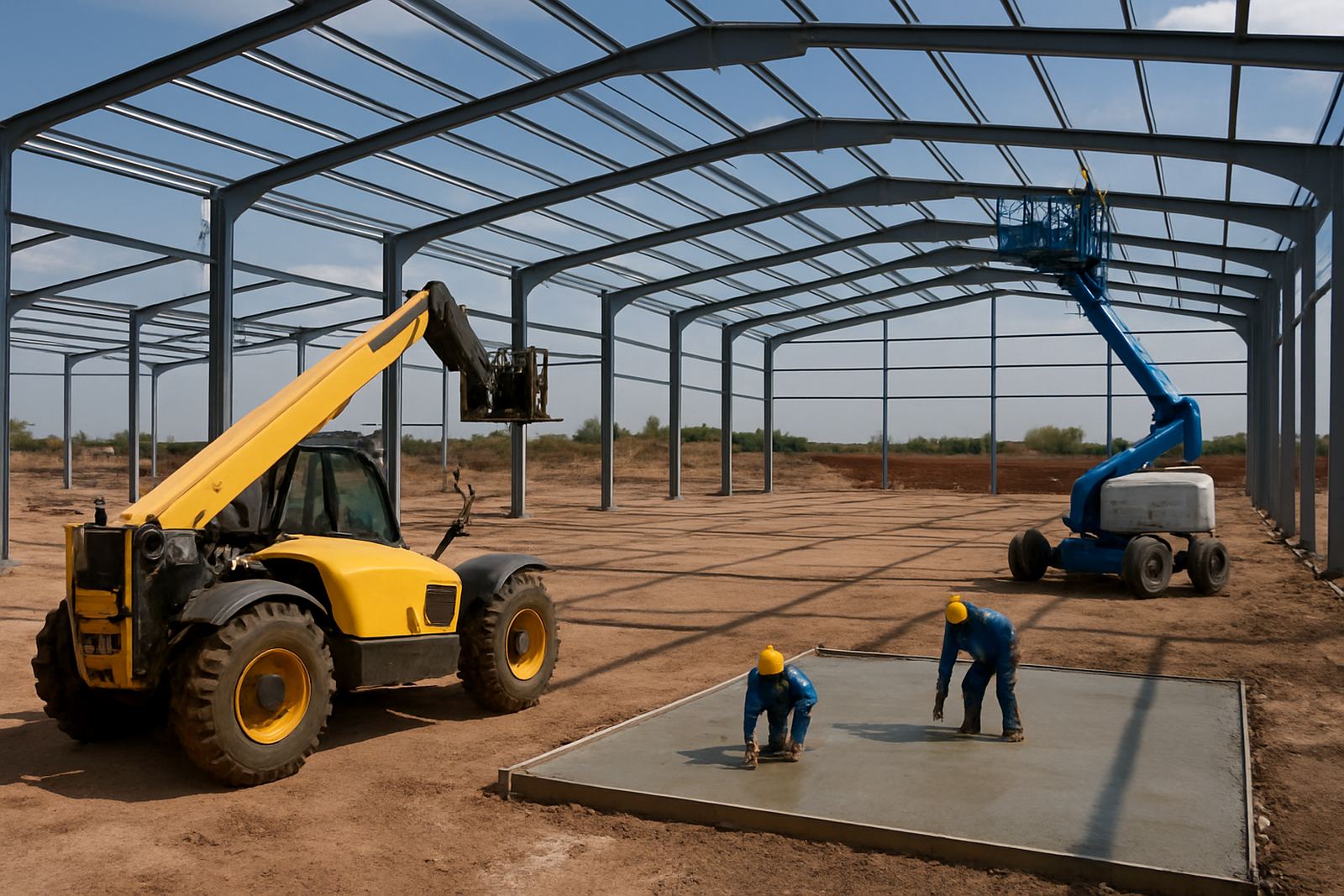
Warehouse sites often have narrow access roads, live neighbours and limited laydown areas. You need plant that can move in and out without blocking deliveries or slowing other trades. We usually see smaller excavators, telehandlers, mobile access equipment and generators working together on the same site.
Load-shedding still affects many projects, especially where welding, drilling or temporary lighting runs for long shifts. In humid coastal conditions, power gear and exposed steel need proper storage and servicing. We can arrange fuel management, on-site servicing and weekend support where the programme cannot stop.
- Telehandlers and forklifts for pallets, purlins and roof material
- Mobile access platforms for overhead work and maintenance tasks
- Generators sized for tools, lighting and temporary offices
- Water bowsers or suppression gear where dust control is required
- Barriers and signage for traffic separation and safe pedestrian routes
How to plan the layout before the first delivery
A good warehouse build starts with the laydown plan. Mark the entry point, crane positions, spoil stockpile area, refuelling point and the route for delivery trucks before the first machine arrives. If you leave this too late, plant ends up parked where it should be working and the whole site slows down.
We advise contractors to separate heavy plant movement from finishing trades, especially where slab pours or racking layouts are already set out. Keep clear access to fire points, ablutions and emergency routes. On industrial sites, safety documentation and machine checks should be in place before work starts, not after a complaint from the client or site agent.
- Set the delivery gate and turning circles early
- Confirm ground bearing for heavy equipment and materials
- Plan refuelling so it does not interrupt pours or lifts
- Keep a backup power option for critical work windows
- Schedule off-hire collections to avoid congestion at handover
Common mistakes that push warehouse jobs off programme
The most common issue is hiring the wrong size machine for the access available. A unit that is too large can damage finished hardstands or simply not fit through the gate. Another mistake is underestimating power needs. Once lighting, welders and small tools are all running at once, a small set will not hold the load.
Teams also lose time when they forget about soil conditions. In Germiston and other industrial areas, compacted ground may need different equipment than a softer greenfield site. Along the coast, rain and humidity can create holding areas that bog down light plant. We help clients avoid these problems by checking the site brief, the programme and the haul route before dispatch.
- Hiring plant before the layout is confirmed
- Forgetting operator supply for specialist equipment
- Not allowing for service access around the slab edge
- Leaving breakdown response too late in the programme
- Using one machine for multiple tasks where swop-outs would save time
Typical hire budgets for warehouse builds
Budgets depend on the stage of the build, the hire length and whether you need operators or after-hours support. As a practical guide, smaller support items like compactors, generators and access gear can start from around R1 500 to R6 000 per week, depending on size and specification. Mid-size plant such as excavators, rollers and telehandlers often sits in the range of R8 000 to R28 000 per week.
For larger warehouse sites needing multiple machines, fuel planning and standby cover, monthly spend can run from about R35 000 into six figures. Long-term hire usually gives better value when the programme is stable. If the job changes often, shorter blocks with plant swop-outs can save money and keep the site moving.
We can help you compare daily, weekly and long-term hire options so the numbers make sense before the first truck leaves the depot. It is usually cheaper to plan the fleet properly than to fix a late hire gap in the middle of a pour or lift.