
School sites need careful planning from day one
Working on a school is not the same as working on an open construction site. You are dealing with learner movement, staff parking, assembly times, noisy work windows and often very limited space for materials and plant. In Johannesburg, Durban or Cape Town, school upgrades also need to fit around weather, security controls and municipal rules for waste removal and access routes.
For classroom additions, paving, drainage and sports facility work, the hire plan must match the sequence of the job. If the excavation starts too late, the slab crew waits. If the compaction equipment is too small, the paving fails early. We help contractors line up the right machines, delivery times and off-hire dates so the work keeps moving without unnecessary standby costs.
For schools with narrow driveways or soft verges, smaller tracked machines often make more sense than larger wheeled units. On urban sites in Germiston, Midrand or Pretoria East, access planning matters just as much as the equipment list.
Typical equipment for classroom additions and upgrades
Most school projects need a mix of earthmoving, access, lifting and support equipment. The right set depends on whether you are building new classrooms, doing toilet block extensions, fixing stormwater lines or upgrading a sports field. Contractors usually hire for short bursts during earthworks, then keep lighter support equipment on site through the finishing stages.
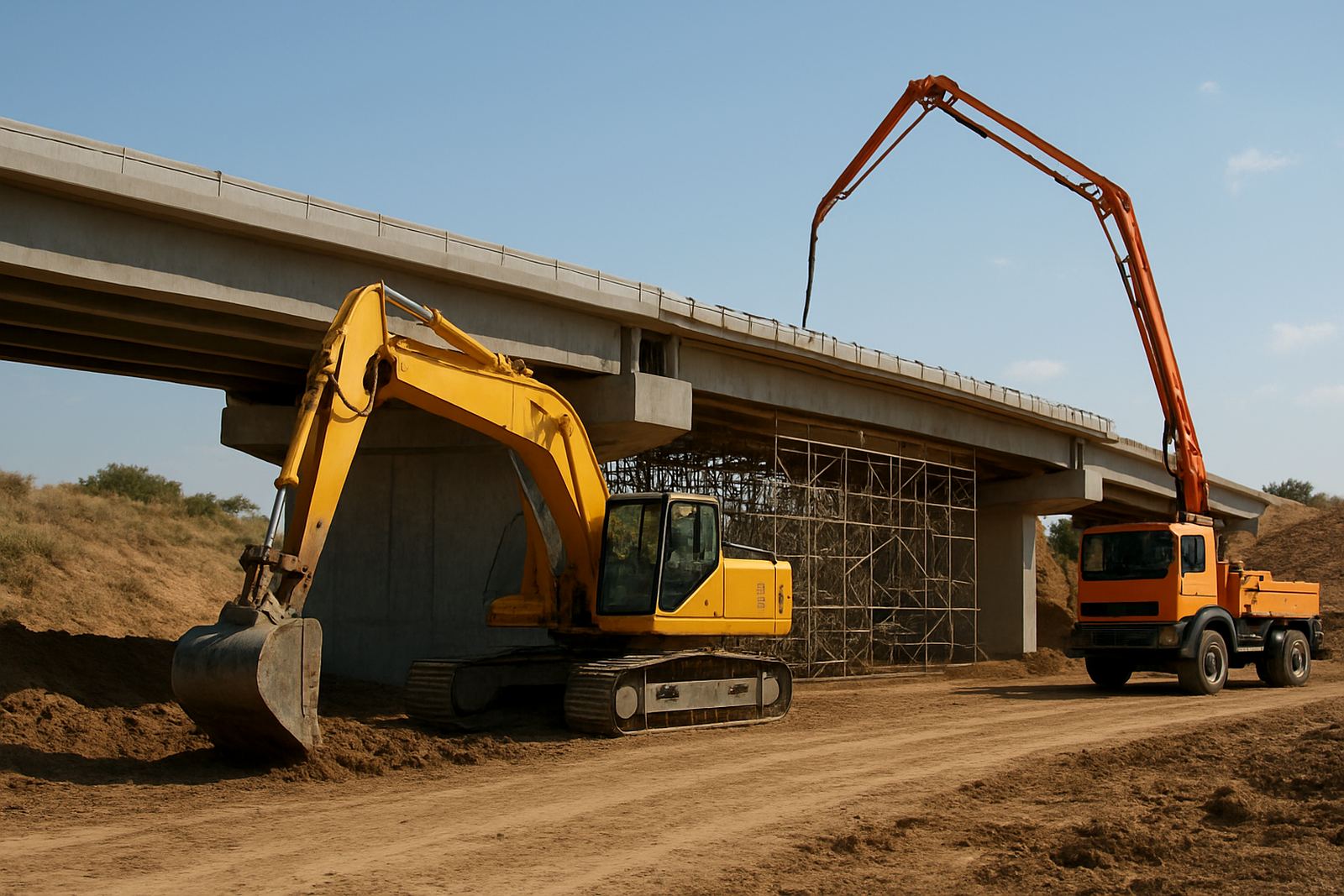
- Mini or standard excavators for trenching, footing prep and stormwater lines
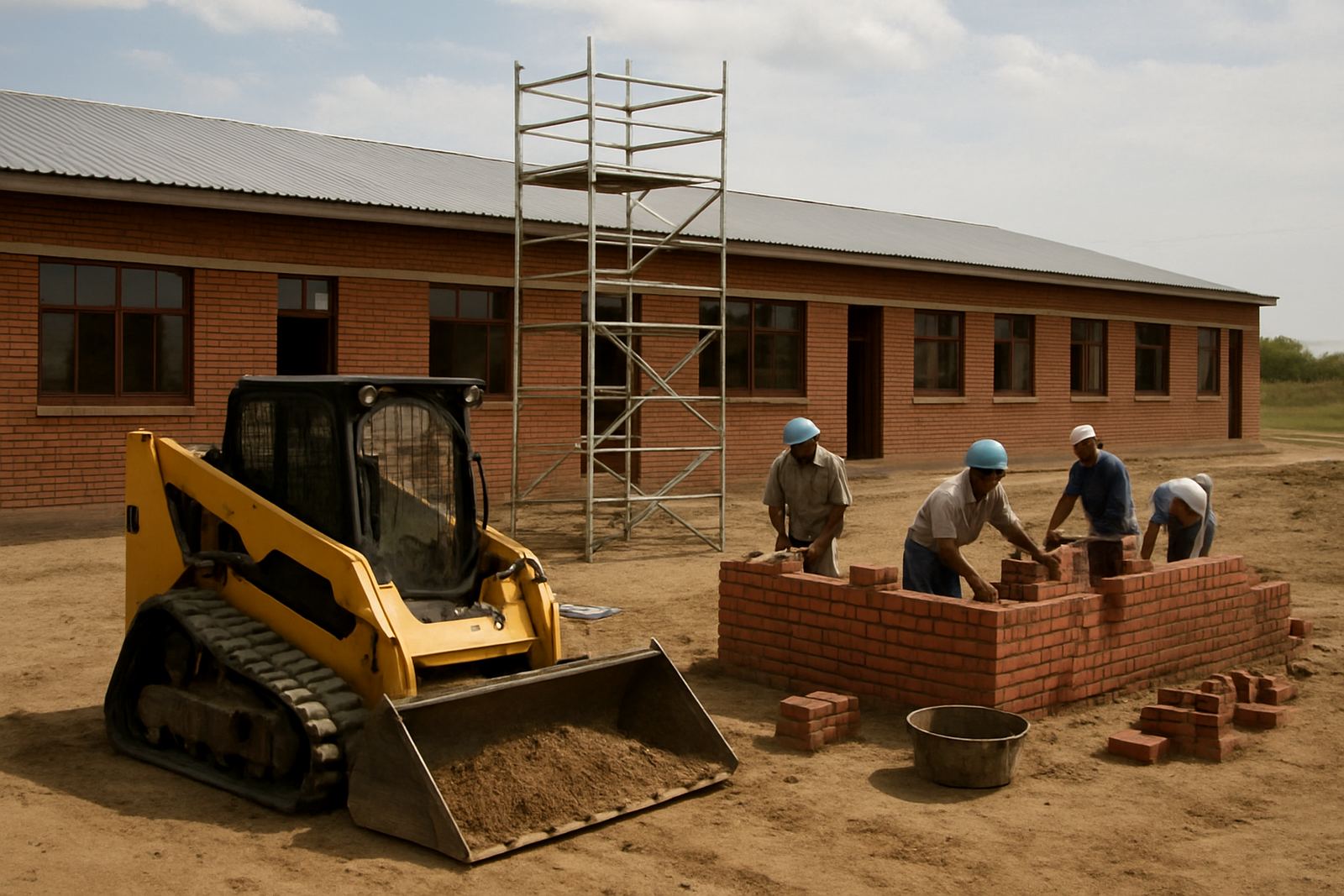
- Loaders or bobcat-style machines for spoil removal and material movement
- Backhoe loaders for mixed digging and backfilling where space is limited
- Rollers and plate compactors for sub-base, paving and path repairs
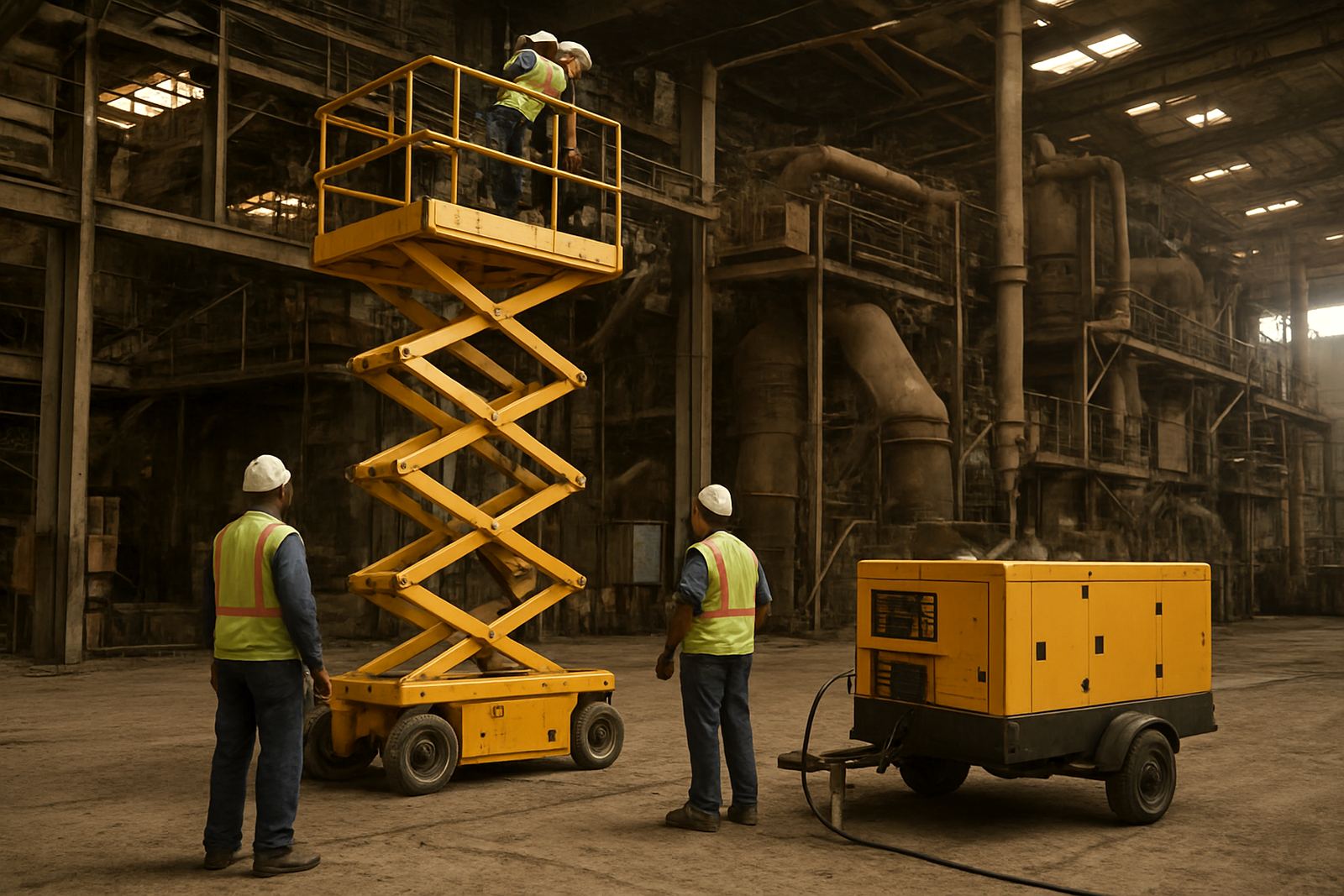
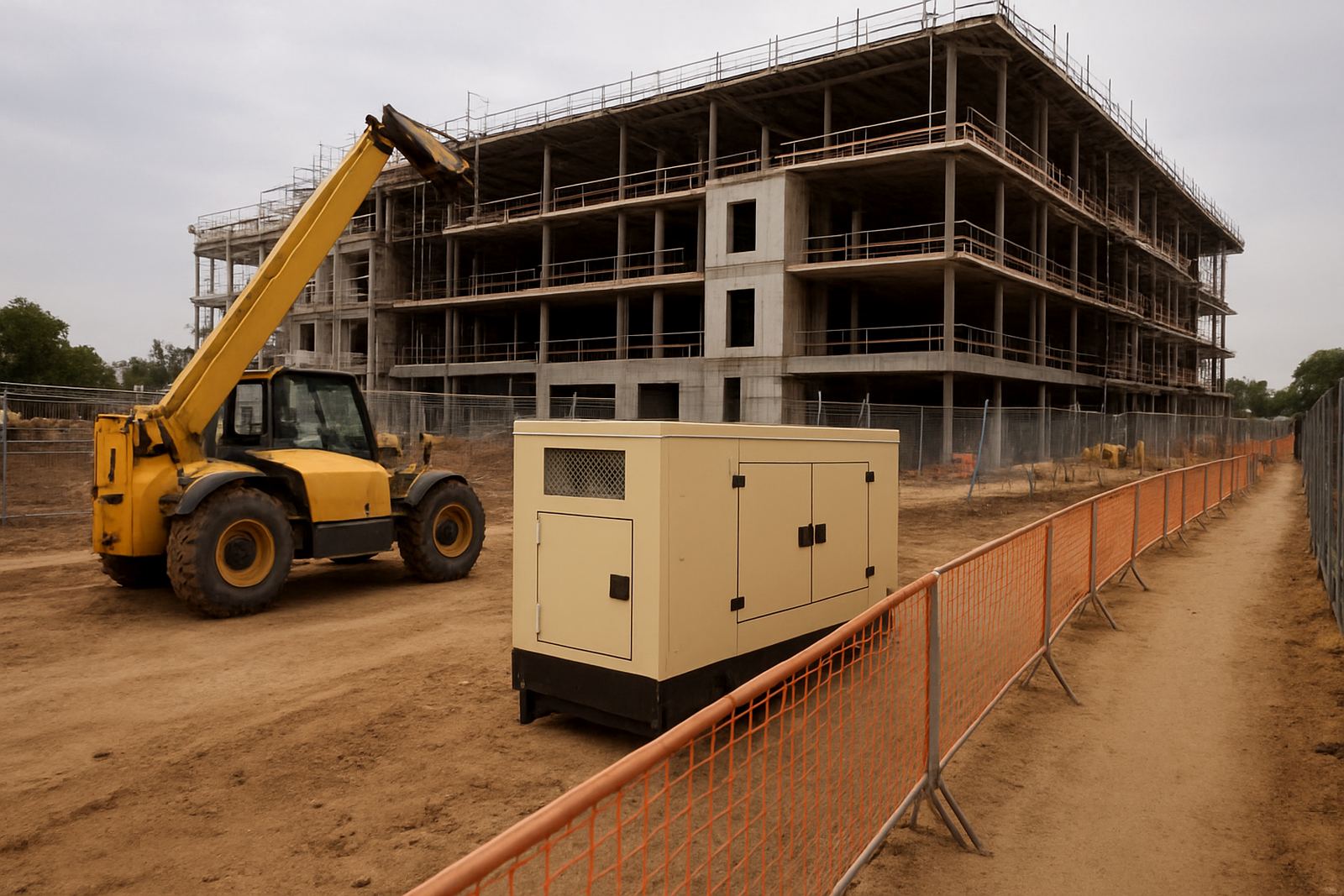
- Generators for power cuts, welding and temporary site supply
- Scaffolding and access towers for roof repairs, paint work and fascia work
- Water tanks or pumps for dust suppression and drainage control
For coastal schools in Durban or Cape Town, equipment choice should also account for moisture and salt air. Electrical items need proper protection, while steel access gear should be inspected regularly for corrosion. In inland areas, dust and heat can be the bigger issue, especially on long summer programmes.
Drainage, paving and sports fields need the right sequence
Many school projects fail because the sequence is wrong. Drainage comes before paving. Base prep comes before surfacing. On sports fields, levels and falls must be checked before any top layer is laid. A few millimetres out at the start can turn into puddles, loose paving or uneven court lines later on.
For drainage work, excavation, trench support, compaction and pumping should be planned together. For paving around classrooms, walkways and halls, the contractor needs excavation support, a compactor and often a site dumper or loader to keep stone and sand moving. Sports upgrades may need graders, rollers and water control equipment, especially where the ground is compacted or uneven from years of use.
- Check the setting out before machinery arrives
- Keep a clear route for learners, staff and deliveries
- Separate wet works from pedestrian areas where possible
- Allow time for inspections and sign-off before backfilling
- Plan material storage so sand, bricks and cement stay dry
On live school sites, noise restrictions can affect when you can run breakers, compactors or generators. Weekend support and same-day dispatch help when the programme changes or a section has to be opened for a short school holiday window, then closed again fast.
Common mistakes that add cost and delay
One of the most common mistakes is hiring too much plant too early. School projects often run in phases, and idle machines burn money while waiting for the next trade. Another mistake is underestimating access. A large excavator might be fine on paper, but if the gate width, turning circle or ground conditions are tight, you can waste a day just getting equipment in and out.
Contractors also sometimes forget the support items. A generator without fuel planning, or an excavator without the right bucket size, slows the whole job. Safety documentation is another area that gets overlooked. Schools usually want clear paperwork for operator details, machine inspections and site rules before work starts. That should be sorted before the first delivery, not after the foreman arrives on site.
We also see crews under plan for breakdown cover. If a roller goes down on Friday afternoon in Pretoria or a generator fails during evening work in Bellville, the project can lose a whole shift. Off-hire collections and plant swop-outs reduce that risk when the programme is tight.
Budget ranges that make sense for school work
Budgeting for school projects depends on duration, machine size and whether you need operators, fuel management or servicing on site. As a rough guide, smaller upgrade jobs often start with light plant and short-term hire, while phased additions and field works need a longer programme with more support.
For a small paving or drainage repair job, contractors may spend from about R8 000 to R25 000 on light plant over a short period, depending on the number of machines and days hired. Mid-sized classroom additions or toilet block extensions can move into the R30 000 to R120 000 range once excavation, compaction, lifting and support equipment are included. Larger sports field or multi-classroom projects can run well above that, especially when there is long-term hire, operator supply and ongoing fuel control.
The smart approach is to phase the hire. Bring in heavier machines for the earthworks and footing stage, then swap to compactors, generators and access gear for the finishing work. That keeps the budget easier to manage and avoids paying for plant that is sitting idle.
How our hire depots support schools across provinces
With depots in Germiston, Midrand, Pretoria East, Boksburg, Durban, Pinetown, Cape Town and Bellville, we can move equipment to school sites across Gauteng, KwaZulu-Natal and the Western Cape. That matters when a project is split between a main campus and a satellite sports area, or when a contractor has multiple schools on the same programme.
Our team, led by Sibusiso Mthembu with support from Annelie van Wyk, Thabo Nkosi, Zanele Dlamini, Willem Erasmus and Nokuthula Khumalo, keeps the hire process practical. That includes fleet planning, breakdown response, on-site servicing and the paperwork needed for school access. If the programme changes, we can adjust the machine mix, collect off-hire units and send replacements where needed.
For school work, speed matters but so does control. The aim is to keep classrooms open, protect pupils and finish the job without chasing missing equipment or waiting on a last-minute fix.